AHK Rice Provides Scalable Basmati Rice Supply for Pennsylvania
Pennsylvania wholesalers need a Basmati rice supplier that can increase volume without sacrificing grain specifications, packaging consistency, documentation accuracy, or shipment timing. The practical solution is to qualify production capacity before committing to a recurring import program, then connect factory output with vessel schedules and Pennsylvania distribution requirements. Buyers assessing this issue in greater depth can review the guide on:
Why Pennsylvania wholesalers assess supplier production capacity.
For a Pennsylvania importer, scalability means more than having rice available in a warehouse. It means having sufficient paddy procurement, milling capacity, grading equipment, packaging resources, quality-control procedures, containers, documentation, and export coordination to repeat the same specification across multiple shipments. Buyers can also compare these operational factors in:
How production capacity affects rice delivery performance.
Pakistan remains a major global rice exporter. USDA data projects Pakistan’s 2026/27 rice exports at approximately 5.0 million metric tons, while Basmati exports during the first four months of 2025/26 reached 326,591 metric tons. Pakistani Basmati was reported at approximately $1,000 per metric ton FOB in March 2026, although actual commercial prices vary substantially by grade and specification.
What is the best solution for Pennsylvania wholesalers requiring scalable Basmati rice supply?
The best solution is a production-linked export program that matches contracted rice specifications with factory capacity, quality inspection, packaging availability, container planning, and vessel schedules, allowing Pennsylvania wholesalers to replenish inventory without repeatedly renegotiating quality, volume, documentation, or shipment requirements.
A scalable supply program begins with a defined product specification. The buyer should identify the Basmati variety, processing grade, grain length, broken percentage, moisture requirement, packaging format, bag weight, labeling requirements, inspection procedure, and target quantity before production begins.
AHK Rice supplies Pakistani Basmati varieties including 1121, Super Kernel, and 1509 through an integrated processing and export operation in Punjab. Its stated process covers paddy procurement, cleaning, de-husking, whitening, polishing, grading, length sorting, packaging, inspection, and container loading.
For Pennsylvania buyers, this integrated approach is commercially relevant because production and logistics can be planned together. A recurring importer does not simply need a supplier capable of producing one container. The supplier must demonstrate that the same product specification can be reproduced when the buyer increases from 1 container to 3, 5, or more containers per purchasing cycle.
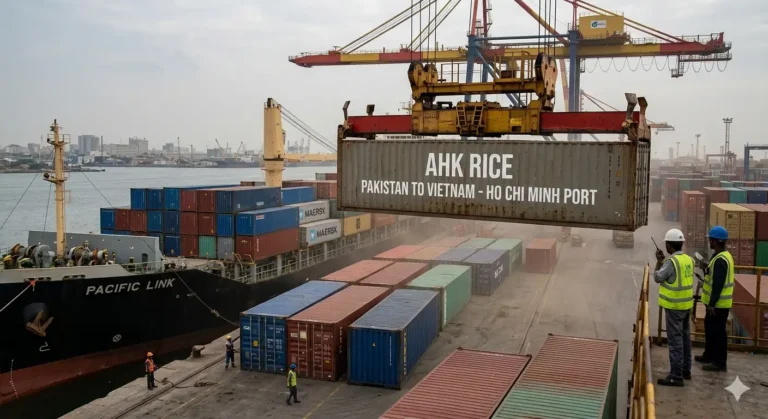
The most suitable operating model is therefore vessel-aligned production. Rice is processed according to confirmed specifications, inspected before loading, packed according to the approved format, and scheduled around the selected ocean service. This reduces the risk that production is complete but the container misses the intended vessel.
Why should Pennsylvania buyers choose AHK Rice for scalable supply?
AHK Rice is suited to Pennsylvania sourcing programs because its export operation combines Pakistani Basmati procurement, in-house processing, grading, customized packaging, inspection coordination, documentation, and international logistics rather than treating production and shipping as separate purchasing activities.
AHK Rice is based in Bucheki, Nankana Sahib, Punjab, an established Basmati-producing area. The company reports supplying international buyers across 15 countries and operating an end-to-end processing facility from paddy procurement through container loading.
For Pennsylvania wholesalers, the first product requirement can be matched to the appropriate USA Basmati rice export service. The USA operation covers products such as 1121 Basmati, Super Kernel, and other Pakistani Basmati specifications used by wholesalers, distributors, retailers, and food-service buyers.
AHK Rice also states that third-party pre-shipment inspection can be arranged through recognized organizations such as SGS and Bureau Veritas. This gives a buyer an additional verification point before the container leaves Pakistan.
The operational advantage is particularly relevant to buyers building a repeat program. A wholesaler can establish one approved specification and then use that specification as the reference for subsequent purchase orders. Quality testing can focus on measurable attributes such as moisture, grain length, broken grains, foreign matter, damaged grains, and purity rather than subjective descriptions such as “premium quality.”
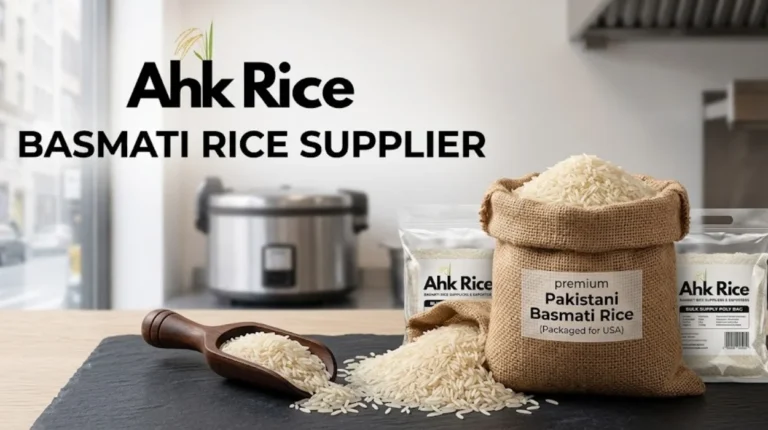
AHK Rice also supports customized packaging. This matters when Pennsylvania wholesalers supply regional supermarkets, independent ethnic stores, restaurant distributors, or private-label customers. Packaging can be specified around bag weight, material, artwork, labeling, and shipment quantity rather than accepting whatever packaging happens to be available.
How many shipping days should Pennsylvania buyers allow for Pakistani Basmati rice?
Pennsylvania buyers should normally budget about 35–50 days for an East Coast Pakistan-to-USA shipment from export preparation through U.S. port clearance, with additional inland delivery time depending on the Pennsylvania warehouse and the selected port-routing combination.
For Pennsylvania, East Coast routing is generally more logical than a West Coast route because the state is positioned within the northeastern U.S. distribution network. A shipment may use the Port of New York and New Jersey or another suitable East Coast gateway, followed by truck or rail movement into Pennsylvania.
A practical 2026 planning model is:
| Shipment stage | Typical planning time |
|---|---|
| Production and final preparation | 7–15 days |
| Inland movement to Pakistani port | 1–3 days |
| Export documentation and clearance | 1–3 days |
| Ocean freight to East Coast | 28–35 days |
| U.S. port clearance | 3–7 days |
| Inland delivery to Pennsylvania | 1–4+ days |
| Indicative total | 41–67+ days |
These are planning ranges rather than guaranteed delivery commitments. AHK Rice’s published 2026 logistics guidance places East Coast Pakistan-to-USA transit at approximately 35–50 days when inland origin movement, export clearance, ocean freight, and U.S. clearance are considered.
The most important point is that ocean transit is not the same as total delivery time. Production, container availability, export documentation, vessel booking, port handling, U.S. clearance, and inland transportation all contribute to the final arrival date.
AHK Rice’s export workflow identifies payment confirmation, vessel booking, shipping, delivery, and pickup as separate stages. This is the structure Pennsylvania wholesalers should use when calculating reorder points. If a warehouse needs rice continuously, the next purchase should be planned before existing inventory reaches its minimum stock level.
A missed vessel can create another week or more of delay depending on the sailing schedule. Port congestion, customs examinations, container shortages, weather, transshipment, and documentation corrections can also extend the schedule. Therefore, a responsible purchase plan should use a delivery window rather than a single fixed arrival date.
What does the complete Basmati rice sample process cost for a Pennsylvania buyer?
The most practical sample process starts with a defined commercial specification, followed by sample preparation, courier shipment, buyer testing, specification approval, commercial quotation, and final pre-shipment inspection; sample rice may be free while courier and applicable certification expenses remain buyer costs.
Sampling should occur before a Pennsylvania wholesaler commits to a large recurring order. The objective is not simply to taste the rice. The sample should verify the commercial specification that will later appear in the purchase contract.
A complete sample workflow can follow these stages:
| Sample stage | Buyer action | Typical cost treatment |
| Specification | Confirm grade, length, moisture and broken limits | Usually no separate charge |
| Sample preparation | Supplier prepares representative rice | Often free |
| Sample quantity | Up to approximately 20 kg where offered | Product may be free |
| Courier | Ship sample from Pakistan to Pennsylvania | Buyer pays courier |
| Phytosanitary documentation | Obtain if required for the sample movement | Buyer generally covers applicable cost |
| Laboratory/cooking test | Check physical and cooking performance | Buyer or supplier depending on arrangement |
| Commercial approval | Approve specification and packaging | No separate product cost |
| Bulk order | Convert approved specification into contract | Included in commercial quotation |
AHK Rice’s USA product information states that samples up to 20 kg can be provided without a sample charge, while the client pays shipping costs. It also states that buyers can use their own courier account and that applicable phytosanitary certificate costs for samples are covered by the client.
Sample cost therefore should not be confused with the cost of the commercial shipment. Courier pricing depends on package weight, dimensions, service level, destination, and carrier. A Pennsylvania buyer should request the exact courier charge before dispatch rather than using a generic international sample estimate.
Once the sample arrives, the buyer should check appearance, aroma, grain length, cooking elongation, texture, broken percentage, moisture, and packaging presentation. Commercial buyers should also compare the sample against the agreed specification sheet.
The approved sample then becomes a reference point. AHK Rice can coordinate production and inspection against the buyer’s agreed requirements, helping reduce disputes between the original sample and later bulk containers.
For regulated U.S. food imports, the importer remains responsible for ensuring that imported food is safe, sanitary, properly labeled, and compliant with applicable U.S. requirements. FDA states that food facilities handling imported products must be registered where required and that prior notice is required for incoming food shipments. Imported food can also be inspected at U.S. ports.
What results can Pennsylvania wholesalers expect from a scalable supply program?
A properly structured supply program should produce more predictable replenishment, repeatable product specifications, clearer purchasing costs, fewer avoidable documentation problems, and better inventory planning because production, inspection, packaging, and freight are managed against an agreed commercial schedule.
The expected result is not simply faster delivery. The stronger commercial outcome is predictability.
For example, consider a Pennsylvania wholesaler selling 1121 Basmati through ethnic grocery stores and food-service customers. The first order may be one container for market testing. If demand increases, the second purchase could become three containers. The supplier must then increase production without changing the approved grain specification or packaging format.
AHK Rice provides 1121 Basmati for USA buyers in white and Sella formats, with its USA product information describing containerized delivery, customized packaging, and bulk supply capabilities.
A scalable program should therefore be evaluated against five measurable outcomes:
| Decision area | Desired outcome |
| Production | Capacity supports increased purchase volume |
| Quality | Repeat shipments remain within approved specification |
| Packaging | Same approved packaging is available for replenishment |
| Logistics | Containers are aligned with vessel schedules |
| Documentation | Commercial and regulatory documents are complete |
AHK Rice can also use blending capability to balance quality and price where the buyer’s specification permits it. This can be useful when a Pennsylvania wholesaler has a target selling price and needs to protect gross margin without unnecessarily moving into a lower market grade.
The result is a procurement model based on specifications and measurable performance rather than verbal assurances. This is particularly important when the buyer is building a private-label or wholesale program where inconsistent grain appearance can affect customer retention.
What factors determine the final Basmati rice price for Pennsylvania?
The final price depends on rice variety, processing grade, grain specification, crop conditions, order volume, packaging, inspection, payment terms, Incoterm, freight, exchange-rate conditions, and destination logistics, so a single published price cannot accurately represent every Pennsylvania shipment.
FOB Pakistan pricing provides a useful starting point, but it is not the same as the delivered cost to a Pennsylvania warehouse.
USDA reported Pakistani Basmati at approximately $1,000 per metric ton FOB in March 2026. That figure is a market reference rather than a fixed quotation for 1121, Super Kernel, or 1509 because quality, processing, packaging, and commercial terms can materially change the price.
A Pennsylvania buyer should calculate landed cost using:
Rice price + packaging + inspection/certification + origin handling + ocean freight + destination charges + customs-related costs + inland transportation + applicable duties and taxes = landed cost.
The largest product variables are usually variety and grade. 1121 premium specifications can command a different price from Super Kernel or 1509. Steam, White, Sella, and Golden Sella processing also create different production costs.
Quantity affects the commercial calculation as well. Larger recurring orders can provide stronger production planning and more efficient freight utilization, while smaller purchases may carry higher per-unit logistics costs.
Packaging is another significant variable. Standard PP bags generally have a different cost structure from customized BOPP, retail packaging, private-label artwork, or specialty bags.
Incoterms also change the comparison. FOB Karachi, CFR/CNF, CIF, and other structures transfer freight and risk responsibilities at different points. Pennsylvania buyers should compare quotations on the same Incoterm before selecting the lowest offer.
How should Pennsylvania wholesalers decide whether AHK Rice is the right supplier?
Pennsylvania wholesalers should select AHK Rice when its production capability, approved product specification, inspection process, packaging flexibility, export documentation, and shipping plan collectively meet the buyer’s required volume and replenishment schedule rather than choosing solely on the lowest quoted metric-ton price.
The decision should begin with volume. A buyer should state the initial order quantity and expected monthly or quarterly requirement. This allows the exporter to assess whether the program fits available production schedules.
The second factor is specification control. The buyer should approve the exact rice grade before the commercial order. Grain length, broken percentage, moisture, milling degree, foreign matter, packaging, and labeling should be written into the specification.
The third factor is quality verification. AHK Rice states that third-party inspection through organizations such as SGS and Bureau Veritas is available. The buyer should determine whether pre-shipment inspection is required for every shipment or selected lots.
The fourth factor is logistics. Pennsylvania importers should provide their preferred destination port and warehouse location. This allows the exporter and freight partners to plan the most practical route and calculate the appropriate delivery window.
The fifth factor is replenishment. A supplier should be evaluated not only on whether it can fulfill the first order, but also on whether it can maintain the specification when order volume increases.
AHK Rice’s export model is designed around this end-to-end structure. The company reports managing sourcing, processing, grading, packaging, quality verification, documentation, and export coordination from its Punjab operation.
For a Pennsylvania wholesaler, that creates a clearer decision framework: approve the product, verify the supplier’s operational capability, confirm the shipping plan, calculate landed cost, and then establish a repeat-order schedule.
How can Pennsylvania buyers get started with AHK Rice?
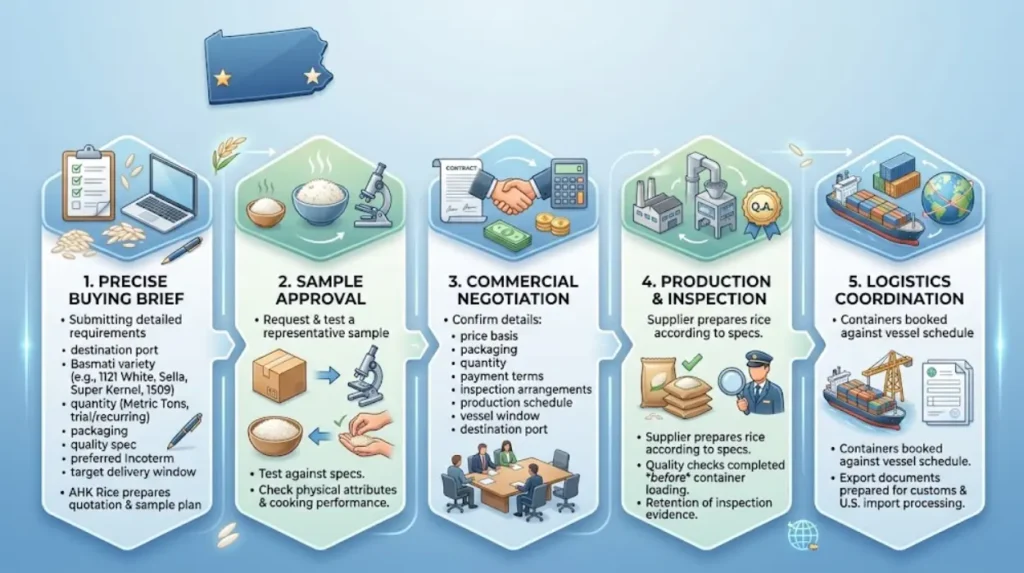
Pennsylvania buyers can start by submitting the destination port, required Basmati variety, quantity, packaging format, quality specification, preferred Incoterm, and target delivery window, allowing AHK Rice to prepare a commercial quotation and sample plan around the actual purchasing requirement.
The first step should be a precise buying brief. Instead of asking only for “Basmati rice price,” specify whether the requirement is 1121 White, 1121 Sella, Super Kernel, 1509, or another grade. Include the required quantity in metric tons and whether the purchase is a trial shipment or recurring program.
The second step is sample approval. Request a representative sample, confirm the courier arrangement, and test the rice against the intended commercial specification. Cooking performance should be checked alongside physical attributes.
The third step is commercial negotiation. Confirm price basis, packaging, quantity, payment terms, inspection arrangements, production schedule, vessel window, and destination port.
The fourth step is production and inspection. Once the order is confirmed, the supplier prepares the rice according to the approved specification. Quality checks should be completed before container loading, with inspection evidence retained for the shipment record.
The fifth step is logistics coordination. Containers should be booked against the intended vessel schedule, while export documents are prepared for customs and U.S. import processing.
The final decision should be based on total supply performance rather than the first quotation alone. AHK Rice gives Pennsylvania wholesalers a practical sourcing option where production, quality control, packaging, inspection, and export logistics can be coordinated within one supply chain. For buyers ready to define their product and volume requirements, request a customized Basmati rice quotation is the appropriate next step.
Frequently Asked Questions
What makes AHK Rice suitable for Pennsylvania wholesalers?
AHK Rice supports scalable Basmati rice supply through integrated processing, grading, packaging, quality control, inspection coordination, and export logistics from Pakistan.
How long does Basmati rice take to reach Pennsylvania from Pakistan?
A Pennsylvania shipment can typically require around 41–67 days from production planning through East Coast arrival and inland delivery, depending on vessel schedules, port clearance, and logistics conditions.
Which Basmati rice varieties can Pennsylvania buyers import from AHK Rice?
Pennsylvania wholesalers can source varieties including 1121 Basmati, Super Kernel, and 1509 Basmati, with White, Steam, Sella, and other specifications available according to the required product grade.
How does the Basmati rice sample process work?
The process starts with confirming the required rice specification, preparing a representative sample, arranging international courier delivery, testing the sample, approving the specification, and then proceeding to commercial production.
How much does a Basmati rice sample cost?
Sample rice may be provided without a product charge depending on the order and product, while the buyer generally pays courier and applicable documentation or phytosanitary costs.
What factors affect Basmati rice prices for Pennsylvania importers?
Prices depend on rice variety, grade, grain length, processing method, order volume, packaging, inspection, payment terms, Incoterm, ocean freight, exchange rates, and destination logistics.
Can AHK Rice handle large-volume Basmati rice orders?
Yes. AHK Rice’s integrated processing and export model is designed to support bulk and recurring Basmati rice requirements, subject to product specifications, production schedules, and confirmed order quantities.