Why Are England Food Businesses Choosing Pakistani Basmati Rice?
England food businesses choose Pakistani Basmati rice for its aromatic character, long slender grain, established export supply, and range of commercial grades. Here is why: Pakistan produces recognised Basmati varieties, including Kernel Basmati, while UK rules define Basmati as aromatic, fragrant, slender, non-glutinous rice.
Pakistani Basmati rice serves several food channels in England. These include wholesalers, restaurants, caterers, manufacturers, ethnic retailers, and supermarket suppliers. Each channel can specify grain length, broken percentage, processing method, moisture, packaging, and food-safety documentation. Pakistani exporters supply white, steam, and parboiled forms for these requirements.
What Is Pakistani Basmati Rice?
Pakistani Basmati rice is an aromatic long-grain rice cultivated in Pakistan, especially Punjab, and processed into white, steam, sella, and brown forms. Its long grain, fragrance, and cooking expansion distinguish it from ordinary long-grain rice. UK customs also recognises Kernel as Pakistani Basmati.
Basmati begins as paddy rice cultivated in suitable agricultural areas. Pakistani Basmati production is strongly associated with Punjab because its farming regions support traditional Basmati cultivation. Farmers irrigate fields, manage crop maturity, and harvest mature paddy before milling begins.
Rice classification also uses grain dimensions. UK guidance classifies long-grain rice as grain exceeding 6.0 mm and uses the length-to-width ratio for classification. Basmati specifically has a slender structure and expands mainly lengthwise during cooking.
The commercial identity of Pakistani Basmati also depends on variety. AHK Rice supplies 1121, Super Kernel, and 1509 varieties, giving food businesses different grain and processing options for retail, catering, restaurant, and wholesale applications.
How Is Pakistani Basmati Rice Processed?
Pakistani Basmati rice passes through cleaning, dehusking, polishing, grading, sorting, and packing stages. Parboiled grades add soaking, steaming, and drying before milling. Each stage controls cleanliness, appearance, grain integrity, and consistency for commercial food use.
What Happens From Paddy to Finished Rice?
The processing sequence normally follows these stages:
- Clean the paddy to remove stones, dust, straw, and other field materials.
- De-husk the grain to remove the outer husk and produce brown rice.
- Separate the grains to remove remaining husk and immature material.
- Polish the rice to produce the required white-rice appearance.
- Grade the grains according to length, size, and commercial specification.
- Sort the rice using mechanical and optical systems to remove unwanted grains.
- Inspect the product for foreign matter, damaged grains, colour defects, and other specification points.
- Pack the rice into the required retail, wholesale, or foodservice packaging.
Parboiled rice follows an additional treatment sequence. Paddy undergoes soaking, steaming, and drying before the grain is milled. This process changes the grain structure and produces grades such as Golden Sella and Creamy Sella.
Processing therefore determines more than appearance. It affects cooking behaviour, grain firmness, colour, and the product’s suitability for different food applications.
Which Pakistani Basmati Grades Are Available?
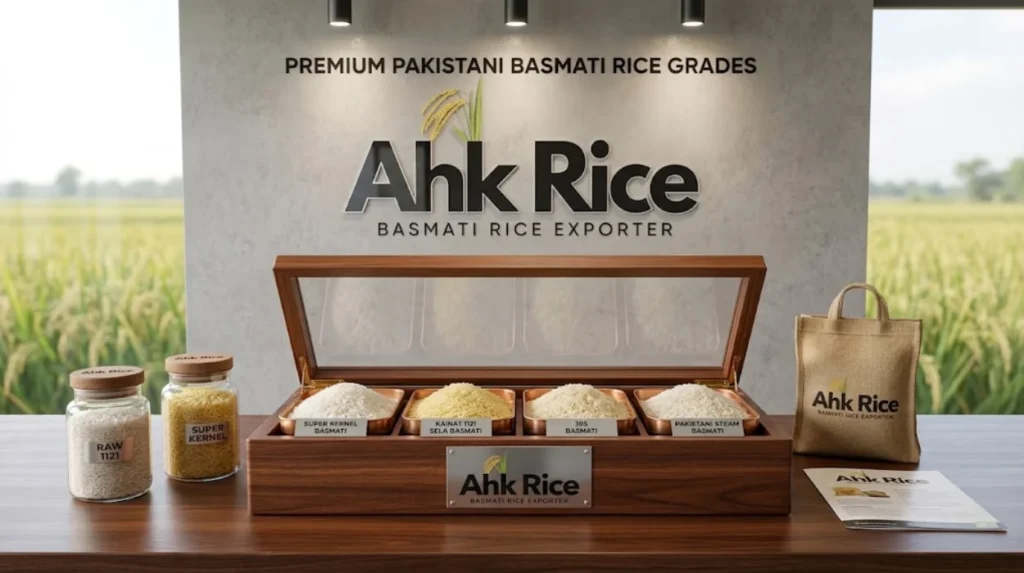
Commercial Pakistani Basmati includes 1121, Super Kernel, and 1509, with white, steam, sella, and brown processing formats. The correct grade depends on grain specification, cooking method, customer positioning, packaging requirements, and the intended foodservice or retail application.
What Is 1121 Basmati?
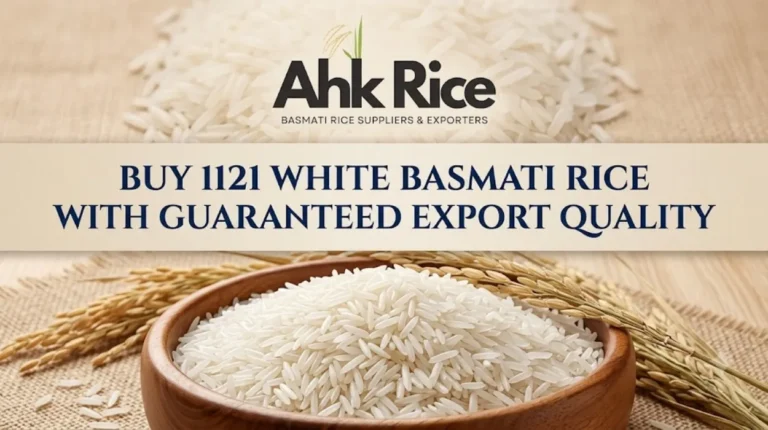
1121 Basmati is a long-grain Pakistani rice variety widely used for premium rice applications. Commercial formats include 1121 White, 1121 Steam, 1121 Golden Sella, 1121 Creamy Sella, and 1121 Brown.
1121 White provides a polished appearance and traditional Basmati cooking profile. 1121 Steam uses controlled steaming during processing. 1121 Golden Sella and Creamy Sella are parboiled formats with distinctive colour and cooking characteristics. Brown rice retains more of the grain layers than polished white rice.
What Is Super Kernel Basmati?
Super Kernel Basmati is a recognised Pakistani Basmati type with a long, slender grain and aromatic cooking profile. Commercial formats include Super Kernel White, Super Kernel Steam, Super Kernel Sella, and Super Kernel Parboiled.
Food businesses select Super Kernel according to the desired appearance, cooking method, serving format, and customer segment. Restaurants and caterers often evaluate cooked grain separation, consistency, and presentation alongside raw-grain specifications.
What Is 1509 Basmati?
1509 Basmati is another Pakistani long-grain variety used across commercial rice markets. Available processing formats include 1509 White, 1509 Golden Sella, and 1509 Steam.
The variety gives buyers another specification option within Pakistani Basmati. Selection depends on the required processing style, cooking performance, commercial positioning, and target market.
Why Does Pakistani Basmati Suit England Food Businesses?
Pakistani Basmati suits English food businesses because it combines aromatic flavour, long-grain presentation, multiple processing grades, and established export infrastructure. These characteristics support restaurants, caterers, wholesalers, manufacturers, and retailers serving different customer requirements.
Which Food Businesses Use Pakistani Basmati?
Wholesalers use Pakistani Basmati for bulk distribution across restaurants, retailers, and catering operators. Restaurants use long-grain Basmati for biryani, pilau, rice bowls, and other South Asian dishes.
Caterers require predictable cooking results across large batches. Retailers require consistent packaging, labelling, appearance, and consumer-facing specifications. Food manufacturers require controlled raw materials that fit defined production formulas.
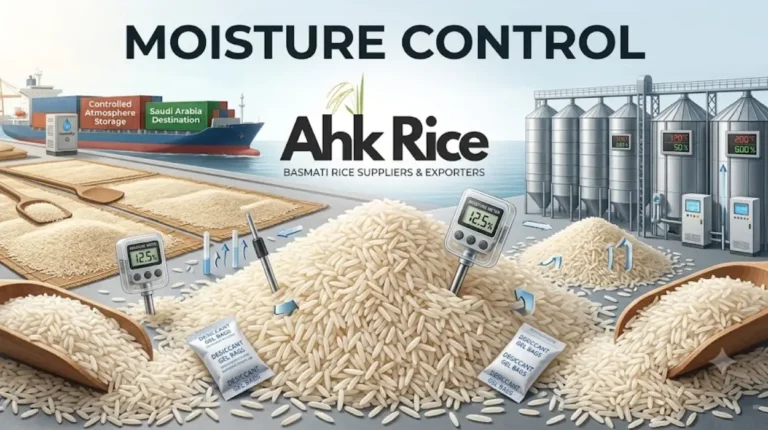
These applications explain why buyers evaluate more than price. Grain length, broken percentage, moisture, foreign matter, processing type, packaging, documentation, and laboratory results all influence commercial suitability.
Businesses comparing these factors can use the related guide how commercial buyers compare imported rice quality and value to understand the evaluation process in greater detail.
Which Markets Import Pakistani Basmati Rice?
Pakistani Basmati reaches food markets across the Middle East, Europe, Asia, and Africa, with England forming part of the established international demand base. AHK Rice supplies 1121, Super Kernel, and 1509 varieties to 15+ countries through export channels.
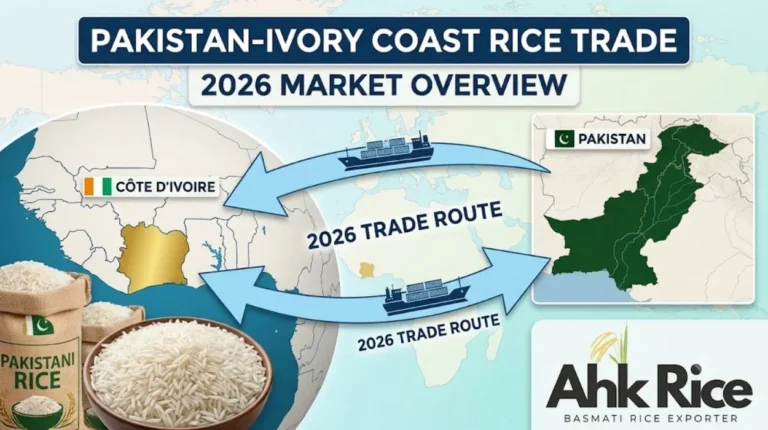
The United Kingdom has an established Pakistani rice trade. UK import rules specifically recognise Pakistan within rice import arrangements, including tariff quota procedures for semi-milled and wholly milled rice.
Pakistan’s export position also connects to the wider Basmati market. Buyers in the UK, UAE, GCC countries, Qatar, Saudi Arabia, Morocco, the Philippines, and North African markets evaluate different Basmati grades according to local demand.
Market selection changes the commercial specification. UK retail buyers focus strongly on labelling, food safety, packaging, and consistency. Foodservice buyers place greater emphasis on cooking performance, grain appearance, pack sizes, and repeat supply.
What Food Safety Requirements Apply to Pakistani Rice in England?
Pakistani rice entering England must meet applicable UK food safety, contaminant, pesticide, labelling, packaging, and import-control requirements. Current UK controls specifically identify Pakistani rice for pesticide residues, aflatoxins, and ochratoxin A, making testing and documentation important.
UK guidance states that imported cereals must meet the same or equivalent food hygiene standards applied to food produced in Great Britain. Rice is included within these cereal import requirements.
Which Certifications and Documents Matter?
Food safety certifications commonly used in international rice supply include HACCP, ISO 22000, and BRCGS, depending on the supplier, buyer, facility, and contractual requirement. These certifications support food-safety management but do not replace statutory UK import controls.
Export documentation can include commercial invoices, packing lists, certificates of origin, laboratory reports, and other documents required for the shipment. UK rice quota procedures can also require proof of origin and specific customs information.
Testing provides another layer of control. UK stakeholders have described testing for mycotoxins, agrochemical residues, and other contaminants across the Pakistan rice supply chain.
What Common Problems Do Buyers Have With Pakistani Basmati Rice?
Common problems include inconsistent specifications, unclear grade names, inadequate testing, poor documentation, unsuitable packaging, and confusion between varieties and processing methods. Buyers reduce these problems by defining measurable specifications before procurement and checking shipment documentation against the agreed product.
One common misconception is that every long-grain rice is Basmati. UK guidance distinguishes Basmati as an aromatic, fragrant, slender, non-glutinous rice category with recognised varieties.
Another problem involves treating “premium” as a measurable specification. A commercial buyer needs defined values for grain length, broken percentage, moisture, foreign matter, crop information, packaging, and processing type.
Import compliance also requires attention to current controls. The UK updated its restrictions for Pakistani rice in July 2026 to include aflatoxins and ochratoxin A alongside pesticide residues.
Price alone also creates misleading comparisons. Two rice shipments with different varieties, processing grades, packaging formats, testing requirements, and delivery terms do not represent equivalent products.
How Should England Food Businesses Evaluate Pakistani Basmati?
England food businesses should compare variety, processing grade, grain specification, food-safety results, packaging, documentation, and delivered commercial terms before selecting Pakistani Basmati rice. This approach separates product quality from simple price comparisons and supports repeatable procurement.
A practical evaluation begins with the variety. Buyers then define the processing format, such as White, Steam, Golden Sella, Creamy Sella, or Brown.
The next stage covers measurable quality requirements. These include grain length, broken percentage, moisture, foreign matter, damaged grains, and appearance. Laboratory testing should address the contaminants relevant to the shipment and current UK controls.
Packaging also requires a defined specification. Common commercial formats include retail bags, foodservice sacks, and bulk export packaging. The buyer should match pack weight and material to the distribution channel.
The final evaluation covers documentation and logistics. Origin, customs classification, testing reports, certificates, shipment terms, and delivery arrangements all affect the landed product.
Pakistani Basmati therefore gives England food businesses a broad specification range rather than one standard product. 1121, Super Kernel, and 1509 provide the variety base, while white, steam, sella, parboiled, and brown processing formats create different commercial options.
With the product, processing, grades, markets, and compliance requirements established, the next stage is comparing imported rice quality against total commercial value.
Frequently Asked Questions
Why do English food businesses use Pakistani Basmati rice?
English food businesses use Pakistani Basmati for its aromatic character, long slender grain, multiple processing grades, and established international supply. The available varieties support retail, restaurant, catering, wholesale, and manufacturing applications.
Which Pakistani Basmati varieties are available commercially?
The main varieties covered here are 1121, Super Kernel, and 1509. Each variety is available in different processing formats, including white, steam, sella, parboiled, or brown forms.
What is the difference between 1121 and Super Kernel Basmati?
1121 and Super Kernel are different Pakistani Basmati varieties. Buyers compare their grain characteristics, processing format, cooking performance, broken percentage, appearance, and commercial specification before selecting a grade.
Is Pakistani rice subject to UK food safety controls?
Yes. Current UK controls identify rice from Pakistan for controls relating to pesticide residues, aflatoxins, and ochratoxin A. Importers must follow applicable UK food safety and import procedures.
Which certifications apply to Pakistani Basmati rice suppliers?
Common food-safety certifications include HACCP, ISO 22000, and BRCGS, depending on buyer and supplier requirements. These certifications support food-safety management but do not replace statutory UK import requirements.
What should an England buyer check before importing Pakistani Basmati?
A buyer should check the variety, processing grade, grain specification, broken percentage, moisture, foreign matter, laboratory testing, packaging, origin documents, customs requirements, and shipment terms before procurement.