How Do Indonesian Buyers Evaluate Pakistan 1121 Brown Rice for Retail?
Indonesian retail buyers should evaluate Pakistan 1121 Brown Basmati through grain quality, bran retention, moisture, purity, packaging, shelf stability, landed cost, and regulatory compliance rather than price alone. Here is why: Indonesian private-sector rice imports reached 512,723 MT from January to August 2025, while 2025/26 imports are forecast at 750,000 MT. Specialty rice for retail and restaurants forms part of this import demand. (source: USDA FAS Jakarta, 2025)
Indonesian buyers first need to understand how Pakistani rice moves from cultivation to export. The wider process covers harvesting, drying, milling, grading, sorting, packaging, documentation, and shipment. Buyers reviewing the full chain can use this guide to Pakistan Basmati rice export and shipping processes to understand the upstream stages before comparing retail grades.
Pakistan 1121 Brown Basmati retains the bran layer after dehusking. This makes it different from polished white 1121. The retained bran creates a darker appearance and a different nutritional profile. Retail buyers therefore evaluate brown rice as a distinct consumer product rather than simply an unpolished version of white rice.
What are the available solutions for Indonesian retail buyers?
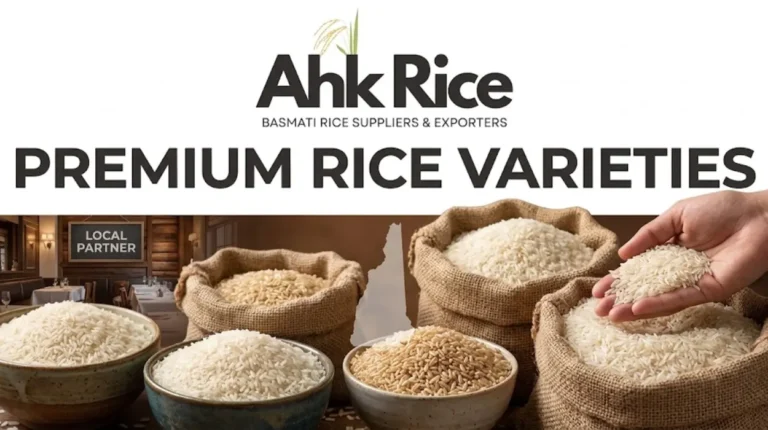
The main solutions are 1121 Brown, 1121 White, 1121 Steam, and 1121 Sella, with Brown best suited to health-focused retail and White or Sella suited to broader consumption. Each grade changes appearance, processing, cooking behaviour, storage requirements, and consumer positioning.
1121 Brown Basmati
1121 Brown retains the bran layer after the husk is removed. The grain therefore keeps a brown appearance and more of the outer grain structure. This format fits retailers building health-oriented, whole-grain, premium, or specialty rice ranges.
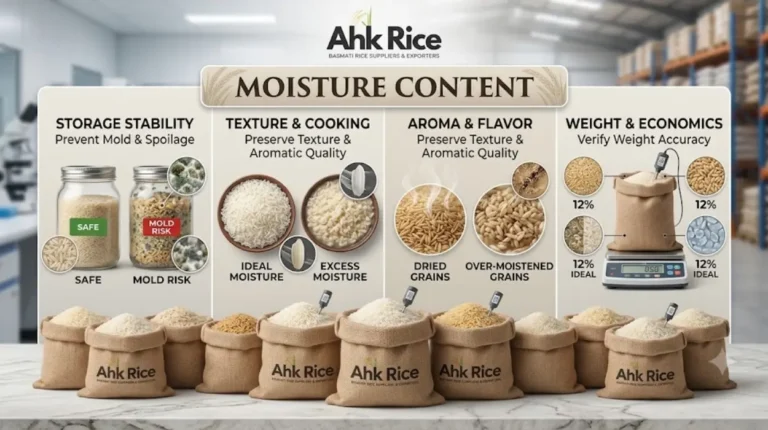
Brown rice also requires tighter storage management. The bran contains natural oils that can reduce storage stability compared with polished white rice. Indonesian retailers therefore need controlled moisture, suitable packaging, and realistic inventory turnover.
1121 White Basmati
1121 White removes the bran and surface layers through milling and polishing. The result is a bright, uniform grain with a familiar retail appearance. AHK Rice’s processing range includes white, brown, steam, and parboiled forms of 1121.
White rice remains easier to position for mainstream consumers. It also offers a familiar cooking format. Current indicative Pakistan FOB pricing for 1121 White is $1,165–$1,205 per MT. (source: Pakistan rice export price data, August 2026)
1121 Steam
Steam processing partially gelatinizes the surface starch. The treatment creates a firmer grain while retaining the characteristic long-grain appearance. Current indicative FOB pricing is $1,160–$1,200 per MT. (source: Pakistan rice export price data, August 2026)
Steam suits buyers seeking stronger cooking performance without the deeper colour associated with some Sella grades. It can therefore serve premium foodservice and retail applications where appearance and grain separation matter.
1121 Sella
Sella means parboiled rice. The paddy is soaked, steamed, dried, dehusked, milled, and sorted. Parboiling strengthens the grain and improves resistance to breakage during cooking.
Current indicative FOB pricing for 1121 Sella is $1,135–$1,175 per MT. Sella also has a documented shelf-life advantage, with some export specifications stating up to 24 months under suitable storage conditions. (source: Pakistan rice export pricing and product specification data, August 2026)
With the four processing options established, the next question is how Indonesian buyers should compare them for retail.
How do different 1121 approaches compare?
1121 Brown leads health-focused positioning, White leads mainstream visual appeal, Steam balances appearance and firmness, and Sella leads long-storage performance. The correct grade depends on consumer positioning, turnover speed, warehouse conditions, packaging format, and expected retail price.
1121 Retail Specification Comparison
| Attribute | 1121 Brown | 1121 White | 1121 Steam | 1121 Sella |
|---|---|---|---|---|
| Bran retention | Retained | Removed | Removed | Removed |
| Raw appearance | Brown | Bright white | Off-white | White to golden |
| Processing | Dehusked, unpolished | Milled and polished | Steam processed | Parboiled |
| Grain length | About 8.2–8.4 mm | About 8.2–8.4 mm | About 8.3 mm | About 8.3 mm |
| Cooking profile | Firm, whole-grain texture | Soft, aromatic | Firm, separate grains | Firm, separate grains |
| Retail position | Health and specialty | Mainstream premium | Premium | Premium and foodservice |
| Storage priority | High control | Moderate | Moderate | Strong stability |
The grain variety remains 1121 across all four formats. Processing creates the commercial differences. Buyers should therefore specify both the variety and the processing method in purchase contracts.
Brown rice requires stronger packaging controls than polished rice. Oxygen, heat, humidity, and extended storage can affect bran-containing products. A retailer should therefore consider smaller consumer packs where inventory turnover is faster.
What price should Indonesian buyers compare?
Price comparison should start with FOB Karachi and then move to landed cost. Current indicative 1121 White pricing is $1,165–$1,205/MT, while 1121 Sella is $1,135–$1,175/MT. These figures provide a benchmark for evaluating supplier quotations. (source: Pakistan rice export price data, August 2026)
Brown 1121 should be priced separately because retaining the bran creates a different processing and quality specification. A buyer should request a brown-rice quotation with moisture, broken percentage, grain length, packing, inspection, and Incoterm clearly stated.
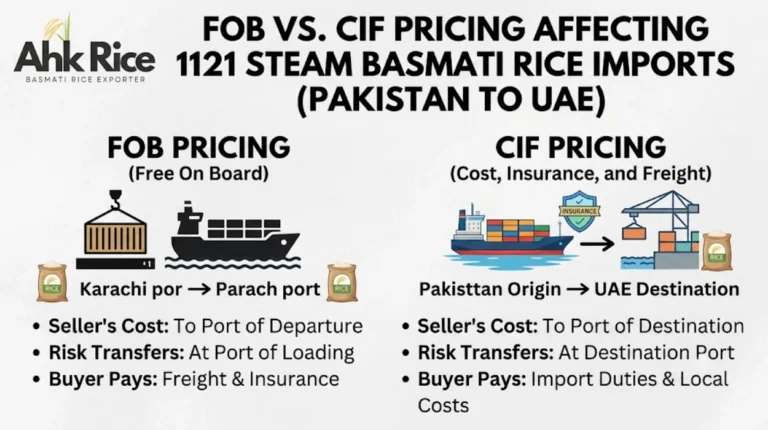
A lower FOB number does not automatically produce a lower retail cost. Freight, insurance, customs, port handling, testing, packaging, inland distribution, and financing all influence landed cost.
Which method works best for Indonesian retail cases?
Brown 1121 works best for health-oriented specialty shelves, White for mainstream premium shelves, Steam for premium cooking performance, and Sella for longer storage or foodservice-led distribution. Retail strategy should determine the processing grade before procurement.
Indonesia and Southeast Asia
Indonesian retail buyers operate within a market where specialty rice imports serve retail, restaurants, and food processing. USDA forecasts Indonesian 2025/26 rice imports at 750,000 MT, up from 700,000 MT in 2024/25. (source: USDA FAS Jakarta, 2025)
Brown 1121 fits premium health-food stores and retailers targeting whole-grain consumers. The brown colour communicates product differentiation immediately. Small consumer packs can also support higher-value positioning.
White 1121 fits supermarkets serving broad consumer demand. Its polished appearance is familiar and easy to communicate. Steam 1121 suits premium consumers who value grain separation and aromatic cooking.
Sella suits foodservice and retailers prioritising cooking resilience. Its parboiled structure provides stronger resistance to breakage and a documented longer shelf-life profile.
Gulf and Middle Eastern markets
GCC buyers generally place greater emphasis on long-grain appearance, aroma, cooking elongation, grain separation, and storage performance. Pakistani Basmati remains established across Saudi Arabia, UAE, Qatar, Kuwait, Oman, and Bahrain. (source: REAP export data, December 2025)
Sella and Steam commonly fit these requirements because they deliver firm grains and strong cooking performance. Brown 1121 can serve specialty health retail, but it does not replace the mainstream role of polished Basmati.
The regional comparison shows why Indonesian buyers should not copy GCC specifications without adapting them to local retail positioning.
What are the pros and cons of each solution?
Brown 1121 offers strong differentiation but demands tighter inventory control; White offers broad appeal; Steam balances quality and performance; Sella delivers strong cooking stability and longer storage potential. Each advantage creates a corresponding procurement consideration.
Brown 1121
Pros: Whole-grain positioning, visible differentiation, premium health-market appeal, retained bran, and distinctive consumer identity.
Cons: Shorter storage stability than polished rice, greater sensitivity to heat and oxygen, and narrower mainstream consumer positioning.
For example, a Jakarta specialty retailer can use 1 kg Brown 1121 packs as a premium whole-grain product rather than competing directly with standard white rice.
White 1121
Pros: Bright appearance, familiar consumer format, strong aroma, broad applications, and established export pricing.
Cons: Less differentiation for health-focused shelves and lower bran retention.
White 1121 works well for supermarkets seeking a recognizable premium Basmati product with broad consumer appeal.
Steam 1121
Pros: Firm texture, strong grain separation, premium presentation, and reliable cooking performance.
Cons: Higher processing complexity and a less distinct health positioning than Brown.
Steam becomes attractive when the retailer prioritizes cooking results over whole-grain positioning.
Sella 1121
Pros: Firm grain structure, low cooking breakage, strong storage performance, and longer documented shelf life.
Cons: Parboiled colour and texture may not match every consumer preference.
Sella works particularly well for distributors supplying restaurants, caterers, and retailers with longer inventory cycles.
What decision factors should Indonesian buyers use?
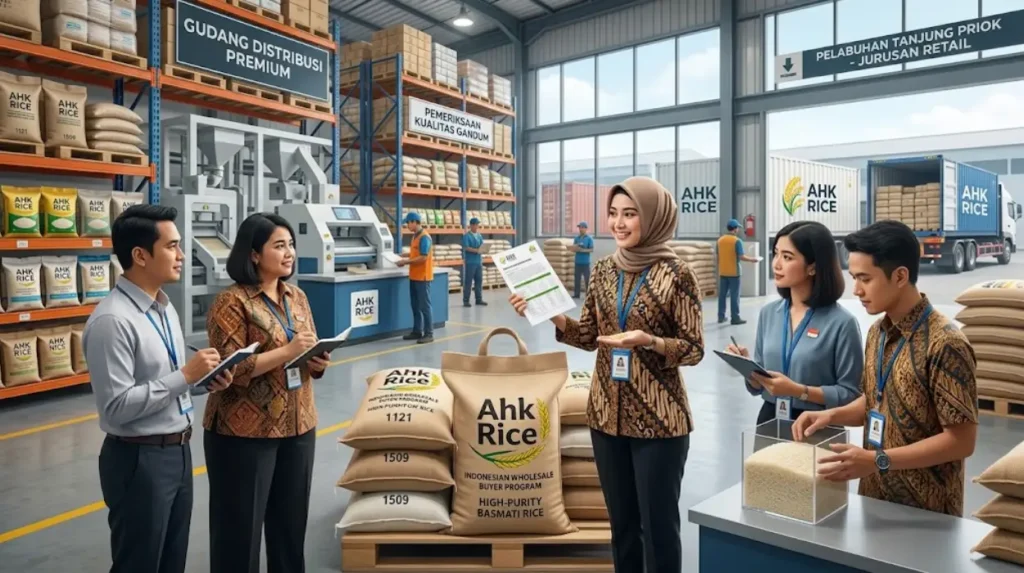
Five factors should determine the purchase: consumer positioning, specification, shelf life, landed cost, and compliance. A buyer can score each supplier against these factors before approving a commercial shipment.
| Decision factor | What to evaluate | Best-fit grade |
|---|---|---|
| Consumer positioning | Health, mainstream, premium, foodservice | Brown for health retail |
| Grain specification | Length, broken percentage, purity | 1121 with contract limits |
| Shelf stability | Storage period and warehouse conditions | Sella for longer storage |
| Landed cost | FOB, freight, duties, testing, distribution | Compare total cost |
| Compliance | Labels, food-grade packaging, certificates | Destination-specific |
Indonesian packaging also requires attention. USDA’s Indonesia import report states that imported rice must be packaged and labelled in Bahasa Indonesia before arrival, while food-contact packaging must meet Indonesian requirements. Plastic packaging must also include required food-grade and recycling information. (source: USDA FAS Indonesia FAIRS report)
Compliance should therefore enter the buying decision before the purchase order. The importer should verify the applicable commodity-balance rules, licensing requirements, food safety documents, packaging specifications, and Bahasa Indonesia labelling.
How should Indonesian buyers evaluate a supplier before ordering?
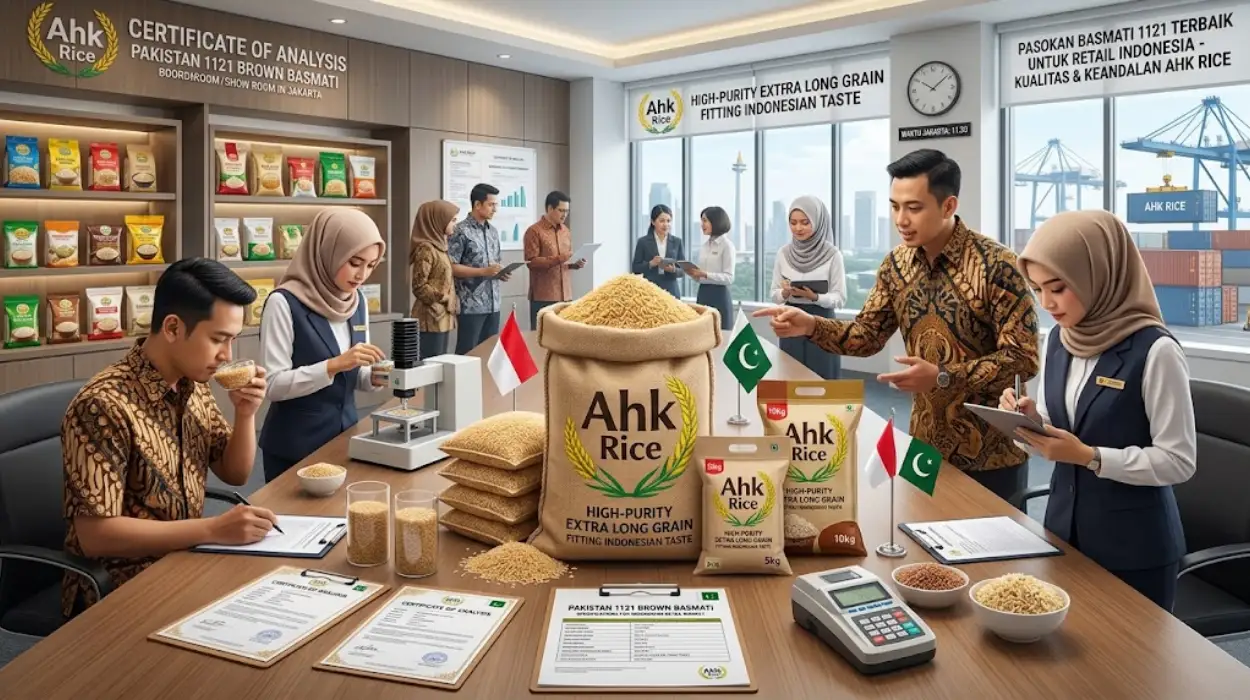
Buyers should approve the supplier only after matching a physical sample against written specifications, testing critical parameters, reviewing documents, and confirming packaging and shipment terms. Sample approval prevents price comparisons from hiding quality differences.
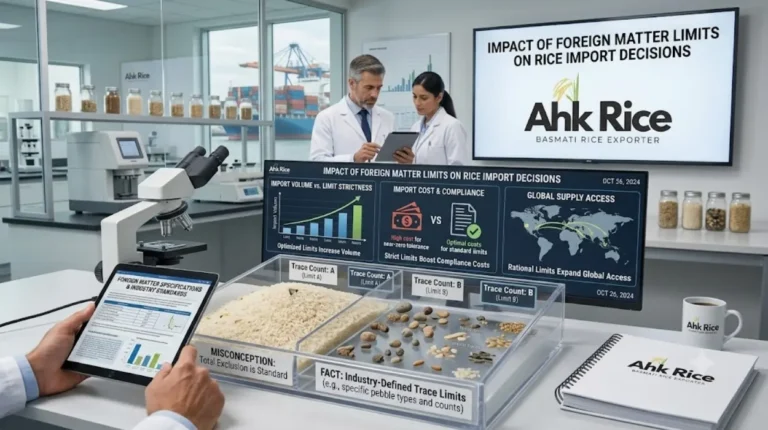
The sample should confirm grain appearance, aroma, bran condition, moisture, broken grains, foreign matter, and cooking performance. The buyer should test the sample using the same cooking method used for the intended retail market.
The specification should then become contractual. A useful purchase specification should identify 1121 variety, brown processing, grain length, moisture, broken percentage, foreign matter, packing weight, packaging material, inspection method, and acceptable tolerances.
AHK Rice operates from Punjab and supplies 1121, Super Kernel, and 1509 varieties with end-to-end processing, custom packaging, and export handling. AHK Rice export and processing services
Supplier evaluation should also include documentation capability. Common export documents include commercial invoices, packing lists, certificates of origin, phytosanitary documentation where required, fumigation records, and bills of lading. Indonesian requirements should be checked against the current import licence and commodity-balance framework.
What shelf-life strategy should Indonesian retailers use?
Brown 1121 should follow faster inventory rotation, while Sella provides the strongest documented storage advantage among the compared formats. Retailers should set stock levels according to processing type, packaging barrier, warehouse temperature, humidity, and expected sales velocity.
Brown rice needs more disciplined inventory management because the retained bran contains oils that can affect storage stability. Smaller packs and faster turnover reduce exposure to prolonged warehouse storage.
White rice generally offers stronger ambient storage stability because milling removes the bran. Sella provides an additional advantage through parboiling. One current Pakistani specification states up to 24 months for 1121 Sella under suitable storage conditions.
Shelf life should still be confirmed through the supplier’s product specification and packaging study. The printed expiry period should match the approved retail label and applicable Indonesian requirements.
What is the best purchasing strategy for Indonesian health retailers?
The strongest strategy is to source 1121 Brown as a controlled specialty product, use measurable specifications, select protective retail packaging, and manage inventory for faster turnover. This approach protects the health-oriented positioning without treating Brown as a direct substitute for White or Sella.
The commercial decision starts with consumer demand. A health retailer needs a product that looks visibly different and communicates whole-grain value. Brown 1121 provides that distinction.
The technical decision follows. The importer should define grain length, moisture, broken percentage, purity, foreign matter, packaging, and shelf-life requirements before requesting prices.
The financial decision comes next. Compare FOB price first, then calculate the full Indonesian landed cost. Use the same shipment volume, packaging, Incoterm, freight assumption, and quality specification for every supplier.
The compliance decision closes the evaluation. Confirm Indonesian licensing, Bahasa Indonesia labelling, food-contact packaging, certificates, and testing requirements before dispatch.
The result is a procurement model based on product-market fit rather than the lowest quoted price. Brown 1121 is strongest where the retailer can communicate its whole-grain identity and maintain disciplined stock rotation.
Frequently Asked Questions
Is Pakistan 1121 Brown Basmati suitable for Indonesian retail?
Yes. 1121 Brown suits premium and health-oriented retail channels where whole-grain positioning, distinctive appearance, and aromatic Basmati identity create product differentiation.
What is the grain length of 1121 Brown Basmati?
Export specifications commonly position 1121 around 8.2–8.4 mm raw grain length. The final contractual specification should define the accepted range and testing method.
Is Brown 1121 more expensive than White 1121?
The comparison requires a current supplier quotation because Brown has a different processing specification. For reference, 1121 White currently carries an indicative FOB range of $1,165–$1,205/MT.
How long does 1121 Brown Rice last?
Brown rice generally requires faster inventory rotation than polished rice because its retained bran contains natural oils. The exact printed shelf life should come from the supplier’s validated product and packaging specification.
What is the shelf life of 1121 Sella?
A current Pakistani export specification lists up to 24 months for 1121 Sella under suitable storage conditions.
What packaging should Indonesian retailers consider?
Retailers should select food-grade packaging that protects the grain from moisture, oxygen, contamination, and handling damage. Indonesian labelling and packaging requirements must also be satisfied before arrival.
Should Indonesian buyers choose Brown, White, Steam, or Sella?
Brown is strongest for health-focused retail. White suits mainstream premium retail. Steam suits premium cooking performance. Sella suits longer storage and foodservice applications.
What should buyers test before approving 1121 Brown?
Buyers should inspect grain length, moisture, broken percentage, bran condition, foreign matter, purity, aroma, cooking performance, packaging integrity, and documentation.
Recommended BOFU placement: Insert the BOFU article after the “How should Indonesian buyers evaluate a supplier before ordering?” section and before the FAQs, using a natural decision-focused anchor such as “Pakistan 1121 Brown Basmati supply for Indonesian health retailers”. This placement follows the evaluation sequence and moves readers from product comparison into supplier-level purchasing decisions without interrupting the informational flow.