1121 Basmati Rice FOB Price for Global Importers
The practical FOB range for 1121 Basmati is about US$1,135–US$1,205 per MT, depending on processing type, grade, packing, quantity, and shipment terms. Here is why: current Pakistan export listings place 1121 Sella near US$1,135–US$1,175, Steam near US$1,160–US$1,200, and White near US$1,165–US$1,205 per MT.
Global importers should compare FOB prices against exact specifications rather than choosing the lowest quotation. A buyer also needs to verify broken percentage, grain length, moisture, processing method, packaging, inspection, loading port, and shipment schedule.
For buyers still evaluating cooking performance, the 1121 Basmati cooking guide explains how grain behavior changes during preparation. The comparison between 1121 and Super Kernel also helps buyers connect aroma, grain length, application, and price before requesting a commercial quotation.
What is the best solution for buying 1121 Basmati Rice at FOB price?
A specification-led FOB purchase gives importers clearer costs, verified quality, and predictable shipment execution. The buyer should fix variety, processing type, broken percentage, packing, quantity, inspection requirements, and destination before accepting the quoted FOB rate.
1121 Basmati Rice is a premium long-grain Pakistani Basmati variety. Commercial specifications commonly identify raw grain around 8.3 mm and cooked grain above 22 mm. The variety is available in White, Steam, Sella, and Golden Sella forms.
FOB pricing means the exporter arranges the goods and export delivery to the agreed loading point. The importer then manages the ocean freight, insurance where applicable, and destination-side charges under the agreed contract.
For example, a distributor ordering 50 kg PP bags may receive a different quotation from a retailer ordering custom 5 kg packs. Packaging, quantity, inspection, and processing requirements change the commercial calculation.
AHK Rice approaches this requirement through specification-based sourcing. The exporter can coordinate processing, grading, packaging, inspection, documentation, and shipment preparation around the buyer’s agreed specification.
Why choose AHK Rice for 1121 Basmati Rice supply?
AHK Rice combines Pakistani Basmati sourcing with processing, grading, custom packaging, quality verification, and export coordination, giving importers one commercial workflow from specification approval through shipment dispatch.
AHK Rice is a Pakistani Basmati rice exporter based in Punjab. Its core export range includes 1121, Super Kernel, and 1509 varieties.
The first product decision should be processing type. White Basmati suits buyers seeking a natural white appearance. Steam provides a firmer grain structure while retaining a near-white appearance. Sella uses parboiling to create firmer, well-separated grains.
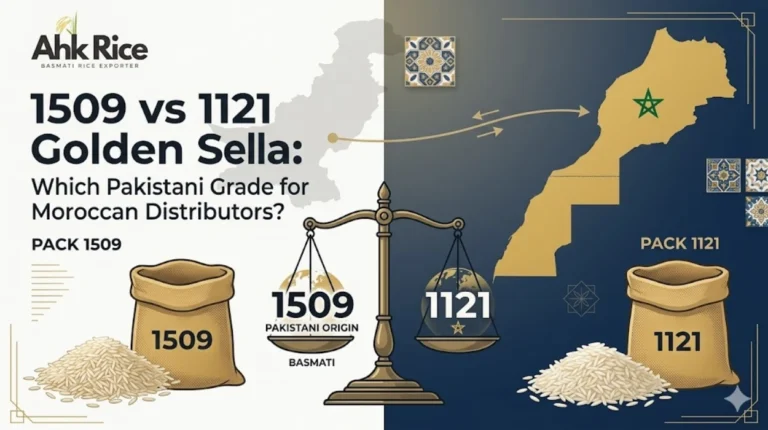
The current 1121 Basmati versus Super Kernel comparison is useful for buyers deciding between premium grain length and aroma characteristics before final procurement.
AHK Rice can align the selected grade with the buyer’s required broken percentage, moisture specification, packaging format, and commercial volume. This reduces the risk of receiving a technically different product after agreeing only on the variety name.
A specification should therefore state measurable requirements. A typical commercial specification can include grain length, broken percentage, moisture, foreign matter, damaged kernels, crop year, processing type, packing, and inspection requirements.
What results can global importers expect from AHK Rice?
Importers can expect a defined product specification, controlled processing, pre-shipment quality checks, export documentation, suitable packaging, and coordinated dispatch instead of an FOB price without technical support.
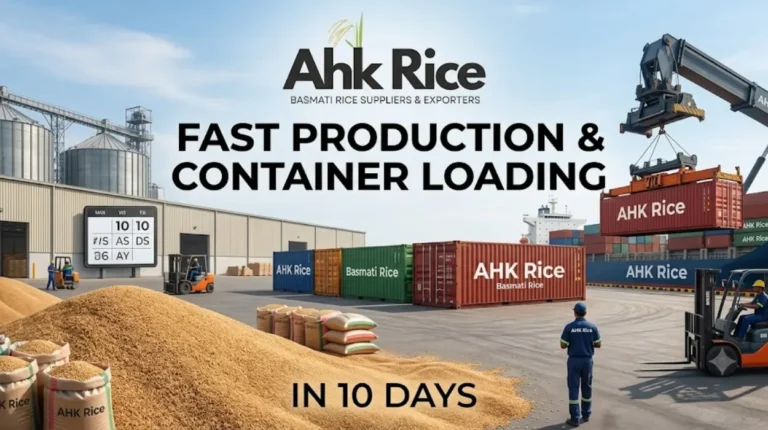
AHK Rice focuses on end-to-end export coordination. The process starts with the buyer’s requirement and moves through sample approval, production, inspection, packing, documentation, loading, and shipment.
Quality control should verify the agreed specification before loading. Typical checks include grain appearance, length, broken percentage, moisture, foreign matter, damaged kernels, and processing consistency.
AHK Rice also supports custom packaging. Bulk distributors can use larger PP woven bags, while retail programs can require smaller consumer packs or private-label formats.
How does the sample approval process work?
A commercial sample process should confirm product identity before production: specification review, sample preparation, courier dispatch, buyer testing, feedback, final approval, production, inspection, and shipment follow the agreed sequence.
- Share the specification — Provide variety, processing type, broken percentage, packing, quantity, and destination.
- Prepare the sample — AHK Rice prepares a representative sample against the requested specification.
- Dispatch the sample — Courier delivery normally takes several working days depending on destination.
- Test the sample — The importer checks cooking behavior, appearance, aroma, grain separation, and laboratory parameters.
- Approve the specification — The buyer confirms the approved sample and commercial specification.
- Produce the order — AHK Rice mills, grades, sorts, processes, and packs the approved product.
- Inspect the shipment — The buyer can request agreed third-party or pre-shipment inspection.
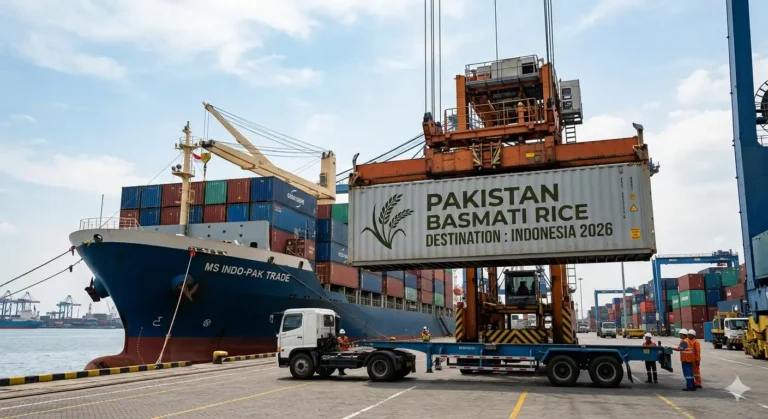
- Load the container — AHK Rice prepares export documents and loads the approved cargo for dispatch.
Sample costs depend on courier destination, sample weight, packaging, and testing requirements. A practical budgeting allowance is US$50–US$150 for international sample courier and handling, excluding specialized laboratory testing. The final amount should be confirmed before dispatch.
What factors affect the 1121 Basmati Rice FOB price?
Processing type, crop quality, broken percentage, packaging, order volume, inspection, market demand, and loading schedule are the main commercial factors behind an importer’s final FOB quotation.
| Price factor | Commercial effect |
|---|---|
| Processing type | Steam and Sella involve additional processing |
| Broken percentage | Lower broken specifications require tighter sorting |
| Packaging | Custom retail packaging costs more than standard bulk bags |
| Quantity | Larger confirmed volumes can support different mill pricing |
| Inspection | Third-party inspection adds a service cost |
| Crop quality | Grain quality and availability influence quotation |
| Loading schedule | Urgent production can affect commercial terms |
Current third-party market listings show meaningful differences between processing types. One current Pakistan export listing reports 1121 Sella at US$1,135–US$1,175/MT, Steam at US$1,160–US$1,200/MT, and White at US$1,165–US$1,205/MT FOB Karachi. These figures are indicative rather than guaranteed transaction prices.
Pakistan’s broader Basmati export average was US$1,027.11 per MT in FY2024-25, based on total Basmati export value divided by exported quantity. This figure covers Pakistan’s overall Basmati exports and should not be treated as a current 1121-specific quotation.
The commercial lesson is simple. Compare quotations against identical specifications rather than comparing headline FOB numbers alone.
How long does 1121 Basmati Rice take to reach global markets?
Typical ocean transit varies by destination, while production and port scheduling add additional time. Importers should allow approximately 12–20 days to Gulf destinations, 25–40 days to Europe, and 30–45 days for many East African destinations.
| Market | Indicative ocean transit | Procurement consideration |
|---|---|---|
| UAE | 12–20 days | Frequent replenishment supports planned container cycles |
| Saudi Arabia | 14–25 days | Allow time for port and customs procedures |
| Qatar/GCC | 14–25 days | Coordinate documentation before vessel arrival |
| UK/Europe | 25–40 days | Plan inventory around longer ocean transit |
| East Africa | 30–45 days | Maintain additional inventory for longer routes |
Transit time is not the same as total order lead time. Production, inspection, stuffing, vessel availability, transshipment, customs clearance, and destination delivery can extend the complete procurement cycle.
AHK Rice should therefore receive the required shipment window before the commercial quotation is finalized. This allows production and dispatch planning to match the importer’s inventory requirements.
How should importers compare FOB quotations before ordering?
Compare every quotation against the same specification, quantity, packing, inspection requirement, and loading schedule. A slightly higher FOB price can represent better grain quality, tighter sorting, stronger packaging, or a more suitable processing specification.
| Decision point | Buyer question |
|---|---|
| Product | Is the variety exactly 1121? |
| Processing | Is it White, Steam, Sella, or Golden Sella? |
| Quality | Are broken and moisture limits documented? |
| Packing | Does the bag specification match the sales channel? |
| Logistics | Does the loading schedule meet inventory requirements? |
For example, a restaurant distributor may prioritize Steam or Sella because grain separation supports large-volume cooking. A premium retail importer may prioritize White 1121 and custom consumer packaging.
The correct purchase decision therefore begins with the use case. The FOB number becomes meaningful only after the technical specification is fixed.
How can global importers get started with AHK Rice?
Start with the required grade, processing type, specification, quantity, packing format, destination port, and target shipment date. AHK Rice can then structure the quotation around the actual procurement requirement rather than a generic rice price.
- Define the grade — Select 1121 White, Steam, Sella, or Golden Sella.
- Define the quality — State grain length, broken percentage, moisture, and other limits.
- Define the packing — Specify PP bags, retail packs, private label, or custom packaging.
- Define the quantity — State metric tons and expected shipment frequency.
- Define the destination — Provide the destination port and required shipping window.
- Approve the sample — Confirm cooking performance and physical quality.
- Confirm the quotation — Review FOB price, specifications, payment terms, and validity.
- Dispatch the order — AHK Rice coordinates processing, inspection, documentation, loading, and shipment.
AHK Rice’s export workflow gives importers a direct route from product specification to commercial execution. The same process also supports repeat purchasing because the approved specification can become the reference for future shipments.
For a global importer, the strongest FOB purchasing process is therefore specification-led. Confirm the 1121 grade, processing method, quality limits, packing, quantity, inspection, and shipping schedule before comparing prices.
AHK Rice can then build the commercial quotation around the exact requirement. This approach makes the FOB price easier to evaluate and reduces specification disputes after order confirmation.
Contact AHK Rice today and submit your requirements through thequotation request form to receive a tailored export proposal.
Frequently Asked Questions
What is the current FOB price of 1121 Basmati Rice?
The indicative FOB range is around US$1,135–US$1,205 per MT.
Sella generally falls toward the lower part of this range.
Steam and White can reach higher levels based on specifications.
Quantity, packing, crop quality, and processing affect the final price.
Importers should request a quotation against their exact requirements.
Which 1121 Basmati processing type should importers choose?
White 1121 suits buyers seeking a natural white grain appearance.
Steam 1121 provides firm grains and good cooking separation.
Sella 1121 offers parboiled grains with strong cooking stability.
Golden Sella provides a distinctive golden appearance after processing.
The suitable grade depends on the buyer’s market and application.
What is included in an FOB rice price?
An FOB price covers the rice and agreed export-side delivery to the loading point.
The buyer normally arranges ocean freight after the FOB handover point.
Destination charges and local customs costs remain separate.
Insurance depends on the agreed commercial contract.
The sales contract should clearly define included and excluded costs.
How much 1121 Basmati Rice should an importer order?
Order quantity should match expected sales, warehouse capacity, and distribution requirements.
Container capacity also depends on the selected packaging format.
Larger recurring orders can support structured procurement planning.
Buyers should calculate monthly demand before confirming shipment volumes.
AHK Rice can structure supply around the required quantity and schedule.
How does AHK Rice support international Basmati rice buyers?
AHK Rice supports sourcing, processing, grading, sorting, packaging, and export coordination.
The process starts with the buyer’s required product specification.
Importers can evaluate samples before confirming commercial production.
The approved specification then guides processing and shipment preparation.
This creates a clearer workflow for repeat international procurement.