1509 Basmati Rice Cooking Time and Texture Guide
1509 Basmati rice typically cooks in 10–20 minutes, depending on whether it is raw, steam, or Sella processed. Raw 1509 often cooks faster, while parboiled grades need longer hydration. Here is why: processing changes starch structure, water absorption, grain firmness, and final texture. Commercial specifications report cooking times from 10–12 minutes for some raw 1509 grades and 15–20 minutes for Sella grades. The correct water ratio and soaking time also affect the final result.
1509 Basmati rice is a long-grain aromatic rice variety cultivated in the Punjab rice-growing region. Pakistani 1509 is used for household cooking, pulao, biryani, catering, foodservice, retail, and export distribution. The variety provides long grains, quick cooking performance, soft texture, and good grain separation.
What is 1509 Basmati rice?
1509 Basmati rice is a long-grain aromatic variety known for quick cooking, good elongation, soft texture, and separate cooked grains. The variety is cultivated in Punjab and processed into raw, steam, Sella, and Golden Sella forms. Each processing grade produces a different cooking response.
1509 Basmati belongs to the Basmati rice category. Basmati describes aromatic long-grain rice with distinctive cooking and eating characteristics. The 1509 variety is associated with a relatively short crop cycle and strong yield efficiency compared with traditional longer-duration Basmati varieties.
Raw 1509 normally retains a white or creamy appearance after milling. Steam 1509 receives controlled steam treatment before drying and milling. Sella 1509 is parboiled before milling. Golden Sella receives parboiling that produces its characteristic golden appearance.
What does 1509 mean in rice?
The term 1509 identifies the rice variety, not the cooking method. Processing terms such as Steam, Sella, and Golden Sella identify how that variety is processed.
A 1509 raw grain and a 1509 Golden Sella grain come from the same variety category. Their processing histories differ. That difference affects cooking time, firmness, hydration, color, and grain stability.
The distinction becomes important when selecting rice for different dishes. Household cooks often prefer quick hydration. Caterers often need grain stability during extended service.
With the variety defined, the next question is how its processing changes cooking performance.
How does 1509 Basmati rice cooking work?
1509 cooking works through hydration, starch gelatinisation, heat transfer, and grain expansion. Water enters the grain during heating, starch absorbs moisture, and the grain softens while retaining its elongated structure.
Cooking begins when water penetrates the rice grain. Heat increases the rate of hydration. The starch granules absorb water and gelatinise as temperature rises.
Soaking changes this process before cooking starts. A soaked grain already contains absorbed water. Cooking then requires less time to hydrate the centre of the grain.
How should you cook raw 1509 Basmati rice?
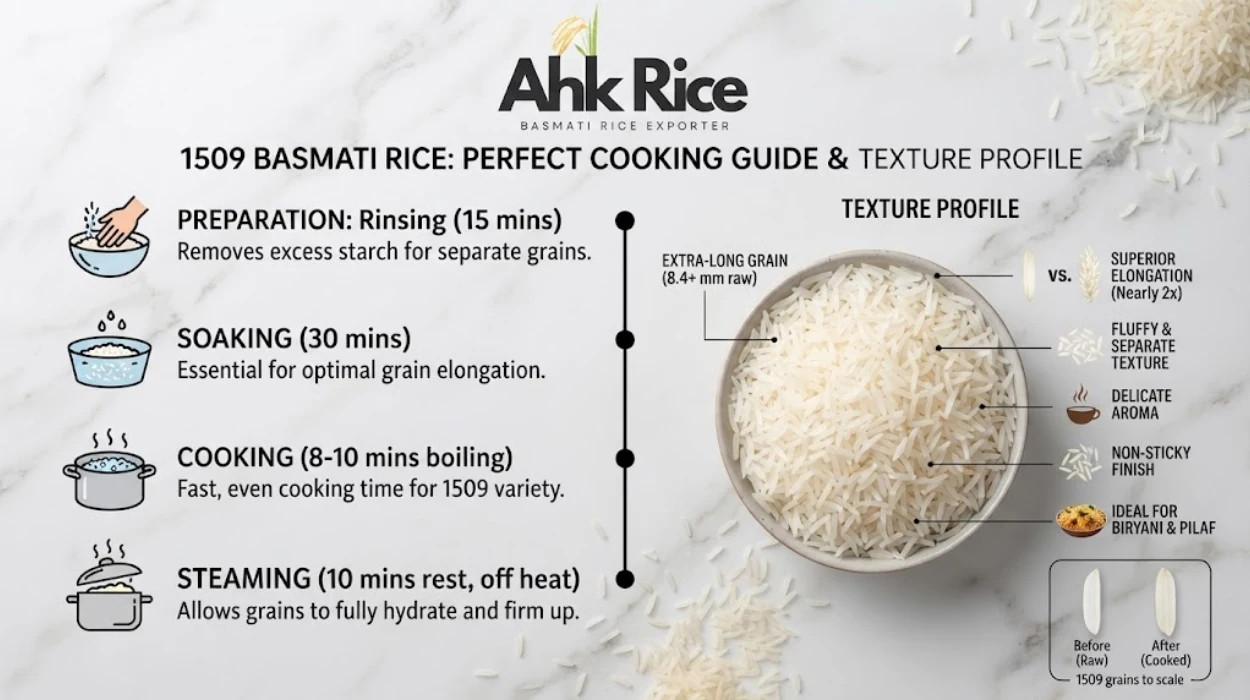
Use approximately 1.5–2 cups of water for 1 cup of raw 1509, with about 10–15 minutes of cooking after soaking. Adjust the water according to the cooking method, soaking period, and desired texture.
- Rinse the rice 2–3 times to remove loose surface starch.
- Soak the rice for 20–30 minutes for more uniform hydration.
- Drain the rice before transferring it to the cooking pot.
- Add the water using approximately 1.5–2 cups per cup of rice.
- Boil the mixture until the grains become tender.
- Reduce the heat and allow the remaining moisture to absorb.
- Rest the rice for 5 minutes before fluffing.
- Fluff the grains gently with a fork.
Commercial guides report raw 1509 cooking times around 10–12 minutes, while other 1509 specifications report 15–20 minutes. The difference comes from grade, soaking, equipment, and cooking method.
How should you cook 1509 Sella and Golden Sella?
Cook 1509 Sella and Golden Sella for about 15–20 minutes after adequate hydration, using enough water to soften the parboiled grain without excessive starch release. Parboiling produces a firmer grain structure than raw rice.
- Rinse the Sella rice gently before cooking.
- Soak the rice for 20–30 minutes.
- Drain the grains before adding them to boiling water.
- Add the rice to approximately 1.5–2 cups of water per cup.
- Cook the grains for approximately 15–20 minutes.
- Check the centre for firmness before stopping the heat.
- Rest the rice for 5–10 minutes.
- Separate the grains with a fork.
Golden Sella is commonly used where cooked grain firmness and visual separation matter. Supplier specifications commonly place 1509 Sella cooking around 15–20 minutes.
With cooking mechanics established, the next factor is the processing grade that determines the starting texture.
Which 1509 Basmati grades affect cooking time and texture?
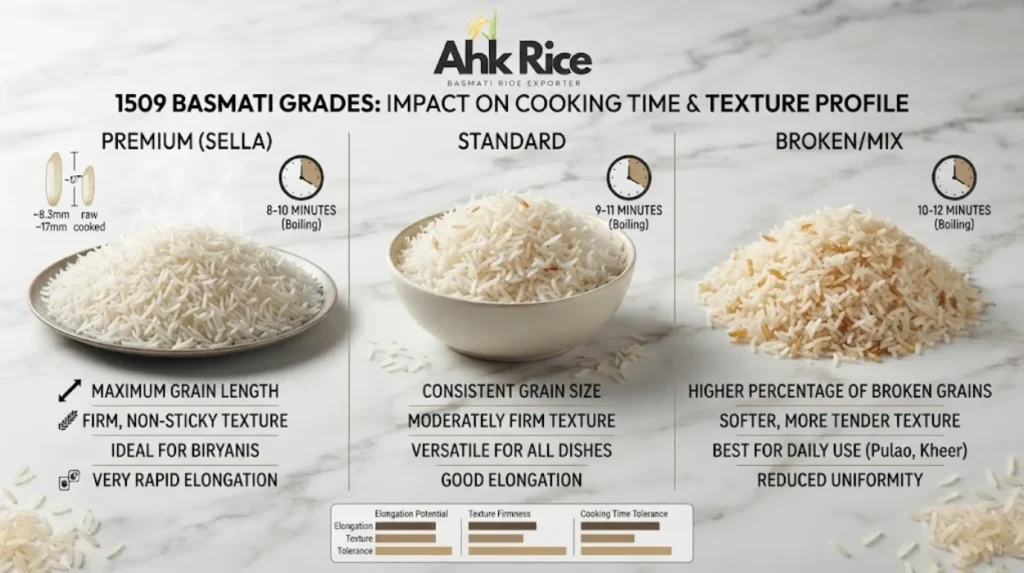
The main 1509 processing grades are Raw, Steam, Sella, and Golden Sella, with each grade producing different hydration and texture characteristics. Raw cooks fastest, while parboiled grades provide greater structural firmness.
Raw 1509 Basmati
Raw 1509 is milled without parboiling. The grain normally has a white or creamy appearance. Its cooking time is commonly around 10–15 minutes after suitable hydration.
Raw 1509 produces soft, fluffy, and separate grains when the water ratio is controlled. It suits everyday rice dishes, pulao, and household cooking.
Steam 1509 Basmati
Steam 1509 receives controlled steam treatment before drying and milling. The process modifies the grain structure and supports improved cooking stability.
Steam 1509 commonly produces separate grains with a firm but tender texture. Cooking time depends on the specific steam process and moisture level.
1509 Sella Basmati
Sella means parboiled rice. The grain is treated with heat and water before milling. This process strengthens the internal structure of the grain.
1509 Sella produces firm, separate grains and handles high-volume cooking well. Commercial specifications commonly place cooking time around 15–20 minutes.
1509 Golden Sella Basmati
Golden Sella is a parboiled 1509 grade with a golden or yellow appearance. Parboiling gives the grain greater structural stability during cooking.
Golden Sella suits biryani, pulao, catering, and foodservice applications where grain separation is important. Cooking normally requires more time than raw 1509.
With the grades separated, the key components behind final texture become easier to understand.
What factors determine 1509 Basmati rice texture?
Grain length, moisture, processing method, soaking, water ratio, heat, and cooking time determine 1509 texture. Controlling these factors produces softer, fluffier, firmer, or more separate grains.
Grain structure
Long, slender grains create the visual appearance associated with Basmati rice. 1509 specifications commonly report raw grain lengths around 7.8–8.4 mm, depending on the product specification.
Moisture content
Moisture affects storage and cooking behavior. Export specifications commonly target controlled moisture levels around 12–13%.
Processing method
Parboiling changes starch structure and increases grain firmness. Raw, Steam, Sella, and Golden Sella therefore require different cooking approaches.
Water absorption
Water controls softness and grain separation. Excess water produces a softer and heavier texture. Insufficient water leaves the grain firm at the centre.
Resting time
Resting allows residual moisture to distribute through the cooked grains. A 5–10 minute resting period helps separate the grains before serving.
These components explain the texture difference between grades, while the next section shows where each texture performs best.
Where is 1509 Basmati rice used?
1509 Basmati rice suits biryani, pulao, pilaf, household meals, restaurants, catering, institutional kitchens, retail packs, and bulk distribution. Its cooking speed and grain separation support both small and large-scale food preparation.
Biryani uses long, separate grains that retain structure after cooking. Sella and Golden Sella grades provide greater firmness for layered and extended cooking methods.
Pulao benefits from soft, separate grains with controlled water absorption. Raw and Steam 1509 work well for this application.
Catering requires consistency across large batches. Parboiled 1509 grades provide structural stability during cooking and serving.
Retail applications use different grades according to consumer expectations. Raw 1509 suits everyday cooking, while Golden Sella suits buyers seeking firmer grains and a golden appearance.
International foodservice buyers also evaluate moisture, broken grains, grain length, aroma, packaging, and cooking performance. These specifications determine how a shipment performs after arrival.
Which markets use 1509 Basmati rice?
1509 Basmati is used across South Asian, Middle Eastern, African, and other international rice markets where long-grain aromatic rice fits retail and foodservice demand. Market requirements differ by grade, packaging, cooking style, and food-safety controls.
Gulf foodservice uses long-grain rice for dishes such as biryani, pulao, and mixed rice meals. African distribution markets often evaluate grain appearance, price efficiency, cooking yield, and bulk-pack availability.
European markets apply strict food-safety requirements to imported rice. Great Britain currently lists rice from Pakistan under controls for pesticide residues, aflatoxins, and ochratoxin A. Official controls include documentary checks and physical or laboratory examination under applicable rules.
Export specifications therefore extend beyond cooking performance. Importers need product specifications, laboratory testing, traceability documents, phytosanitary documentation where required, and other destination-specific certificates.
With market requirements established, the final issue is avoiding common cooking and specification mistakes.
What are the common 1509 Basmati cooking problems?
The most common problems are excessive water, insufficient hydration, overcooking, aggressive stirring, and confusing Raw with parboiled 1509 grades. Each problem changes starch release, grain firmness, or separation.
Why does 1509 rice become sticky?
Excess water creates excessive hydration and increases starch dispersion. Use a measured rice-to-water ratio and avoid repeated stirring during cooking.
Why does 1509 rice remain hard?
Insufficient water or cooking time leaves the grain centre underhydrated. Extend cooking gradually and allow the rice to rest before judging the final texture.
Why does Sella need longer cooking?
Parboiled rice has a stronger grain structure. The grain requires more hydration and heat exposure than many raw grades.
Does every 1509 grade cook for the same time?
No. Raw, Steam, Sella, and Golden Sella have different processing histories. Supplier specifications show ranges from approximately 10–12 minutes for some raw products to 15–20 minutes for Sella products.
Is longer cooking always better?
No. Overcooking causes excessive softness and grain breakage. Stop heating once the centre becomes tender and allow residual moisture to redistribute during resting.
Understanding these variables gives buyers and cooks a clearer way to evaluate 1509 beyond the label alone.
What should you check before choosing 1509 Basmati rice?
Check the processing grade, grain length, moisture, broken percentage, cooking time, cooked texture, aroma, and intended dish before selecting 1509 Basmati rice. These specifications connect the raw product with its final cooking performance.
A household buyer can focus on cooking time, texture, and preferred dishes. A foodservice buyer should also evaluate batch consistency, grain separation, cooking yield, and holding performance.
An importer should review the full specification before ordering. The specification should identify variety, processing grade, grain length, moisture, broken grains, packaging, and required quality documentation.
The comparison between processing grades becomes especially important when choosing between Steam and Golden Sella. A detailed comparison of their cooking behavior, grain structure, and applications belongs in the next consideration-stage article.
Frequently Asked Questions
Should 1509 Basmati rice be soaked before cooking?
Yes. A 20–30 minute soak improves hydration consistency and supports better grain separation, especially for dishes requiring elongated grains.
Why does 1509 Basmati rice become sticky?
Excess water, excessive stirring, or overcooking causes sticky texture. Measure the water and avoid disturbing the grains repeatedly during cooking.
Which 1509 grade cooks fastest?
Raw 1509 generally cooks faster than Sella and Golden Sella because parboiled grades have a firmer grain structure.
What texture does cooked 1509 Basmati rice have?
Properly cooked 1509 produces soft, fluffy, separate grains. Sella and Golden Sella generally provide a firmer structure.
Is 1509 suitable for biryani?
Yes. 1509 works for biryani because its long grains provide good visual separation. Sella and Golden Sella are particularly suited to applications requiring firmer cooked grains.