How Saudi Arabian Importers Buy Bulk Basmati Rice from Pakistan in 2026
Saudi Arabian importers can buy bulk Basmati rice from Pakistan through a specification-led process covering grade selection, sampling, quotation, inspection, documentation, freight, and delivery. Here is why: Pakistan supplied substantial Basmati export volumes, while recent shipment data shows active Saudi purchasing from Pakistani suppliers.
The buying decision starts with the rice specification, not the headline price. Saudi wholesalers, distributors, catering companies, and foodservice buyers need the correct variety, processing grade, grain specification, packing format, quantity, and delivery term.
For broader market context, buyers can review the Saudi rice import market trends and Pakistani Basmati demand in 2026 before moving into procurement specifications. The next step is matching the required grade with the intended Saudi distribution channel.
What is the best solution for buying bulk Basmati rice from Pakistan?
A specification-approved purchase with a representative sample, commercial quotation, quality verification, export documentation, and planned shipment provides the clearest route for Saudi bulk buyers. This process reduces specification disputes and connects the agreed rice quality directly with the final commercial order.
Define the rice specification before requesting a price
Bulk Basmati procurement should define variety, processing grade, grain length, broken percentage, moisture, foreign matter, packing, quantity, and destination.
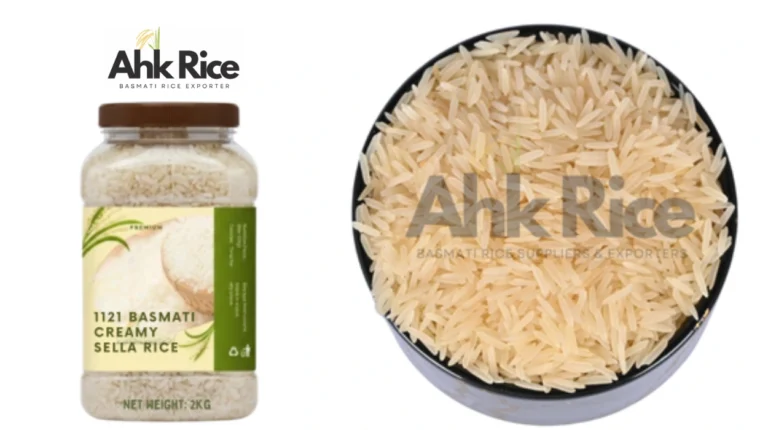
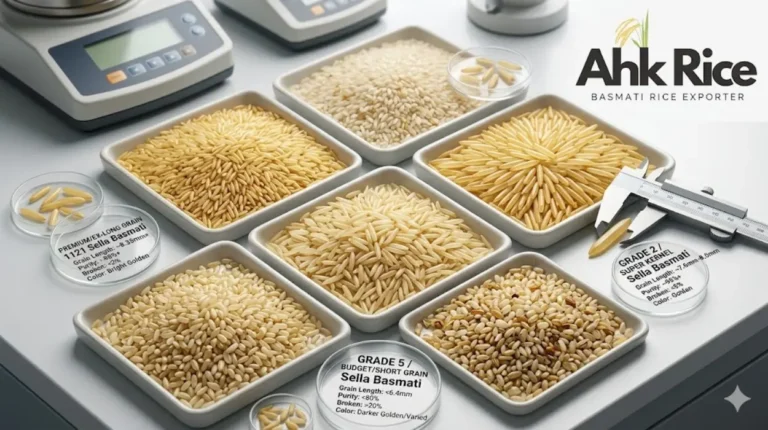
Common Pakistani Basmati choices include 1121, Super Kernel, and 1509. Processing options include White, Steam, Golden Sella, Creamy Sella, and Brown, depending on the variety and commercial requirement.
Saudi buyers should also define the intended use. Retail distribution can require different appearance and packaging specifications than catering or foodservice procurement.
Recent trade data confirms continuing Pakistani supply into Saudi Arabia. Volza recorded 147 active Saudi Basmati buyers sourcing from 152 Pakistani suppliers between July 2024 and June 2025.
The same data recorded 1,777 Pakistan-to-Saudi Basmati shipments across the broader three-year dataset.
Match grade to the purchasing channel
1121 Basmati suits buyers seeking long grain presentation and premium positioning. Super Kernel provides a traditional aromatic Basmati profile for retail and distribution channels.
1509 can suit buyers prioritizing commercial yield and procurement efficiency. Sella grades can support bulk foodservice applications where cooked grain resilience and holding performance matter.
Saudi buyers comparing these varieties should review [the key Pakistani rice varieties preferred by Saudi wholesale buyers in 2026 — MOFU link to insert] before approving the commercial specification.
With the specification defined, the next decision is selecting an exporter capable of converting that specification into a controlled shipment.
Why choose AHK Rice for Saudi bulk Basmati procurement?
AHK Rice connects sourcing, milling, grading, packaging, sampling, documentation, and export logistics through one procurement process. This gives Saudi importers one specification to approve and one commercial workflow to manage from sample evaluation through container loading.
AHK Rice is based in Punjab and supplies Pakistani Basmati varieties including 1121, Super Kernel, and 1509. The exporter supports buyers that need defined specifications rather than generic rice quotations.
AHK Rice can coordinate product selection, processing requirements, packaging, export documentation, and shipment planning around the buyer’s agreed specification.
What should Saudi buyers verify before ordering?
Saudi importers should verify the commercial specification before confirming a purchase order. The specification should cover:
- Variety
- Processing grade
- Grain length
- Broken percentage
- Moisture percentage
- Foreign matter
- Packaging format
- Net quantity
- Country of origin
- Destination port
- Incoterm
- Inspection requirement
AHK Rice can use the approved specification as the reference for sampling and commercial quotation. The same reference should remain connected to production, inspection, packing, and loading.
Saudi food imports also require regulatory documentation. The Saudi Food and Drug Authority states that importers must register their establishment and food products through the applicable Saudi systems. Food clearance documentation includes the commercial invoice, certificate of origin, bill of lading, health certificate, and phytosanitary certificate.
The documentation stage therefore belongs inside procurement planning, not after the cargo has been dispatched.
With the supplier workflow established, the next question is what a Saudi buyer should expect from sampling and shipment execution.
What results can Saudi importers expect from the buying process?
A controlled bulk purchase should produce an approved sample, fixed commercial specification, documented quality checks, complete export paperwork, and a shipment plan linked to the destination port. These outputs make the final container easier to verify against the original buying decision.
How does the sample process work?
Saudi buyers should start by sending the required variety, grade, packaging, quantity, destination, and target specification.
AHK Rice can then identify the matching Pakistani rice specification and prepare a representative sample for evaluation.
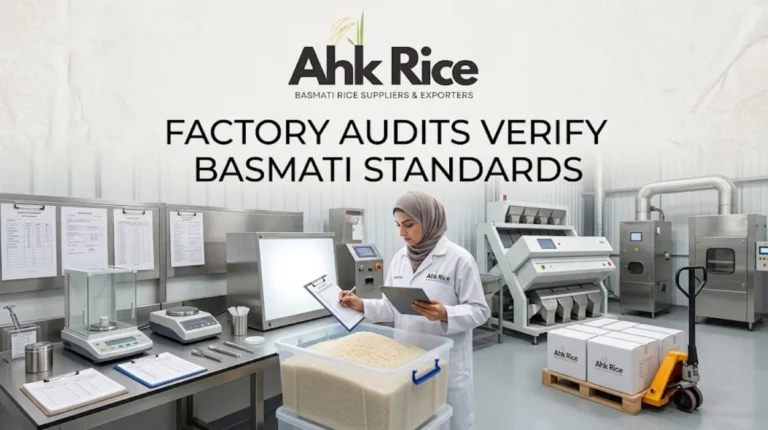
The buyer should assess grain appearance, aroma, broken percentage, cooking performance, moisture, packaging suitability, and any required laboratory parameters.
The buyer should approve the sample before the commercial specification is finalized. The approved sample becomes the practical reference for the bulk order.
Sample costs depend on the sample weight, courier destination, courier service, and required certificates. The rice sample itself can be supplied under the supplier’s sampling arrangement, while the Saudi buyer should budget for international courier charges and applicable certification or phytosanitary costs.
A practical buyer request should state the required sample weight before dispatch. A 5–20 kg evaluation quantity can support testing by procurement, quality-control, and foodservice teams, subject to supplier confirmation.
How long does shipment to Saudi Arabia take?
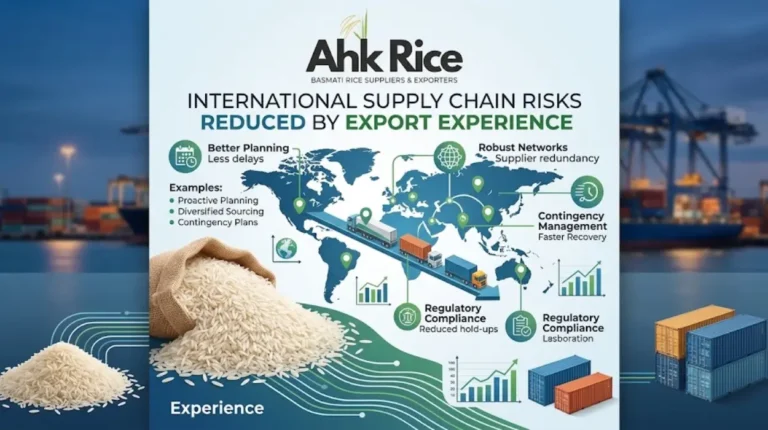
Shipping time depends on the destination port, vessel schedule, port congestion, documentation, and selected Incoterm.
Jeddah and Dammam are common destination ports for Saudi rice procurement. A current Pakistan exporter market reference gives an indicative sailing range of 14–30 days from Karachi to Jeddah or Dammam.
A buyer should therefore separate production time from ocean transit time. Production and packing can require additional days before container loading.
For planning purposes, Saudi buyers can request a shipment schedule showing sample approval, production, inspection, loading, vessel departure, estimated arrival, and customs clearance stages.
Which documents should accompany the shipment?
Saudi food clearance requires several documents through the applicable electronic clearance process. SFDA guidance lists the certificate of origin, commercial invoice, bill of lading, health certificate, and phytosanitary certificate among the required food-clearance documents.
Additional documents can depend on the product, shipment, importer, and applicable Saudi regulations. The importer should confirm current requirements before dispatch.
With sampling, documentation, and shipping defined, the remaining commercial decision is the landed cost.
What factors affect the price of bulk Basmati rice in Saudi Arabia?

Bulk Basmati pricing depends on variety, processing grade, grain specification, broken percentage, moisture, packaging, order quantity, destination, freight, inspection, and Incoterm. A valid Saudi import quotation must therefore identify the specification and delivery basis before comparing supplier prices.
FOB versus CIF pricing
FOB pricing normally covers the rice and export-side costs up to the agreed loading point. Freight and destination charges remain outside the quoted FOB value.
CIF pricing includes the agreed ocean freight and insurance to the named destination port. The buyer should still verify destination customs, clearance, handling, storage, and local delivery costs.
Saudi buyers should not compare an FOB Karachi quotation directly against a CIF Jeddah quotation. The delivery basis differs, so the total commercial exposure also differs.
Quantity and packaging
Larger quantities can change the unit economics of processing, packing, freight, and container utilization. Packaging also affects the final quotation.
Common commercial formats can include bulk bags, retail bags, and customized private-label packaging. The buyer should specify bag weight, material, printing, labeling, and pallet requirements before receiving the final quote.
Grade and processing
Processing grade directly affects the price because milling, sorting, parboiling, drying, grading, and packaging requirements change the production specification.
A Saudi buyer requesting 1121 Steam should not compare that quotation against a Super Kernel Raw quotation as though both specifications were identical.
AHK Rice can build the quotation around the buyer’s selected variety, grade, quantity, packing, destination, and delivery term.
Pakistan’s overall Basmati export benchmark also provides useful market context. REAP reports 808,643 MT of Basmati exports worth US$830.569 million during FY2024-25, with an average Basmati export value of US$1,027.11 per MT.
That figure is a national export average, not a Saudi-specific quotation. A shipment-specific price must still be calculated from the actual specification and logistics.
With the cost structure understood, Saudi buyers can move directly into the procurement sequence.
How can Saudi Arabian importers start buying from AHK Rice?
Saudi buyers can begin by submitting the required variety, grade, quantity, packaging, destination port, and Incoterm, then approve a sample before confirming the bulk order. This creates a clear sequence from product selection to quotation, inspection, loading, and shipment.
Follow the procurement process
- Define the requirement. Specify variety, grade, grain length, broken percentage, moisture, quantity, packing, destination, and Incoterm.
- Request the sample. Provide the required evaluation quantity and destination details.
- Evaluate the rice. Test appearance, aroma, cooking performance, grain consistency, and agreed laboratory parameters.
- Approve the specification. Confirm the sample and written specification before commercial production.
- Confirm the quotation. Review the rice price, packaging, inspection, freight, destination, and payment terms.
- Complete documentation. Prepare the commercial and regulatory documents required for Saudi food clearance.
- Inspect the shipment. Verify the finished rice against the approved specification before loading.
- Load the container. Confirm packaging, container condition, quantity, documents, and seal details.
- Ship the cargo. Dispatch through the agreed vessel schedule toward Jeddah, Dammam, or the nominated Saudi port.
- Clear the shipment. Coordinate Saudi customs and food-clearance procedures through the importer and its appointed agents.
AHK Rice can manage the commercial workflow around the agreed specification, helping the buyer maintain continuity between sample approval and bulk shipment.
What should a buyer send in the first inquiry?
A useful inquiry should contain the rice variety, processing grade, required quantity, packaging format, destination port, preferred Incoterm, target shipment period, and inspection requirement.
A buyer requesting 500 MT of 1121 Basmati in 40 kg bags for Jeddah should state those details directly. The exporter can then prepare a more comparable commercial quotation.
A buyer without a fixed grade can request options for 1121, Super Kernel, and 1509. The supplier can then align each option with grain specification, processing, packaging, and intended use.
AHK Rice should receive the complete specification before the final quotation. This reduces the risk of comparing prices based on different quality assumptions.
What is the final decision for Saudi bulk rice buyers in 2026?
The practical buying route is specification first, sample second, quotation third, inspection fourth, and shipment fifth. Saudi importers should compare suppliers using identical rice specifications and delivery terms rather than choosing solely from the lowest headline price.
Pakistan remains an established Basmati export origin. REAP’s FY2024-25 data records more than 808,000 MT of Pakistani Basmati exports, while recent shipment data confirms active Saudi sourcing from Pakistan.
AHK Rice gives Saudi buyers a direct procurement route covering Pakistani Basmati selection, processing, grading, packaging, sampling, documentation, and export logistics.
The strongest commercial decision comes from matching the rice specification with the Saudi buyer’s sales channel. Retail, wholesale, catering, and foodservice operations can require different grades, packing formats, and quality targets.
AHK Rice can structure the purchase around an approved sample and written specification. That approach gives the buyer a clear reference from quotation through container loading.
Saudi importers ready to convert the specification into a shipment can request a bulk Basmati rice export quotation from AHK Rice.
FAQs About Buying Bulk Basmati Rice from Pakistan
Which Pakistani Basmati rice is commonly purchased by Saudi buyers?
1121 Basmati is widely used for long-grain premium applications.
Super Kernel suits aromatic retail and distribution requirements.
1509 can support commercial and high-volume procurement.
Processing grades include White, Steam, Golden Sella, and other specifications.
The final choice should match the buyer’s channel and approved specification.
How long does Pakistan-to-Saudi rice shipping take?
Indicative ocean transit can range around 14–30 days.
Jeddah and Dammam are common destination ports.
Production and container loading require additional time.
Vessel schedules can change the arrival date.
Buyers should request a complete production-to-arrival timeline.
What documents does Saudi Arabia require for imported rice?
Saudi food clearance requires regulatory and commercial documentation.
SFDA lists certificates of origin, commercial invoices, and bills of lading.
Health and phytosanitary certificates are also listed.
Importers must register applicable establishments and food products.
Current requirements should be confirmed before shipment.
How should Saudi buyers compare rice quotations?
Compare identical varieties and processing grades first.
Compare grain length, broken percentage, moisture, and packaging next.
Compare quantity and inspection requirements after specification alignment.
Compare FOB and CIF quotations on the same delivery basis.
Compare total landed cost before approving the supplier.
Can Saudi buyers request a rice sample before bulk purchasing?
Yes, sampling should precede a major bulk commitment.
The buyer should specify the required variety and processing grade.
The buyer should evaluate appearance, aroma, cooking, and agreed specifications.
Courier and applicable certification costs should be confirmed before dispatch.
The approved sample should become the reference for bulk production.