How US Buyers Verify Halal Certification, Quality Standards, and Supplier Credibility from Pakistan
U.S. buyers verify Pakistani rice suppliers through halal documentation, FDA compliance records, laboratory reports, processing controls, export documents, and supplier history. Here is why: U.S. food importers must perform risk-based foreign supplier verification under the FDA’s FSVP framework, while halal claims require separate certification evidence.
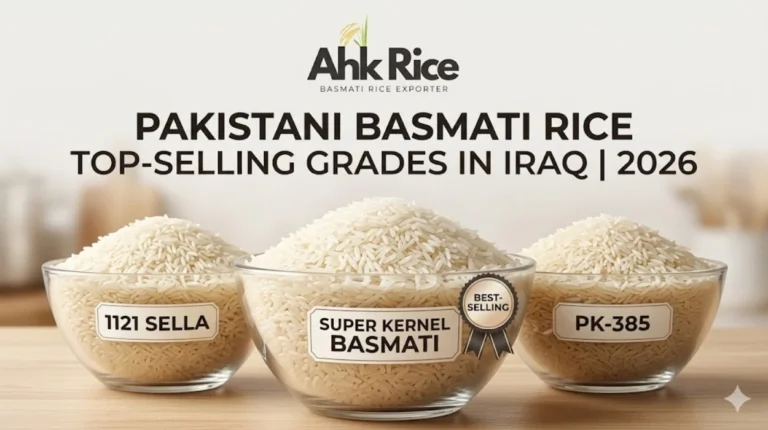
Pakistani Basmati rice enters the U.S. market through a documented supply chain. The process begins with cultivated paddy in Punjab and continues through milling, grading, testing, packaging, inspection, and export. Common export varieties include 1121 Basmati, Super Kernel, and 1509 Basmati.
What is supplier verification for Pakistani rice?
Supplier verification means checking the exporter, facility, product specifications, food-safety controls, certificates, laboratory results, and shipment documents before approving a purchase. U.S. importers use documented evidence to establish supplier credibility and manage food-safety risks.
The Foreign Supplier Verification Program is a U.S. FDA requirement for covered food importers. The FSVP importer generally evaluates the foreign supplier and the food before importation. The program addresses hazards, supplier performance, verification activities, corrective actions, and recordkeeping.
Supplier verification therefore differs from a simple company background check. A buyer reviews the actual facility, product, documents, and controls connected to the shipment.
A Pakistani rice exporter should provide consistent information across the commercial invoice, packing list, certificate of origin, phytosanitary certificate, laboratory report, product specification, and certificate records.
The next step is understanding how U.S. buyers verify each part of this evidence.
How do US buyers verify halal certification from Pakistan?
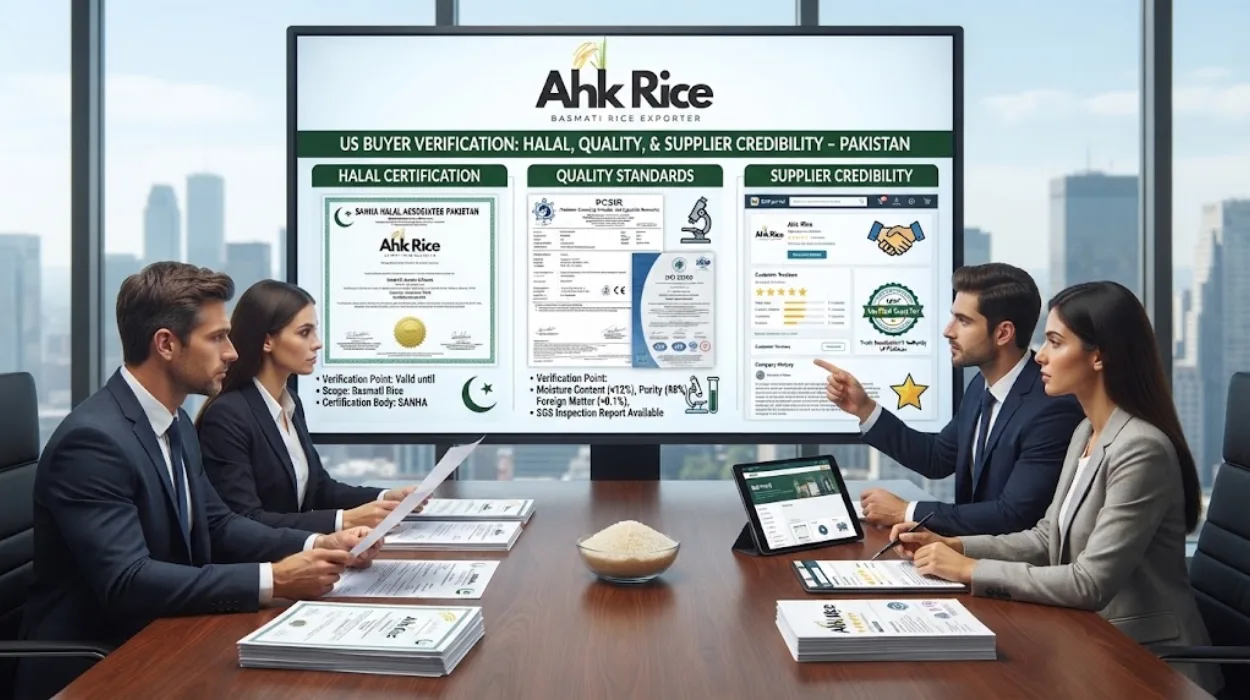
U.S. buyers verify halal certification by checking the certificate issuer, certificate number, product scope, facility name, validity period, and certification mark against the certifier’s records. A halal logo alone does not establish certification validity.
Halal certification confirms conformity with Islamic dietary requirements under the standards of the certifying organization. The certification process can include facility inspection, ingredient review, processing review, storage controls, and documentation.
For plain rice, the halal question often focuses on processing, handling, packaging, storage, and the accuracy of the halal claim. Rice itself contains no animal ingredient, but processing environments and packaging claims still require verification.
U.S. buyers should request the complete certificate rather than relying on a logo supplied in a product photograph. The document should identify the certified company and relevant facility.
Buyers should also confirm whether the certificate covers the specific rice products being purchased. A certificate for one product or facility does not automatically establish certification for another facility.
IFANCA provides an example of this verification model. Its certified products use the Crescent-M certification mark, and its published material directs consumers toward certified-product verification. (source: IFANCA)
Halal verification therefore establishes religious compliance. FDA and food-safety verification establish a separate regulatory requirement.
What quality standards do US buyers check for Pakistani rice?
U.S. buyers check grain length, broken percentage, moisture, purity, foreign matter, processing consistency, packaging, microbiological safety, and contaminant results against the agreed product specification. Each parameter should appear in measurable terms.
Grain specifications
Basmati rice specifications commonly identify variety, grain length, broken percentage, moisture, purity, and appearance. Examples include 1121, Super Kernel, and 1509.
1121 Basmati is associated with long grain length, aroma, and premium retail positioning. Super Kernel focuses on traditional Basmati characteristics and aroma. 1509 combines long grain performance with shorter cultivation duration and strong volume-market use.
Processing specifications
Export rice passes through controlled processing stages. The basic sequence includes cleaning, dehusking, polishing, grading, sorting, inspection, packaging, and container loading.
Colour sorting removes visually different grains. Length grading separates grains according to specified dimensions. Mechanical sorting reduces foreign material and inconsistent grains.
Laboratory specifications
Laboratory testing provides measurable evidence for food-safety and commercial specifications. Buyers can request reports covering agreed parameters such as moisture, pesticide residues, mycotoxins, heavy metals, microbiological criteria, and other destination-specific requirements.
The exact testing panel depends on the product, buyer specification, and applicable U.S. requirements.
How does the US verification process work?
The verification process moves from supplier identity to facility evidence, product specifications, certification checks, laboratory testing, inspection, documents, and shipment records. This creates a traceable chain from Pakistani mill to U.S. receiving facility.
What should buyers check first?
Start with the supplier’s legal identity, facility location, export history, product range, and processing capability. Match the company name across certificates, invoices, bank information, and export documentation.
What should buyers verify at the facility?
Inspect the processing workflow from paddy intake through container loading. Review cleaning, dehusking, polishing, grading, sorting, storage, packaging, and pest-control procedures.
What should buyers verify in product samples?
Compare the physical sample with the agreed specification. Check grain length, colour, aroma, broken percentage, cooking performance, moisture, and visible foreign matter.
What should buyers verify before shipment?
Review the final inspection report, laboratory report, packing list, certificate of origin, phytosanitary documentation, commercial invoice, and bill of lading details.
FDA guidance identifies supplier evaluation, hazard analysis, supplier verification, corrective actions, and recordkeeping as important FSVP components. Verification activities can include onsite audits, sampling and testing, and review of relevant food-safety records. (source: FDA)
With the verification sequence established, the next question is which documents provide the strongest evidence.
Which documents prove Pakistani rice supplier credibility?
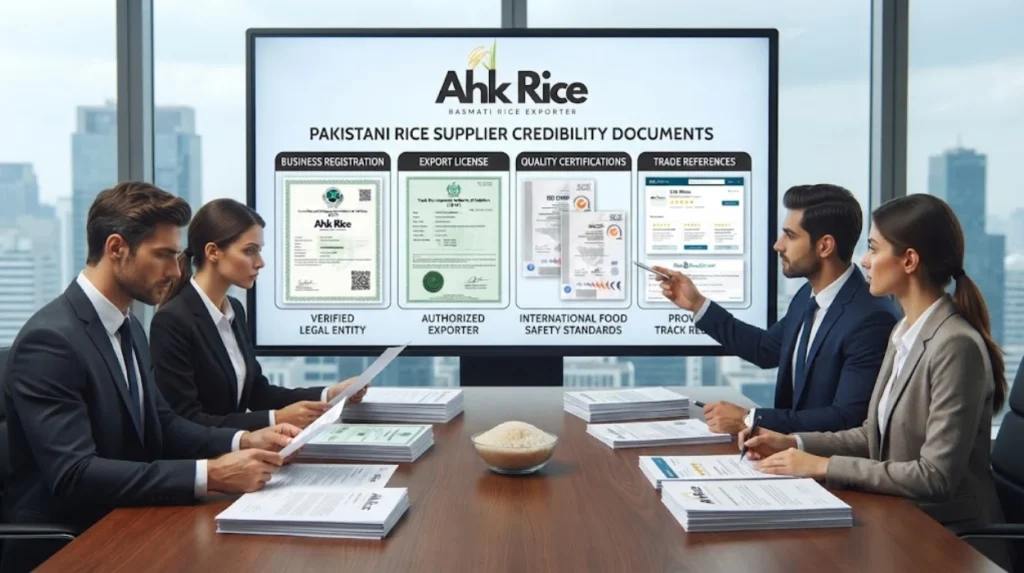
The strongest supplier file combines company identity, food-safety certification, halal certification, laboratory testing, product specifications, third-party inspection, origin documents, and shipment records. No single certificate proves complete supplier credibility.
Food-safety documents
Common documents include ISO 22000, HACCP records, GMP evidence, laboratory reports, sanitation procedures, and buyer-specific audit records.
ISO 22000 addresses food-safety management systems. HACCP identifies hazards and establishes controls at critical points.
Halal documents
Halal certification identifies the certifying organization, certified facility, product scope, and certification validity. Buyers should verify these details with the issuing organization.
Export documents
Export documentation commonly includes the commercial invoice, packing list, certificate of origin, phytosanitary certificate, and bill of lading.
The phytosanitary certificate addresses plant-health requirements. The certificate of origin establishes the declared country of origin.
Inspection documents
Third-party inspection reports provide independent evidence of agreed product specifications. Buyers can specify inspection agencies, sampling procedures, testing parameters, and acceptance criteria within the purchase contract.
AHK Rice publicly states that its export quality system includes ISO 22000:2018, HACCP, ISO 9001:2015, GMP, and Halal certification. Its export information also identifies phytosanitary documentation and third-party inspection as available compliance elements. (source: AHK Rice)
What are the benefits of verifying a Pakistani rice supplier?
Supplier verification reduces compliance uncertainty, improves specification control, strengthens traceability, supports FSVP records, and reduces the risk of receiving rice that fails the agreed commercial specification. Verification also creates evidence for future purchasing decisions.
Compliance benefit
A documented supplier file supports the U.S. importer’s regulatory responsibilities under FSVP.
Quality benefit
Defined specifications make physical and laboratory inspection measurable. Buyers can compare the shipment against an approved sample and purchase specification.
Traceability benefit
Batch records, certificates, inspection reports, and shipment documents connect the finished rice to its processing and export records.
Commercial benefit
Consistent documentation helps importers repeat successful specifications across multiple containers. It also gives buyers objective evidence when resolving quality disputes.
The benefit is strongest when verification begins before the purchase contract rather than after cargo arrival.
Which Pakistani rice products require the most detailed verification?
1121 Basmati, Super Kernel, and 1509 Basmati all require specification-based verification, but premium retail and private-label programs usually demand more detailed documentation and tighter consistency. Product requirements depend on the buyer and sales channel.
1121 Basmati
1121 suits premium retail, foodservice, and private-label programs that prioritize long grains, aroma, appearance, and cooking performance.
Super Kernel Basmati
Super Kernel suits buyers seeking traditional Pakistani Basmati characteristics with controlled grain quality, aroma, moisture, and broken percentage.
1509 Basmati
1509 suits volume distribution, foodservice, catering, retail, and price-sensitive programs. Steam and Golden Sella processing provide different cooking and holding characteristics.
For every grade, the buyer should approve the product specification before commercial shipment.
What are common problems and misconceptions in supplier verification?
The most common mistakes are treating a halal logo as complete proof, accepting certificates without checking scope, confusing HACCP with product certification, and approving suppliers without shipment-level testing. Verification requires several independent evidence points.
A halal logo does not replace certificate verification. Buyers should confirm the issuing organization, validity, facility, and product scope.
An ISO certificate does not prove that every shipment meets the buyer’s grain specification. Product inspection and laboratory testing remain separate controls.
HACCP does not mean a product is automatically halal. HACCP addresses food-safety hazards, while halal certification addresses Islamic dietary compliance.
A company website also does not prove supplier credibility. Buyers should match public claims against certificates, inspection records, samples, and export documents.
U.S. importers should also distinguish the FSVP importer from the importer of record. FDA identifies the FSVP importer separately for regulatory purposes, and its public FSVP records show that the two roles are not necessarily identical. (source: FDA)
How should US buyers build a Pakistani rice supplier verification file?
Build one supplier file containing company records, facility evidence, product specifications, halal documents, food-safety certificates, laboratory reports, inspection records, export documents, and corrective-action history. Update the file when certification or product specifications change.
A practical verification file contains:
- Company records: Legal name, address, ownership details, contact information, and export history.
- Facility records: Processing location, milling capabilities, storage controls, sanitation procedures, and pest-control records.
- Product records: Variety, grade, grain length, broken percentage, moisture, purity, packaging, and approved sample.
- Certification records: Halal, ISO, HACCP, GMP, and buyer-required certifications.
- Laboratory records: Agreed contaminant, residue, microbiological, and quality test results.
- Inspection records: Pre-shipment inspection reports and sampling results.
- Export records: Invoice, packing list, certificate of origin, phytosanitary certificate, and bill of lading.
- Corrective records: Previous non-conformities, corrective actions, and closure evidence.
This structure gives buyers a repeatable method for evaluating Pakistani rice suppliers before approving future shipments.
For buyers moving from basic supplier verification toward market-specific purchasing decisions, the next useful topic is Vietnam’s Rice Import Shifts and Niche Demand Opportunities for Pakistani Exporters in 2026, which connects importer demand with grade selection and market opportunities.
Frequently Asked Questions
Do US buyers require halal certification for all Pakistani rice?
No. Halal certification is separate from the FDA food-import framework. Buyers require it when the product carries a halal claim, their customers require halal status, or their commercial specification demands certification.
What is FSVP for Pakistani rice imports?
FSVP is the FDA’s Foreign Supplier Verification Program. Covered U.S. importers use risk-based procedures to verify that foreign suppliers produce food according to applicable U.S. safety requirements.
How do buyers verify a halal certificate?
Buyers check the certifying organization, certificate number, facility, product scope, validity period, and certification mark. They should also verify the certificate through the certifier where a verification system exists. IFANCA, for example, publishes certified-product verification information.
Which documents should a US rice importer request from Pakistan?
A buyer should request the product specification, laboratory report, food-safety certificates, halal certificate where applicable, certificate of origin, phytosanitary certificate, packing list, commercial invoice, and inspection report.
Can HACCP replace halal certification?
No. HACCP controls food-safety hazards. Halal certification addresses Islamic dietary compliance. The two systems serve different purposes and should not be treated as interchangeable.