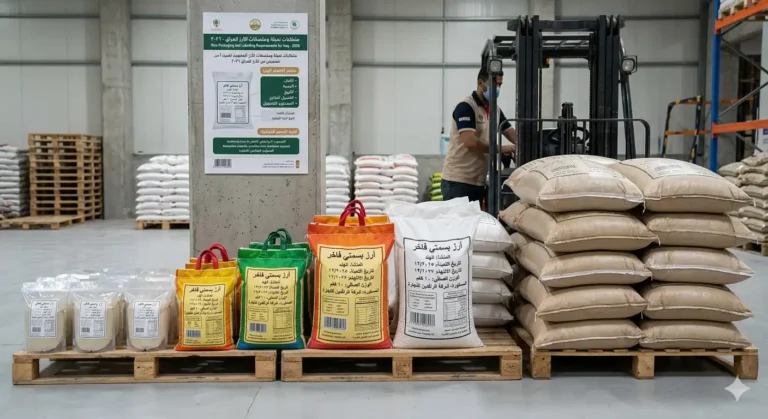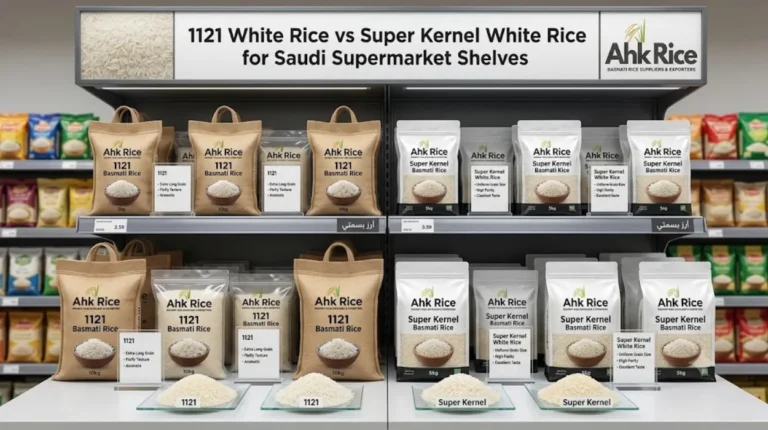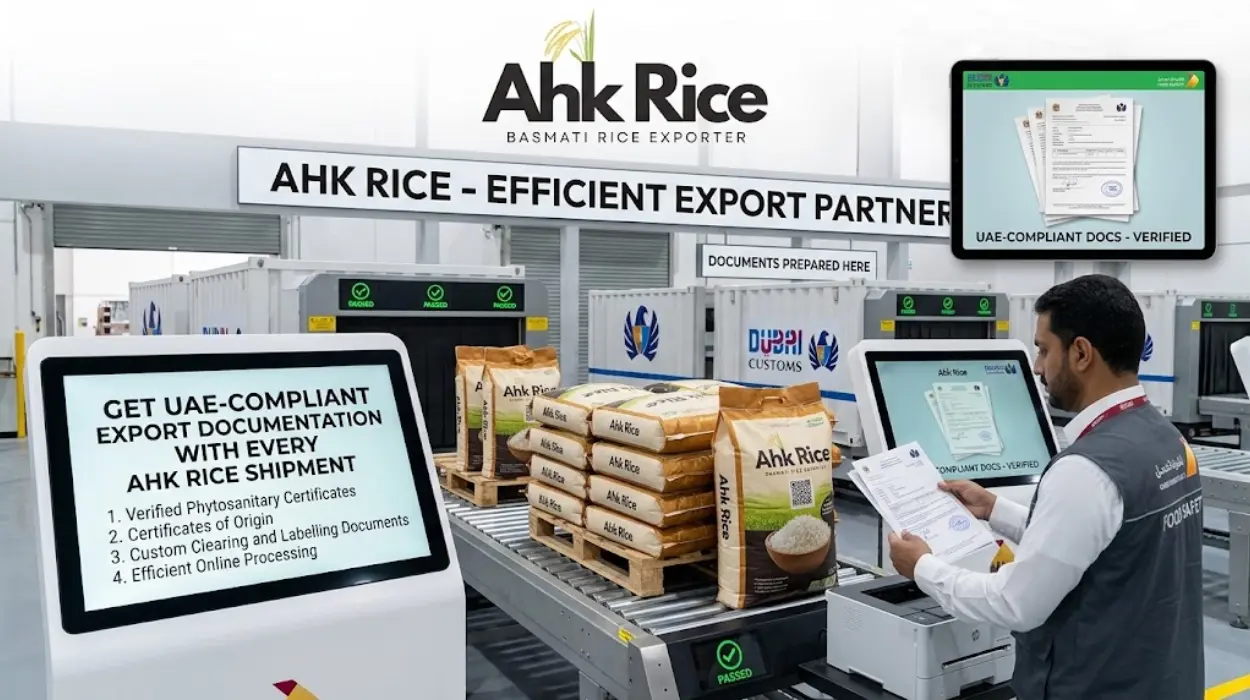
Get UAE-Compliant Export Documentation with Every AHK Rice Shipment
UAE-compliant rice export documentation helps importers reduce clearance delays, verify product specifications and prepare Pakistani Basmati rice shipments for Dubai and other UAE markets. Buyers need a coordinated document set covering product identity, origin, food safety, shipment details and applicable import requirements. Missing or inconsistent records can delay customs clearance, inspection, warehouse delivery and retail distribution.
For a practical introduction to the rules, read our guide to UAE import requirements for Basmati rice. Importers should confirm the current requirements with their UAE importer, customs broker and relevant authorities before shipment. AHK Rice coordinates rice sourcing, processing, grading, packaging and export documentation to help buyers prepare orders against agreed commercial specifications.
What Is the Best Solution for UAE-Compliant Rice Export Documentation?
The best solution is to establish the document requirements before production and shipment, then verify that certificates, invoices, packing lists, labels and product specifications match. This approach reduces avoidable discrepancies and gives UAE importers a clearer path from supplier approval to customs clearance and final delivery.
A shipment can contain excellent rice and still face administrative problems if its paperwork is incomplete. Examples include differences between the commercial invoice and packing list, incorrect product descriptions, inconsistent net weights, missing certificate details or labels that do not meet applicable UAE requirements.
AHK Rice addresses these risks through coordinated order preparation. The buyer confirms the variety, grade, broken percentage, moisture level, packing format, destination and delivery terms. The exporter then aligns the commercial and product information with the agreed order before shipment.
The document checklist normally includes the following items, depending on the product, shipment and applicable regulations:
- Commercial invoice identifying the seller, buyer, product, quantity, unit price and agreed trade terms.
- Packing list showing bag count, package weights, net weight and gross weight.
- Certificate of origin issued or certified through the applicable authorised process.
- Phytosanitary certificate where required by the importing authority.
- Bill of lading or other applicable transport document.
- Product specification sheet and relevant quality or laboratory reports.
- Applicable health, food safety or conformity documents requested by UAE authorities or the importer.
- Compliant retail labelling and food-registration records where applicable.
Not every shipment requires every document in the same format. Requirements can vary according to rice type, packaging, intended use, import channel and current UAE regulations. Importers should confirm the final checklist before loading.
Why Choose AHK Rice for Pakistani Basmati Rice Exports to the UAE?
Choose AHK Rice when your purchasing decision depends on coordinated product specifications, packaging, quality checks and export documentation rather than rice supply alone. One coordinated workflow helps buyers compare samples with commercial orders and prepare shipment records against agreed specifications.
AHK Rice is a Pakistani Basmati rice exporter based in Punjab, supplying 1121, Super Kernel and 1509 varieties to international markets. Its service covers sourcing, processing, grading, sorting, packaging and export coordination.
Buyers can select specifications for premium retail, wholesale distribution, foodservice or institutional purchasing. The order can define grain length, broken percentage, moisture, processing type, bag weight and labelling requirements. These details provide a commercial reference for production and inspection.
For UAE buyers evaluating a supplier, the AHK Rice export and supply service provides a starting point for discussing product options, packaging and shipment requirements.
A Dubai wholesaler purchasing 1121 Golden Sella may prioritise grain uniformity, cooking performance and bulk packaging. A retailer selling premium Basmati under a private label may require smaller printed bags, bilingual labelling and additional approval steps. A foodservice buyer purchasing 1509 may place greater emphasis on cost per tonne, cooking consistency and repeat-order availability.
In each scenario, the specifications should be agreed before production. AHK Rice can coordinate the required product and commercial information, while the buyer or its UAE representative confirms local registration, import permissions and authority-specific requirements.
Which Documents Must Be Ready Before a Rice Container Leaves Pakistan?
Prepare the document checklist before loading and verify all shipment details against the final purchase order. The exporter, importer and customs broker should agree on document responsibility, certificate requirements and approval deadlines to reduce discrepancies after the container departs.
The commercial invoice and packing list establish the shipment’s commercial and physical details. The certificate of origin supports origin verification, while transport documents record the movement of the cargo. A phytosanitary certificate may be required under the applicable plant-health rules.
Quality documents should reflect the agreed rice specification and any required test results. Buyers may request moisture, broken-grain, purity, residue or other analytical information according to their procurement standards and regulatory obligations. Any certificate or test report must be genuine, applicable to the shipment and issued by the appropriate party.
Packaging and labelling need separate attention. UAE-bound retail products may require Arabic information, or Arabic alongside another language, depending on the applicable rules and approved label. Required particulars can include the product name, country of origin, net weight, production or packing details, expiry or best-before information where applicable, storage instructions and importer information.
The importer should confirm whether the product must be registered in the relevant UAE food system before arrival. Dubai-bound consignments may require Dubai Municipality food registration and label assessment, alongside customs and other applicable approvals.
For a closer comparison of the registration and clearance process, review Dubai Municipality food registration, labelling and customs clearance for rice imports. The importer should complete required approvals within the relevant timelines rather than assuming that documents supplied by the exporter automatically satisfy every UAE procedure.
What Results Can Buyers Expect from a Coordinated Documentation Process?
A coordinated documentation process gives buyers better shipment visibility, fewer preventable paperwork discrepancies and a clearer basis for receiving and inspecting rice. It does not guarantee automatic clearance, because UAE authorities retain control over registration, inspection, testing and release decisions.
The main benefit is consistency. If the purchase order specifies 25 kg bags, the packing list should reflect the actual package count and weight. The invoice should identify the correct product and quantity. The certificate details and transport documents should correspond to the shipment, while labels should match the approved product presentation.
Consider a distributor ordering one container of 1121 Steam Basmati rice for wholesale customers in Dubai. Before loading, the buyer confirms the grade, bag weight, permitted broken percentage and required documents. The exporter coordinates the order records, and the importer checks registration, label approval and clearance arrangements with its broker.
This sequence helps identify problems while corrections remain practical. It also supports repeat orders because both parties retain an agreed specification and documented purchasing process.
AHK Rice can coordinate product preparation and export paperwork according to the order. Buyers should still arrange independent inspection or laboratory testing when their contract, internal quality policy or destination requirements call for it.
How Much Does UAE-Compliant Rice Export Documentation Cost?
Documentation costs depend on the certificates required, laboratory testing, inspection arrangements, packaging, order size and shipping terms. Buyers should request an itemised quotation that distinguishes rice value, export-side charges, freight, insurance where applicable, destination fees and importer-paid regulatory costs.
There is no single fixed documentation fee that applies to every Pakistani rice shipment entering the UAE. A straightforward bulk order may require a different document package from a private-label retail shipment involving label review, additional testing and food-registration coordination.
Typical cost categories include:
| Cost component | What determines the cost |
|---|---|
| Export certificates | Certificate type, issuing authority and processing requirements |
| Laboratory testing | Tests requested, sample quantity and laboratory charges |
| Inspection | Inspection scope, location and service provider |
| Retail packaging | Bag material, printed artwork, language and order quantity |
| Freight and transport | Container size, routing, carrier rates and shipment timing |
| Destination clearance | Customs broker, port handling, storage and applicable local fees |
| Food registration and label review | Applicable UAE procedures, product details and service-provider fees |
The agreed Incoterm determines which party pays particular costs and where responsibility transfers. Under FOB terms, the buyer generally arranges the main sea freight, while under CIF terms the seller arranges cost, insurance and freight to the named destination port, subject to the contract. Neither term automatically transfers responsibility for every import approval or destination charge.
Importers should obtain current charges from the relevant authorities, laboratories, shipping providers and customs brokers. AHK Rice can discuss the commercial order and coordinate applicable export-side requirements within the agreed scope.
How Many Days Does Shipping Pakistani Basmati Rice to the UAE Take?
Shipping time depends on the Pakistani loading port, vessel schedule, transshipment, customs processing and destination delivery arrangements. Buyers should distinguish ocean transit from total order lead time, which also includes production, inspection, document preparation, port handling and import clearance.
For planning purposes, a direct or near-direct sea service from Karachi to a UAE port may take approximately 2–7 days of ocean transit, depending on the destination and actual vessel schedule. This is an indicative planning range, not a guaranteed sailing time. Transshipment or schedule changes can extend transit.
The full order timeline is longer because the rice must be prepared and packed, shipment documents must be completed, and the importer must arrange any necessary approvals. Customs or food inspection can also add time after arrival.
Before confirming a delivery commitment, buyers should request a current vessel schedule and agree on the production and loading window. They should also verify the expected clearance period with their UAE customs broker.
How Can UAE Importers Request Samples and Approve a Commercial Order?
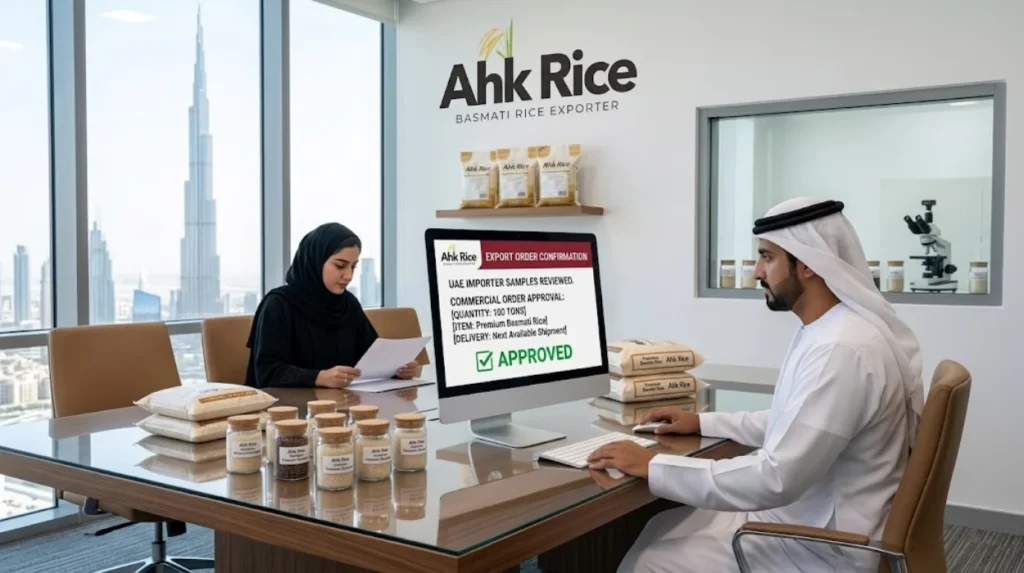
Start with the target rice variety, written specifications, destination requirements and a representative sample. Approve the sample and commercial specification before confirming bulk production, packaging, final inspection and shipment documents.
AHK Rice offers a sample-based evaluation process for buyers who need to test cooking performance and grain quality before placing a larger order. The buyer should first identify the variety, processing type, intended use and target packaging.
A typical workflow is:
- Define the requirement. Share the desired variety, grain length, broken percentage, moisture limit, packing size, estimated quantity and destination.
- Confirm sample availability. Agree on the sample type, quantity, courier method and any required supporting information.
- Pay applicable sample-delivery charges. AHK Rice has previously offered up to 20 kg of Super Kernel Basmati for sampling, with the buyer covering courier shipping and applicable phytosanitary charges. Confirm current availability, eligibility and charges before dispatch.
- Evaluate the sample. Check raw grain appearance, aroma, uniformity, impurities, cooking behaviour and elongation against the intended application.
- Approve the commercial specification. Record the agreed grade, tolerances, packing, labelling and testing requirements in writing.
- Confirm the order and documentation checklist. Agree on payment terms, Incoterm, production schedule, inspection requirements and the documents needed for UAE import.
- Prepare and dispatch the shipment. Coordinate final checks, certificates, transport documents and loading details before departure.
Sample costs vary according to parcel weight, courier service, destination, documentation and applicable charges. The sample itself may be offered without charge under an eligible promotion, but freight and other applicable expenses are separate. Buyers should obtain a written estimate before dispatch.
What Should Buyers Confirm Before Selecting a Pakistani Rice Exporter?
Select an exporter that can document the agreed specifications, explain the allocation of export and import responsibilities, and coordinate a repeatable order process. Before paying a deposit, confirm the product grade, inspection method, packaging, document checklist, shipping terms and procedure for resolving specification discrepancies.
Ask for a written quotation that identifies the rice variety, processing type, quantity, packing, price basis, delivery terms and quotation validity. Confirm which certificates the exporter supplies and which registrations, label approvals or destination charges remain the importer’s responsibility.
For UAE shipments, the decisive step is to finalise the requirements before loading. A well-defined specification and document checklist make the transaction easier to evaluate, while sample approval gives the buyer a practical reference for the commercial order.
To discuss your required Basmati variety, documentation checklist, sample arrangements and shipment terms, submit your requirements through the AHK Rice quotation request page.
Frequently Asked Questions
Which documents are required to export Pakistani Basmati rice to the UAE?
The usual commercial documents include an invoice, packing list, certificate of origin and bill of lading. A phytosanitary certificate, quality reports and other certificates may also be required. The final checklist depends on the product, applicable regulations and importer requirements.
Does AHK Rice provide UAE-compliant export documentation?
AHK Rice coordinates export documentation and shipment preparation according to the agreed order requirements. Buyers should confirm the precise documents included in the quotation and verify UAE registration, labelling and import approvals with their local importer or customs broker.
How much does a rice sample from Pakistan to Dubai cost?
The cost depends on sample weight, courier service, destination and applicable charges. Eligible Super Kernel Basmati sampling has previously been offered up to 20 kg without a product charge, with courier shipping and applicable phytosanitary charges paid by the buyer. Confirm current terms before dispatch.
How long does Pakistani rice take to reach the UAE?
Indicative sea transit from Karachi to a UAE port may take around 2–7 days, depending on the destination and vessel schedule. Production, loading, transshipment, document processing and import clearance add time. Confirm the current schedule before setting a delivery deadline.
Who is responsible for Dubai Municipality food registration and label approval?
The UAE importer or its authorised representative typically coordinates the applicable local registration and label-approval process. The exporter supplies relevant product and shipment information. Both parties should agree on responsibilities and complete required approvals before dispatch whenever the applicable process permits or requires it.