What are the available Sella and Steam Basmati solutions for UAE HoReCa?
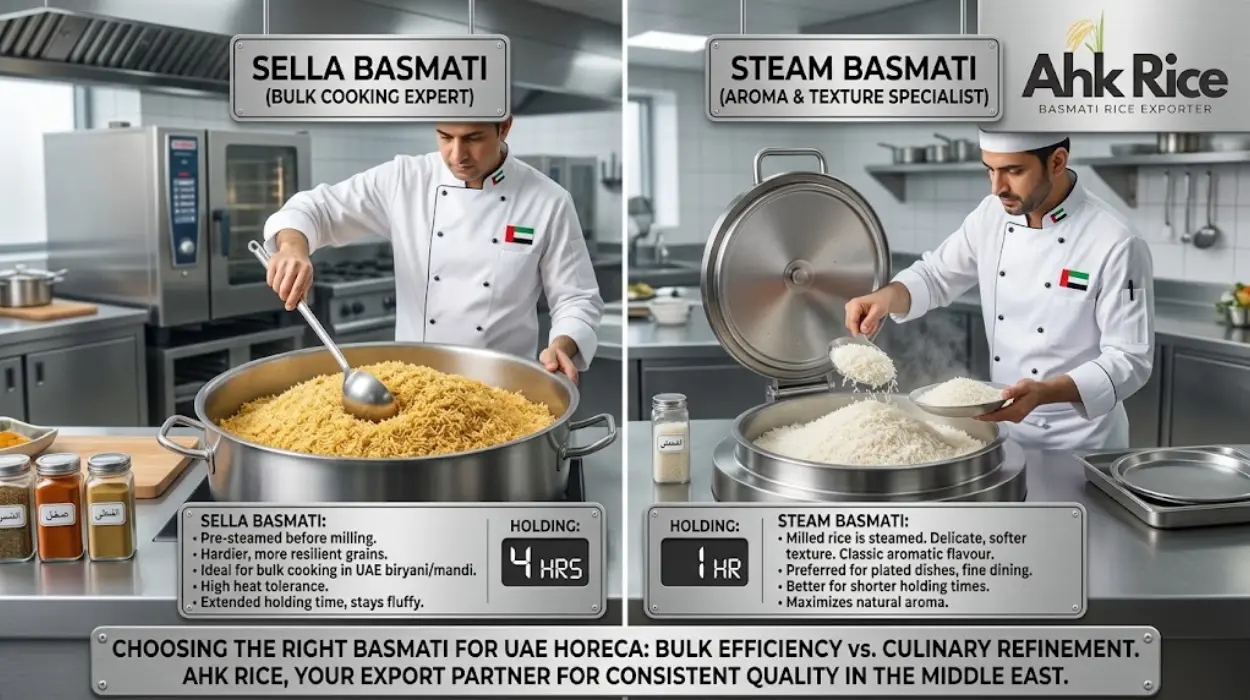
UAE HoReCa buyers can choose parboiled Sella Basmati, Steam Basmati or a mixed procurement strategy. Sella supports high-volume catering and holding requirements, while Steam supports white-grain presentation and premium menus. Both require cooking trials against the kitchen’s recipes and service conditions.
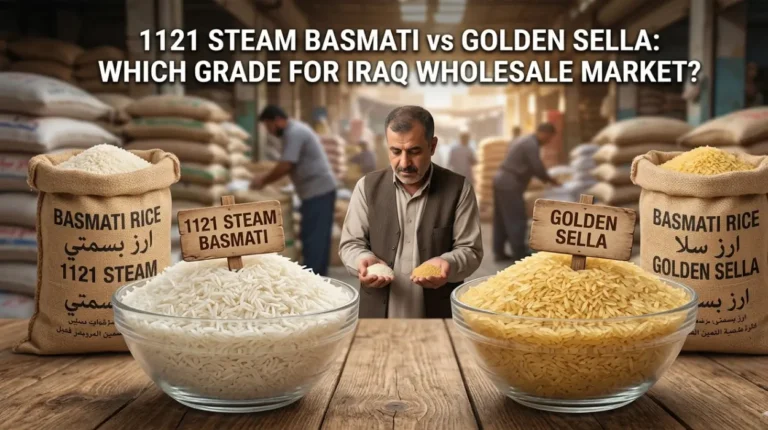
Sella Basmati is rice that undergoes parboiling before milling. The paddy is soaked, heated and dried before the husk and bran are removed. Golden Sella retains a golden appearance, while Creamy Sella has a lighter cream colour. Parboiling changes the grain structure and cooking behaviour.
Steam Basmati undergoes steaming as part of processing before milling. It generally retains a white appearance and provides a familiar presentation for restaurants serving pulao, biryani and other rice dishes. Its final texture depends on the variety, processing conditions, soaking method and cooking ratio.
For commercial sourcing, AHK Rice supplies Pakistani Basmati varieties, including 1121, Super Kernel, and 1509 Basmati rice, with processing and packaging options for export buyers. Procurement teams should specify both the rice variety and the processing type because “1121” identifies a variety, whereas “Steam” and “Sella” identify processing styles.
The main solutions are:
- 1121 Golden Sella: Long-grain presentation and a useful option for large biryani batches and catering operations.
- 1121 Creamy Sella: A lighter parboiled appearance for buyers who want Sella cooking characteristics without a strong golden colour.
- 1121 Steam: A premium long-grain option for white-grain presentation and premium restaurant menus.
- 1509 Sella or Steam: Options for buyers balancing grain length, procurement budgets and commercial serving volumes.
- Super Kernel Steam or Sella: Options for traditional Pakistani Basmati positioning, subject to the supplier’s available processing specifications.
The final specification must identify the variety, processing type, raw grain length, moisture, broken percentage, foreign matter tolerance, packing format and destination requirements.
How do Sella and Steam compare across seven specifications?
Sella generally offers stronger resistance to overcooking and extended service, while Steam provides a white appearance and suits menus with shorter service cycles. Buyers should assess both against the same variety, grade, cooking recipe and holding conditions before selecting a contract specification.
| Specification | Sella Basmati | Steam Basmati |
|---|---|---|
| Processing | Parboiled before milling | Steamed during processing |
| Grain appearance | Golden or creamy, depending on type | Generally white |
| Cooking texture | Firm grains with good separation when prepared correctly | Tender, aromatic grains with separation dependent on cooking |
| Bulk cooking | Suits large batches and high-volume kitchens | Suits controlled batches and premium restaurant service |
| Holding performance | Often maintains grain structure well during extended service | Performs well when holding time and moisture are controlled |
| Menu suitability | Catering biryani, buffets, banquets and institutional meals | Premium biryani, pulao and white-grain presentations |
| Main quality risk | Excessive cooking or poor rehydration can produce uneven texture | Excess water or prolonged holding can cause soft, sticky grains |
These characteristics describe typical commercial performance, not a guarantee for every batch. Grain variety, milling quality, moisture, soaking time and cooking equipment influence the final result. A kitchen trial provides stronger evidence than a processing label alone.
Which UAE market regions favour Sella or Steam Basmati?
Dubai’s hotel, restaurant and catering market requires different rice specifications across premium dining, buffet service and bulk food production. Abu Dhabi’s hospitality, banquet and institutional catering operations also benefit from matching processing type to service duration, menu style and portion economics.
Dubai: Hotels, restaurants and catering distributors
Dubai combines premium hotels, independent restaurants, catering businesses, wholesalers and food distributors. Premium biryani restaurants often prioritise aroma, grain length and appearance. Large caterers and buffet kitchens also consider how the rice behaves after cooking, transport and holding.
Golden Sella suits kitchens preparing biryani in large batches for weddings, events and high-volume service. Creamy Sella provides an alternative where buyers prefer a lighter grain colour. Steam suits premium menus where white grains and familiar Basmati presentation are central to the dish.
Procurement teams should compare prices on a consistent basis. The relevant figure is the landed cost per metric tonne, including the agreed Incoterm, freight, insurance where applicable, destination charges and import-related expenses.
Abu Dhabi: Hotels, banquets and institutional catering
Abu Dhabi buyers may need specifications for hotel banquets, corporate catering, large events and institutional meal production. Kitchens serving hundreds of portions need repeatable cooking results and predictable portion yields.
Sella is a strong candidate when the operation cooks rice in advance and holds it for staggered service. Steam remains suitable for freshly cooked premium dishes and kitchens with tighter batch-to-service timing. Neither city has one universal grade preference; the buyer’s menu, customer expectations and kitchen process determine the appropriate choice.
Regional preference should therefore be validated through buyer trials and purchase records rather than assumed from geography alone.
How do bulk prices per metric tonne compare?
Sella and Steam prices must be compared using the same Basmati variety, grade, packing, quantity, shipment period and Incoterm. Processing alone does not establish the final price. Buyers should request matched FOB and delivered quotations instead of relying on an unsupported market-wide price difference.
The table below provides a commercial comparison framework. It does not present unverified market quotations as current UAE prices.
| Cost comparison | Sella Basmati | Steam Basmati |
|---|---|---|
| FOB price per MT | Obtain a dated quote for the exact Sella grade | Obtain a dated quote for the equivalent Steam grade |
| Freight and insurance | Add according to the selected shipping terms | Use the same route and shipping assumptions |
| Landed cost per MT | FOB or supplier price plus applicable delivery costs | FOB or supplier price plus applicable delivery costs |
| Cost per cooked portion | Calculate from actual cooked yield and serving size | Calculate from actual cooked yield and serving size |
| Best value measure | Cost per acceptable portion after holding | Cost per acceptable portion at the required service time |
For example, if a kitchen buys 10 MT, a difference of US$20 per MT changes the purchase value by US$200 before other costs. However, a cheaper shipment does not automatically produce a cheaper meal if the rice has lower usable yield or more rejected portions.
AHK Rice has previously used a Super Kernel Basmati reference benchmark of US$1,165–US$1,205 per MT FOB Karachi. This is a historical reference for that product context, not a current offer, a UAE landed price or a verified Sella-versus-Steam price comparison. Buyers need fresh, specification-matched quotations to make a contract decision.
How does shelf life and cooked holding time affect the decision?
Unopened dry Basmati rice can retain quality for months under suitable storage conditions, but cooked holding time is a separate operational measure. Sella often tolerates extended hot service better than Steam, while both require controlled temperatures, moisture management and safe food-handling procedures.
Dry rice shelf life depends on moisture, packaging integrity, storage temperature, humidity, pests and the supplier’s validated product specifications. Rice should be stored in a clean, dry environment away from heat sources and condensation. Buyers should follow the stated shelf life and storage instructions on the commercial specification.
| Factor | Sella Basmati | Steam Basmati |
|---|---|---|
| Dry storage | Follow validated packaging and storage specifications | Follow validated packaging and storage specifications |
| Cooked holding | Often retains a firm grain structure during extended service | Benefits from shorter, controlled service cycles |
| Buffet suitability | Strong candidate for large batches | Suitable when replenishment is frequent |
| Reheating | Test texture after the actual reheating process | Test softness and separation after reheating |
| Quality control | Check firmness, hydration and grain integrity | Check moisture, stickiness and grain separation |
There is no universal shelf-life figure that applies to every shipment, and there is no guaranteed holding time for every recipe. The kitchen must validate both through its own cooking and storage procedures.
For hot-held cooked rice, UAE operators should follow applicable food-safety requirements and their approved food-safety plan. As a widely used food-safety benchmark, hot food is generally held at 60°C or above, subject to the applicable local requirements. Cooked rice also needs careful time and temperature control because Bacillus cereus spores can survive cooking, and reheating does not reliably eliminate toxins that have already formed.
Which method works best for different HoReCa operations?
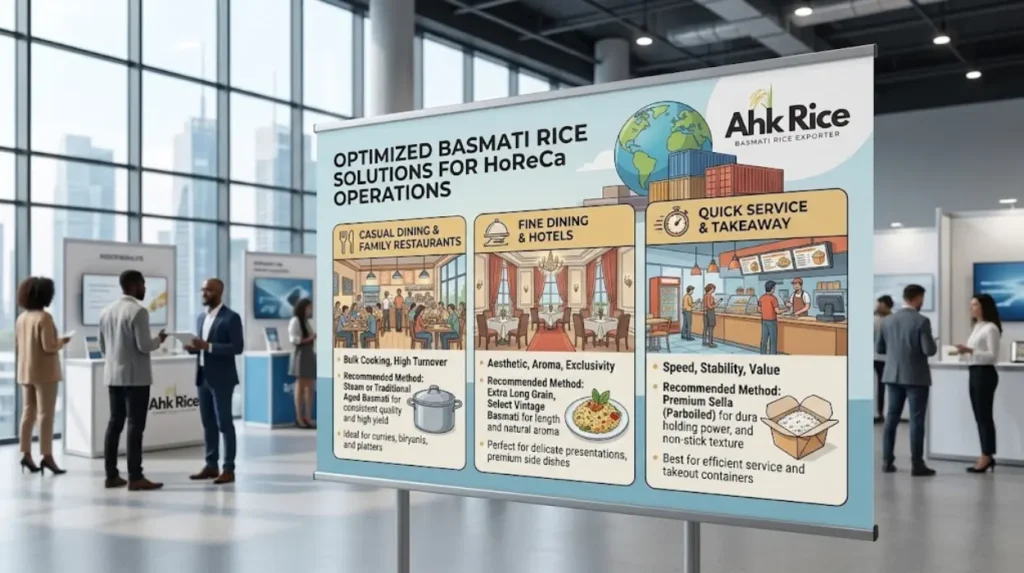
Choose Sella for high-volume biryani, banquet service and operations that need firm grains across a longer service window. Choose Steam for premium white-grain presentation and freshly cooked menus. A split procurement strategy works when one kitchen serves both high-volume and premium segments.
- Hotel buffets: Trial 1121 Golden Sella where biryani is prepared in bulk and served over a longer period.
- Premium restaurants: Trial 1121 Steam for white-grain presentation and controlled batch cooking.
- Wedding and event caterers: Compare Sella grades for large batches, transport and staggered serving.
- Institutional kitchens: Compare 1509 and 1121 using cost per acceptable portion, cooking yield and service requirements.
- Mixed-menu operators: Maintain separate specifications for buffet rice and premium à la carte dishes instead of forcing one grade to serve every purpose.
The trial should use the same batch size, soaking time, water ratio, cooking equipment and holding conditions. Record cooked yield, texture, broken grains after cooking, customer acceptance and waste. This produces a repeatable purchasing decision.
What are the main advantages and disadvantages?
Sella offers dependable grain structure for demanding bulk-cooking workflows, but its colour and firmer texture do not suit every menu. Steam supports a white-grain presentation, but overhydration and extended holding can reduce quality. Both methods need supplier verification and recipe testing.
| Method | Advantages | Disadvantages | Example |
|---|---|---|---|
| Golden Sella | Firm grains and suitable bulk-cooking performance | Golden colour may not suit every dish | High-volume biryani catering |
| Creamy Sella | Lighter appearance with parboiled characteristics | Texture still depends on cooking technique | Banquet menus seeking a lighter grain colour |
| Steam | White appearance and premium menu positioning | Sensitive to excess water and prolonged holding | Freshly cooked restaurant biryani |
| Mixed sourcing | Matches products to different service requirements | Requires separate inventory and quality controls | Hotel with buffets and fine dining |
A successful sourcing decision considers more than the raw grain price. The kitchen must evaluate the cost of cooking, labour, rejected portions, reheating, storage and waste. The lowest purchase price is not necessarily the lowest operating cost.
What factors should buyers include in a rice supply contract?
A reliable HoReCa contract defines the rice variety, processing method, grade tolerances, packaging, sample approval, shipment terms and inspection procedure. Buyers should also establish a cooking-test protocol and agree on how non-conforming shipments are documented and resolved.
| Decision factor | What to specify |
|---|---|
| Product identity | Variety, Sella or Steam, and Golden or Creamy where applicable |
| Physical quality | Grain length, broken percentage, moisture and foreign matter limits |
| Cooking performance | Approved sample, recipe, cooked yield and holding-test criteria |
| Packaging | Bag weight, material, labelling and private-label requirements |
| Trade terms | Quantity, price per MT, Incoterm, shipment schedule and payment terms |
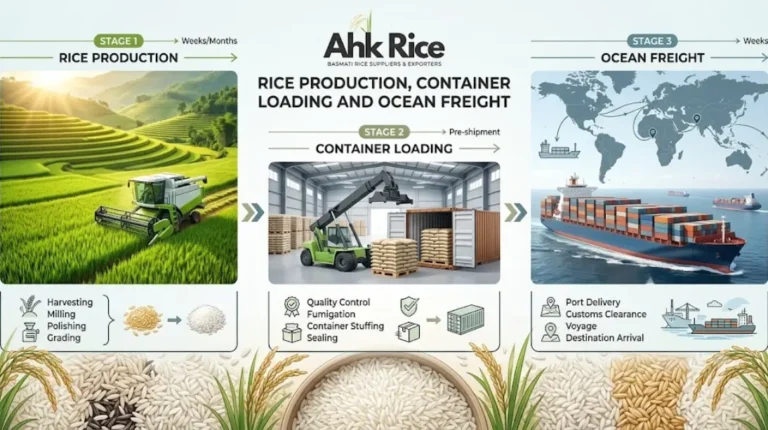
AHK Rice supports buyers sourcing Pakistani Basmati from Punjab, including 1121, Super Kernel and 1509. Its end-to-end processing, custom packaging and export coordination provide a basis for discussing product specifications and shipment requirements.
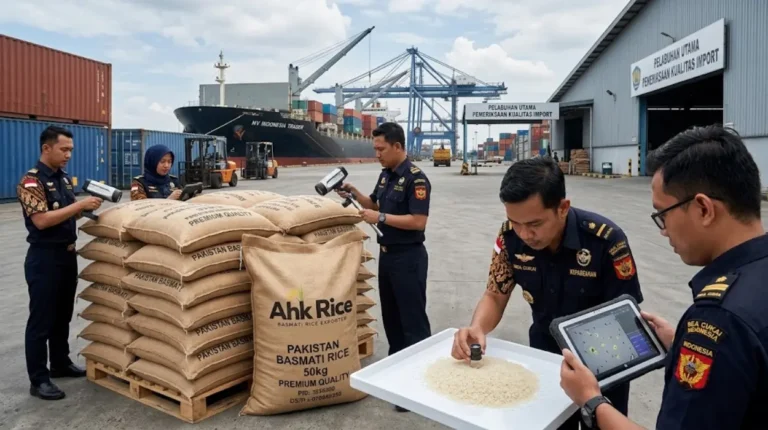
The buyer should request a commercial sample before approving bulk production. The sample must match the intended variety and processing method. Both parties should record the approved specifications, sample reference and acceptance procedure. A pre-shipment inspection can then verify the agreed parameters before dispatch.
Frequently asked questions
Is Sella or Steam Basmati better for UAE hotel buffets?
Sella is often the stronger starting point for large buffet batches because it typically maintains a firmer grain structure. Steam suits buffets with frequent replenishment and menus prioritising white-grain appearance. Test both under the hotel’s actual holding conditions.
Does 1121 Sella cook differently from 1121 Steam?
Yes. Both use the 1121 variety, but processing changes hydration and texture. Sella generally produces firmer grains, while Steam typically offers a white appearance and tender texture. Soaking and water ratios must be calibrated for each product.
Which Basmati variety suits bulk catering, 1121 or 1509?
1121 suits buyers prioritising premium long-grain presentation. 1509 offers an alternative for buyers balancing grain length, procurement cost and serving volume. The best choice depends on cooking yield, customer expectations and the supplier’s verified grade specifications.
How should UAE buyers compare rice prices per MT?
Compare quotations for the same variety, processing method, broken percentage, moisture, packing, quantity, shipment period and Incoterm. Calculate landed cost and cost per acceptable cooked portion. A lower FOB price alone does not establish better commercial value.
How long can cooked Sella or Steam rice remain on a buffet?
There is no universal safe holding duration based on processing method alone. Follow UAE food-safety requirements, maintain the required hot-holding temperature, monitor time and temperature, and use an approved food-safety procedure. Validate texture separately from microbiological safety.
What should a UAE importer request before confirming a bulk order?
Request a detailed specification sheet, representative sample, packaging details, quotation, shipment schedule and applicable export documentation. Agree on inspection criteria and sample approval before authorising bulk production.