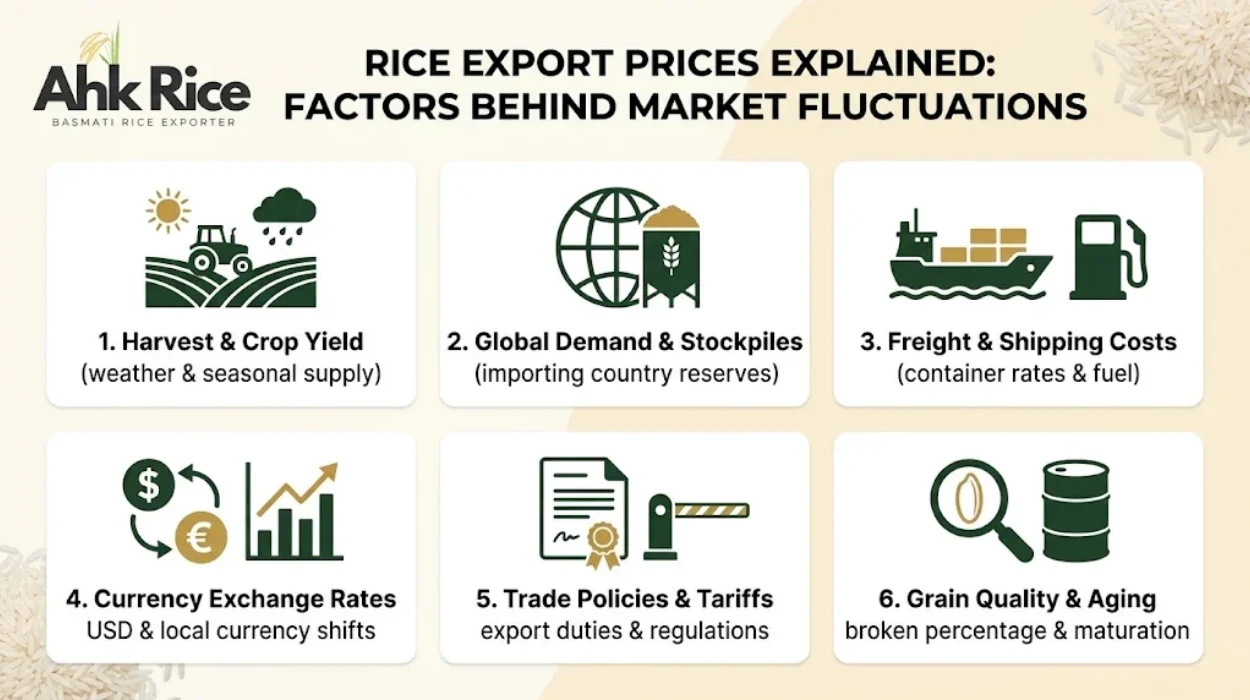
Rice Export Prices Explained: Factors Behind Market Fluctuations
Rice export prices fluctuate because of changes in production costs, crop availability, international demand, exchange rates, freight charges, government policies, and rice quality. Pakistani Basmati export prices also depend on grain variety, processing grade, moisture content, broken percentage, packaging, and destination market requirements.
Understanding these factors helps importers, wholesalers, distributors, and food manufacturers evaluate quotations and identify the reasons behind price differences between suppliers.
What Are Rice Export Prices?
Rice export prices represent the amount international buyers pay for rice supplied by an exporting country. These prices depend on rice variety, quality specifications, processing costs, market demand, transportation expenses, trade regulations, and agreed shipping terms.
Export prices are generally quoted per metric tonne (MT). A metric tonne equals 1,000 kilograms. Exporters calculate quotations using commercial specifications and international trade terms such as FOB (Free on Board) and CIF (Cost, Insurance and Freight).
Pakistan exports several rice categories, including Basmati and non-Basmati varieties. Basmati rice commands different prices because of its natural aroma, grain length, cooking characteristics, and consumer demand.
Pakistan’s major commercial Basmati varieties include:
- 1121 Basmati: A premium long-grain variety known for exceptional cooked grain elongation and aroma.
- Super Kernel Basmati: A traditional Pakistani aromatic variety used in premium retail, restaurants, and ethnic food markets.
- 1509 Basmati: A long-grain variety valued for its relatively shorter growing cycle, processing flexibility, and commercial applications.
Export prices differ between these varieties because their production characteristics, grain specifications, market positioning, and processing requirements are different.
How Do Rice Export Prices Work?
Rice export prices work through a combination of procurement costs, processing expenses, quality specifications, exporter margins, and international logistics. Exporters calculate the total shipment cost before offering buyers a price under agreed commercial and shipping conditions.
The export pricing process follows several stages.
1. Paddy Procurement
Rice production begins with paddy cultivation. Farmers grow rice in agricultural regions, including Punjab’s Gujranwala, Hafizabad, Sheikhupura, Narowal, and Sialkot districts.
Harvest quantity and paddy quality influence the price exporters pay for raw material. Weather conditions, irrigation availability, fertilizer expenses, and harvesting costs also affect procurement prices.
2. Milling and Processing
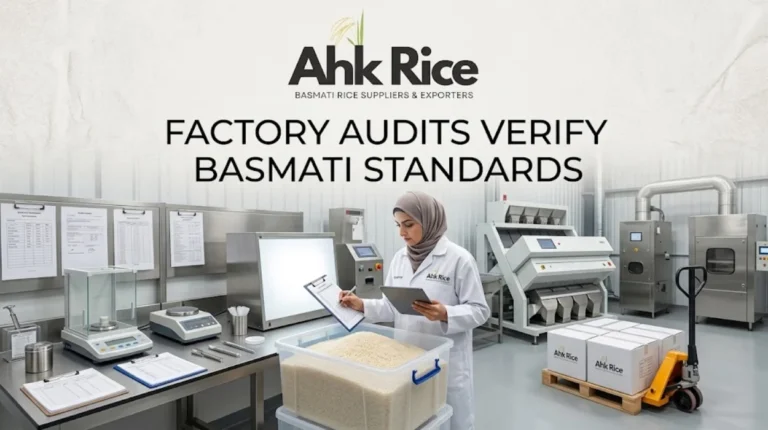
After procurement, paddy enters a processing facility. Milling removes the outer husk and produces brown rice. Additional polishing and grading prepare the rice for commercial export.
Processing facilities use equipment such as:
- De-stoners to remove stones and heavy impurities.
- Paddy separators to separate unhulled grains.
- Length graders to classify grains by size.
- Sortex machines to remove discoloured and defective grains.
- Polishers to improve grain appearance.
- Colour sorters to improve visual consistency.
Each processing stage adds operational costs to the final export price.
3. Quality Grading
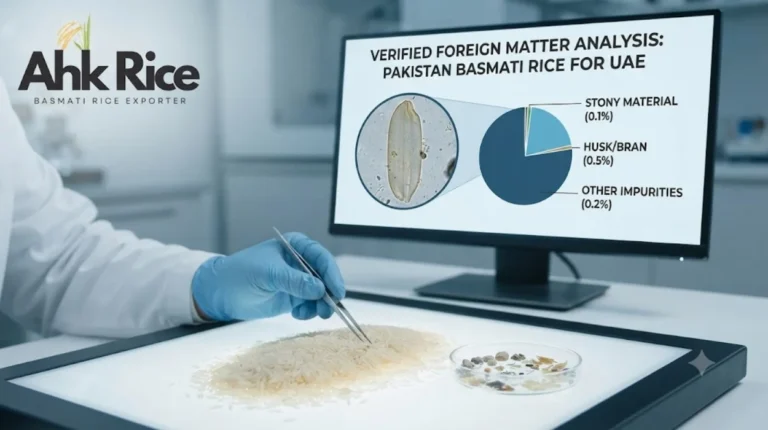
Exporters classify rice according to grain length, broken percentage, moisture, foreign matter, colour, and purity.
A shipment with a lower broken percentage and consistent grain specifications generally requires tighter quality control. Premium grades also require careful selection and processing.
4. Packaging and Shipment
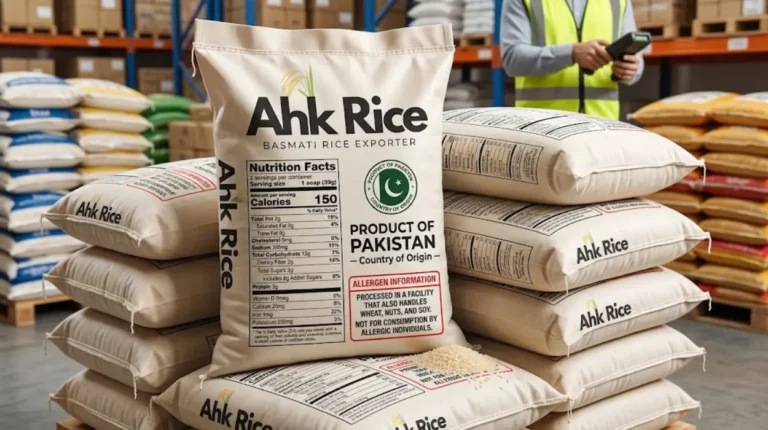
Rice is packed according to buyer requirements. Common packaging options include 5 kg, 10 kg, 25 kg, and 50 kg bags.
Packaging material, printing, private labelling, container loading, documentation, and transportation contribute to the final quotation.
What Factors Influence Rice Export Price Fluctuations?
Rice export prices change when agricultural supply, international demand, production expenses, currency exchange rates, shipping costs, and government regulations change. Each factor affects the cost of producing, purchasing, processing, or delivering rice to international buyers.
1. Weather Conditions and Crop Production
Weather directly influences rice cultivation and harvested quantities. Rainfall distribution, temperature, flooding, drought, and irrigation availability determine crop development and production costs.
In Pakistan, Punjab is an important Basmati-producing region. Changes in rainfall, extreme temperatures, and water availability influence paddy production and grain quality.
A smaller harvest reduces available raw material and increases competition among rice mills. A larger harvest increases market availability and creates different procurement conditions.
2. International Supply and Demand
Global rice prices respond to the balance between available export supplies and international purchasing requirements.
Major rice-exporting countries include India, Pakistan, Thailand, and Vietnam. Their production volumes, export policies, and commercial quotations influence international market competition.
Large importers such as China, Indonesia, the Philippines, Saudi Arabia, and the United Arab Emirates purchase different rice categories according to domestic consumption and trade requirements.
When importers increase purchasing volumes, competition for export supplies increases. When international inventories remain sufficient, buyers gain more negotiating flexibility.
3. Currency Exchange Rates
Currency movements influence the competitiveness of rice exports.
Pakistani exporters purchase paddy and pay domestic operating expenses primarily in Pakistani rupees. International quotations are commonly expressed in US dollars.
When the Pakistani rupee depreciates against the US dollar, domestic production expenses convert into a different dollar value. Imported machinery, fuel, packaging materials, and spare parts also become more expensive when their underlying costs rise.
Exchange-rate changes therefore influence exporter margins and international quotations.
4. Fuel, Electricity, and Processing Costs
Rice processing requires electricity, machinery, labour, fuel, and maintenance.
Higher electricity tariffs increase milling and processing expenses. Rising diesel prices increase the cost of transporting paddy from farms to mills and finished rice to ports.
Exporters include these expenses when calculating their commercial offers.
5. International Freight and Container Availability
Shipping costs influence the final landed cost of imported rice.
Container availability, port congestion, vessel schedules, fuel surcharges, insurance, and destination port charges affect transportation expenses.
A buyer importing rice into Dubai, Jeddah, Jakarta, or New York faces different freight and delivery costs.
This explains why the same rice specification receives different CIF quotations for different destinations.
6. Government Policies and Export Regulations
Government decisions influence export supply and international pricing.
Export restrictions, minimum export prices, customs procedures, taxation, import duties, and trade agreements affect international rice transactions.
Pakistan’s export policies and agricultural regulations influence domestic exporters. Similarly, decisions by competing exporting countries influence the availability of alternative supplies.
What Are the Main Components of a Rice Export Quotation?
A rice export quotation combines the rice purchase price, milling and grading expenses, packaging costs, documentation, inland transportation, port handling, freight, insurance, and exporter margin. The final components depend on the agreed Incoterm and destination.
The principal pricing components include:
| Cost component | Description |
|---|---|
| Paddy procurement | Cost of purchasing raw paddy |
| Milling | Husk removal and rice recovery |
| Grading | Sorting, polishing, and quality control |
| Packaging | Bags, printing, and labelling |
| Labour and utilities | Factory operations and electricity |
| Inland transportation | Movement to the export port |
| Port expenses | Handling and export-related charges |
| Freight | International shipping |
| Insurance | Cargo protection where applicable |
FOB and CIF Price Differences
FOB and CIF are two important international shipping terms.
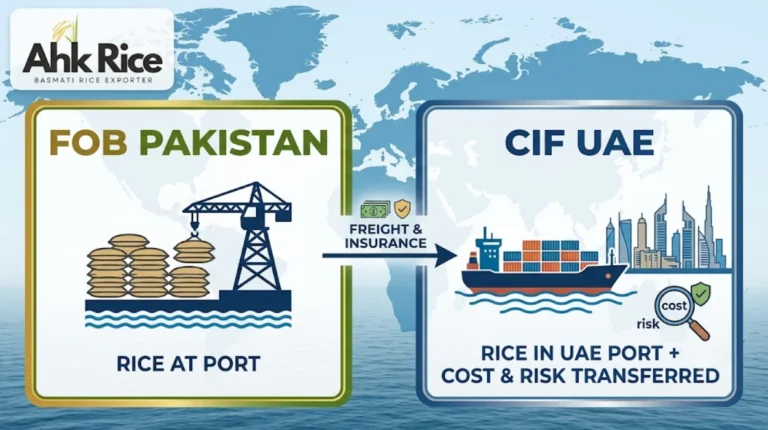
FOB Karachi: The seller delivers the goods on board the nominated vessel at the agreed port. The buyer generally arranges the main ocean freight and insurance.
CIF Destination Port: The seller arranges the cost, insurance, and freight to the named destination port. The buyer remains responsible for applicable import clearance and destination charges.
For example, an FOB Karachi quotation and a CIF Jakarta quotation cannot be compared directly without accounting for ocean freight and insurance.
How Do Rice Varieties and Grades Affect Export Prices?
Rice varieties and commercial grades influence export prices through differences in grain length, aroma, broken percentage, cooking performance, processing requirements, and buyer demand. Premium Basmati grades generally serve different markets from standard and economy rice categories.
1121 Basmati Rice
1121 Basmati is recognized for its extra-long grain and significant cooked grain elongation.
Commercial grades include:
- 1121 Steam.
- 1121 Golden Sella.
- 1121 Creamy Sella.
- 1121 Brown Rice.
- 1121 Broken Rice.
Premium retail brands, restaurants, catering companies, and international distributors purchase different grades according to their specifications.
Super Kernel Basmati Rice
Super Kernel is a traditional aromatic Pakistani Basmati variety grown in Punjab.
Its commercial value comes from natural aroma, grain appearance, cooking characteristics, and established demand among South Asian consumers.
Export grades include raw white, Steam, Sella, Creamy Sella, and broken categories, depending on the processing specification.
1509 Basmati Rice
1509 is a long-grain Basmati variety with a shorter crop duration than traditional Basmati varieties.
Its commercial specifications commonly include raw grain lengths around 8.10–8.50 mm, depending on the selected grade and measurement method.
Available commercial categories include:
- 1509 White.
- 1509 Steam.
- 1509 Golden Sella.
- 1509 Creamy Sella.
- 1509 Broken.
The selection depends on the importer’s price requirements, cooking applications, and retail positioning.
What Are the Benefits of Understanding Rice Export Price Movements?
Understanding rice export price movements helps importers evaluate supplier quotations, control procurement expenses, compare commercial grades, manage inventory, and plan purchasing schedules. It also improves negotiations by connecting price differences with measurable product and delivery specifications.
Key benefits include:
- Better procurement planning: Importers compare quotations before placing bulk orders.
- Quality-based purchasing: Buyers evaluate grain length, moisture, broken percentage, and purity against the quoted price.
- Inventory management: Distributors plan purchases according to consumption and available stock.
- Supplier comparison: Importers compare FOB and CIF quotations using consistent specifications.
- Cost control: Businesses identify the impact of packaging, freight, and processing expenses.
A lower quotation does not automatically represent better value. Differences in grain quality, processing standards, packaging, and shipping responsibilities explain many price variations.
Which International Markets Import Pakistani Rice?
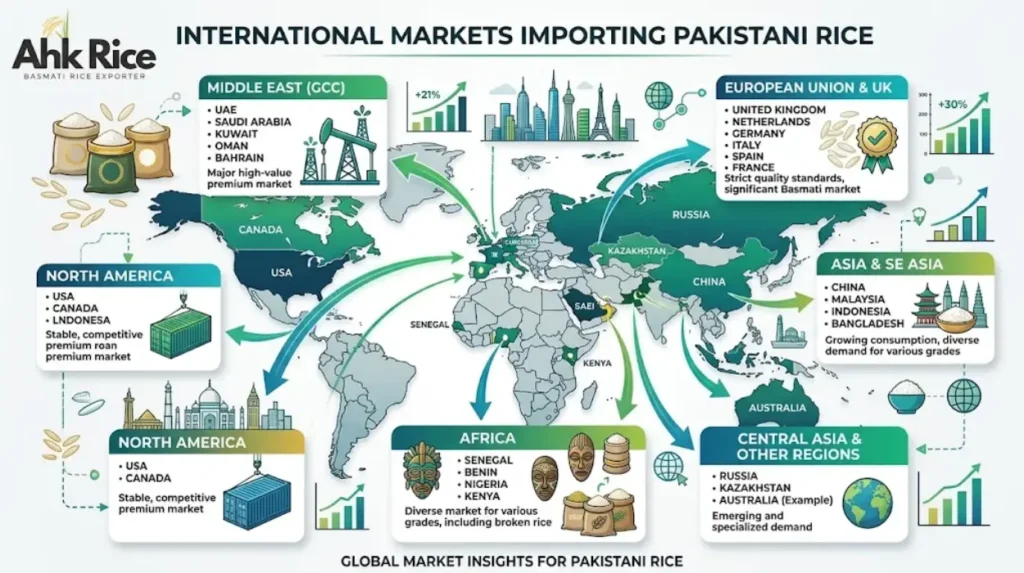
Pakistani rice reaches international markets across the Middle East, Asia, Europe, Africa, and North America. Importers select Basmati and non-Basmati grades according to consumer preferences, foodservice requirements, retail demand, and national import regulations.
Important destination markets include:
Middle East
Saudi Arabia, the United Arab Emirates, Iraq, and other Gulf markets import Pakistani rice for retail distribution, restaurants, catering, and household consumption.
Basmati varieties are particularly relevant to consumers seeking aromatic rice for traditional dishes, biryani, and pulao.
Asian Markets
Malaysia, Indonesia, and other Asian destinations purchase rice according to domestic consumption patterns and import requirements.
Importers evaluate grain specifications, packaging, documentation, and applicable import permissions before arranging shipments.
European and North American Markets
The United Kingdom, European countries, Canada, and the United States serve ethnic grocery retailers, food distributors, restaurants, and private-label brands.
These markets require attention to food safety, traceability, labelling, pesticide residue limits, and applicable import regulations.
Which Certifications and Documents Affect Rice Export Transactions?
Rice export certifications and documents establish product origin, food safety compliance, quality specifications, and shipment eligibility. Requirements depend on the importing country’s regulations, product category, buyer contract, and destination-specific inspection procedures.
Important documents and standards include:
- Certificate of Origin: Identifies Pakistan as the declared country of origin.
- Phytosanitary Certificate: Confirms compliance with applicable plant health requirements.
- Commercial Invoice: Records product description, quantity, price, and transaction details.
- Packing List: Identifies package quantities, weights, and shipment information.
- Bill of Lading: Serves as the principal shipping document for sea freight.
- Certificate of Analysis (COA): Records tested quality parameters.
- HACCP: Establishes a systematic approach to identifying and controlling food safety hazards.
- ISO 22000: Provides a food safety management system framework.
- Halal Certification: Demonstrates compliance with applicable Halal requirements where requested or required.
Additional requirements include pesticide residue testing, heavy metal analysis, labelling compliance, and importer-specific quality inspections.
What Are the Common Misconceptions About Rice Export Prices?
Rice export prices are not determined by grain length alone. Quality specifications, crop availability, processing recovery, packaging, freight, currency movements, and trade regulations all influence the final commercial quotation.
Several misconceptions create confusion in international rice purchasing.
A Longer Grain Always Has a Higher Price
Grain length influences commercial classification, but aroma, purity, cooking performance, broken percentage, and buyer demand also affect value.
FOB and CIF Prices Are Identical
FOB excludes the seller’s responsibility for arranging the main ocean freight and insurance. CIF includes those costs to the named destination port.
All Basmati Rice Has the Same Specification
1121, Super Kernel, and 1509 have different physical characteristics and commercial applications. Their grades also differ according to processing and quality requirements.
A Lower Price Always Means Better Procurement
An inexpensive quotation can reflect a higher broken percentage, different grain specifications, lower packaging quality, or different delivery responsibilities.
Export Prices Depend Only on Harvest Quantity
Crop supply is important, but international demand, exchange rates, energy expenses, freight rates, and government policies also influence export prices.
Rice export prices reflect the combined economics of agricultural production, processing, quality grading, international trade, and logistics. Pakistan’s Basmati varieties, including 1121, Super Kernel, and 1509, serve different commercial requirements and receive different quotations according to their specifications.
Importers who understand these pricing components can compare suppliers more accurately, evaluate quality against cost, and make informed purchasing decisions. Monitoring crop conditions, production expenses, currency movements, and international freight provides a clearer understanding of market fluctuations.
Frequently asked questions
What determines rice export prices?
Rice export prices depend on paddy procurement, crop availability, rice quality, milling costs, packaging, international demand, exchange rates, freight, and government policies.
Why do Pakistani Basmati rice prices fluctuate?
Pakistani Basmati prices fluctuate because of seasonal production, weather conditions, domestic procurement rates, international demand, processing expenses, currency movements, and export competition.
Which Pakistani Basmati varieties are exported internationally?
Pakistan exports 1121, Super Kernel, and 1509 Basmati rice. Each variety has different grain characteristics, processing grades, cooking properties, and commercial applications.
What is the difference between FOB and CIF rice prices?
FOB covers the seller’s delivery obligations up to loading on the nominated vessel. CIF includes the cost, insurance, and freight to the agreed destination port.
How does weather affect rice export prices?
Floods, droughts, irregular rainfall, and extreme temperatures affect crop production and paddy quality. Changes in harvested supply influence procurement costs and export availability.