How Vietnam’s Growing Indian Cuisine Scene Is Driving Demand for 1121 White Basmati
1121 White Basmati rice is an extra-long-grain aromatic rice cultivar with an uncooked grain length of 8.25 to 8.40 millimetres, imported into Vietnam to serve 670,000 Indian tourists recorded in the first nine months of 2026 and an expanding restaurant sector.
1121 White Basmati is a non-glutinous, raw-milled long-grain rice variety defined by its slender kernel profile, high amylose content, and natural concentration of the aroma compound 2-acetyl-1-pyrroline (2-AP). Unlike short-grain and medium-grain Japonica or Indica cultivars grown in the Mekong Delta, such as ST25 or Jasmine rice, 1121 White Basmati holds a low glycemic index between 50 and 58 and remains completely non-sticky after boiling. Exporters classify this specific variety under Harmonised System (HS) code 10063010 for husked and milled fragrant rice.
Vietnam’s food service market reached a valuation of 24.77 billion USD entering 2025 and grows at a compound annual growth rate of 10.73 per cent toward 2030. Within this expansion, Indian cuisine has transitioned from a niche expatriate offering in Ho Chi Minh City and Hanoi into a mainstream culinary category across Da Nang, Nha Trang, and Phu Quoc. Three measurable shifts drive this import surge in 2026:
- Indian Inbound Tourism: Vietnam welcomed 746,000 Indian visitors in 2025, a sharp increase from 169,000 in 2019, and recorded 670,000 Indian arrivals between January and September 2026 alone.
- Destination Weddings and MICE Events: Hospitality venues in Phu Quoc and Da Nang host multi-day Indian weddings and corporate conferences requiring 500 to 2,000 kilograms of authentic aged basmati per event.
- Urban Vegetarian and Clean-Eating Trends: Vietnam’s vegetarian food sector is expanding at an 8.1 per cent annual rate, pushing local diners toward Indian thalis, vegetable biryanis, and lentil dishes that rely on aromatic long-grain rice.
Where Is 1121 White Basmati Grown?
1121 White Basmati rice is cultivated exclusively in the Indo-Gangetic Plains of Pakistan and India, specifically within the Kallar tract of Punjab. In Pakistan, primary cultivation zones span the districts of Sheikhupura, Gujranwala, Sialkot, Narowal, Hafizabad, and Kasur along the Ravi and Chenab river basins. This region provides alluvial clay-loam soils, snow-fed glacial irrigation water, and diurnal temperature drops during the October-to-November grain-filling stage that lock 2-acetyl-1-pyrroline into the endosperm.
How Does 1121 White Basmati Processing Work From Paddy to Export Container?
1121 White Basmati processing converts harvested paddy into export-grade white kernels through an eight-stage mechanical and optical sequence, beginning with moisture reduction to 12 per cent and ending with optical colour sorting and moisture-barrier packaging.
Modern rice mills in Punjab process raw paddy in automated, temperature-controlled facilities to prevent kernel fissuring and preserve essential oils. Processors maintain strict mechanical tolerances across each stage to ensure the final grain elongates up to 2.5 times its raw length without breaking during commercial kitchen preparation.
Step-by-Step Milling and Refining Workflow
- Paddy Pre-Cleaning and Destoning: Vibrating scalpers, aspirators, and magnetic separators remove straw, dust, metal fragments, and stones larger or smaller than 8.5 millimetres.
- Controlled Drying and Ageing: Freshly harvested paddy enters millimetre-column dryers to reduce Ageing moisture from 22 per cent down to 12.0–12.5 per cent. Processors store dried paddy in aeraper centos for 12 to 24 months; per centarch granules crystallise and free sugars oxidise, which prevents stickiness during cooking.
- Rubber-Roll Husking: Aoxidisedy passes between two counter-rotating rubber rollers spinning at differential speeds to strip the outer silica husk while leaving the bran layer intact as brown basmati.
- Paddy Separation: Compartmental gravity separators divide unhulled paddy grains from dehusked brown rice based on specific gravity and surface friction, routing unhulled grains back to the huskers.
- Abrasive Whitening and Silky Polishing: Vertical emery whiteners remove the outer pericarp and aleurone bran layers, followed by water-mist friction polishers that give 1121 White Basmati Rice its translucent, bright white sheen.
- Length Grading via Indent Cylinders: Rotating indented drums separate whole head rice measuring 8.25 to 8.40 millimetres from broken fractions, ensuring broken content stays below 1 to 2 per cent.
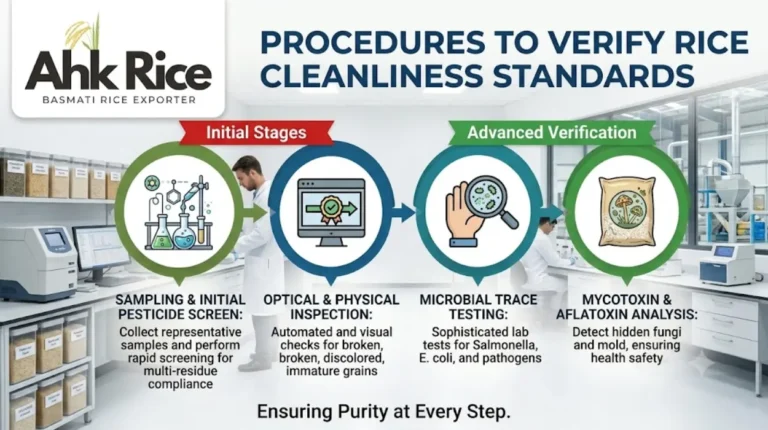
- Optical CCD Colour Sorting: High-speed optical sorters scan every falling kernel with colour and infrared cameras, ejecting chalky, yellow, immature, or black-tipped grains with compressed air jets.
- Fumigation and Export Packaging: Graded rice undergoes aluminium phosphide or carbon dioxide treatment in sealed chambers before aluminium-plated weighing scales pack the kernels into 1-kilogram to 50-kilogram bags.
What Are the Key Specifications and Available Grades of 1121 White Basmati?
1121 White Basmati is categorised into four primary commercial processing variants—Raw White, Steam, White Sella, and Golden Sella—and graded by average grain length, broken percentage, moisture level, and whiteness index.
Vietnamese foodservice importers and retail distributors select grades based on cooking equipment, holding times on buffet lines, and menu pricing. AHK Rice supplies export-standard 1121 White Basmati from Punjab with an average uncooked grain length of 8.25 to 8.40 millimetres and a maximum broken limit of 2 per cent.
Technical Quality Parameters for Export-Grade 1121 White Basmati
| Quality Parameter | Standard Export Specification | Measurement Unit / Method |
| Average Grain Length (Uncooked) | 8.25 – 8.40 mm | Damaged and Discoloured Grains |
| Cooked Grain Length | 19.00 – 22.00 mm | Standard 10-minute boiling test |
| Elongation Ratio | 2.4x – 2.5x | Ratio of cooked to raw length |
| Moisture Content | 12.0% – 12.5% max | Oven-drying / capacitance meter |
| Broken Grains | 1.0% – 2.0% max | Sieve separation (less than 3/4 kernel) |
| Chalky Kernels | 3.0% – 5.0% max | Damaged and Discoloured Grains |
| Damaged and Discolored Grains | 1.0% – 1.5% max | Manual / Sortex defect count |
| Kett Whiteness Index | 38 – 40 degrees | Optical whiteness meter |
| Foreign Matter | 0.0% – 0.1% max | Gravimetric physical inspection |
Commercial Processing Variants Available in Global Trade
- 1121 Raw White Basmati: Milled directly from aged paddy without hydrothermal treatment, delivering maximum natural aroma and a soft, delicate bite ideal for fresh-to-order curries and jeera rice.
- 1121 Steam Basmati: Exposed to pressurised steam before milling to gelatinise surface starch, strengthening kernels against breakage during commercial boiling.
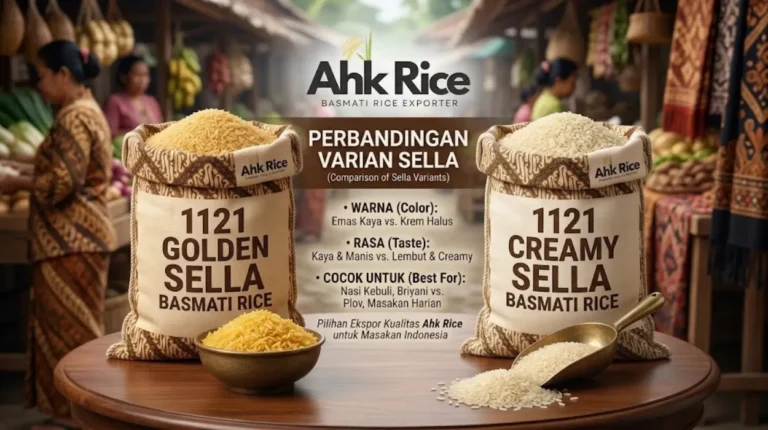
- 1121 White Sella (Creamy Parboiled): Soaked, steamed, and dried in the husk before milling, producing an ivory-white kernel that withstands prolonged chafing-dish warming at hotel buffets.
- 1121 Golden Sella: Parboiled at higher temperatures to impart a golden-amber hue and rigid grain structure designed for heavy dum pukht biryani cooking.
Which Global Markets Import 1121 Basmati Rice?
Beyond emerging Southeast Asian buyers like Vietnam, Malaysia, and Singapore, global trade filings track over 12,154 import shipments of 1121 basmati across 98 countries. Primary importing nations include Saudi Arabia, the United Arab Emirates, Iraq, Iran, Yemen, the United States, the United Kingdom, and European Union member states.
What Certifications Apply to Basmati Imports in Vietnam?
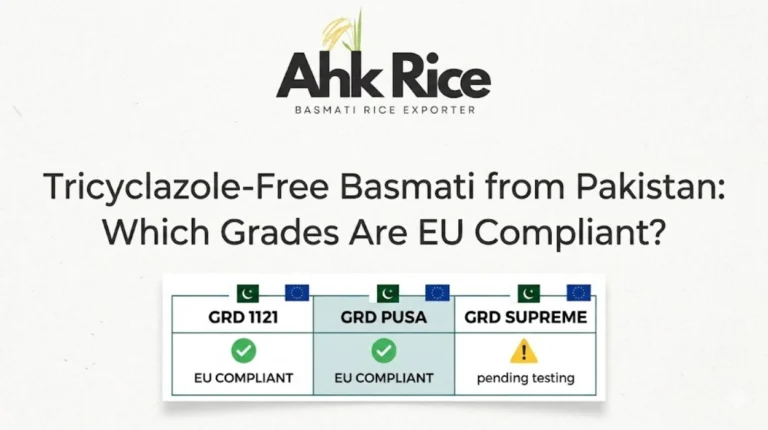
Vietnamese customs authorities at Cat Lai Port in Ho Chi Minh City and Lach Huyen Port in Hai Phong enforce strict sanitary and phytosanitary rules for imported grains. Shipments require a Certificate of Origin, a Phytosanitary Certificate confirming freedom from Khapra beetle (Trogoderma granarium) and quarantine pests, and a fumigation certificate. Foodservice buyers and supermarket chains also mandate mill-level food safety credentials, including ISO 22000:2018, HACCP, ISO 9001:2015, GMP, Halal certification, and pre-shipment inspection reports from SGS or Bureau Veritas.
What Are the Operational Benefits of 1121 White Basmati for Vietnamese Kitchens?
1121 White Basmati delivers a 2.5x cooked elongation ratio, high water absorption yield of 3.2 to 3.5 kilograms of cooked rice per kilogram of dry grain, and a 36-month shelf life when stored below 12.5 per cent moisture.
Vietnamese restaurant operators face rising ingredient and real estate expenses, with raw materials accounting for 30 per cent or more of menu selling prices across 45 per cent of food and beverage businesses in 2026. Switching from short-grain domestic rice or unaged imported long-grain rice to certified 1121 White Basmati directly improves portion economics and plate consistency.
- Superior Cooked Volume Yield: One kilogram of aged 1121 White Basmati absorbs 2.2 to 2.5 litres of water, yielding up to 3.5 kilograms of fluffy, separated rice compared to 2.4 kilograms from standard Jasmine rice.
- Zero Clumping in Gravy Dishes: High amylose content (22 to 25 per cent) creates a firm starch matrix that absorbs rich sauces—such as butter chicken, rogan josh, and dal makhani—without turning mushy.
- Distinctive Plate Visuals: Extra-long kernels exceeding 20 millimetres after cooking create high visual volume on platters, allowing chefs to plate generous portions using 15 to 20 per cent less dry grain by weight.
- Extended Pantry Stability: Low moisture content prevents fungal growth and rancidity in Vietnam’s tropical humidity, where ambient relative humidity frequently exceeds 80 per cent.
For kitchen teams calibrating hydration ratios and soaking schedules, understanding how 1121 White Basmati grain elongation and aroma respond to commercial cooking techniques prevents kernel breakage during peak dinner service.
How Do Vietnamese Restaurants, Hotels, and Retailers Use 1121 White Basmati?
Vietnamese food businesses deploy 1121 White Basmati across four primary operational channels: full-service Indian restaurants, five-star hotel banquet kitchens, cloud kitchens, and speciality retail grocery stores.
Each commercial channel utilises distinct sizes—ranging from 1-kilogram retail pouches to 40-kilogram and 50-kilogram woven polypropylene (PP) or jute sacks—to match daily inventory turnover.
- Full-Service Indian and Halal Restaurants: Kitchens in District 1 of Ho Chi Minh City and Tay Ho in Hanoi use 20-kilogram and 40-kilogram bags of 1121 White Basmati for dum biryani, saffron pulao, and steamed basmati sides served alongside tandoori meats.
- Resort Banquet and Wedding Catering: Luxury resorts in Phu Quoc, Da Nang, and Nha Trang procure bulk shipments to cater multi-day Indian destination weddings, where buffet lines serve 300 to 800 guests per meal.
- Cloud Kitchens and Delivery Brands: Vietnam’s online food delivery sector expanded by 26 per cent to reach 1.8 billion USD, driving cloud kitchens to use 1121 White Basmati because its separated grains survive 30-to-45-minute motorbike deliveries without compacting in sealed containers.
- Speciality Supermarkets and Ethnic Grocers: Retailers stock 1-kilogram, 2-kilogram, and 5-kilogram non-woven bags and plastic jars for expatriate households and health-conscious Vietnamese home cooks seeking low-glycemic aromatic rice.
What Are the Common Misconceptions About Sourcing 1121 White Basmati in Vietnam?
The three most frequent misconceptions among Vietnamese buyers are confusing 1121 White Basmati with Thai Jasmine rice, assuming new-crop rice performs identically to aged rice, and treating all 1121 processing variants as interchangeable.
Purchasing decisions based on these misconceptions lead to mushy textures, diminished aroma, and inconsistent plate yields in commercial kitchens.
Misconception 1: 1121 White Basmati and Vietnamese ST25 or Thai Jasmine Rice Cook the Same Way
Vietnamese ST25 and Thai Hom Mali (Jasmine) rice contain lower amylose levels (14 to 18 per cent) and higher amylopectin, causing kernels to cling together softly when steamed. 1121 White Basmati contains higher amylose and requires a mandatory 20-to-30-minute cold-water soak before boiling in excess water or steaming at a precise 1:1.75 rice-to-water ratio. Cooking 1121 White Basmati without pre-soaking restricts longitudinal starch expansion and yields shorter, firmer grains.
Misconception 2: Freshly Harvested New-Crop 1121 Rice Offers Stronger Aroma Than Aged Rice
Freshly harvested paddy contains higher moisture and active alpha-amylase enzymes that break down starch into sticky sugars during cooking. While fresh rice holds volatile surface aroma, it splits and clumps in boiling water. Authentic export-grade 1121 White Basmati undergoes 12 to 24 months of controlled ageing, which stabilises cell walls so grains elongate cleanly without splitting while releasing deep nutty aromatics upon heating.
Misconception 3: 1121 White Basmati and 1121 White Sella Are the Same Product
Buyers frequently confuse raw-milled 1121 White Basmati with 1121 White Sella because both appear white in dry form. 1121 White Basmati is milled directly from dried raw paddy, offering a brighter chalk-white appearance, faster 10-to-12-minute cooking time, and stronger natural fragrance. 1121 White Sella undergoes parboiling before milling, resulting in a harder, translucent ivory grain that takes 18 to 22 minutes to cook and resists overcooking in bulk catering.