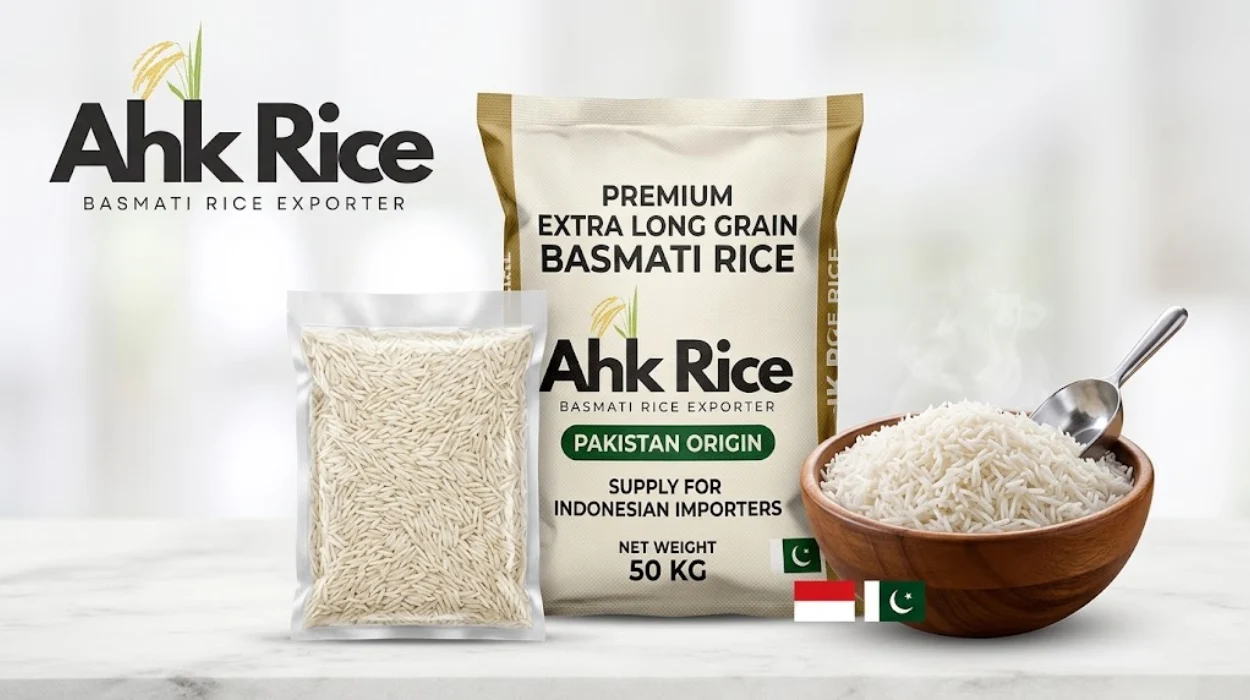
AHK Rice Pakistan Extra Long Grain Basmati Supply for Indonesian Importers
AHK Rice is a practical choice for Indonesian importers seeking extra-long Pakistani Basmati with controlled specifications, documented quality checks, and organized Karachi-to-Indonesia logistics. Here is why: Indonesian buyers need more than long grain appearance. They need consistent milling, controlled moisture, predictable broken ratios, reliable shipment planning, and a clear landed-cost structure.
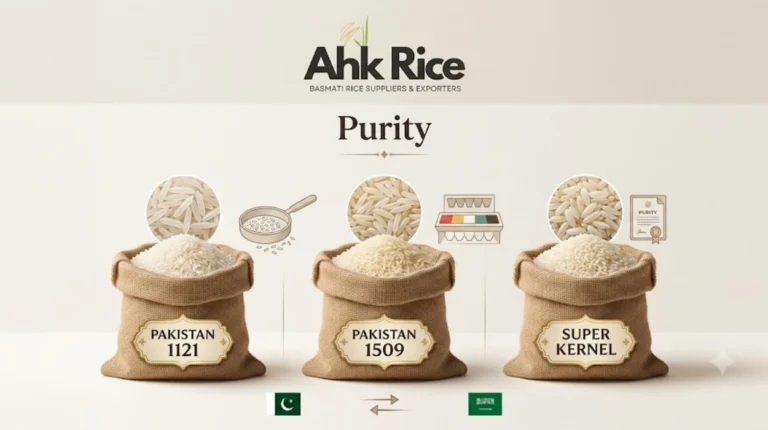
Indonesian buyers commonly compare 1121, Super Kernel, and 1509 Basmati rice before placing bulk orders. 1121 Basmati offers the strongest premium grain-length proposition, while 1509 can provide a more cost-efficient long-grain option. AHK Rice supplies these Pakistani varieties from Punjab and coordinates processing, packaging, inspection, documentation, and export logistics. For background, buyers can first review how Pakistan Basmati grain length affects Indonesian purchasing decisions.
What is the best solution for Indonesian importers seeking extra-long Basmati?
The best solution is a specification-led 1121 Basmati supply program with 8.2–8.4 mm grain length, controlled moisture, low breakage, approved packaging, and scheduled sea freight. This approach protects product consistency while giving importers a clearer basis for landed-cost decisions.
1121 Basmati is the strongest premium option for buyers prioritizing long grain presentation. AHK Rice lists export specifications around 8.35 mm average grain length, moisture below 12.5%, and broken grains below 1% for its Indonesia supply page.
1509 Basmati provides another commercial option. Its typical grain length is around 8.10–8.35 mm, with moisture around 12–13% under the cited AHK Rice specification. This grade can suit buyers seeking long grain performance with tighter procurement economics.
| Specification | 1121 Basmati | 1509 Basmati | Super Kernel |
|---|---|---|---|
| Average grain length | 8.2–8.4 mm | 8.1–8.35 mm | 7.0–7.4+ mm |
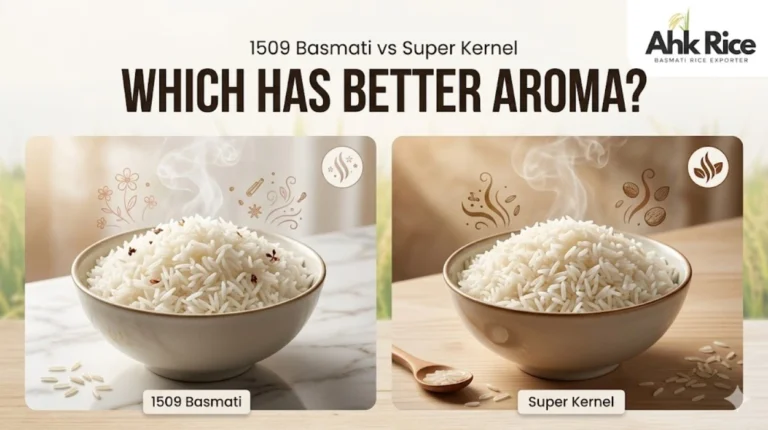
| Aroma | High | Medium-high | High |
| Cooked elongation | Very high | High | High |
| Moisture target | ≤12.5% | 12–13% | ≤12.5% |
| Broken target | <1–2% | 1–5% | ≤2–3% |
| Positioning | Premium | Mid-premium | Traditional premium |
| Main use | Premium retail/HORECA | Retail/HORECA | Specialty retail |
Specifications vary by contracted grade and shipment.
For buyers comparing grain-length economics across varieties, the related comparison of Pakistani Basmati grain lengths for Indonesian buyers provides the decision context.
With the right grade established, the next decision is whether the supplier can control the complete export chain.
Why choose AHK Rice for Indonesian Basmati supply?
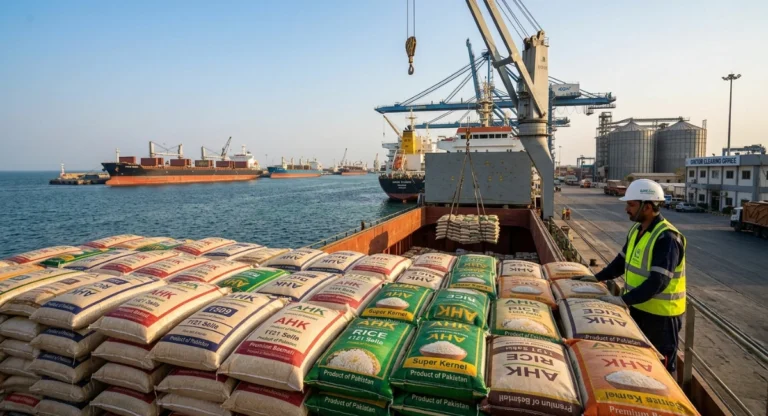
AHK Rice combines Punjab sourcing, controlled milling, grading, color sorting, customized packaging, inspection, export documentation, and Karachi loading within one supply process. This reduces coordination between separate suppliers and gives importers one specification reference from order approval through dispatch.
AHK Rice operates from Bucheki, Nankana Sahib, Punjab, and supplies 1121, Super Kernel, and 1509 Basmati. Its published service scope includes processing, grading, color sorting, customized packaging, and export documentation.
The processing sequence matters for extra-long grain. AHK Rice can clean, de-husk, polish, sort, grade, inspect, test, pack, and load the contracted product before shipment. These controls help protect grain integrity and reduce variation between the approved sample and commercial lot.
Quality verification also supports the buyer’s commercial position. AHK Rice states that pre-shipment inspections can involve recognized inspection organizations such as SGS and Bureau Veritas.
The service can also include packaging suited to Indonesian distribution. Available formats include bulk PP bags and customized retail packaging. Packaging selection should match the buyer’s channel, storage conditions, and local labeling requirements.
For a direct supplier relationship, AHK Rice’s export service provides the processing, packaging, documentation, and shipping framework required for international rice orders.
With supplier capability established, shipping time becomes the next practical consideration for Indonesian procurement planning.
How many shipping days should Indonesian importers expect?
Sea freight from Karachi to Indonesia commonly requires about 18–28 days, while AHK Rice cites 14–21 days for some direct Indonesian routes. Actual delivery depends on destination port, vessel schedule, transshipment, port congestion, customs clearance, and inland delivery requirements.
| Indonesian destination | Indicative sea transit | Planning use |
|---|---|---|
| Jakarta / Tanjung Priok | 18–24 days | Retail and wholesale |
| Surabaya | 20–26 days | East Java distribution |
| Medan | 22–28 days | Northern Sumatra distribution |
These figures are planning ranges, not guaranteed arrival dates. AHK Rice also states that Karachi-to-Jakarta or Surabaya shipping can take 14–21 days under its Indonesia logistics process.
A complete order timeline also includes sample approval, production, inland transport, vessel booking, sea transit, customs clearance, and final delivery. Importers should therefore avoid calculating lead time from sailing days alone.
A typical sequence can begin with a specification inquiry. AHK Rice then provides pricing and sample options. After approval, the buyer confirms the order and payment terms. Production and quality inspection follow before container loading.
The next step is understanding what a realistic commercial cost structure looks like.
What does an Indonesian Basmati order cost?
A 20 MT illustrative 1121 order at $1,100 per MT represents $22,000 in FOB rice value before freight, insurance, destination charges, duties, and taxes. The final landed cost must therefore be calculated from the contracted grade, quantity, Incoterm, freight quotation, destination port, and regulatory charges.
AHK Rice currently publishes a starting reference of approximately $1,100 per MT for its Indonesia 1121 Basmati page, while stating that final pricing depends on specifications and commercial terms.
Example 20 MT procurement calculation
| Cost component | Illustrative amount |
|---|---|
| 1121 Basmati | $1,100/MT |
| Quantity | 20 MT |
| FOB rice value | $22,000 |
| Sample evaluation | $50–$150 indicative |
| Ocean freight | Quoted separately |
| Insurance | Optional |
| Destination charges | Buyer/importer dependent |
| Duties/taxes | Buyer/importer dependent |
| Final CIF/landed value | Confirmed quotation |
The $22,000 figure is an illustrative FOB calculation, not a fixed quotation. Freight changes with vessel availability, container rates, route, season, and destination port.
Sample procurement can start at a much lower commitment. AHK Rice states that samples up to 20 kg can be provided, with courier and phytosanitary costs normally handled separately.
A practical sample process is straightforward:
- Submit the required grade, grain length, broken percentage, packaging, and destination.
- Receive the sample specification and commercial indication.
- Test aroma, grain length, cooking expansion, texture, and appearance.
- Approve the sample against the required commercial specification.
- Confirm quantity, packaging, Incoterm, payment terms, and inspection requirements.
- Process the approved rice through the agreed milling and grading specification.
- Inspect the finished shipment before loading.
- Load the containers at Karachi and issue shipping documentation.
- Clear the shipment at the Indonesian destination and arrange final delivery.
This sample-first process reduces the risk of approving a supplier based only on photographs or a price sheet.
What results can Indonesian importers expect?
Importers can expect better procurement control when the shipment specification, sample, inspection process, packaging, and logistics schedule are agreed before production. The main commercial outcome is reduced uncertainty rather than simply a lower purchase price.
Extra-long grain creates a stronger premium presentation. Controlled broken ratios protect retail appearance. Moisture control supports storage stability. Consistent grading helps distributors maintain the same product specification across repeat orders.
AHK Rice also supports custom packaging and private-label requirements. This allows Indonesian distributors to position Pakistani Basmati under their own commercial brands rather than relying only on generic bulk packaging.
The result is a more measurable procurement process. Buyers can compare sample quality against the contracted specification, verify shipment quality before loading, and calculate landed cost before committing to repeat volumes.
With quality and commercial outcomes defined, the final step is preparing the buyer’s order requirements.
How should an Indonesian importer get started?
Start with the exact grade, quantity, destination port, packaging, broken percentage, moisture requirement, inspection preference, and Incoterm. These details allow AHK Rice to prepare a commercially relevant quotation instead of a generic rice price.
Buyer specification checklist
- Select 1121, 1509, or Super Kernel.
- Define target grain length and broken ratio.
- Confirm moisture and purity requirements.
- Choose PP, jute, or retail packaging.
- State Jakarta, Surabaya, Medan, or another destination.
- Specify FOB, CFR/CNF, or CIF requirements.
- Request sample approval before bulk production.
- Confirm third-party inspection requirements.
- Approve final specifications before loading.
Indonesian import regulations can change, so the buyer should verify the current permit, customs, labeling, and product requirements before shipment. Indonesia’s current framework distinguishes special rice categories such as Basmati from general consumption rice, making product classification important.
AHK Rice provides the commercial information needed to move from product selection to production scheduling. Its published export workflow covers inquiry, sample approval, contract confirmation, production, quality inspection, packaging, documentation, loading, and delivery.
The purchasing decision is therefore simple: choose 1121 Basmati when maximum extra-long grain presentation is the priority, choose 1509 when commercial efficiency is more important, and use Super Kernel when traditional Basmati aroma is central to the product position.
For a specification-based Indonesian supply quotation, request an export quote from AHK Rice.
Frequently Asked Questions
Is 1121 Basmati suitable for Indonesian importers?
Yes, 1121 Basmati suits premium Indonesian retail and foodservice applications.
Its grain profile provides strong visual presentation after cooking.
AHK Rice lists approximately 8.35 mm average raw grain length.
Low broken percentages can support consistent retail appearance.
Final specifications should always be agreed through the approved sample.
How long does Pakistan-to-Indonesia rice shipping take?
Typical sea transit is approximately 18–28 days.
Jakarta can often be planned around an 18–24-day transit range.
Surabaya can require approximately 20–26 days.
Medan can require approximately 22–28 days.
Port congestion and vessel schedules can extend these planning ranges.
What is the minimum order for Indonesian buyers?
AHK Rice publishes flexible MOQs starting around one 20-foot container.
Its Indonesia pages reference approximately 20–25 MT for container supply.
Larger volumes can improve freight and procurement economics.
The final MOQ depends on grade, packaging, and commercial terms.
Buyers should confirm container payload before signing the contract.
What documents should Indonesian importers request?
Buyers should request commercial and export documents matching the agreed shipment.
Typical documents include the commercial invoice and packing list.
Certificate of Origin and phytosanitary documentation may also apply.
Fumigation documentation can support destination clearance requirements.
Importers should verify current Indonesian requirements before shipment.
Why use AHK Rice for Pakistani Basmati supply?
AHK Rice combines sourcing, milling, grading, packaging, inspection, and logistics coordination.
Its published Indonesia supply includes 1121, 1509, and other Basmati options.
Buyers can test samples before committing to bulk production.
Third-party inspection can provide additional shipment verification.
The process supports repeat procurement based on defined specifications.