AHK Rice Pakistan High-Purity Basmati Rice Supply for Indonesian Buyers
AHK Rice is a practical sourcing solution for Indonesian buyers requiring specification-controlled Pakistani Basmati, verified purity, export documentation, and planned Karachi-to-Indonesia shipment execution. Here is why: purity alone does not secure a successful import. Buyers also need controlled moisture, broken percentage, grain length, packaging, inspection, documentation, and dependable dispatch planning.
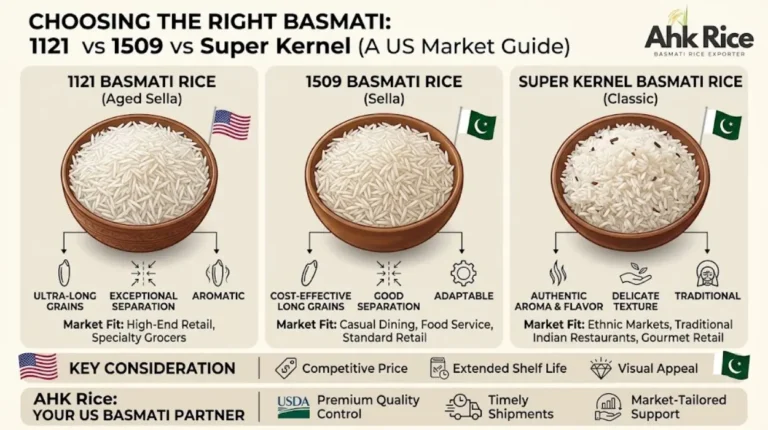
Indonesian buyers can compare 1121, 1509, and Super Kernel Basmati against their target retail, foodservice, or wholesale specification. 1121 suits premium positioning and long-grain presentation. 1509 provides a competitive balance between grain performance and procurement cost. Super Kernel supports buyers seeking traditional Basmati characteristics at a different commercial level. AHK Rice coordinates sourcing, milling, grading, sorting, packing, inspection, and export documentation from Pakistan. Buyers can first understand the commercial importance of purity through why rice purity matters to Indonesian buyers of Pakistan Basmati.
What is the best solution for Indonesian buyers seeking high-purity Basmati?
The best solution is a specification-led supply contract covering grain length, purity, moisture, broken grains, processing grade, packaging, inspection, documents, and destination port before production begins.
High-purity Basmati should be purchased against measurable specifications rather than a general description such as “premium rice.” AHK Rice can structure the order around the buyer’s required grade and destination.
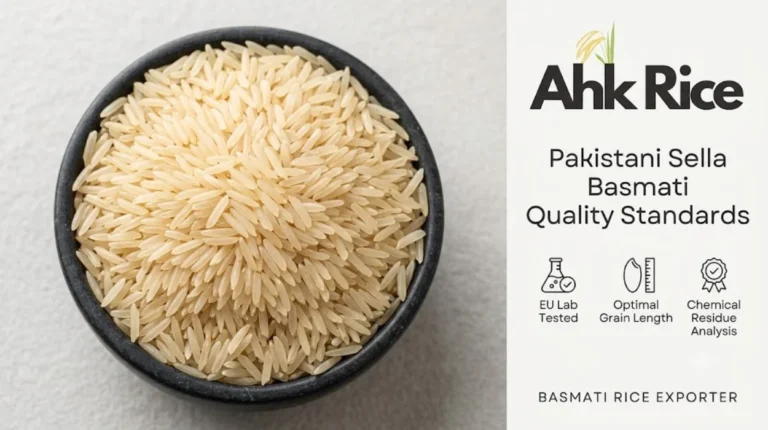
1121 Basmati provides a premium long-grain profile. Current AHK Rice specifications show 1121 Sella at approximately 8.3–8.4 mm average grain length, with 12% maximum moisture and 0.5% maximum broken grains for the listed specification.
1509 Basmati provides another commercial option. AHK Rice lists 1509 Sella at approximately 8.4 mm average grain length, with 12.5% maximum moisture and 1% maximum broken grains under the referenced specification.
Indonesia regulates rice imports through specific import-policy requirements. Current Indonesian rules distinguish rice for general purposes from other import categories, while import permits and agricultural requirements can apply according to the applicable classification.
Indonesian buyers should therefore approve the exact HS classification, import permission, labeling, inspection, and plant-health requirements before shipment. Pakistani exporters must also obtain applicable phytosanitary certification for regulated plant products.
With the sourcing specification established, the next decision is which supplier can control those specifications through shipment.
Why choose AHK Rice for Pakistan Basmati supply?
AHK Rice combines Punjab sourcing, controlled milling, sorting, inspection, customized packing, documentation, and export coordination into one specification-led supply process for Indonesian importers.
AHK Rice supplies Pakistani Basmati varieties from Punjab and coordinates the commercial stages between production and export. The process can include cleaning, dehusking, polishing, grading, sorting, processing, packing, inspection, container loading, and documentation.
For buyers requiring high purity, colour sorting and repeated quality checks are important. AHK Rice states that its export process includes purity, moisture, breakage, and grading controls. Product-specific specifications should remain the controlling reference for every purchase order.
The service also supports customized packaging. Available formats can include PP, non-woven, jute, cloth, and other buyer-specified formats. Packaging should be agreed before production because bag size, printing, material, palletization, and labeling can affect the final commercial cost.
Indonesian buyers can use the AHK Rice Pakistani Basmati export service to align the product specification, packing requirement, quantity, destination port, and Incoterm before requesting a commercial offer.
Which specification should an Indonesian buyer select?
| Buyer objective | Recommended direction | Main reason |
|---|---|---|
| Premium retail | 1121 Basmati | Long grain and premium presentation |
| Premium foodservice | 1121 Steam | Strong cooking and presentation profile |
| Cost-conscious premium | 1509 Basmati | Competitive procurement positioning |
| Long shelf-storage requirement | Sella grades | Parboiling supports commercial handling |
| Traditional Basmati positioning | Super Kernel | Recognized aromatic long-grain profile |
| Custom retail packing | Any approved grade | Packaging can match market positioning |
| Independent verification | Any approved grade | Third-party inspection can verify specifications |
The correct grade depends on the buyer’s target price, cooking requirement, channel, and import specification. The next step is proving the agreed specification before bulk loading.
What results can Indonesian buyers expect?
Buyers can expect a documented supply process, controlled product specifications, sample approval, inspection options, export documentation, and shipment visibility from Pakistan to the destination port.
The first result is specification clarity. The buyer receives a defined product rather than an open-ended rice description. Grain length, moisture, broken percentage, processing type, packing, quantity, and destination become measurable commercial terms.
The second result is sample-based approval. A buyer can evaluate the physical grain, aroma, colour, cooking behaviour, and packaging before committing to a bulk shipment.
The third result is independent verification. AHK Rice states that third-party inspections such as SGS can be arranged. The buyer pays the third-party inspection fee under the stated commercial process.
The fourth result is documentation control. Export shipments can include commercial invoices, packing lists, certificates of origin, phytosanitary certificates, and other documents required for the transaction. Indonesian requirements should be confirmed against the buyer’s current import approval.
The fifth result is planned logistics. Indicative commercial information for Pakistan-to-Indonesia rice shipments places Karachi-to-Tanjung Priok or Surabaya sailing at approximately 18–28 days, excluding additional time for production, port handling, customs clearance, and inland delivery.
For Jakarta buyers, Tanjung Priok is the relevant planning destination. For East Java distribution, Surabaya provides another major destination option. Actual transit depends on vessel schedules, transshipment, port congestion, and shipping-line availability.
The next decision is cost because the correct specification must also fit the buyer’s landed-cost target.
What affects the price of Pakistan Basmati supplied to Indonesia?
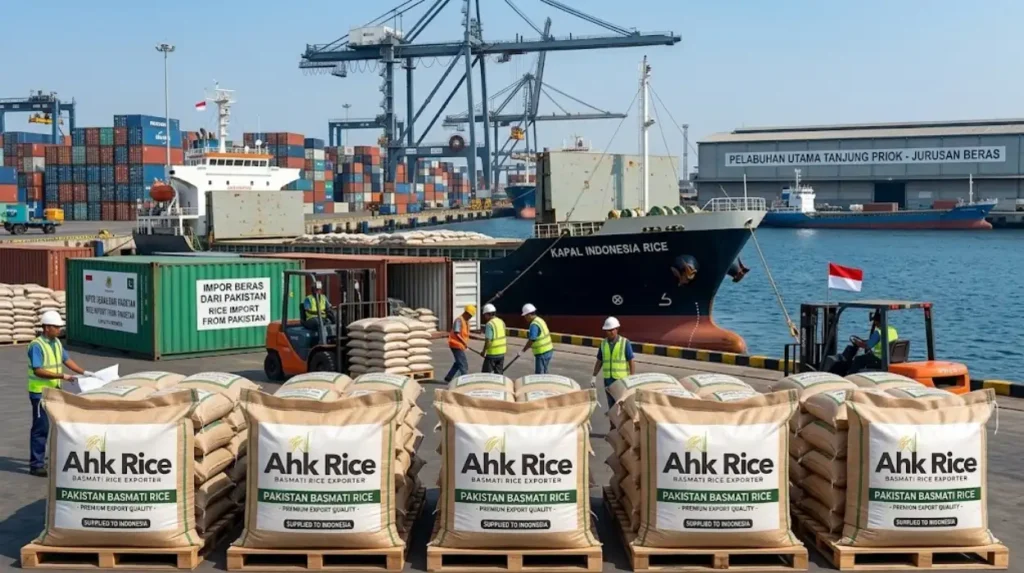
Final pricing depends on variety, processing grade, quality specification, order volume, packaging, inspection, Incoterm, freight, documentation, and destination-port requirements.
Variety affects the base rice value. Premium 1121 can carry a different price position from 1509 or Super Kernel because grain profile, market positioning, and procurement demand differ.
Processing also affects cost. White, Steam, Golden Sella, and other processed grades require different milling and processing operations. Additional sorting or tighter broken-grain limits can increase processing requirements.
Packaging affects the final quotation. Standard bulk PP bags generally have a different cost structure from printed retail packaging, laminated bags, woven formats, or smaller consumer packs.
Inspection creates another variable. Independent inspection provides additional buyer assurance, but the inspection company charges separately according to the agreed scope and shipment.
Freight must also be separated from the rice price. FOB Karachi and CIF/CFR destination pricing produce different commercial comparisons. Insurance is another consideration when the selected Incoterm requires or permits buyer-arranged cover.
Current public AHK Rice pages do not provide a fixed universal Indonesia price per metric ton. That approach is appropriate for export procurement because rice values change with grade, quantity, packing, freight, and shipment timing.
The next step is therefore a controlled sample and quotation process rather than comparing an isolated headline price.
How does the AHK Rice sample process work?
The sample process starts with product selection, specification confirmation, sample dispatch, buyer testing, approval, commercial quotation, and bulk-order confirmation.
Step 1: Define the requirement
Specify the Basmati variety, processing grade, grain length, moisture target, broken percentage, quantity, packaging, destination port, and preferred Incoterm.
Step 2: Select the sample
AHK Rice product information states that samples of up to 20 kg can be provided, while the client covers sample shipping costs. Phytosanitary charges can also apply to the sample shipment.
Step 3: Dispatch the sample
AHK Rice prepares the agreed sample and arranges shipment. Courier cost depends on destination, package weight, service level, and current carrier rates. The exact amount should therefore be quoted before dispatch.
Step 4: Test the sample
Check grain appearance, broken percentage, moisture, aroma, cooking performance, colour, foreign matter, and packaging suitability. Compare the result against the purchase specification.
Step 5: Approve the specification
Confirm the approved sample and convert its characteristics into the commercial specification. This reduces disputes between sample quality and bulk shipment quality.
Step 6: Request the bulk quotation
Request pricing based on metric tons, packaging, destination, Incoterm, inspection requirement, and shipment schedule. AHK Rice can then prepare the commercial offer around the actual order structure.
This sample-first approach creates the evidence needed for the final procurement decision.
How many shipping days should Indonesian buyers plan?
Plan approximately 18–28 sailing days from Karachi to Tanjung Priok or Surabaya, then add production, port, customs, and inland-delivery time.
| Indonesian destination | Indicative ocean transit | Planning consideration |
|---|---|---|
| Tanjung Priok, Jakarta | 18–28 days | Major Jakarta distribution route |
| Surabaya | 18–28 days | Suitable for East Java distribution |
| Other Indonesian ports | Quote required | Transit depends on routing |
The 18–28-day figure is an indicative sailing range, not a guaranteed delivery date. Vessel schedules and transshipment arrangements can change the actual arrival date.
Indonesia’s import process can add additional time because import permissions, verification, customs, and agricultural controls may apply. Buyers should therefore calculate the full procurement cycle instead of using ocean transit alone. Indonesian regulations have also been updated during 2026, making current import-policy verification important before contracting.
With transit planning understood, the final decision becomes whether the supplier can meet the product, compliance, and commercial requirements together.
How should an Indonesian importer get started with AHK Rice?
Start with one approved specification, one sample, one destination port, and one commercial quantity before moving into a recurring supply program.
Send the required variety and processing grade first. State the target moisture, broken percentage, grain length, packaging, quantity, destination port, and preferred Incoterm.
Next, request the sample. Test the physical and cooking characteristics against the agreed specification. Ask for independent inspection when the shipment requires additional verification.
Then confirm the commercial structure. Review the rice price, packaging cost, inspection cost, freight, documentation, payment terms, and shipment schedule together.
AHK Rice can support buyers seeking 1121, 1509, and Super Kernel Basmati supply for Indonesian commercial channels. AHK Rice also coordinates packaging and export documentation around the agreed shipment specification.
For buyers comparing supplier controls before purchase, the relevant Indonesian importer purity-verification comparison should be reviewed alongside the final specification; the exact MOFU article URL was not provided in the brief.
AHK Rice is best evaluated against measurable procurement criteria: specification accuracy, sample consistency, inspection access, documentation, logistics planning, and total landed cost.
For a specification-based quotation covering your required Basmati grade, quantity, packaging, destination, and Incoterm, request an export quotation from AHK Rice.
Frequently Asked Questions
Is AHK Rice suitable for Indonesian Basmati importers?
AHK Rice supplies Pakistani Basmati for Indonesian commercial buyers.
The available varieties include 1121, 1509, and Super Kernel.
Buyers can specify processing, packaging, quantity, and destination port.
Third-party inspection can also be arranged for independent verification.
Final compliance should match the buyer’s current Indonesian import requirements.
Which Pakistani Basmati is best for Indonesia?
1121 is suitable for premium positioning, while 1509 offers commercial efficiency.
Super Kernel provides another established Pakistani Basmati option.
The final selection should consider price and cooking requirements.
Buyers should compare grain length, broken percentage, and moisture.
Sample approval should precede the bulk shipment decision.
How much does a rice sample cost?
AHK Rice states that samples up to 20 kg can be provided without a rice charge.
The buyer covers sample shipping costs.
Phytosanitary charges can also apply to sample export.
Courier pricing varies by destination and shipment weight.
The exact sample logistics cost should be confirmed before dispatch.
How long does shipping from Pakistan to Indonesia take?
Indicative ocean transit from Karachi to Tanjung Priok or Surabaya is 18–28 days.
This range covers ocean sailing rather than the complete order cycle.
Production and container loading require additional time.
Customs clearance can also extend final delivery.
Buyers should confirm the shipment schedule before booking inventory.
Can Indonesian buyers request third-party inspection?
Yes, AHK Rice states that SGS or similar third-party inspection can be arranged.
The inspection provides independent verification before shipment.
The buyer covers the third-party inspection fee.
Inspection can cover agreed quality and shipment specifications.
The inspection scope should be written into the purchase terms.
What documents should Indonesian buyers review?
Buyers should review the commercial and plant-health documents required for their specific import approval.
Common export documents include the invoice and packing list.
Certificates of origin and phytosanitary certificates may also apply.
Indonesia’s current import rules should be checked before shipment.
Document requirements can depend on rice classification and import purpose.