How Do Indonesian Importers Verify Purity in Pakistan Basmati Rice Shipments?
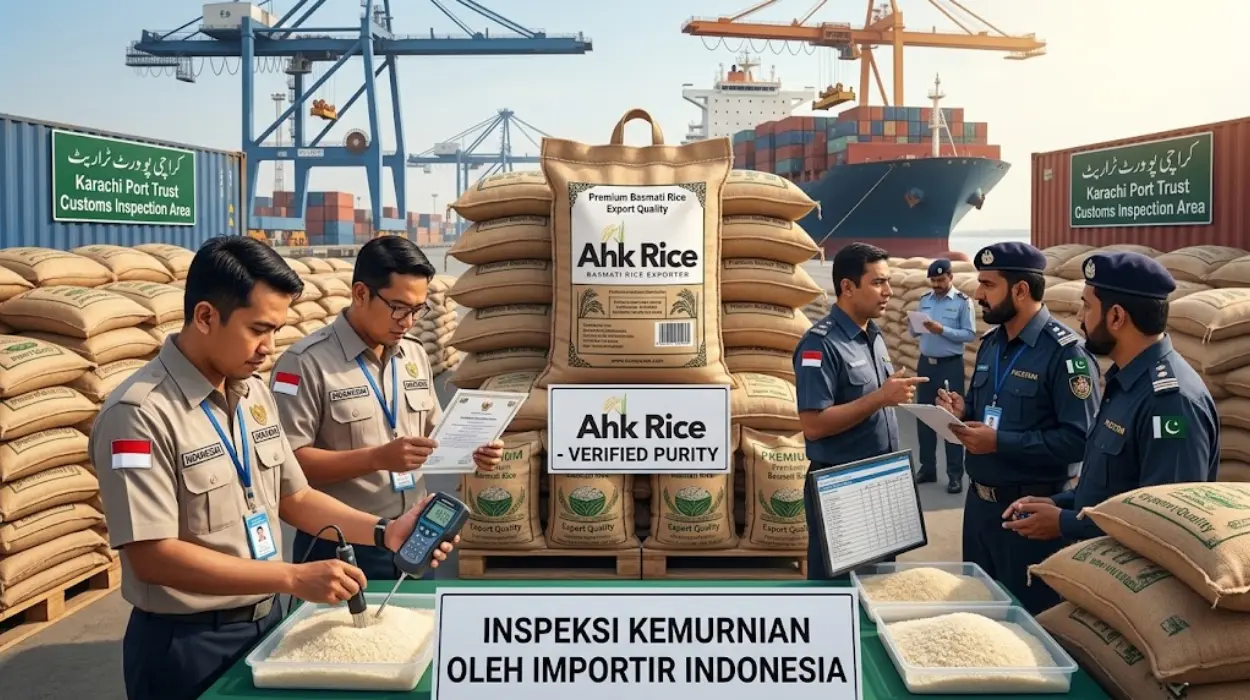
Indonesian importers verify Pakistan Basmati purity most reliably through representative sampling, calibrated testing, optical sorting, laboratory analysis, and shipment-level inspection. Here is why: purity depends on more than visual appearance. Moisture, broken grains, foreign matter, grain length, processing grade, and batch traceability must match the agreed specification.
For broader product context, Indonesian buyers can review this guide to Pakistani rice varieties exported to Indonesia before comparing suppliers. The relevant Pakistani varieties include 1121, Super Kernel, and 1509 Basmati rice. Each variety has different grain characteristics, processing options, pricing, and commercial applications.
Purity verification should begin before loading, not after arrival. A buyer should approve a precise specification covering moisture, broken percentage, grain length, foreign matter, purity, packaging, and processing grade. The same specification should govern the sample, production lot, inspection report, and commercial shipment. This creates a measurable chain from processed rice to container.
What does purity mean in a Pakistan Basmati rice shipment?
Purity means the shipment contains the agreed proportion of genuine rice grains with controlled foreign matter, broken grains, moisture, and physical quality. A documented specification makes purity measurable.
Rice purity is a composite quality concept. It does not simply mean that grains look clean. Importers evaluate physical cleanliness, variety consistency, grain uniformity, broken percentage, moisture, damaged kernels, chalky grains, and foreign matter.
Foreign matter includes materials that are not rice. Examples include husk fragments, stones, dust, straw, weed seeds, insects, and other unwanted materials. Modern export processing reduces these materials through cleaning, grading, colour sorting, and inspection.
Broken percentage also influences perceived purity. Lower broken content produces a more uniform retail appearance and improves the proportion of intact grains available to the buyer. Premium retail specifications commonly use 1–5% broken, while foodservice and manufacturing buyers may accept higher levels.
Moisture forms another part of shipment verification. Indonesia’s SNI 6128:2020 specifies a maximum moisture level of 14% for rice. Commercial Basmati contracts commonly use tighter specifications around 12–13%, depending on grade, packaging, and storage requirements.
A buyer should therefore define purity as a complete specification rather than a single laboratory number. The next step is comparing the available methods used to prove that specification.
What are the available solutions for verifying purity?
The strongest verification system combines supplier testing, representative sampling, calibrated instruments, laboratory confirmation, optical sorting records, and independent pre-shipment inspection.
Supplier-side quality testing
Supplier testing provides the first control point. Quality teams can inspect moisture, grain length, broken percentage, foreign matter, colour, and purity before packing. This approach identifies production problems early and allows corrective processing before loading.
Supplier testing is also economical. A mill can inspect several production batches without waiting for an external inspector. AHK Rice uses processing, grading, sorting, inspection, packaging, and export coordination as connected stages. This approach supports batch-level consistency rather than relying on one final visual inspection.
Portable moisture testing
Portable moisture meters provide rapid operational measurements. Controllers can test multiple bags and identify inconsistent moisture quickly. The limitation is calibration. Instrument settings, grain temperature, sample preparation, and equipment condition affect the reading.
Laboratory testing
Laboratory testing provides stronger evidence for contractual disputes. Reference methods establish a more controlled measurement than a quick factory reading. Indonesia has also adopted SNI ISO 712-1:2024 for determining moisture content in cereals and cereal products.
Optical colour sorting
Optical sorting separates discoloured grains and unwanted materials according to visual characteristics. Multiple sorting stages can improve consistency before the rice reaches final packaging. Integrated processing systems combine cleaning, grading, colour sorting, laboratory inspection, and export documentation.
Independent inspection
Third-party inspection connects the quality result directly to the actual export container. The inspector samples the shipment, records the findings, and issues documentation. This method costs more but provides stronger evidence for high-value or specification-sensitive purchases.
These solutions establish different levels of control, so the next comparison should focus on measurable commercial differences.
How do different purity verification approaches compare?
Integrated export processing provides the strongest consistency, while supplier-only testing provides the lowest verification cost. Independent inspection adds shipment-level assurance for higher-risk purchases.
| Attribute | Supplier Testing | Laboratory Testing | Third-Party Inspection |
|---|---|---|---|
| Sampling control | Internal | Controlled | Independent |
| Testing evidence | Good | Strong | Strongest shipment linkage |
| Testing speed | Fast | Moderate | Moderate |
| Cost per shipment | Low | Medium | Higher |
| Dispute protection | Moderate | High | Very high |
| Batch traceability | Good | High | High |
| Best application | Routine supply | Contract-sensitive supply | High-value shipments |
Supplier testing works best for routine production control. Laboratory testing works best when moisture or purity forms a contractual acceptance condition. Third-party inspection works best when the financial impact of rejection exceeds inspection cost.
The correct approach therefore depends on shipment value, specification sensitivity, storage period, and buyer risk tolerance. Verification should match the commercial consequence of a failed specification.
Which two market regions show different grade preferences and commercial values?
Indonesia generally favors 1121 Steam and 1121 Sella for premium positioning, while Middle Eastern buyers commonly compare 1121, Super Kernel, and Sella grades across retail and foodservice channels.
| Attribute | Indonesia | Middle East |
|---|---|---|
| Main premium grades | 1121 Steam, 1121 Sella | 1121 Sella, 1121 Steam, Super Kernel |
| Wholesale option | 1509 Steam, 1121 Steam | Super Kernel, 1509 |
| Indicative FOB price/MT | $1,135–$1,200 premium | $1,135–$1,205 |
| Typical shelf-life planning | 12–24 months | 12–24 months |
| Primary quality focus | Purity, appearance, cooking consistency | Grain length, aroma, storage stability |
| Common buyer segment | Retail and foodservice | Retail, hospitality, wholesale |
| Commercial priority | Specification consistency | Grade-to-price balance |
The price figures are indicative FOB Pakistan benchmarks, not fixed quotations. Published references place 1121 Steam around $1,160–$1,200 per MT. Indonesian market guidance places 1509 Steam around $920–$1,050 and 1121 Steam around $1,080–$1,280, depending on specification and market conditions.
Shelf-life planning reaches 12–24 months in both markets, but actual storage performance depends on moisture, packaging, temperature, humidity, pest control, and stock rotation. Golden Sella generally supports longer storage programs because parboiling strengthens the kernel structure. Steam grades suit buyers prioritizing appearance and cooking characteristics.
For an Indonesian importer, price should therefore be evaluated against the purity specification. A lower FOB price provides limited value when inconsistent moisture, excessive broken grains, or foreign matter creates downstream losses.
Which method works best for different Indonesian importing cases?
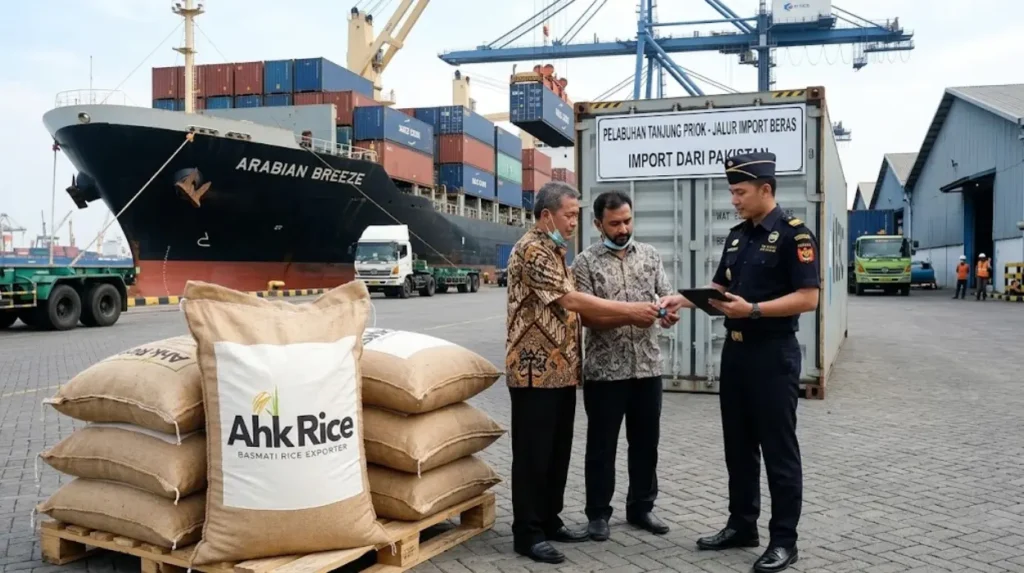
Trial buyers need supplier documentation and independent sample testing. Recurring container buyers need batch certificates. High-value retail programs benefit most from independent inspection and laboratory confirmation.
Trial shipment
A first-time importer should request a representative sample and supplier quality report. The buyer should test moisture, inspect foreign matter, assess broken percentage, and compare grain length against the approved specification.
Recurring wholesale shipment
A recurring buyer should establish a written specification before placing repeated orders. The specification should define moisture tolerance, broken percentage, grain length, purity, sampling method, testing method, packaging, and rejection procedure.
Premium retail program
A premium retailer should combine purity verification with grain appearance, aroma, cooking performance, packaging, crop year, and traceability. Lower broken percentages support stronger shelf presentation and consistent cooking results.
Long-storage program
A long-storage importer should prioritize moisture stability and processing grade. Golden Sella provides stronger kernel structure through parboiling. A 12–24-month planning horizon requires better warehouse controls than rapid wholesale turnover.
The verification method should therefore change with the buyer’s commercial exposure rather than remain identical for every shipment.
What are the pros and cons of each purity strategy?
Supplier testing is fast and economical but depends on internal controls. Laboratory testing provides stronger evidence but costs more. Third-party inspection gives independent shipment assurance at additional cost.
Supplier testing provides the strongest process-control advantage. A mill can identify contamination or moisture variation before packaging. The weakness is independence because the importer relies on the supplier’s equipment and procedures.
Laboratory testing provides stronger evidence. The weakness is time and cost. The sample must also represent the actual shipment and remain properly sealed, labelled, and traceable.
Third-party inspection provides the strongest connection between the test result and the container. The weakness is scheduling and inspection expense. For high-value shipments, the additional cost can be small compared with rejection, reprocessing, or customer claims.
Integrated processing provides another advantage. Cleaning, dehusking, polishing, grading, optical sorting, inspection, and packaging operate as connected controls. AHK Rice’s export workflow follows these processing and quality stages before dispatch.
What decision factors should Indonesian importers use?
Indonesian importers should prioritize specification, sampling, testing method, processing grade, storage period, packaging, inspection, documentation, and total landed value instead of FOB price alone.
| Decision Factor | Question to Ask | Priority |
|---|---|---|
| Moisture | What exact percentage appears in the contract? | Critical |
| Sampling | Does the sample represent the full production lot? | Critical |
| Testing | Is the method calibrated and documented? | Critical |
| Processing grade | Is Steam, White, or Sella suitable? | High |
| Storage | How long will the rice remain in Indonesia? | High |
The first decision is the contractual moisture specification. A supplier cannot be compared fairly against another supplier without identical acceptance thresholds.
The second decision is sampling. Multiple bags or production locations should contribute to the sample. Testing one bag does not establish the condition of an entire container.
The third decision is method alignment. Buyer and supplier should use comparable procedures. Different methods can produce different readings, so the controlling method belongs in the contract.
The fourth decision is processing grade. 1121 emphasizes extra-long grain presentation. Super Kernel emphasizes traditional Basmati characteristics. 1509 provides a competitive price-to-performance position.
The fifth decision is total value. An additional $20–$50 per MT can be commercially justified when tighter specifications reduce rejection exposure and improve storage performance.
What should Indonesian importers request before shipment?
Importers should request the product specification, batch quality report, sampling record, test method, laboratory report where required, inspection certificate, packaging details, and shipment documents before loading.
The product specification should identify variety, processing grade, moisture, broken percentage, grain length, purity, packaging, and acceptance criteria. This document becomes the reference point for production and inspection.
The batch quality report should correspond to the actual production lot. A generic specification sheet does not prove that the loaded container meets the agreed specification.
The sampling record should identify the sampled lot and inspection date. A sealed reference sample should remain available for later comparison.
The shipment file should also include applicable export documentation. Common documents include commercial invoice, packing list, certificate of origin, phytosanitary documentation, fumigation documentation, and bill of lading.
This documentation converts purity verification from a visual judgment into a traceable procurement system.
What is the best overall verification strategy for Indonesian buyers?
The best strategy is a layered system: approved specification, representative sampling, supplier testing, calibrated measurement, laboratory confirmation, and independent pre-shipment inspection for high-value contracts.
AHK Rice provides Pakistani Basmati rice from Punjab across 1121, Super Kernel, and 1509 varieties. Its export workflow connects processing, grading, sorting, packaging, inspection, and shipment coordination. The buyer should evaluate these capabilities against the agreed Indonesian specification rather than relying on a generic quality claim.
The practical solution is specification control across the complete shipment. The approved sample should match the commercial grade. The production batch should match the sample. The inspection report should identify the actual shipment. The documents should remain traceable through container dispatch.
This model also supports supplier comparison. Indonesian importers can compare purity, moisture, broken percentage, grain length, processing grade, packaging, inspection, shelf-life planning, and FOB or CIF cost using the same framework.
Frequently Asked Questions
How do Indonesian importers verify Basmati rice purity?
Indonesian importers verify purity through representative sampling, moisture testing, broken-percentage analysis, foreign-matter inspection, grain-length grading, laboratory testing, and independent shipment inspection.
What moisture level should Indonesian Basmati buyers specify?
Indonesia’s SNI 6128:2020 sets 14% as the maximum moisture level for rice. Commercial Basmati contracts commonly specify tighter targets around 12–13%.
Is supplier testing enough for a container shipment?
Supplier testing provides useful process control but should not be the only evidence for high-value contracts. Independent sampling and laboratory confirmation provide stronger contractual protection.
Which Pakistani Basmati grades can Indonesian importers source?
Indonesian buyers can source 1121, Super Kernel, and 1509 Basmati. Available processing options include Steam, White, Sella, Golden Sella, Creamy Sella, and Brown depending on the variety and specification.
Is Golden Sella better for long storage?
Golden Sella generally supports stronger storage performance than raw white rice because parboiling strengthens the kernel structure. Actual shelf life still depends on moisture, packaging, warehouse conditions, pest control, and stock rotation.
What documents should an Indonesian importer request?
The buyer should request the product specification, batch quality report, sampling record, laboratory report where applicable, inspection certificate, commercial invoice, packing list, certificate of origin, phytosanitary documentation, fumigation documentation, and bill of lading.
How should Indonesian importers compare suppliers?
Importers should compare identical moisture limits, sampling procedures, testing methods, broken percentages, grain lengths, processing grades, packaging, inspection requirements, shelf-life planning, and landed costs.
What is the main takeaway?
Purity verification works best as a documented system rather than a single test. Indonesian buyers gain stronger procurement control by connecting the product specification, representative sample, laboratory result, inspection certificate, batch identity, and final container.
Primary Keyword: Pakistan Basmati rice purity verification Indonesia
Secondary Keywords:
- Indonesian Basmati rice importers
- Pakistan Basmati rice Indonesia
- Basmati rice quality inspection
- Basmati rice purity testing
- Pakistan rice shipment verification
- Basmati rice moisture testing Indonesia
- Basmati rice foreign matter inspection
Meta Title: Pakistan Basmati Rice Purity Verification in Indonesia
Meta Description: Learn how Indonesian importers verify Pakistan Basmati rice purity through sampling, moisture testing, laboratory checks, grading, and shipment inspection.