Foreign Matter Comparison Across Pakistan 1121, 1509, and Super Kernel Rice for UAE Markets
Foreign matter determines the commercial quality of exported Basmati rice. UAE importers inspect every shipment because foreign particles influence food safety, milling quality, customer satisfaction, and compliance with import regulations. Pakistan’s1121, 1509, and Super Kernel Basmati varieties all follow different grading practices, yet modern processing reduces foreign matter to internationally accepted specifications.
Rice exporters inspect foreign matter before milling, during optical sorting, after polishing, and before container loading. Each inspection stage removes unwanted materials while protecting grain quality. Buyers in the UAE evaluate these specifications because restaurants, supermarkets, hotels, and food processors require clean and uniform rice.
Foreign matter represents one of several quality parameters. Grain length, moisture content, broken percentage, damaged kernels, chalky grains, color consistency, and aroma also influence export acceptance. Foreign matter remains the first visible indicator of milling quality because contamination appears before cooking or laboratory analysis.
Understanding how Pakistan controls foreign matter explains why different Basmati varieties satisfy different commercial applications. Buyers selecting premium retail packs apply stricter specifications than institutional catering buyers purchasing large-volume shipments.
What Is Foreign Matter in Pakistan Basmati Rice?
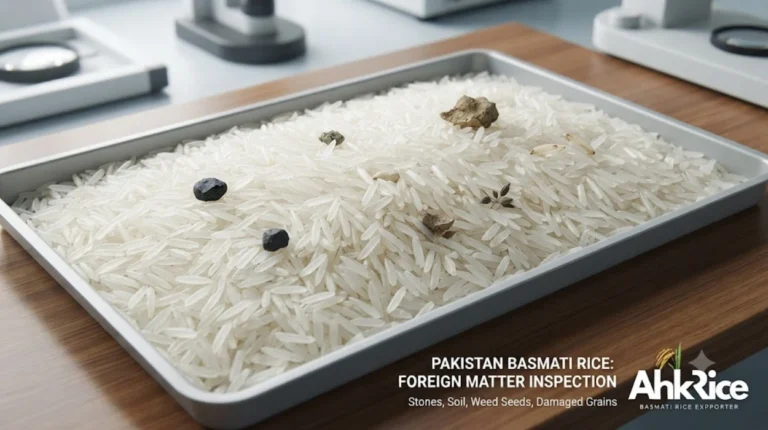
Foreign matter includes every non-rice material present inside a rice lot. Quality inspection removes stones, dust, straw, husk fragments, weed seeds, metal particles, insects, and damaged organic materials because these contaminants reduce food safety, export quality, and commercial value in international markets.
Foreign matter refers to every material that does not belong to edible rice kernels. International rice standards classify these materials separately from broken rice and defective grains.
Typical foreign matter includes:
- Stones
- Sand particles
- Dust
- Straw pieces
- Paddy husks
- Weed seeds
- Soil
- Metal fragments
- Glass particles
- Plastic pieces
- Insect remains
Rice mills remove these materials before export through multiple cleaning stages. Each stage targets a specific contaminant instead of removing every impurity at once.
Foreign matter differs from defective rice. Broken kernels remain edible rice. Chalky grains remain rice. Damaged kernels remain rice. Foreign matter consists entirely of materials outside the rice grain itself.
The UAE maintains strict food safety standards because imported rice supplies supermarkets, hotels, restaurants, catering companies, and food manufacturers. Clean rice improves consumer confidence while reducing processing losses after import.
According to Pakistan’s export inspection practices, commercial rice undergoes repeated cleaning before shipment to satisfy overseas buyer specifications (Source: REAP export data, December 2025).
With foreign matter defined, the next question becomes how exporters remove these contaminants before shipment.
How Does Pakistan Remove Foreign Matter During Rice Processing?
Modern rice mills remove foreign matter through sequential mechanical and optical processing. Each stage targets a different contaminant, producing cleaner rice while protecting grain length, aroma, appearance, and export specifications required by UAE buyers.
Rice processing follows a structured quality-control sequence. Every machine performs one specific function before transferring rice to the next operation.
Initial Cleaning
Fresh paddy arrives from farms containing straw, stones, dust, immature grains, and field debris.
Cleaning machines separate larger impurities using vibrating screens.
Air aspiration removes lightweight particles before milling begins.
De-husking
Rubber roll shellers remove the outer husk while protecting whole kernels.
De-husking separates edible rice from paddy coverings.
Paddy Separation
Paddy separators isolate unhulled grains from fully processed rice.
Separated paddy returns for another de-husking cycle.
Whitening
Rice whitening machines remove bran layers through controlled abrasion.
Proper whitening improves appearance while maintaining grain integrity.
Polishing
Mist polishing enhances grain surface smoothness.
Polished rice reflects light more evenly and appears brighter.
Length Grading
Indented cylinder graders separate whole kernels from broken grains.
Uniform grain size improves cooking consistency.
Color Sorting
Optical color sorters inspect every grain using high-speed cameras.
Rejected materials include:
- Black grains
- Yellow grains
- Red grains
- Chalky defects
- Foreign particles
Modern color sorters inspect thousands of kernels every second.
Metal Detection
Metal detectors identify steel fragments introduced during transportation or machinery maintenance.
Automatic reject systems remove contaminated portions instantly.
Final Inspection
Quality inspectors verify export specifications before packaging.
Laboratories measure moisture, broken percentage, damaged kernels, chalkiness, and foreign matter.
Modern processing reduces contamination without affecting grain aroma or cooking quality.
Understanding the cleaning process explains why each Basmati variety achieves different commercial grades.
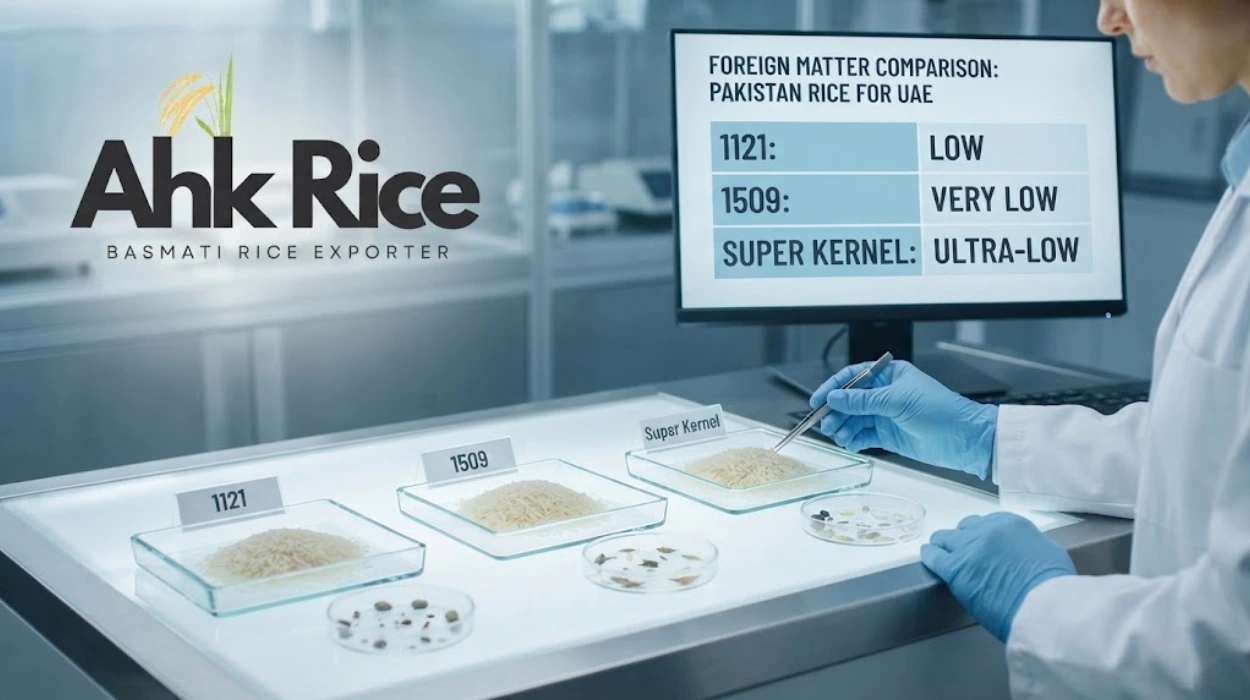
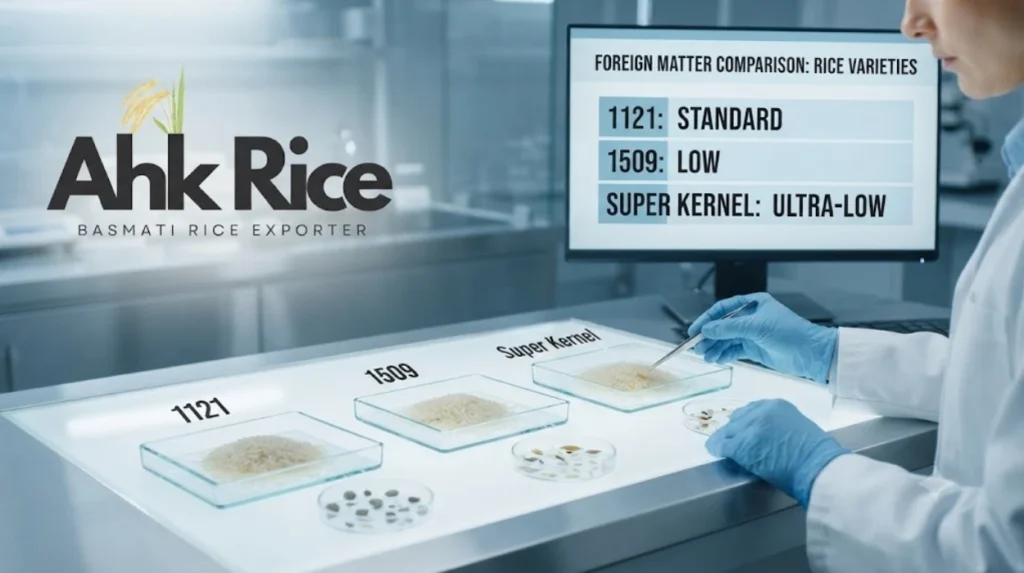
What Foreign Matter Levels Differentiate 1121, 1509, and Super Kernel Rice?
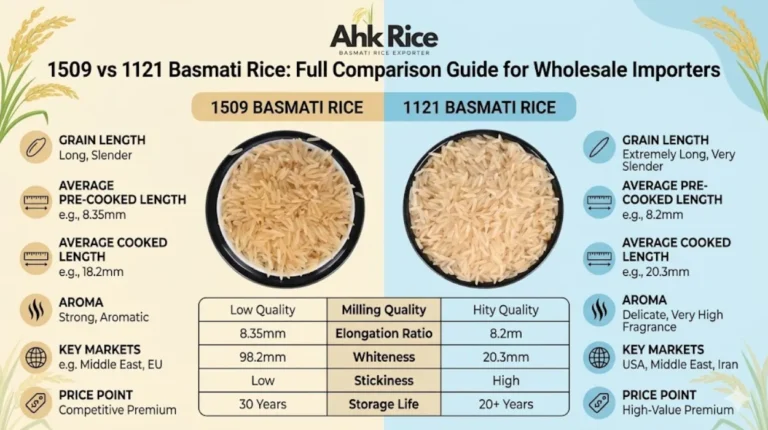
1121 receives the strictest premium grading, 1509 emphasizes high-volume efficiency, and Super Kernel balances traditional quality with commercial affordability. Foreign matter specifications differ according to buyer requirements, packaging category, and intended market segment rather than rice variety alone.
Although all three varieties undergo similar processing, export specifications differ according to customer contracts.
1121 Basmati Rice
1121 Basmati produces exceptionally long kernels.
Premium retail buyers usually request the lowest possible foreign matter tolerance.
Applications include:
- Premium supermarkets
- Luxury retail brands
- Fine dining restaurants
- Gourmet exports
Typical characteristics include:
| Specification | 1121 Basmati |
|---|---|
| Grain Length | 8.30 mm+ |
| Aroma | Strong |
| Foreign Matter | Very Low |
| Export Grade | Premium |
| Retail Demand | High |
1509 Basmati Rice
1509 matures earlier than traditional Basmati varieties.
High productivity supports competitive export pricing.
Large institutional buyers frequently purchase 1509 because it balances quality and affordability.
Typical applications include:
- Catering companies
- Food processors
- Government procurement
- Hospitality suppliers
What Foreign Matter Levels Differentiate 1121, 1509, and Super Kernel Rice?
Super Kernel Basmati Rice
Super Kernel Basmati is Pakistan’s traditional premium aromatic variety. The grain is shorter than 1121 but delivers excellent fragrance and cooking performance. UAE importers continue purchasing Super Kernel for retail brands that prioritize authentic Basmati aroma over maximum grain length.
Typical applications include:
- Premium retail packs
- Traditional grocery chains
- Hotels
- Family restaurants
| Specification | Super Kernel Basmati |
|---|---|
| Grain Length | 7.20–7.60 mm |
| Aroma | Very Strong |
| Foreign Matter | Low |
| Export Grade | Premium Commercial |
| Retail Demand | High |
Comparison of Foreign Matter Expectations
Foreign matter limits depend on the buyer’s specification instead of the rice variety alone. Premium UAE retailers generally request stricter cleaning than catering distributors because retail consumers inspect rice before cooking.
| Quality Parameter | 1121 | 1509 | Super Kernel |
|---|---|---|---|
| Foreign Matter Control | Very Strict | Strict | Strict |
| Optical Sorting | Multiple Passes | Multiple Passes | Multiple Passes |
| Metal Detection | Yes | Yes | Yes |
| Manual Inspection | Yes | Yes | Yes |
| Export Packaging Inspection | 100% | 100% | 100% |
Each variety satisfies different commercial needs. The next step is understanding which components influence foreign matter during production and processing.
What Components Influence Foreign Matter in Basmati Rice?
Foreign matter develops from cultivation, harvesting, transportation, storage, and milling operations. Proper cleaning equipment, trained inspectors, calibrated machinery, and controlled storage conditions reduce contamination before rice reaches international buyers.
Foreign matter originates long before rice enters the milling facility. Every production stage influences the final quality.
Field Contamination
Rice fields naturally contain soil particles, weeds, stones, and plant residue. Mechanical harvesting collects both mature rice and unwanted materials. Proper field preparation reduces contamination before harvesting begins.
Transportation
Open transportation exposes harvested paddy to dust and environmental particles. Covered vehicles preserve cleanliness during movement from farms to rice mills.
Storage
Poor warehouse management increases contamination from insects, packaging debris, and moisture damage. Clean warehouses and palletized storage maintain grain quality before processing.
Milling Equipment
Modern rice mills use specialized machinery to remove contaminants systematically.
Major cleaning equipment includes:
- Vibrating pre-cleaners
- Destoners
- Air aspirators
- Magnetic separators
- Length graders
- Optical color sorters
- Metal detectors
Each machine removes a specific contaminant. Combined processing delivers export-quality rice suitable for demanding international markets.
Human Inspection
Quality inspectors verify machine performance throughout processing. Manual inspection confirms that automated systems achieve the required specification before packaging.
Foreign matter control depends on equipment and inspection together. The resulting improvements create measurable commercial benefits.
What Benefits Does Low Foreign Matter Provide for UAE Buyers?
Lower foreign matter improves food safety, cooking consistency, product appearance, warehouse efficiency, consumer satisfaction, and regulatory compliance. Cleaner rice also reduces processing losses after import and increases confidence throughout the food supply chain.
Clean rice provides advantages beyond visual appearance.
Better Food Safety
Removing stones, metal fragments, plastic pieces, and organic contaminants reduces physical hazards during cooking and consumption.
Improved Cooking Performance
Uniform rice absorbs water evenly. Clean kernels cook consistently because foreign particles no longer interfere with heat distribution.
Reduced Processing Costs
Importers spend less time cleaning rice before repackaging. This increases operational efficiency inside UAE distribution centers.
Higher Consumer Satisfaction
Consumers associate clean rice with premium quality. Uniform appearance strengthens confidence in retail brands.
Stronger Regulatory Compliance
Food authorities inspect imported rice for contamination and labeling accuracy. Lower foreign matter supports compliance with import standards and reduces shipment delays.
Better Brand Reputation
Retailers receive fewer complaints when rice maintains consistent quality across every package.
These benefits explain why UAE buyers specify maximum foreign matter limits before confirming supply contracts. The next section examines where each variety fits within the UAE market.
Where Are 1121, 1509, and Super Kernel Rice Used in UAE Markets?
Each variety serves a different commercial purpose. 1121 supports premium retail, 1509 supplies institutional food service, and Super Kernel serves consumers seeking traditional aroma and authentic Basmati characteristics.
Different sectors prioritize different product specifications.
1121 Basmati Rice
Common uses include:
- Premium supermarkets
- Luxury hospitality
- Export retail brands
- High-end restaurants
Long grain appearance makes 1121 attractive for premium packaged products.
1509 Basmati Rice
Typical users include:
- Catering companies
- Airline kitchens
- Food manufacturers
- Institutional kitchens
Earlier maturity and competitive pricing support high-volume procurement.
Super Kernel Basmati Rice
Common applications include:
- Traditional grocery retailers
- Family restaurants
- Ethnic food stores
- Specialty rice brands
Strong aroma remains the primary purchasing factor for this variety.
Each market applies different specifications while maintaining strict cleanliness requirements. Certifications ensure those specifications remain consistent.
Which Certifications Support Foreign Matter Control?
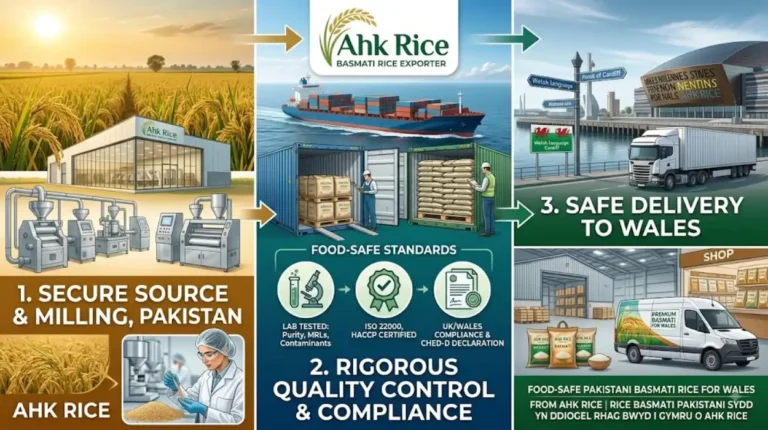
International certifications verify food safety systems, processing controls, hygiene practices, traceability, and export documentation. Independent audits confirm that rice mills follow standardized quality management procedures throughout production.
Certifications establish documented quality systems rather than product claims.
Common certifications include:
- ISO 22000 Food Safety Management
- HACCP
- GMP (Good Manufacturing Practices)
- Halal Certification
- Phytosanitary Certificate
- Certificate of Origin
- Fumigation Certificate
- Quality Inspection Certificate
Each certification addresses a specific stage of production or export documentation.
For UAE shipments, exporters also prepare commercial documents that support customs clearance and food authority inspections.
Typical export documentation includes:
- Commercial Invoice
- Packing List
- Bill of Lading
- Certificate of Origin
- Phytosanitary Certificate
- Health Certificate
- Fumigation Certificate
Quality documentation complements physical inspection by proving compliance throughout the export process.
With certifications established, the final educational topic addresses common misunderstandings about foreign matter in Basmati rice.
What Misconceptions Exist About Foreign Matter in Exported Rice?
Foreign matter does not indicate rice variety, aroma, freshness, or nutritional value. It reflects cleaning efficiency, inspection quality, milling technology, and adherence to export specifications before shipment.
Many buyers confuse foreign matter with other quality parameters.
One misconception assumes that longer rice always contains less contamination. Grain length and foreign matter represent separate quality measurements.
Another misconception suggests that polished rice automatically contains no foreign matter. Polishing improves surface appearance but does not replace optical sorting or metal detection.
Some buyers believe broken rice increases foreign matter. Broken kernels remain edible rice and are classified separately from contaminants.
Another misunderstanding assumes all export grades follow identical specifications. Buyer contracts define acceptable limits according to market requirements, packaging formats, and intended applications.
Understanding these distinctions helps importers evaluate rice using internationally recognized quality parameters rather than visual assumptions.
The comparison of 1121, 1509, and Super Kernel demonstrates that modern processing, systematic inspection, and standardized grading determine foreign matter performance across every export shipment.
Foreign matter represents one of the most important quality indicators in Pakistan’s Basmati rice exports. Modern processing removes contaminants through cleaning, de-husking, grading, optical sorting, metal detection, and laboratory inspection. Although 1121, 1509, and Super Kernel serve different commercial markets, each variety undergoes systematic quality control before export.
UAE buyers evaluate foreign matter together with grain length, moisture, broken percentage, aroma, and appearance. Understanding these quality parameters enables importers to select the correct specification for retail, hospitality, food service, and industrial applications.
Learn how premium Pakistani Basmati suppliers maintain strict foreign matter control for UAE private-label and wholesale brands.
Frequently Asked Questions
What is foreign matter in Basmati rice?
Foreign matter includes non-rice materials such as stones, dust, straw, husk pieces, weed seeds, metal fragments, plastic particles, and other contaminants removed during rice processing.
Which Pakistani Basmati variety has the strictest foreign matter control?
Premium export-grade 1121 Basmati Rice generally follows the strictest foreign matter specifications because it serves premium retail and hospitality markets.
Does foreign matter affect cooking quality?
Yes. Lower foreign matter improves cooking consistency, food safety, grain appearance, and consumer satisfaction by removing unwanted materials before packaging.
How do Pakistani rice mills remove foreign matter?
Rice mills use vibrating cleaners, destoners, air aspirators, paddy separators, whiteners, polishers, optical color sorters, metal detectors, and manual quality inspections.
Why do UAE importers inspect foreign matter?
UAE importers verify food safety, regulatory compliance, retail quality, and customer satisfaction. Lower foreign matter reduces processing losses and supports premium product positioning.