Why Do Some Basmati Rice Varieties Command Premium Market Prices?
Premium Basmati rice commands higher market prices because buyers pay for measurable characteristics such as grain length, aroma, cooking expansion, varietal purity, aging, processing quality, low broken percentage, and consistent specifications. These characteristics create higher value for retailers, restaurants, food-service operators, and consumers.
Basmati rice is a long-grain aromatic rice traditionally associated with the Himalayan foothill region of the Indian subcontinent. Pakistan is one of the principal Basmati-producing and exporting countries. In Pakistan, Basmati cultivation is concentrated mainly in Punjab, where varieties such as 1121, Super Kernel, and 1509 are commercially important.
Price differences do not come from grain length alone. A premium grade combines several specifications. For example, 1121 Basmati is valued for its exceptionally long grain and strong cooking expansion, while Super Kernel provides a traditional Basmati profile with a different commercial positioning. 1509 is widely used where buyers need long grain, cooking performance, and a competitive price structure.
What Makes Basmati Rice a Premium Product?
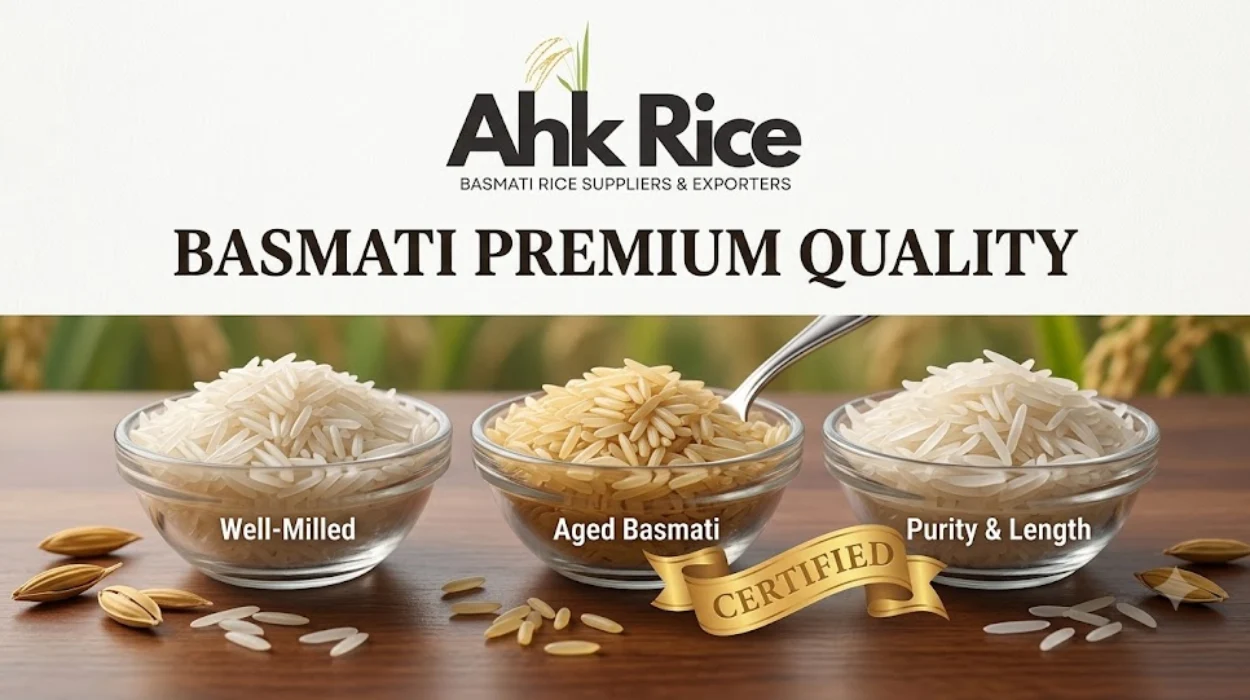
Premium Basmati rice is defined by a combination of long grain, aromatic character, varietal identity, purity, cooking expansion, low broken percentage, controlled moisture, clean appearance, and consistent processing rather than by grain length alone.
Premium Basmati belongs to a differentiated rice segment where physical, sensory, and cooking characteristics influence commercial value. Buyers evaluate the rice before purchase because each specification affects consumer acceptance and selling price.
Grain length is one of the most visible characteristics. Extra-long varieties create a distinctive appearance after cooking. 1121 Basmati is particularly known for its long slender grain and substantial elongation during cooking.
Aroma is another defining characteristic. Authentic Basmati has a recognizable fragrance associated with its genetic composition and traditional growing conditions. Aroma becomes important in retail rice, restaurant menus, biryani production, and other aromatic rice applications.
Varietal purity also affects value. A shipment containing the declared variety consistently across the lot provides predictable cooking and appearance. Mixed grains create different cooking behavior and reduce specification control.
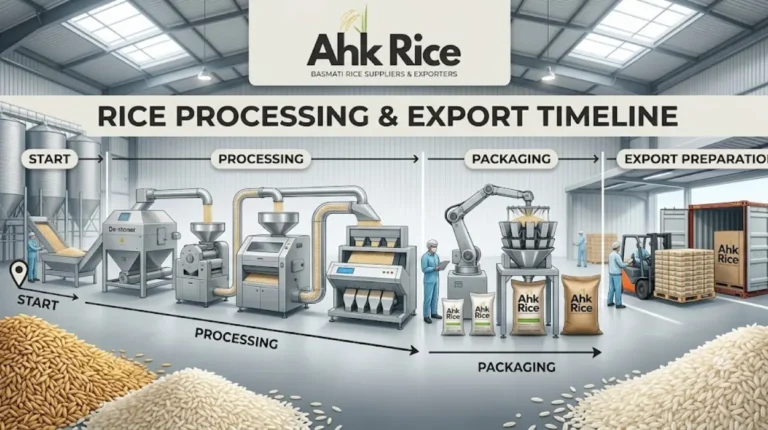
Processing determines the final commercial presentation. Milling, sorting, grading, polishing, and optical separation remove unwanted material and defective grains. The final specification therefore reflects both the variety and the processing system.
Where Is Basmati Rice Grown?
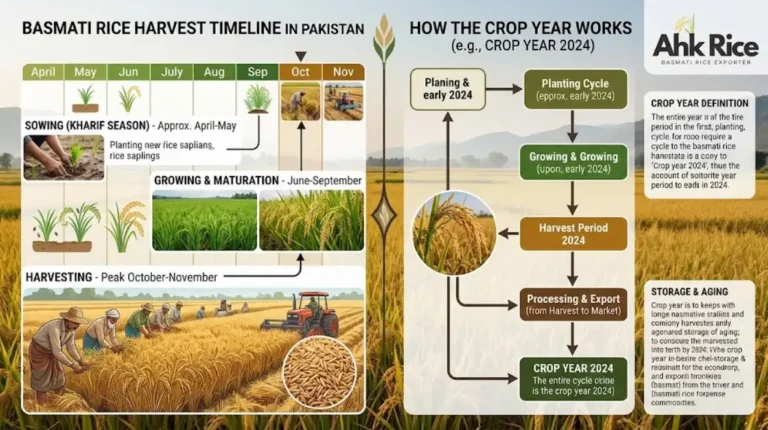
Pakistan produces Basmati rice mainly in Punjab, where suitable soil, irrigation, climate, and traditional cultivation practices support aromatic long-grain varieties used for domestic consumption and international export.
Punjab is the central production region for Pakistani Basmati rice. Important growing areas include districts within the traditional Basmati belt, such as Gujranwala, Hafizabad, Sialkot, Sheikhupura, Narowal, and adjoining areas.
The production environment influences grain characteristics. Temperature, water availability, soil conditions, harvesting time, and post-harvest handling all affect rice quality.
Basmati is not simply defined as any long-grain rice. Its commercial identity depends on varietal characteristics and the recognized production origin associated with Basmati cultivation.
Pakistan’s export sector supplies different Basmati specifications to markets across the Middle East, Europe, North America, Africa, and other regions. AHK Rice, based in Punjab, supplies 1121, Super Kernel, and 1509 varieties as part of Pakistan’s export-oriented Basmati industry.
How Is Basmati Rice Processed Before Export?
Basmati rice moves through harvesting, drying, cleaning, dehusking, whitening or steaming, polishing, grading, sorting, inspection, packing, and final quality control before export, with each stage affecting appearance, purity, moisture, cooking performance, and commercial consistency.
1. Harvesting
Rice is harvested after the crop reaches suitable maturity. Harvest timing affects moisture level, grain integrity, and post-harvest quality.
2. Drying
Freshly harvested paddy contains more moisture than finished export rice. Controlled drying reduces moisture to a suitable level for storage and milling.
Poor drying creates quality problems. Excessive moisture increases storage risk, while aggressive drying can increase grain breakage.
3. Cleaning
The paddy passes through cleaning equipment to remove field materials and unwanted particles. Examples include stones, straw, dust, and other foreign matter.
4. Dehusking
The outer husk is removed mechanically. The resulting brown rice retains the bran layer and germ.
5. Aging
Traditional Basmati processing often includes aging after milling or before final packing, depending on the commercial specification. Aging reduces moisture and changes starch behavior, improving cooked grain separation and elongation.
6. Whitening and polishing
For white Basmati rice, bran layers are removed through milling. Polishing improves surface appearance and produces the white commercial grain associated with polished rice.
7. Steaming or parboiling
Sella and Steam Basmati products follow a heat-based process before or during milling. Heat treatment changes grain structure and improves resistance to breakage.
Steam processing and conventional white rice processing therefore create different finished products. Buyers select between them according to cooking requirements, appearance, market preference, and price positioning.
8. Grading
Grading separates grains according to size and physical specifications. It controls characteristics such as grain length, broken percentage, and foreign material.
9. Optical sorting
Modern optical sorters identify and remove grains with color or appearance defects. Examples include discolored grains, immature grains, and other visually different particles.
10. Final inspection and packing
The finished rice is checked against the agreed specification before packing. Export packaging can include retail bags, food-service sacks, bulk bags, or private-label formats.
Which Basmati Varieties Occupy Premium and Value Segments?
Basmati varieties occupy different price segments because their grain length, cooking expansion, aroma, processing method, yield, market demand, and production economics differ; 1121 generally targets premium positioning, while Super Kernel and 1509 serve broader value and mainstream applications.
1121 Basmati
1121 is recognized for its exceptionally long slender grain. Its cooked grain becomes substantially longer while retaining a separated appearance when properly processed and cooked.
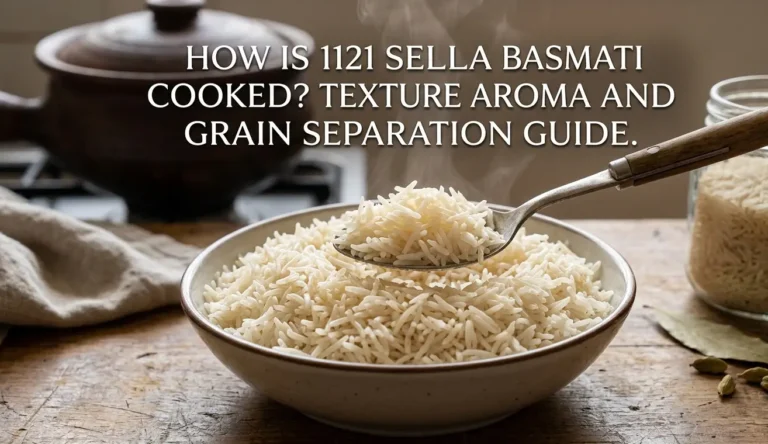
1121 is commonly available as White, Steam, and Sella forms. Each processing style produces different cooking characteristics.
Premium retail, restaurants, caterers, and food-service buyers frequently use 1121 where visual presentation and long cooked grain are important.
Super Kernel Basmati
Super Kernel is a traditional Pakistani Basmati variety with a long, slender grain and aromatic cooking profile.
It occupies an important mainstream and premium-mainstream position. Its commercial value depends on purity, grain specifications, processing quality, and market requirements.
Super Kernel is widely relevant to retail and food-service applications where authentic Basmati characteristics are required without positioning every product at the highest premium tier.
1509 Basmati
1509 is another long-grain aromatic variety used extensively in export markets. It provides strong cooking expansion and a competitive commercial position.
1509 is available in forms such as White, Steam, and Sella, depending on processing requirements.
Its value proposition is often based on balancing grain appearance, cooking performance, supply economics, and retail price.
Which Processing Forms Affect Basmati Rice Prices?
White, Steam, and Sella Basmati rice differ in processing method, appearance, cooking behavior, and market application, so the processing form directly affects the product specification and commercial price rather than representing simple packaging variations.
White Basmati undergoes conventional milling and polishing. It is commonly selected for traditional cooking applications where the natural white appearance and aromatic profile are important.
Steam Basmati receives controlled steam treatment. The process strengthens the grain structure and supports better grain integrity during cooking.
Sella Basmati is parboiled. The heat treatment alters the physical structure of the grain and produces a firm cooked texture with strong grain separation.
These products should not be compared only by variety name. A buyer comparing 1121 White with 1121 Steam is comparing two processing specifications within the same variety.
The same principle applies to 1509 and other Basmati varieties.
Which Quality Specifications Increase Basmati Rice Value?
The specifications that most directly support premium Basmati pricing include grain length, varietal purity, broken percentage, moisture, foreign matter, damaged grains, color, aroma, cooking expansion, and processing consistency across repeated shipments.
Grain length affects visual positioning. Longer grains often support premium retail presentation.
Broken percentage affects appearance and usable whole-grain yield. A low broken percentage creates a cleaner finished product.
Moisture affects storage stability and cooking behavior. Export specifications normally establish a controlled moisture range appropriate for safe handling and storage.
Purity affects consistency. A declared Basmati variety must match the buyer’s specification.
Foreign matter is another critical specification. Export-grade rice requires controlled levels of unwanted material.
Damaged, discolored, immature, or chalky grains can affect visual quality. Optical sorting and mechanical grading help control these defects.
Cooking expansion is especially important for Basmati. Buyers assess both length and separation after cooking because consumers purchase the cooked result, not only the raw grain.
Why Does Aging Increase the Commercial Value of Basmati Rice?
Aging changes the physical and cooking behavior of Basmati rice by reducing moisture and modifying starch properties, which supports better grain separation, elongation, texture, and cooking consistency in properly aged commercial rice.
Freshly harvested rice does not always provide the same cooking behavior as properly aged Basmati.
During aging, biochemical and physical changes occur inside the grain. These changes influence water absorption and cooking performance.
Aged Basmati is therefore valued in markets where cooked grain elongation and separation are important.
The economic value comes from the final consumer experience. A rice that produces long, separate, aromatic cooked grains has stronger premium positioning than rice that loses shape or becomes excessively sticky.
Aging requirements differ according to variety, processing method, supplier specification, and market expectations. Buyers should therefore specify aging requirements rather than treating all Basmati rice as identical.
Which Markets Import Premium Basmati Rice?
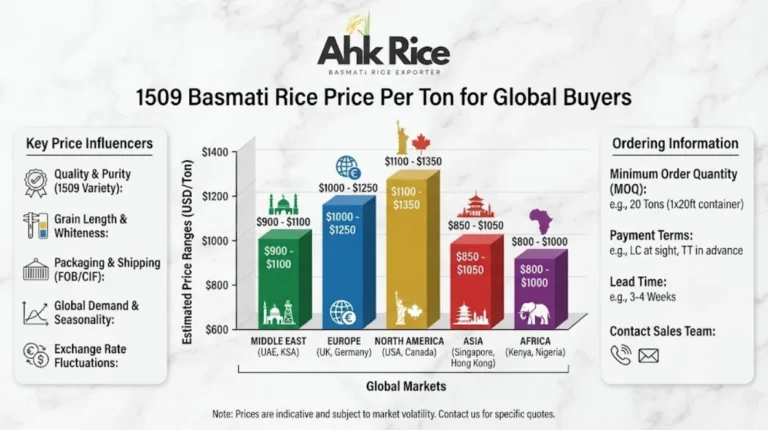
Premium Basmati rice is imported across the Middle East, Europe, North America, Africa, and other markets where consumers recognize aromatic long-grain rice and buyers require consistent specifications for retail, restaurants, catering, food service, and private-label distribution.
Middle Eastern markets
Saudi Arabia and the UAE are major destinations for Pakistani rice. Premium Basmati is used in household cooking, restaurants, catering, hotels, and food-service operations.
North American markets
The United States and Canada have established demand for Basmati rice through South Asian, Middle Eastern, and broader specialty-food channels. Retailers and restaurants commonly differentiate products by variety, grain length, processing form, packaging, and origin.
European markets
European importers purchase Basmati for retail and food-service distribution. Packaging, traceability, food safety documentation, and product specifications become important commercial requirements.
African markets
African markets include buyers that use long-grain rice across retail and food-service channels. Product selection depends on local consumer preferences, price positioning, cooking requirements, and distribution economics.
Market preference therefore affects the premium level. A specification that commands a high retail price in one market does not automatically occupy the same price position in another.
What Certifications and Documents Apply to Export Basmati Rice?
Basmati rice exports require product, food-safety, traceability, customs, and shipment documentation according to the destination market, while specific certifications depend on buyer requirements and the regulatory framework of the importing country.
Common export documentation includes a commercial invoice, packing list, certificate of origin, phytosanitary documentation where required, transport documents, and relevant food-safety or laboratory reports.
Depending on the destination and buyer, requirements can include HACCP-based food-safety controls, ISO management certifications, Halal certification, laboratory analysis, pesticide-residue testing, and other compliance documents.
For the United States, importers must meet applicable U.S. Food and Drug Administration requirements and maintain the documentation required for food imports.
European buyers operate under European Union food-safety and traceability requirements.
Middle Eastern buyers can have additional conformity, Halal, labeling, or product-registration requirements.
Certification should therefore be matched to the destination market rather than treated as a universal checklist.
What Are the Main Benefits of Premium Basmati Rice?
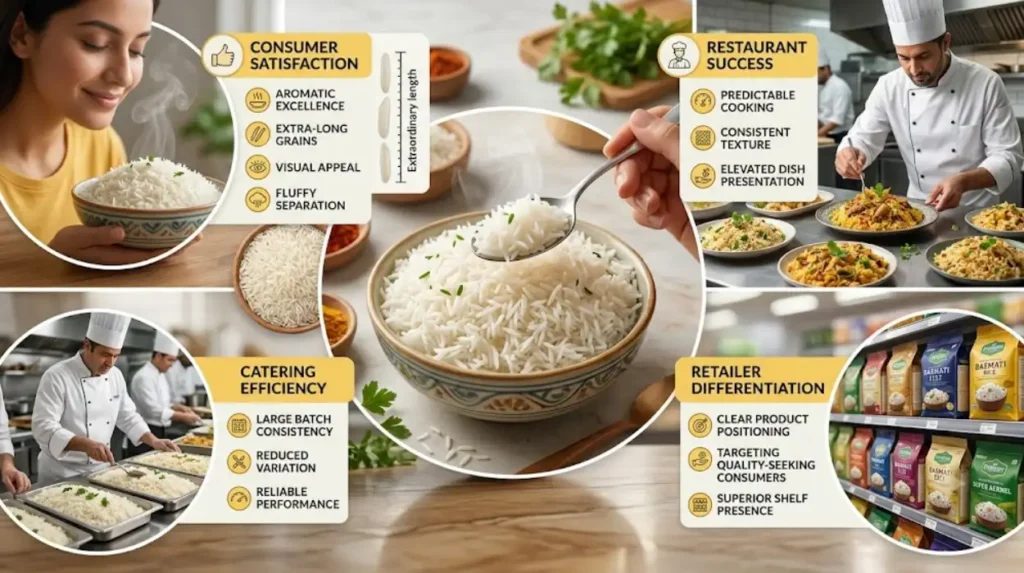
Premium Basmati provides longer cooked grains, stronger aromatic character, improved visual presentation, predictable cooking performance, and stronger product differentiation, allowing retailers, restaurants, caterers, and food-service operators to target consumers seeking recognizable Basmati quality.
For retailers, premium specifications create product differentiation. A clearly defined 1121 or Super Kernel product can be positioned according to its grain characteristics and processing form.
For restaurants, cooking performance is central. Biryani, pulao, pilaf, and other rice dishes depend on grain separation and texture.
For caterers, consistency across large cooking batches matters. A rice specification that behaves predictably reduces variation in finished dishes.
For consumers, grain appearance and aroma are immediately visible and detectable. Long, separated grains create a recognizable premium presentation.
Premium rice therefore creates value at several stages of the supply chain.
What Are Common Misconceptions About Premium Basmati Rice?
The most common misconception is that the longest grain automatically represents the highest quality; premium value also depends on varietal purity, aroma, moisture, broken percentage, processing, aging, cooking performance, documentation, and consistency between shipments.
One misconception is that longer raw grain always means better rice. Grain length matters, but cooking behavior also determines quality.
Another misconception is that Steam and White Basmati are interchangeable. They are different processing forms with different physical and cooking characteristics.
A third misconception is that polished appearance proves premium quality. Excessive visual polishing does not replace varietal purity or cooking performance.
A fourth misconception is that every Basmati variety has the same price. Varieties have different production economics, grain characteristics, demand patterns, and processing requirements.
A fifth misconception is that a low initial purchase price creates the lowest overall cost. Broken grains, inconsistent specifications, poor documentation, and variable cooking performance can increase downstream costs for commercial buyers.
How Should Buyers Understand Premium Versus Value Basmati Rice?
Buyers should compare Basmati rice using a complete specification rather than price alone, including variety, processing form, grain length, purity, broken percentage, moisture, aging, cooking performance, packaging, certifications, and shipment consistency.
The distinction between premium and value rice is therefore a specification decision.
Premium Basmati usually targets buyers who prioritize grain appearance, aroma, cooking expansion, purity, and consumer positioning.
Value Basmati targets buyers who require acceptable Basmati characteristics while maintaining tighter control over purchase price and distribution costs.
The correct comparison starts with the intended use. A premium restaurant menu, supermarket private label, institutional kitchen, and price-sensitive retail channel do not require identical rice specifications.
Buyers evaluating these segments should next compare the specifications that separate premium products from value products, including grain dimensions, processing form, cooking yield, shelf-life considerations, and market pricing.
This comparison provides the logical next step for understanding:
How Do Buyers Compare Premium and Value Basmati Rice Segments?
Frequently Asked Questions
Why does Basmati rice command a premium price?
Basmati rice commands a premium price because of its long slender grain, distinctive aroma, cooking expansion, varietal purity, aging characteristics, and consistent processing quality. Premium grades also have lower broken percentages and stronger market demand.
Which Basmati variety is considered premium?
1121 Basmati is commonly positioned in the premium segment because of its exceptionally long grain, strong cooking expansion, and attractive cooked appearance. Super Kernel and 1509 also serve premium and mainstream segments depending on specifications and processing.
Does grain length determine Basmati rice quality?
Grain length is an important quality factor, but it does not determine quality alone. Buyers also evaluate varietal purity, aroma, moisture, broken percentage, processing method, aging, cooking performance, and consistency.
What makes 1121 Basmati more expensive?
1121 Basmati commands higher prices when it meets premium specifications for grain length, purity, low broken percentage, aroma, cooking expansion, and processing quality. Its strong demand in retail and food-service markets also supports premium positioning.
What is the difference between premium and value Basmati rice?
Premium Basmati generally emphasizes longer grain, higher purity, stronger aroma, better cooking expansion, lower broken percentage, and consistent specifications. Value Basmati focuses on meeting acceptable quality requirements while maintaining a lower purchase price.
Does aging increase the value of Basmati rice?
Proper aging improves Basmati cooking characteristics by influencing moisture distribution and starch behavior. It supports better grain separation, elongation, texture, and cooking consistency, which increases the commercial value of suitable premium grades.
What are the main processing forms of Basmati rice?
The main commercial processing forms include White, Steam, and Sella Basmati rice. These forms differ in processing method, grain structure, cooking behavior, texture, appearance, and suitability for different consumer and food-service applications.
Which countries import premium Pakistani Basmati rice?
Premium Pakistani Basmati rice is imported by markets across the Middle East, North America, Europe, Africa, and other regions. Saudi Arabia, the UAE, the United States, and European markets have established demand for Pakistani aromatic rice.