Request Current FOB and CIF USA Basmati Rice Quotations from AHK Rice
Importers need more than a rice price per metric tonne to make profitable purchasing decisions. A reliable quotation must identify the Basmati variety, grain specifications, processing requirements, packaging, shipment schedule, and delivery terms. For US buyers, comparing FOB Karachi with CIF New York, Houston, or Los Angeles also helps establish the full landed-cost structure before placing an order.
AHK Rice is a Pakistani Basmati rice exporter based in Punjab, supplying 1121, Super Kernel, and 1509 Basmati rice varieties to international markets. Its export process covers rice processing, grading, custom packaging, shipment preparation, and export documentation. Buyers can use the educational guide How Is Basmati Rice Priced for Export from Pakistan to the USA? to understand pricing fundamentals before requesting a shipment-specific quotation.
What is the best solution for obtaining a current USA Basmati rice quotation?
The best solution is to request a specification-based FOB or CIF quotation that identifies the rice variety, grade, packaging, order volume, destination port, and shipment window. This approach enables US importers to compare supplier offers using consistent commercial terms and documented product requirements.
A general market price cannot establish the final cost of an import order. Pakistani Basmati rice prices vary according to grain variety, processing method, broken percentage, moisture content, crop year, packaging, and quantity. Freight, insurance, and destination requirements also affect the total purchasing budget.
Importers should first decide whether they need 1121 Basmati for premium retail, Super Kernel for aromatic rice distribution, or 1509 for price-sensitive wholesale and foodservice applications. They should then specify whether the shipment requires white, Steam, or parboiled rice.
Buyers can compare delivery terms using the guide FOB Karachi vs CIF New York, Houston and Los Angeles: Basmati Rice Cost Breakdown. This comparison helps distinguish the export-port price from the freight and insurance components included in a CIF offer.
A useful quotation should confirm:
- Rice variety and processing type.
- Raw grain length and acceptable broken percentage.
- Moisture limits and quality requirements.
- Crop year and requested quantity.
- Packaging material, bag weight, and private-label requirements.
- FOB Karachi or CIF destination port.
- Expected shipment window and payment terms.
- Inspection, testing, and documentation requirements.
This specification-first process reduces misunderstandings and helps procurement teams compare offers on a like-for-like basis.
Why choose AHK Rice for Pakistani Basmati rice exports to the USA?
AHK Rice provides US importers with access to Pakistani Basmati varieties, processing options, custom packaging, and coordinated export preparation. Buyers can define their product specifications before quotation, helping align purchasing decisions with retail, wholesale, or foodservice requirements.
AHK Rice serves international buyers seeking a structured sourcing process from product selection through shipment preparation. Its range includes 1121, Super Kernel, and 1509 Basmati rice, with processing options selected according to the agreed order specification.
Importers can explore the AHK Rice Basmati rice export service to understand the supplier’s product and export offering.
The most suitable variety depends on the buyer’s commercial objective.
1121 Basmati rice: This variety suits premium grocery shelves, specialty distributors, private-label brands, and foodservice businesses seeking long grains and characteristic Basmati aroma. Steam and parboiled versions can serve different cooking and presentation requirements.
Super Kernel Basmati rice: Super Kernel is suitable for buyers targeting aromatic Pakistani rice with an established position in South Asian grocery distribution and ethnic retail channels. Final grain length, broken percentage, moisture, and aroma requirements should appear in the purchase specification.
1509 Basmati rice: This variety offers an alternative for importers balancing grain appearance, procurement cost, and volume requirements. Steam and Golden Sella options can serve different retail, catering, and institutional applications.
AHK Rice can coordinate agreed grading, processing, packaging, and export preparation requirements. Buyers should confirm the exact specification, testing arrangements, certifications, and documents available for their shipment rather than assuming every requirement applies to every order.
What results can US importers expect from a specification-based order?
A clearly defined order helps importers establish product consistency, forecast procurement costs, coordinate shipping schedules, and prepare receiving operations. Actual results depend on the agreed specifications, production readiness, shipping arrangements, destination clearance, and compliance with applicable US import requirements.
The principal benefit is greater purchasing control. When the supplier and importer agree on grain quality, moisture, broken percentage, bag weight, and inspection criteria before production, both parties have a documented basis for evaluating the shipment.
For example, a US distributor purchasing 1121 Basmati for premium retail may prioritise grain length, appearance, aroma, and packaging quality. A foodservice importer buying 1509 may place greater emphasis on cooking performance, consistent bulk supply, and cost per serving.
These buyers should not use the same specification simply because both products are Pakistani Basmati rice.
A defined quotation also helps finance and logistics teams estimate the cost of goods, freight exposure, and inventory requirements. Under FOB terms, the buyer generally arranges the main carriage and insurance. Under CIF terms, the seller arranges and pays the cost, insurance, and freight to the named destination port, subject to the contract and applicable Incoterms.
CIF does not automatically include every destination charge. Import duties, customs brokerage, terminal handling, port storage, inland transportation, and other applicable charges must be checked separately.
The expected outcome is a more transparent purchasing decision, not a guaranteed selling margin or clearance result.
How much does Pakistani Basmati rice cost for US importers?
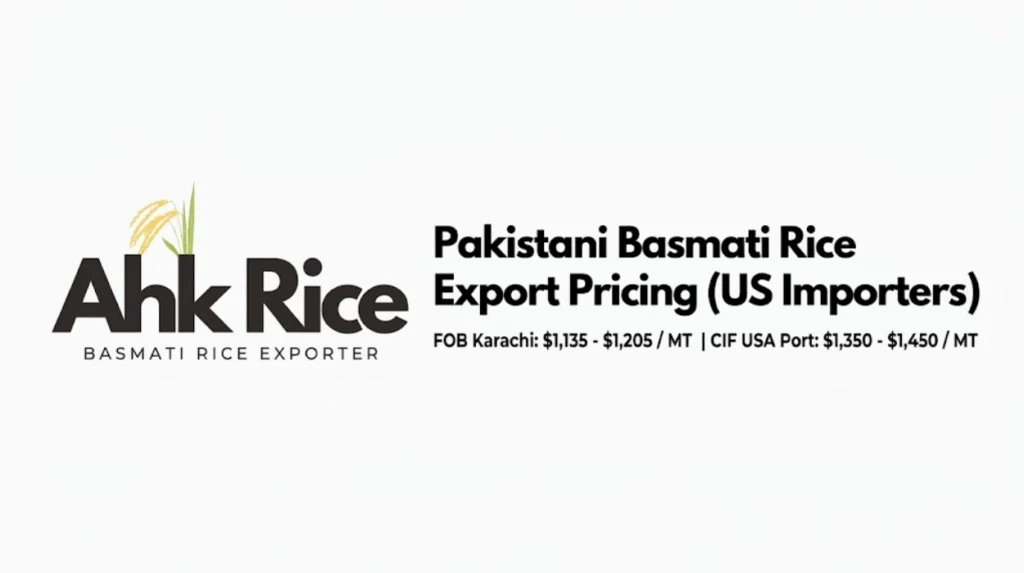
The price depends on variety, grade, processing, order quantity, packaging, shipment timing, and delivery terms. A current quotation must be confirmed against the requested specification and market conditions because indicative prices do not guarantee the price available for a new order.
AHK Rice quotations should be evaluated as shipment-specific commercial offers. Importers should avoid comparing a premium 1121 Steam specification directly with a different grade of 1509 or Super Kernel without adjusting for product differences.
The main pricing factors include:
| Pricing factor | Effect on the quotation |
|---|---|
| Rice variety | 1121, Super Kernel, and 1509 have different commercial positioning and specifications. |
| Processing method | White, Steam, and Golden Sella processing can change production requirements and pricing. |
| Grain quality | Length, broken percentage, moisture, and sorting requirements affect the specification. |
| Order quantity | Volume influences production planning, packaging, and freight economics. |
| Packaging | Bulk bags, retail packs, and private-label printing have different cost structures. |
| Delivery terms | FOB excludes the seller-paid main carriage and insurance, while CIF includes these to the named destination port. |
| Destination | Freight availability, routing, and port-related requirements affect the delivered quotation. |
| Compliance requirements | Agreed laboratory tests, inspections, and documentation may add costs. |
Importers should request separate FOB Karachi and CIF quotations when they want to compare supplier-side pricing with a delivered-to-port option.
The CIF offer should identify the named destination port and specify the freight and insurance arrangements. Buyers should also confirm which charges remain payable at destination.
For a meaningful comparison, request the same rice specification, packaging, quantity, and shipment window under both pricing terms. This prevents a lower headline price from disguising differences in quality or delivery scope.
How many shipping days should US buyers allow?
Shipping time depends on the vessel schedule, route, transshipment requirements, port congestion, and export readiness. US importers should request an estimated transit range and separate it from production, loading, customs clearance, and inland delivery timelines.
The following planning ranges are indicative estimates, not confirmed sailing schedules or delivery commitments.
| US destination | Indicative ocean transit planning range from Karachi | Main considerations |
|---|---|---|
| New York / East Coast | Approximately 30–45 days | Routing, transshipment, and vessel availability |
| Houston / Gulf Coast | Approximately 30–45 days | Carrier schedules, routing, and port congestion |
| Los Angeles / West Coast | Approximately 25–40 days | Pacific routing, service availability, and terminal conditions |
Actual transit may fall outside these ranges. Buyers should obtain a current carrier estimate for their specific shipment before committing to inventory or promotional dates.
The total order timeline also includes specification approval, processing, packaging, container loading, export documentation, ocean transit, and US import clearance. These stages should be scheduled separately because vessel transit alone does not represent the time from purchase order to warehouse receipt.
AHK Rice buyers should confirm the expected cargo-ready date, loading window, estimated vessel departure, transit time, and required shipping documents before finalising their procurement plan.
What is the complete sample process and how much does it cost?
A commercial rice sample allows importers to assess grain appearance, aroma, cooking performance, and suitability before placing a bulk order. The sample cost depends on the quantity, preparation, courier destination, shipping method, and any applicable inspection or regulatory charges.
US buyers should follow a documented sample-to-order process.
Step 1: Define the product. Identify the variety, processing type, grain specification, and intended application. Explain whether the sample is for retail evaluation, foodservice testing, or laboratory analysis.
Step 2: Confirm sample availability. Ask AHK Rice to confirm the sample quantity, preparation time, dispatch location, and available shipping options. The sample should represent the specification being considered for the commercial order.
Step 3: Agree on costs. Request a written breakdown covering the sample itself, packaging, courier charges, laboratory testing if required, and applicable export or import charges. Do not assume that a sample is free or that courier costs are included.
Step 4: Arrange dispatch. Confirm the recipient’s full business details, delivery address, courier service, and any documents required for the proposed shipment. The importer should verify US requirements for receiving the specific sample before dispatch.
Step 5: Conduct quality checks. Evaluate grain appearance, aroma, cooking performance, texture, and the agreed quality parameters. If laboratory testing is required, specify the test methods and acceptance criteria before ordering.
Step 6: Approve the commercial specification. Record the approved variety, processing type, grade, packaging, quantity, and applicable testing requirements. A sample approval should not replace contractual specifications or shipment inspection arrangements.
Step 7: Request the bulk quotation. Ask for FOB Karachi and, where available, CIF pricing for the selected US port. Review the production schedule, payment terms, documents, and shipment window before issuing a purchase order.
AHK Rice should confirm the actual sample charges before dispatch. Courier fees vary by destination, parcel weight, service level, and any applicable customs or regulatory requirements, so an unverified fixed sample cost should not be treated as a firm offer.
Which export documents should US importers confirm before ordering?
US importers should establish the applicable food-import, customs, labelling, and shipment-document requirements before confirming an order. Responsibilities depend on the product, transaction, parties, and current regulations, so the importer should verify requirements with the relevant authorities and customs broker.
The commercial documentation commonly associated with rice exports includes a commercial invoice, packing list, bill of lading, and certificate of origin where required. A phytosanitary certificate, certificate of analysis, inspection report, or other supporting document may be required according to the product and importing requirements.
For US food imports, buyers should also assess applicable FDA facility registration, Prior Notice, and Foreign Supplier Verification Program responsibilities. These obligations do not all fall automatically on the exporter, and the importer should confirm who is responsible for each step.
Product labels must meet applicable US requirements for the intended packaging and sales channel. Buyers should confirm the required information, including product identity, net quantity, responsible business details, and Nutrition Facts where applicable.
AHK Rice and the importer should agree on the required documents before shipment. The importer should have its customs broker verify tariff classification, applicable duties, entry procedures, and any additional compliance requirements before cargo departure.
How can buyers get started with AHK Rice?
Start by submitting a complete purchase specification that identifies the rice variety, grade, processing method, packaging, quantity, destination port, and preferred delivery terms. AHK Rice can then assess the request and confirm the quotation, sample options, and shipment details available for that order.
US buyers should prepare the following information:
- Product: 1121, Super Kernel, or 1509 Basmati rice.
- Processing: White, Steam, Golden Sella, or another agreed specification.
- Quality: Grain length, moisture limit, broken percentage, and testing requirements.
- Packaging: Bag weight, material, printing, and private-label details.
- Quantity: Required metric tonnes and expected purchasing frequency.
- Destination: New York, Houston, Los Angeles, or another agreed delivery port.
- Pricing basis: FOB Karachi, CIF named port, or both for comparison.
- Schedule: Target loading window and required arrival period.
- Documentation: Applicable certificates, test reports, and import-compliance requirements.
Once these details are available, the buyer can evaluate product suitability, compare the quotation against the purchasing budget, and establish a realistic shipment plan.
Request a current FOB Karachi or CIF USA Basmati rice quotation from AHK Rice through the official quotation request page.
Frequently Asked Questions
Can AHK Rice provide both FOB Karachi and CIF USA quotations?
Yes, buyers can request both pricing options for comparison. Availability depends on the product specification, quantity, destination port, and shipment requirements. The quotation should clearly identify the named port and included costs. Importers should separately verify destination charges, duties, and inland delivery expenses.
Which Basmati variety should US importers select?
1121 generally suits premium retail and foodservice applications requiring long grains and characteristic aroma. Super Kernel is relevant to aromatic rice distribution and ethnic retail channels. 1509 offers another option for buyers balancing product presentation and procurement economics. Final selection should follow cooking tests and agreed specifications.
How long does shipping from Pakistan to the USA take?
Ocean transit planning estimates commonly range from approximately 25 to 45 days, depending on the destination and route. Actual schedules depend on carrier availability, transshipment, and port conditions. Production, loading, customs clearance, and inland delivery add time beyond ocean transit.
Are rice samples available before a bulk order?
Buyers can ask AHK Rice to confirm sample availability for the required variety and specification. Sample costs depend on preparation, quantity, courier charges, and applicable regulatory requirements. Importers should obtain a written cost breakdown and verify that the sample can legally enter the USA before dispatch.
What information is required for a current quotation?
Provide the rice variety, processing method, quality parameters, packaging, order quantity, destination port, and preferred Incoterm. Include the target shipment window and any testing or documentation requirements. These details help the exporter prepare a commercially relevant quotation rather than a non-binding general market estimate.