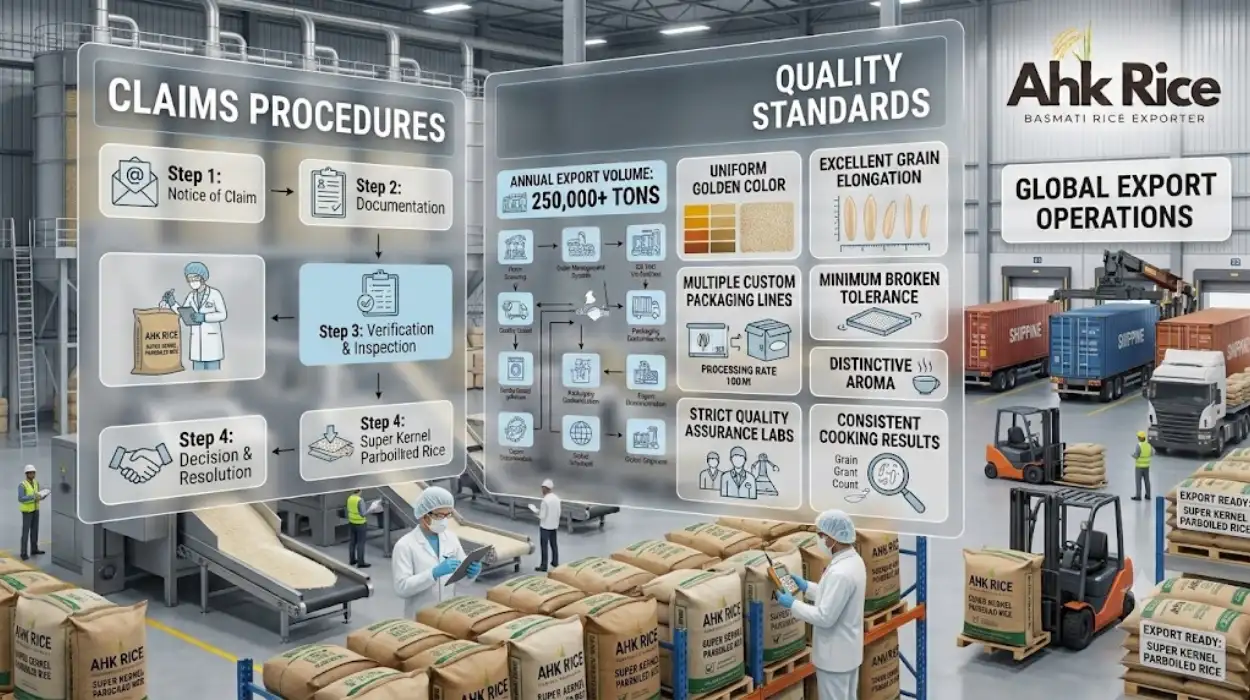
Super Kernel Parboiled Rice Claims Procedures and Quality Standards
Super Kernel Parboiled Rice quality standards and claims procedures determine whether an import shipment succeeds or becomes a commercial dispute. Here is why: standardized specifications, documented inspections, and verified claims processes reduce risk, protect buyers, and ensure contractual compliance across international markets.
Super Kernel Parboiled Rice remains one of the most traded Pakistani Basmati varieties because it combines long grain appearance, cooking stability, and competitive pricing. International buyers evaluate this rice through measurable standards. Importers compare grain length, moisture, purity, broken percentage, damaged kernels, shelf life, and certification compliance before procurement decisions.
Buyers seeking technical knowledge about processing, grading, and export standards can first review our guide on understanding Pakistani Basmati processing methods and quality classifications. This educational resource explains how milling, grading, and inspection affect export quality and buyer satisfaction.
AHK Rice supplies Super Kernel Parboiled Rice from Punjab, Pakistan. The company mills, grades, sorts, tests, and exports rice according to international buyer specifications. Understanding claims procedures and quality standards helps importers evaluate suppliers objectively and reduce procurement risk.
What quality standards apply to Super Kernel Parboiled Rice?
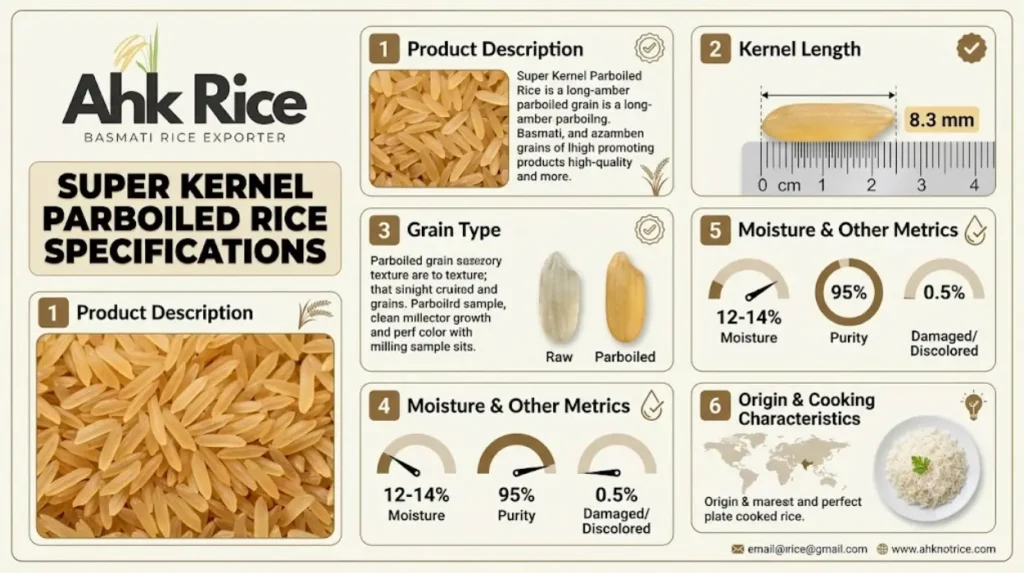
The most important standards are grain length above 7.0 mm, moisture below 14%, purity above 92%, controlled broken percentage, verified inspection reports, and export compliance documentation. These standards define commercial acceptance and determine whether claims can be accepted or rejected.
What is Super Kernel Parboiled Rice?
Super Kernel Parboiled Rice is a Pakistani Basmati variety cultivated in Punjab. Processors soak, steam, dry, mill, grade, and sort the paddy before export. The parboiling process strengthens kernels and improves cooking performance.
Super Kernel Parboiled Rice delivers long grains, separate cooking characteristics, and strong holding capacity. Catering businesses, foodservice operators, wholesalers, and retail brands commonly procure this specification.
How is quality verified?
Quality verification follows structured inspection procedures.
- Clean the harvested paddy.
- Parboil the grain.
- Dry the kernels.
- Mill the rice.
- Dehusk the grain.
- Grade by size.
- Sort by defects.
- Test laboratory samples.
- Verify export specifications.
Super Kernel Parboiled Rice Specification Comparison
| Attribute | Premium Grade | Standard Export Grade |
|---|---|---|
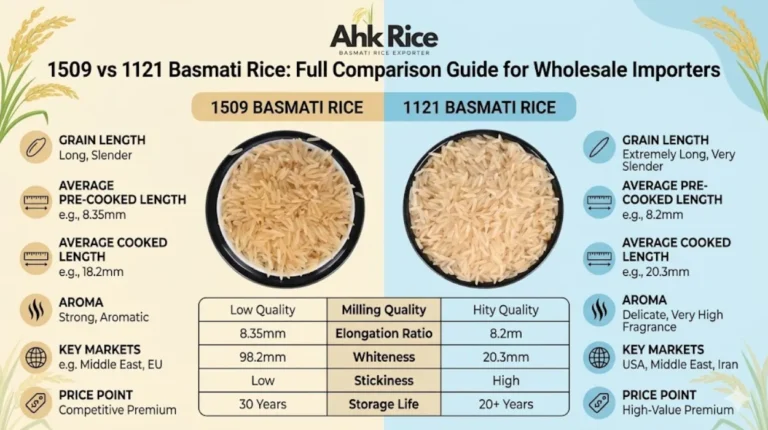
| Grain Length | 7.0–7.4 mm | 6.8–7.0 mm |
| Moisture | 13% Max | 14% Max |
| Broken Rice | 2–5% | 5–10% |
| Purity | 95%+ | 92%+ |
| Damaged Kernels | 0.5% Max | 1.0% Max |
| Foreign Matter | Nil | Trace Allowed |
| Milling Quality | Highly Polished | Standard Polish |
Quality standards establish the baseline for claim evaluation. The next question is how buyers compare available claims management approaches.
What are the available solutions for handling rice quality claims?
Three solutions dominate international rice trade: pre-shipment inspection, arrival inspection, and third-party arbitration. Pre-shipment verification produces the lowest dispute rate. Independent arbitration provides the strongest resolution mechanism for contested quality claims between exporters and importers.
Pre-Shipment Inspection
Pre-shipment inspection verifies cargo before loading. Independent surveyors inspect rice quality against contractual specifications.
Pre-shipment inspection reduces disputes because exporters and buyers review the same inspection report before dispatch. International commodity traders frequently prefer this approach.
Arrival Inspection
Arrival inspection occurs after cargo reaches the destination port. Buyers inspect the shipment and compare actual quality with contractual specifications.
Arrival inspection identifies transit-related issues. Moisture variation, packaging damage, and contamination can become visible after shipment.
Third-Party Arbitration
Third-party arbitration resolves disputes through independent experts. Arbitration bodies review contracts, inspection reports, photographs, and laboratory results.
Arbitration provides structured dispute resolution for large-volume contracts. International commodity traders frequently include arbitration clauses.
Claims Documentation Requirements
Required documentation includes:
- Commercial Invoice
- Packing List
- Certificate of Origin
- Phytosanitary Certificate
- Inspection Certificate
- Laboratory Analysis Report
- Bill of Lading
Claims management depends on documented evidence. The next section compares different quality assurance approaches.
How do different quality assurance approaches compare?
Laboratory testing provides the highest technical accuracy, third-party inspections provide the strongest commercial protection, and supplier self-certification offers the lowest verification reliability. Each approach serves different procurement objectives and risk levels.
Comparison of Quality Assurance Methods
| Method | Accuracy | Cost | Risk Reduction | Buyer Acceptance |
|---|---|---|---|---|
| Supplier Declaration | Low | Low | Low | Limited |
| Internal Laboratory | Medium | Medium | Medium | Moderate |
| Third-Party Inspection | High | Medium | High | Strong |
| SGS Verification | Very High | Higher | Very High | Excellent |
| Multi-Stage Testing | Highest | Highest | Highest | Excellent |
Third-party inspection outperforms supplier declarations. Independent verification creates objective evidence and reduces disagreement.
Laboratory analysis identifies moisture, broken percentage, purity, and contamination levels. Inspection agencies verify loading conditions and packaging compliance.
Quality verification methods vary by risk tolerance. The next question examines which method works best across different buying situations.
Which method works best for different cases?
Premium retail brands benefit from third-party inspections, catering importers benefit from standard inspection protocols, wholesalers benefit from specification-based purchasing, and government tenders benefit from multi-stage verification systems. Matching the verification method to the business model improves procurement efficiency.
Gulf Region Preferences
Gulf countries prefer premium appearance and polished grains.
Preferred specifications include:
- 2–5% Broken
- 13% Moisture
- 95% Purity
- Premium Polish
United Arab Emirates buyers frequently prioritize presentation quality. Saudi Arabian retail brands often emphasize consistency and shelf appearance.
African Market Preferences
African importers frequently prioritize value and cooking yield.
Preferred specifications include:
- 5–10% Broken
- 14% Moisture
- 92% Purity
- Standard Polish
West African wholesale markets often emphasize affordability and cooking performance. East African distributors commonly balance quality and pricing requirements.
Price Comparison Per Metric Ton
| Grade | Average Export Value Per MT |
|---|---|
| Premium Super Kernel Parboiled | USD 1,050–1,200 |
| Standard Export Grade | USD 900–1,050 |
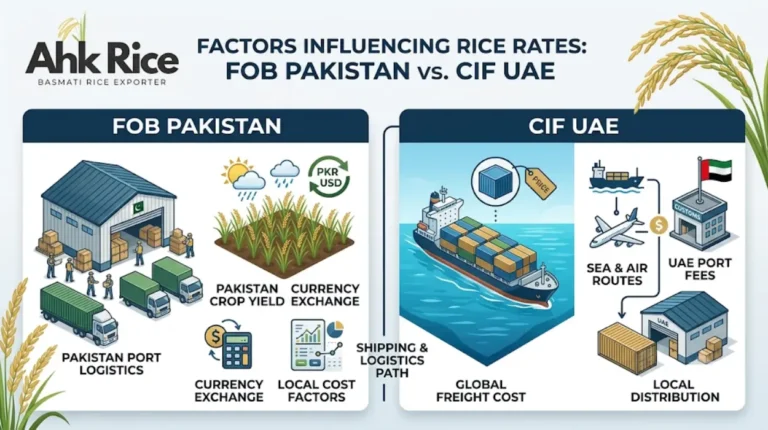
Prices vary according to crop quality, freight costs, and market demand (source: REAP export data, December 2025).
Shelf Life Comparison
| Specification | Shelf Life |
|---|---|
| Premium Parboiled Grade | 18–24 Months |
| Standard Export Grade | 12–18 Months |
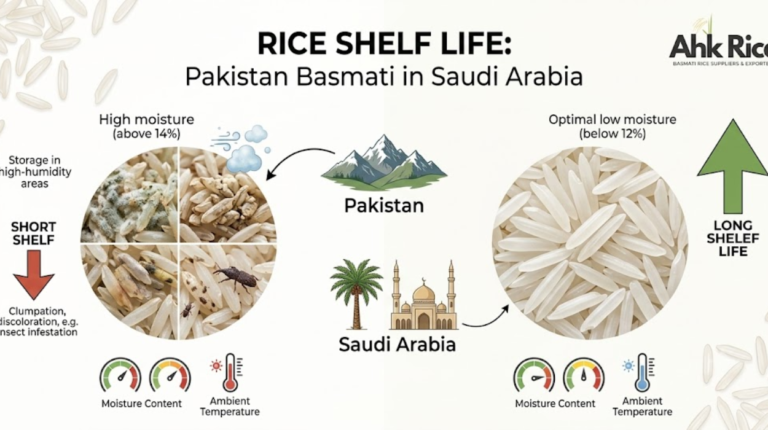
Premium grades maintain quality longer because processors control moisture more effectively.
Regional preferences influence buying decisions. The next section evaluates practical advantages and disadvantages.
What are the pros and cons of different quality standards?
Premium standards reduce buyer risk and improve brand positioning. Standard grades lower procurement costs and increase affordability. The correct choice depends on market objectives, customer expectations, and inventory turnover requirements.
Premium Quality Standards
Advantages
- Higher consumer acceptance
- Lower complaint rates
- Better shelf presentation
- Longer storage stability
- Stronger brand positioning
Disadvantages
- Higher procurement cost
- Tighter inspection requirements
- Smaller supplier pool
Example: UAE retail chains frequently select premium specifications because shelf presentation directly influences consumer purchasing behavior.
Standard Export Standards
Advantages
- Lower acquisition cost
- Wider supplier availability
- Higher price competitiveness
- Faster sourcing opportunities
Disadvantages
- Increased quality variation
- Higher complaint probability
- Reduced shelf appeal
Example: Wholesale distributors serving price-sensitive markets frequently prioritize competitive pricing over premium appearance.
Advantages and disadvantages become clearer through structured evaluation. The next section presents a practical decision framework.
What decision factors should buyers evaluate?
Five factors determine procurement success: target market requirements, inspection method, quality specifications, budget limitations, and claims protection mechanisms. Buyers who evaluate all five factors reduce commercial risk and improve supplier performance.
Buyer Decision Framework
| Decision Factor | Premium Requirement | Standard Requirement |
|---|---|---|
| Market Position | Retail Brand | Wholesale Trade |
| Inspection Level | Third-Party | Standard Inspection |
| Broken Percentage | 2–5% | 5–10% |
| Shelf Life Need | 18–24 Months | 12–18 Months |
| Claims Protection | Arbitration Clause | Standard Contract |
Retail brands generally benefit from premium standards. Commodity wholesalers frequently benefit from standard export specifications.
Importers should compare supplier inspection systems, certification procedures, grading consistency, and claims handling policies before procurement.
Effective decision-making starts with quality standards and ends with enforceable claims procedures. Buyers who align specifications, inspections, and documentation create more predictable supply chains.
Frequently Asked Questions
What is the acceptable moisture level for Super Kernel Parboiled Rice?
The accepted export standard is typically 13–14% moisture. Lower moisture improves storage stability and reduces spoilage risk.
What documents are required for a rice quality claim?
Commercial Invoice, Packing List, Inspection Certificate, Laboratory Report, Bill of Lading, and supporting evidence are commonly required.
How long should buyers submit quality claims after delivery?
Most contracts specify 7–30 days after cargo arrival. Contract terms determine the exact submission period.
Why is third-party inspection important?
Third-party inspection provides independent verification. Independent reports reduce disputes and strengthen claim validity.
Which market prefers premium Super Kernel Parboiled Rice?
Gulf retail markets frequently prefer premium specifications because appearance and grain uniformity influence consumer purchasing decisions.
What is the most effective dispute resolution method?
Third-party arbitration provides the strongest resolution framework for international rice trade disputes.