Top Basmati Rice Importing Countries in 2026
The United States, Italy, the United Kingdom, Saudi Arabia, and Australia are among the leading Basmati rice importing countries in 2026. Pakistan supplies these markets alongside the United Arab Emirates, Oman, and other destinations. Here is why: Trade data identifies established demand across North America, Europe, the Gulf, and Asia. Pakistan exported 773,995 metric tons of Basmati rice in FY2024, valued at US$877 million. (Source: Pakistan Bureau of Statistics, FY2023-24 trade report.)
What Are the Top Basmati Rice Importing Countries in 2026?
The United States, Italy, United Kingdom, Saudi Arabia, Australia, UAE, Germany, Canada, Netherlands, and Oman form a major group of Basmati rice importing countries. Their demand covers retail rice, restaurant supply, wholesale distribution, and private-label products. Trade shipment data provides a useful view of these markets.
Volza recorded the following leading importers for Basmati rice shipments during July 2024 to June 2025. The figures represent shipment counts, not total import tonnage or import value. (Source: Volza Global Export Data, September 2026.)
| Country | Recorded shipment count |
|---|---|
| United States | 5,042 |
| Italy | 2,711 |
| United Kingdom | 2,006 |
| Saudi Arabia | 1,747 |
| Australia | 1,714 |
| United Arab Emirates | 1,535 |
| Germany | 1,304 |
| Canada | 1,274 |
| Netherlands | 1,257 |
| Oman | 1,251 |
Shipment counts differ from national import rankings by value. For example, the United States recorded US$2.82 billion in total rice imports during January to June 2026. That figure covers all rice types, not only Basmati. (Source: TradeInt, September 2026.)
The United States serves retail and foodservice buyers. Italy and the United Kingdom have established Basmati consumption markets. Saudi Arabia, the UAE, and Oman serve Gulf retail, catering, and wholesale channels. Australia, Germany, Canada, and the Netherlands connect Basmati supply with multicultural food markets.
Pakistan’s FY2024 export data confirms the importance of several destinations. The UAE imported US$150 million of Pakistani Basmati rice. Saudi Arabia imported US$112 million, while Italy imported US$60 million. (Source: Pakistan Bureau of Statistics, FY2023-24 trade report.)
With the leading markets identified, the next question is what Basmati rice actually is and why buyers import it.
What Is Basmati Rice and Where Is It Grown?
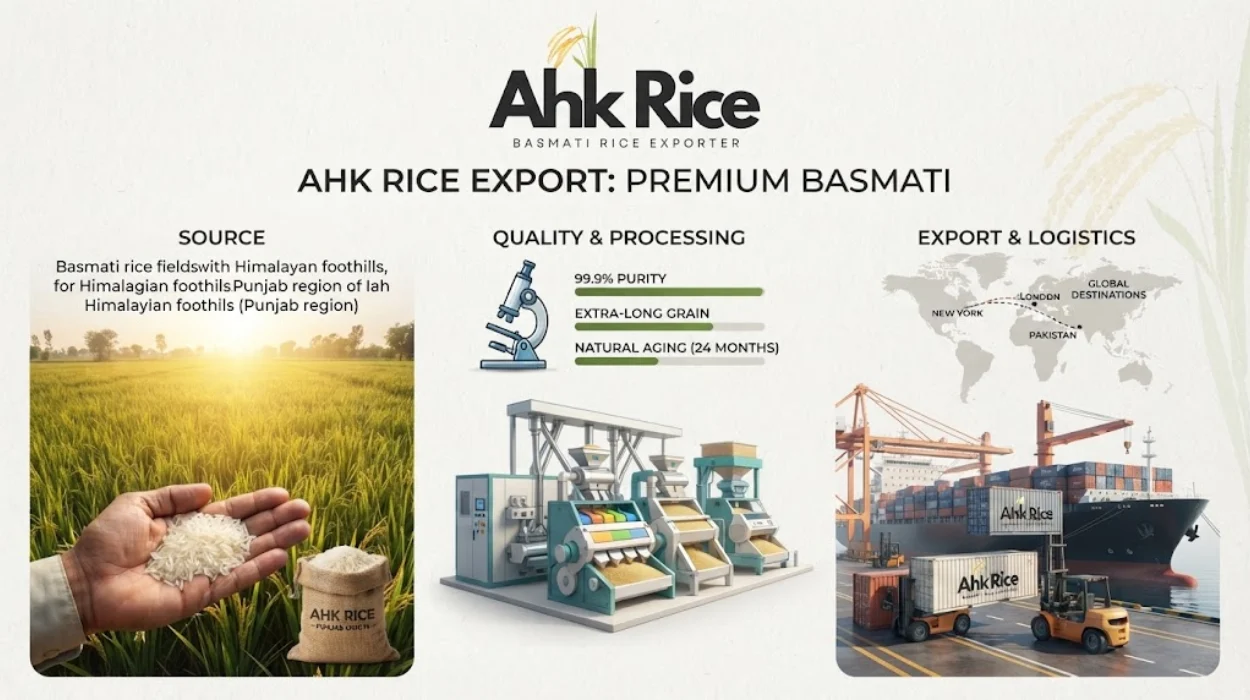
Basmati rice is an aromatic, long-grain rice cultivated mainly in the Himalayan foothills of Pakistan and India. Pakistan’s major Basmati-growing region lies in Punjab, where soil, irrigation, climate, and traditional cultivation support its distinctive grain characteristics.
Basmati means fragrant rice. The grain produces a recognizable aroma during cooking. Properly processed Basmati also develops a long, separate grain structure. These attributes support its use in pilaf, biryani, pulao, and restaurant rice dishes.
Pakistan cultivates Basmati rice primarily in Punjab. The region includes areas around Sialkot, Gujranwala, Hafizabad, Narowal, and Sheikhupura. Farmers cultivate varieties such as 1121, Super Kernel, and 1509.
Which Basmati Varieties Does Pakistan Supply?
Pakistan supplies several commercially important varieties. Each variety has a different grain profile, processing route, and cooking application.
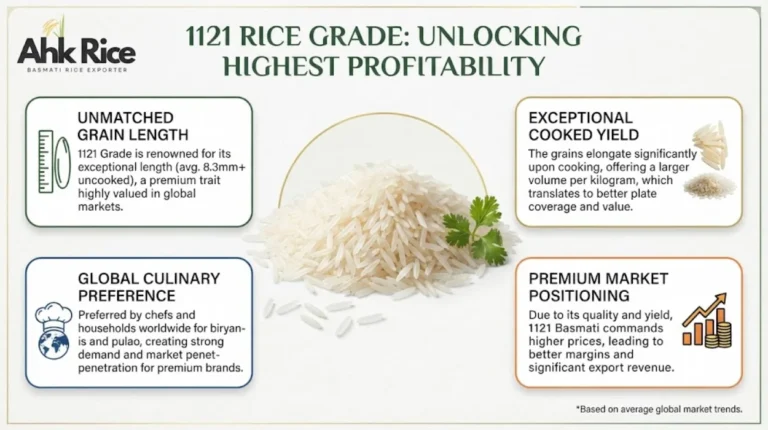
1121 Basmati: A long-grain variety used for premium retail, restaurants, and export markets. Its elongated grain supports visual presentation in cooked rice dishes.
Super Kernel Basmati: A traditional Pakistani Basmati variety known for aroma, grain structure, and suitability for premium rice dishes.
1509 Basmati: A long-grain variety used in retail, foodservice, and value-focused premium markets. It supports procurement programs that require consistent grain appearance.
Basmati rice buyers compare these varieties through grain length, moisture, broken percentage, aroma, processing type, and cooking performance.
With the product defined, the next section explains how farmers and mills convert paddy into export-ready rice.
How Is Basmati Rice Cultivated and Processed for Export?
Basmati rice moves through cultivation, harvesting, drying, milling, grading, sorting, and packaging before export. Each stage affects moisture, grain appearance, cooking performance, and the final specification supplied to international buyers.
How Is Basmati Rice Cultivated?
Basmati cultivation begins with seed selection and field preparation. Farmers irrigate fields, transplant or sow rice, manage weeds, and monitor crop development.
Harvesting begins when the crop reaches maturity. Farmers harvest paddy and transport it to drying and storage facilities. Proper drying reduces excess moisture and supports safe storage.
How Do Mills Process Basmati Rice?
Rice mills remove the outer husk and prepare the grain for consumption. The process includes several connected operations.
- Clean the paddy to remove stones, dust, straw, and other field material.
- Dry the paddy to reach a controlled moisture level.
- De-husk the grain to remove the outer rice husk.
- Separate the brown rice from remaining husk material.
- Polish the grain to improve surface appearance.
- Grade the rice by length, size, and quality.
- Sort the rice to remove discoloured grains and foreign matter.
- Inspect the finished rice for moisture, broken percentage, and other quality parameters.
- Pack the rice in bags or retail packaging according to buyer specifications.
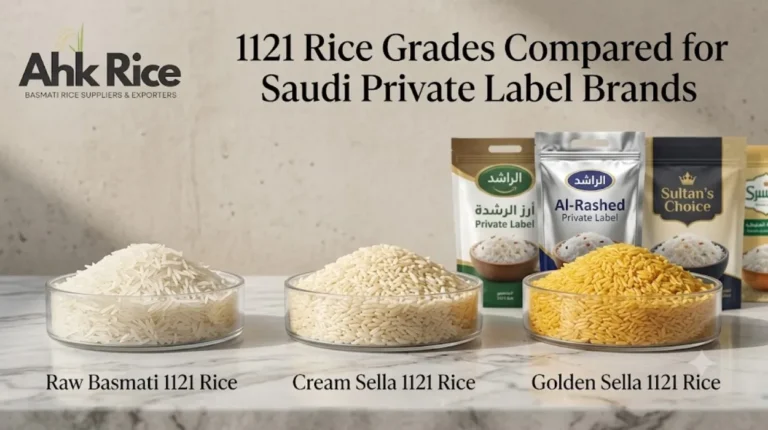
Basmati processing also includes Steam, Sella, Golden Sella, and White rice formats. These terms describe processing differences rather than separate species.
What Are the Main Processing Types?
Steam rice: Steam processing uses controlled heat treatment before drying and milling. The process supports grain structure and cooking performance.
Sella rice: Sella rice is parboiled rice. Parboiling involves soaking, heating, and drying paddy before milling. It produces a firm grain structure.
Golden Sella rice: Golden Sella is parboiled rice with a golden appearance. The process creates a distinct colour and firm cooking texture.
White rice: White rice is milled rice with the husk and bran removed. It provides a lighter appearance and familiar cooking profile.
The processing type determines the final grain characteristics. Buyers match the type to their customers, recipes, and storage requirements.
With cultivation and processing established, the next question is which grades international buyers commonly procure.
Which Basmati Rice Grades Do International Buyers Import?
International buyers commonly procure 1121, Super Kernel, and 1509 Basmati in Steam, Sella, Golden Sella, and White processing formats. Each grade supports different retail, foodservice, wholesale, and private-label requirements.
Which Grade Suits Premium Retail?
1121 Basmati supports premium retail and restaurant applications. Its long grain creates a strong visual presentation after cooking.
Super Kernel Basmati supports premium rice dishes that require aroma and grain separation. Retailers and foodservice buyers use it for biryani, pulao, and other rice-based meals.
Which Grade Suits Value-Focused Retail?
1509 Basmati supports value-focused premium retail. Buyers use it for products that require long-grain appearance and reliable cooking performance.
Steam, Sella, and Golden Sella processing formats provide different grain characteristics. Buyers compare these formats through sample cooking and specification checks.
A buyer ordering 1121 Steam for a premium restaurant evaluates cooked grain length, aroma, and separation. A wholesaler ordering Golden Sella evaluates grain firmness, colour, and storage handling.
With grades defined, the next section explains the commercial benefits and applications of imported Basmati rice.
What Benefits and Use Cases Drive Basmati Rice Imports?
Basmati rice imports support retail shelves, restaurant kitchens, wholesale distribution, private-label brands, and catering operations. Importers select grades according to customer preferences, packaging formats, cooking requirements, and distribution conditions.
What Are the Main Benefits?
Aromatic cooking: Basmati provides a distinctive aroma in rice dishes.
Long-grain appearance: Long-grain varieties support attractive presentation in cooked dishes.
Product variety: Steam, Sella, Golden Sella, and White formats allow buyers to match different cooking preferences.
Market segmentation: 1121, Super Kernel, and 1509 support different retail and foodservice positions.
Private-label flexibility: Importers can specify packaging sizes, branding, and product specifications for their own customers.
Where Do Importers Use Basmati Rice?
Retailers sell Basmati in consumer-sized bags. Restaurants use it for biryani, pulao, and rice platters. Wholesalers distribute bulk bags to grocery stores, caterers, and foodservice operators.
The United States, United Kingdom, and Canada have established retail and restaurant demand. Gulf markets such as Saudi Arabia, UAE, and Oman serve retail, catering, and wholesale channels. Italy and Germany supply European consumers through retail and foodservice networks.
The next section explains common procurement problems and the checks buyers complete before ordering.
What Problems Do Basmati Rice Importers Face?
Importers face specification errors, inconsistent grain quality, incorrect processing selection, moisture problems, and incomplete documentation. These problems increase commercial risk when buyers approve rice without checking the actual product.
What Is the Difference Between Basmati Varieties?
1121, Super Kernel, and 1509 are distinct varieties. Buyers should not treat them as interchangeable grades.
1121 focuses on long-grain presentation. Super Kernel focuses on traditional Basmati characteristics. 1509 supports long-grain value-focused products.
Why Does Processing Type Matter?
Steam, Sella, Golden Sella, and White rice differ in processing method. Buyers should compare cooked grain appearance, firmness, aroma, and intended use.
Golden Sella is not simply coloured White rice. Parboiling creates its characteristic grain structure and appearance.
What Should Buyers Check Before Ordering?
Importers should inspect representative samples before final procurement. The evaluation should cover grain length, broken percentage, moisture, foreign matter, aroma, cooking performance, and packaging.
The article [How to Evaluate a Basmati Rice Sample Before Ordering](Insert Link to MOFU Article) explains the sample approval process in greater detail. It connects product knowledge with practical procurement decisions.
What Certifications Apply to Basmati Rice Imports?
Food safety certificates, phytosanitary certificates, laboratory reports, and export documentation support international rice shipments. Import requirements depend on the destination country, product type, and applicable regulations.
Common documents include:
- Phytosanitary certificate: Confirms plant health requirements for the shipment.
- Certificate of origin: Identifies the country where the rice was produced.
- Commercial invoice: Records product description, quantity, and transaction value.
- Packing list: Identifies packaging units and shipment contents.
- Laboratory test report: Records relevant quality and safety test results.
- Food safety documentation: Supports compliance with applicable importing-country requirements.
The United States, European Union, United Kingdom, and Gulf markets each apply their own import controls. Importers should confirm requirements with their customs authorities before ordering.
With the main problems and documentation requirements established, the final section connects the market overview with practical procurement planning.
How Should Buyers Use the 2026 Basmati Rice Market Overview?
Buyers should match each destination market with a specific variety, processing type, packaging format, quality specification, and import documentation plan. This approach connects global demand with actual procurement requirements.
The United States and Canada serve retail and foodservice buyers. Italy, Germany, the United Kingdom, and the Netherlands serve European retail and restaurant markets. Saudi Arabia, UAE, and Oman serve Gulf distribution and catering channels.
Pakistan’s export statistics show established demand across these markets. The UAE, Saudi Arabia, Italy, Oman, and the United Kingdom all recorded significant Pakistani Basmati export values in FY2024. (Source: Pakistan Bureau of Statistics, FY2023-24 trade report.)
The top Basmati rice importing countries in 2026 represent different commercial opportunities. Buyers should evaluate each market through product specifications, customer segments, import requirements, and sample performance.
The next procurement step is to evaluate a representative Basmati rice sample before placing an order.
Frequently Asked Questions
Which countries import the most Basmati rice in 2026?
The United States, Italy, United Kingdom, Saudi Arabia, Australia, UAE, Germany, Canada, Netherlands, and Oman are among the leading Basmati rice importing countries by recorded shipment activity.
Which Pakistani Basmati varieties are exported internationally?
Pakistan exports 1121, Super Kernel, and 1509 Basmati rice. These varieties are supplied in Steam, Sella, Golden Sella, and White processing formats.
What is the difference between 1121 and 1509 Basmati rice?
1121 Basmati is associated with long-grain presentation and premium rice applications. 1509 Basmati supports long-grain value-focused retail and foodservice products.
What certifications are required for Basmati rice imports?
Common export documents include phytosanitary certificates, certificates of origin, commercial invoices, packing lists, and laboratory test reports. Import requirements vary by destination.
How should an importer evaluate a Basmati rice sample?
An importer should inspect grain length, broken percentage, moisture, foreign matter, aroma, cooking performance, and packaging. Sample testing confirms whether the product matches the required specification.