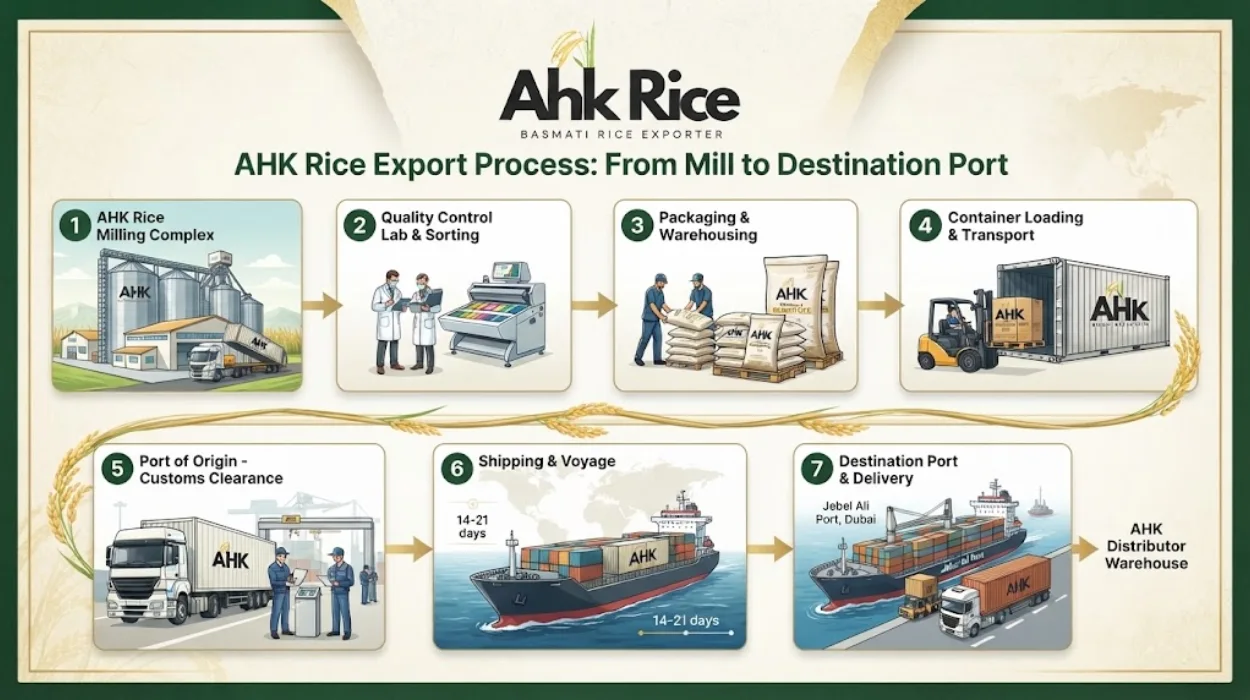
AHK Rice Export Process: From Mill to Destination Port
AHK Rice provides a coordinated export process from Pakistani rice mills to international destination ports. Here is why: buyers receive one managed workflow covering grade selection, milling, quality verification, packaging, documentation, and shipment dispatch. The process reduces communication gaps and gives importers clearer control over procurement.
What is the best solution for Pakistani Basmati rice importers?
A documented export workflow, verified samples, and agreed shipping terms provide the strongest foundation for reliable rice procurement. Buyers need more than a competitive price. They need specifications, inspection records, packing details, and shipment planning before approving a commercial order.
Pakistan Basmati rice differs across varieties, processing grades, and aging conditions. The educational guide What Makes Pakistani Basmati Rice Different? explains the product fundamentals buyers should understand before selecting a supplier. AHK Rice then translates those requirements into a practical export specification.
Which export stages require buyer approval?
The process begins with a confirmed product requirement. The importer specifies the rice variety, processing type, grain length, broken percentage, moisture target, packaging format, quantity, and destination.
AHK Rice reviews these requirements and confirms the available specification. The buyer receives a quotation based on the selected grade, packaging, quantity, and agreed Incoterm.
The supplier then arranges the sample, milling, quality checks, and commercial preparation. The buyer approves the sample before the order proceeds to final production.
Why choose AHK Rice for the export process?
AHK Rice connects product selection, processing, packaging, quality control, and export coordination through one supplier relationship. This gives importers a clearer route from initial inquiry to shipment and helps align the delivered product with the approved specification.
AHK Rice is a Pakistani Basmati rice exporter based in Punjab. Its core varieties include 1121, Super Kernel, and 1509. Each variety serves different procurement requirements, including premium retail, foodservice, and wholesale distribution.
What does AHK Rice provide?
AHK Rice offers coordinated product sourcing and export preparation. Buyers can discuss their required grade, quantity, destination, packaging, and shipping terms before placing an order.
The service includes product selection, milling coordination, packaging preparation, quality verification, and export documentation. The buyer receives a commercial quotation and shipment plan based on the confirmed order details.
AHK Rice can also coordinate custom packaging for importers developing private-label or distributor-specific products. The packaging specification should be confirmed before production begins.
Which product should buyers select?
1121 Basmati suits buyers seeking long grains and a premium rice specification. Super Kernel provides another long-grain option for commercial and retail applications.
1509 Basmati serves buyers evaluating long-grain rice for different price and market requirements. Steam, Sella, and Golden Sella processing types create further differences in cooking performance and product positioning.
The correct selection depends on the buyer’s target market, customer segment, cooking requirements, and approved specifications. AHK Rice helps align these details before production.
How does the AHK Rice export process work?
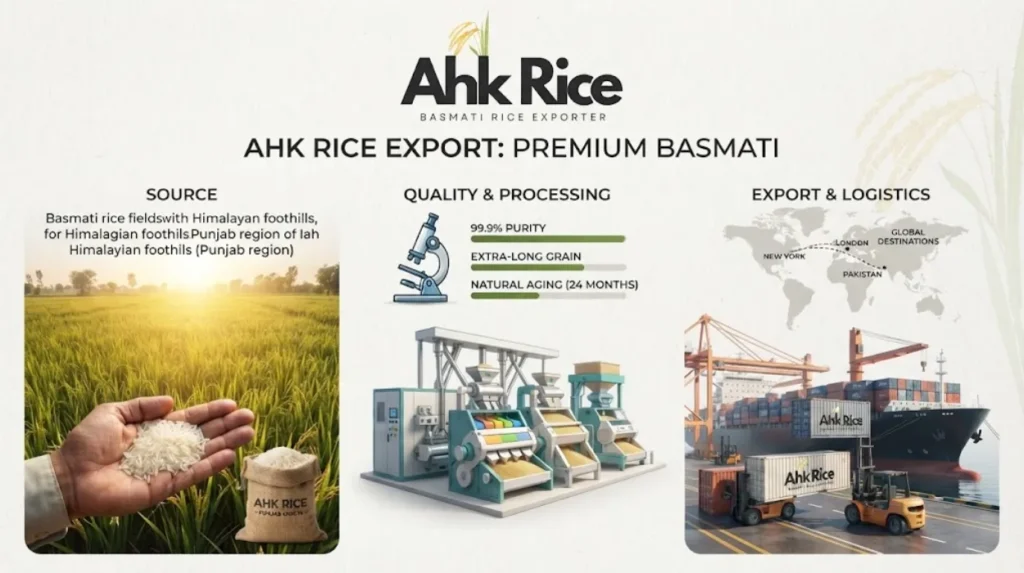
The export process follows eight coordinated stages: specification, quotation, sample, approval, milling, inspection, packaging, and dispatch. Each stage creates a decision point for the buyer and reduces uncertainty before the next stage begins.
1. Confirm the product specification
The buyer submits the required variety, processing type, grain length, broken percentage, moisture, quantity, and packaging format.
AHK Rice reviews the specification and confirms the available product. The quotation follows the agreed commercial requirements.
2. Receive the commercial quotation
The quotation identifies the product, quantity, price basis, packaging, and destination. Buyers can compare the offer against their procurement budget.
The FOB vs CIF pricing comparison explains the difference between supplier delivery at the port and a quotation that includes freight to the destination port.
3. Request and evaluate the sample
AHK Rice prepares a representative sample of the selected rice specification. The buyer checks grain appearance, aroma, cooking performance, broken percentage, and packaging suitability.
Sample approval establishes the reference product for commercial production. Buyers should confirm the accepted specification in writing.
4. Approve the commercial order
The buyer confirms the quantity, grade, packaging, payment terms, and shipping arrangement. AHK Rice schedules the next production and export stages.
The order moves forward after the commercial details are agreed. The supplier then coordinates the required milling and packaging preparation.
5. Mill and process the rice
The rice passes through the required processing stages. These can include cleaning, dehusking, polishing, grading, sorting, and parboiling for Sella products.
The selected processing type determines the final product specification. AHK Rice coordinates the required grade and prepares the product for quality verification.
6. Inspect and verify quality
Quality checks examine the agreed product parameters. These can include moisture, grain length, broken percentage, foreign matter, and overall appearance.
The buyer should confirm the required inspection scope before production. Independent inspection can be arranged when the commercial agreement requires it.
7. Pack and prepare export documents
The rice is packed in the approved format. Packaging can include PP bags, woven bags, or custom retail packaging.
Export documentation supports shipment clearance and delivery. Typical documents include the commercial invoice, packing list, certificate of origin, and required phytosanitary or inspection certificates.
8. Load, dispatch, and track the shipment
AHK Rice coordinates loading and shipment dispatch after the required export preparation is complete. The shipping arrangement depends on the selected Incoterm and destination.
The buyer receives shipment details for tracking and import preparation. The destination port then becomes the next stage of the procurement process.
What results can be expected from the export process?
Buyers can expect clearer specifications, controlled sample approval, coordinated export preparation, and better shipment visibility. These outcomes support procurement planning and help importers manage product, documentation, and delivery requirements.
What shipping days should buyers plan for?
Shipping estimates depend on the destination port, vessel schedule, container availability, and customs clearance. The following planning ranges are indicative, not guaranteed delivery dates.
| Market | Estimated ocean transit | Planning consideration |
|---|---|---|
| UAE and Gulf ports | 10–18 days | Direct or connecting services |
| Saudi Arabia | 12–22 days | Port and vessel schedule |
| Indonesia | 20–35 days | Connecting services may apply |
| Philippines | 18–30 days | Destination port selection |
| UK | 25–40 days | Port and customs planning |
| North Africa | 20–35 days | Route and transshipment |
Buyers should allow additional time for production, inspection, export clearance, and port handling. AHK Rice confirms the expected dispatch schedule after the order and shipping details are agreed.
What happens after shipment dispatch?
The buyer receives the shipment documents and tracking details required for import preparation. The destination-side process includes customs clearance, port handling, and inland delivery.
The buyer’s clearing agent should confirm the destination documentation requirements before shipment. This reduces the risk of delays caused by missing or incorrect paperwork.
What costs affect the AHK Rice export process?
The final export cost depends on the rice grade, order quantity, packaging, inspection requirements, and shipping terms. Buyers should compare the complete commercial specification rather than judging a quotation from the rice price alone.
What does a rice sample cost?
Sample costs depend on the selected product, sample quantity, packaging, and destination. A practical budget should include product preparation, packing, courier charges, and any required testing.
| Sample component | Indicative cost |
|---|---|
| Product sample | $10–$30 |
| Sample packaging | $5–$15 |
| Courier delivery | $40–$120 |
| Optional testing | $30–$100 |
| Estimated total | $55–$265 |
These figures are planning estimates, not a fixed AHK Rice tariff. The actual cost depends on the destination and requested sample specification.
What affects the commercial rice price?
Rice grade, processing type, grain length, broken percentage, crop availability, packaging, order quantity, and shipping terms affect the quotation.
FOB pricing covers the agreed delivery to the export port. CIF pricing includes the agreed ocean freight and insurance to the destination port.
The buyer should confirm whether the quotation includes inspection, documentation, port charges, and freight. AHK Rice can provide a quotation based on the agreed commercial requirements.
How can buyers get started with AHK Rice?
Start with the product specification, confirm the destination, request a sample, and approve the commercial quotation before production. This sequence gives buyers a practical route from inquiry to shipment.
What information should buyers provide?
The initial inquiry should include the required rice variety, processing type, quantity, packaging, destination port, and preferred shipping term.
The buyer should also identify the target market and customer segment. This helps align the grade and packaging with the intended application.
What is the next step after sample approval?
The buyer confirms the commercial order and payment terms. AHK Rice coordinates milling, quality checks, packaging, and export preparation.
The supplier then confirms the shipment plan and expected dispatch schedule. The buyer prepares the destination-side import requirements before the shipment arrives.
Contact AHK Rice today and submit your requirements through the quotation request form to receive a tailored export proposal.
Frequently Asked Questions
How long does the AHK Rice export process take?
The complete process depends on sample approval, production scheduling, inspection, and shipping arrangements. Sample preparation can take several days. Commercial production requires additional time based on quantity and grade. Ocean transit varies by destination. AHK Rice confirms the estimated dispatch and shipping schedule after order details are agreed.
What rice varieties does AHK Rice export?
AHK Rice supplies Pakistani Basmati rice varieties including 1121, Super Kernel, and 1509. Buyers can select Steam, Sella, or Golden Sella processing types. The correct variety depends on grain requirements, cooking performance, and market positioning. AHK Rice confirms available specifications during the quotation stage.
Can AHK Rice provide custom packaging?
AHK Rice coordinates custom packaging for importers requiring specific bag sizes or private-label presentation. Buyers should provide packaging requirements before production begins. The supplier confirms available materials, printing details, and packing quantities. Packaging approval forms part of the commercial specification.
What documents are needed for rice export?
Typical export documents include the commercial invoice, packing list, certificate of origin, and required inspection or phytosanitary certificates. The exact requirements depend on the destination country and product. Buyers should confirm import documentation with their clearing agent. AHK Rice coordinates the supplier-side export documents.
Does AHK Rice offer FOB and CIF pricing?
AHK Rice can prepare quotations based on the agreed shipping term. FOB pricing covers delivery to the export port. CIF pricing includes the agreed freight and insurance to the destination port. Buyers should confirm the included charges before approving the quotation. The final price depends on the product and shipping details.
How can buyers request a rice sample?
Buyers should submit the required variety, processing type, quantity, destination, and packaging preference. AHK Rice reviews the specification and confirms sample preparation details. The buyer then receives the sample for evaluation. Sample approval establishes the reference product for commercial production.
What makes the AHK Rice export process different?
AHK Rice coordinates the main procurement stages through one supplier relationship. Buyers can discuss product specifications, samples, packaging, quality checks, and shipping arrangements together. This creates a clearer process for commercial ordering. The final service depends on the confirmed specification and agreed order terms.
For a quotation based on your required rice grade, packaging, quantity, and destination port, contact AHK Rice through the request-a-quote page.