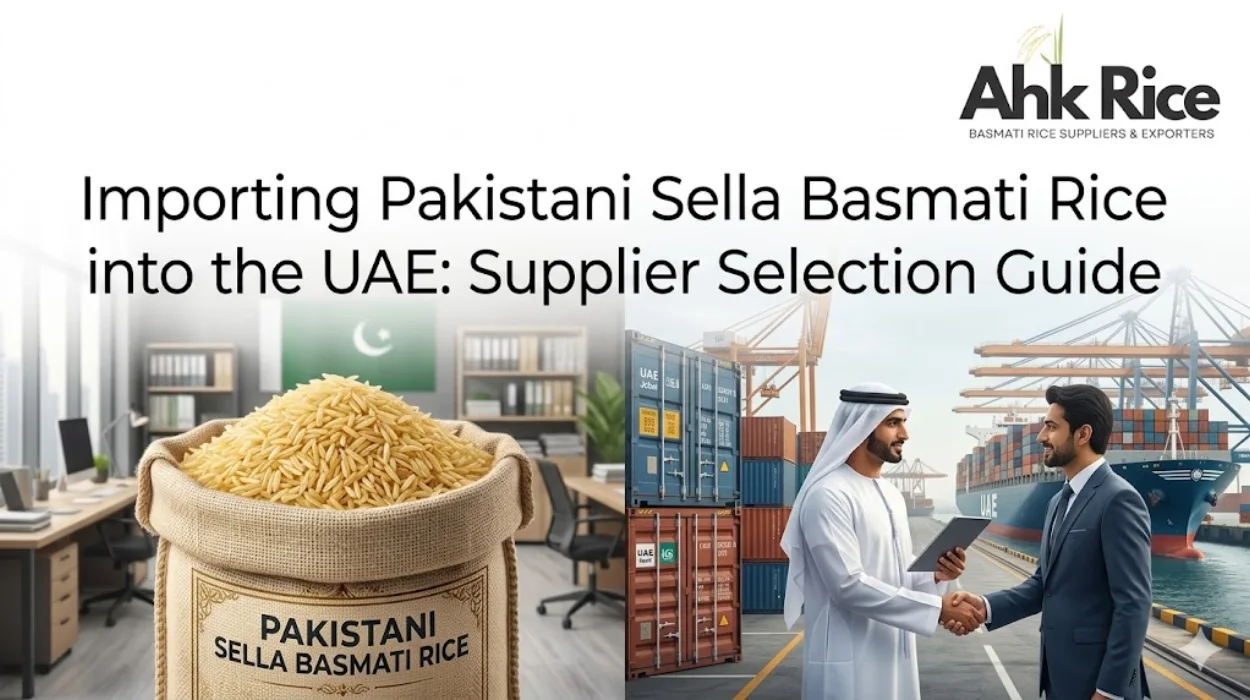
Importing Pakistani Sella Basmati Rice into the UAE: Supplier Selection Guide
Pakistani Sella Basmati Rice import into the UAE requires a supplier that can consistently inspect, grade, and ship export-standard rice with verified moisture, length, and aroma consistency. Here is why: UAE buyers operate in strict retail and hospitality supply chains where uniform cooking performance and long shelf stability directly impact brand reputation.
This guide is built for procurement managers, distributors, and food service buyers evaluating suppliers like AHK Rice. For broader market context, review the demand breakdown in the TOFU article Pakistani Sella Basmati Rice Demand Across UAE Retail and Hospitality Sectors as it explains consumption patterns and buyer segmentation.
For specification alignment and compliance expectations, the MOFU guide Quality Standards UAE Buyers Expect from Pakistani Sella Basmati Rice helps buyers compare grades before final selection.
What is the best solution for importing Pakistani Sella Basmati Rice into the UAE?
The best solution is a vertically integrated export supplier like AHK Rice that can mill, dehusk, polish, grade, certify, and dispatch consistent Sella Basmati batches directly to UAE importers with traceable documentation and stable 12–18 month shelf life assurance across Golden and Steam grades. Here is why: fragmented sourcing increases rejection risk and inconsistent cooking quality.
Pakistani Sella Basmati import success depends on consistency across multiple shipment cycles. UAE buyers reject variability more than price differences. AHK Rice controls processing from paddy selection to export dispatch, reducing variation between shipments.
AHK Rice cultivates, mills, dehusks, polishes, and grades Sella Basmati under standardized export protocols. Each batch is tested for moisture, broken ratio, and grain elongation.
Clean paddy improves baseline quality. De-husking preserves kernel structure. Parboiling stabilizes starch. Sorting removes under-length grains. These steps ensure export uniformity for UAE retail packs and hospitality bulk supply.
Golden Sella performs best in high-temperature storage environments. Steam Sella is preferred for price-sensitive catering contracts. UAE importers typically mix both depending on channel strategy.
AHK Rice supplies both grades under contract consistency programs. Buyers reduce procurement risk by locking specifications instead of switching suppliers per shipment.
Bridge: With the optimal sourcing model defined, the next step is understanding why AHK Rice is preferred by UAE importers over spot-market suppliers.
Why choose AHK Rice as your UAE Sella Basmati supplier?
AHK Rice is chosen because it delivers certified grading, export consistency, and predictable shipment cycles with controlled milling, sorting, and fumigation processes that align with UAE retail rejection thresholds below 2% defect tolerance. Here is why: UAE importers prioritize stability over lowest landed price.
AHK Rice operates under structured export workflows designed for GCC compliance. Each shipment is inspected, tested, and certified before dispatch.
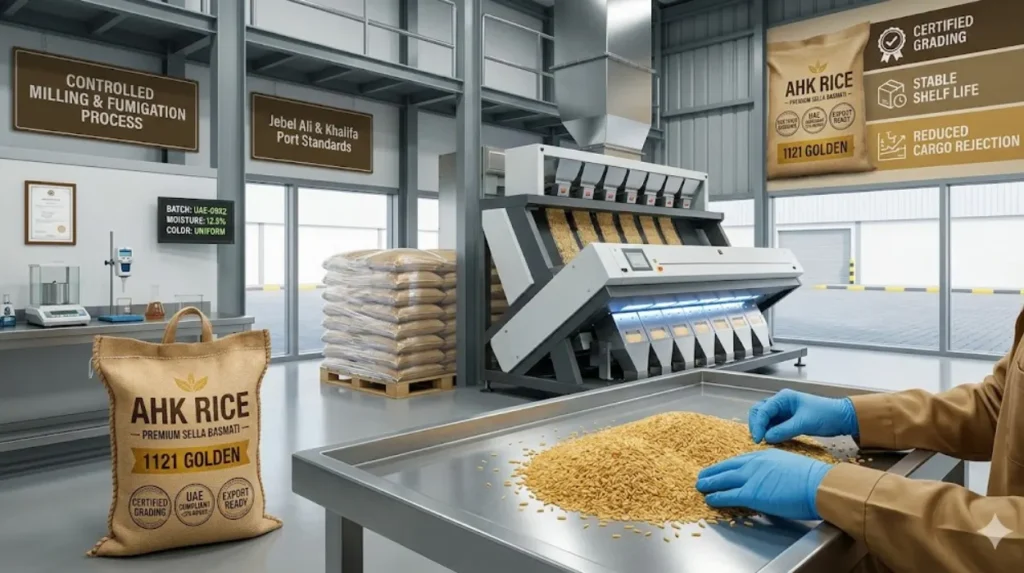
Colour sorting ensures visual uniformity. Moisture control stabilizes shelf life. Fumigation protects long-distance shipping integrity. These processing features reduce cargo rejection risk in Jebel Ali and Khalifa Port inspections.
AHK Rice maintains multiple grade lines including 1121 Sella, Super Kernel, and 1509 Sella. Each grade is matched to buyer segments such as retail packs, hotel kitchens, and institutional catering.
Retail buyers in Dubai prefer premium long-grain Golden Sella. Hospitality buyers in Abu Dhabi often procure Steam Sella for cost efficiency. AHK Rice supplies both under contract-based allocation models.
Sample approval is structured. Buyers receive graded samples, lab reports, and cooking tests before final contract confirmation. This reduces procurement uncertainty for UAE importers.
AHK Rice also supports documentation including phytosanitary certificates, origin certificates, and export test reports aligned with UAE import regulations.
Bridge: With supplier selection clarified, the next decision factor is understanding shipping timelines into UAE ports and distribution centers.
How long does shipping take for UAE importers of Pakistani Sella Basmati Rice?
Shipping from Pakistan to UAE typically takes 7–12 days for sea freight depending on Karachi port loading schedules and Jebel Ali customs clearance speed, while air freight takes 1–3 days but is rarely used except for urgent retail replenishment orders. Here is why: logistics timing directly affects shelf planning in UAE retail chains.
AHK Rice manages export dispatch through Karachi and Port Qasim. Containers are loaded, sealed, and dispatched after inspection and documentation verification.
Loading operations are completed within 24–48 hours once vessel booking is confirmed. Shipping lines to UAE operate frequent weekly departures, improving predictability.
Sea freight remains dominant because bulk rice shipments require cost efficiency. Air freight is limited to sample shipments or urgent stock gaps.
In UAE, Jebel Ali port clearance typically takes 1–3 days if documentation is complete. Khalifa Port follows similar clearance timelines depending on inspection load.
Golden Sella shipments remain stable during transit due to parboiling structure. Steam Sella requires slightly more careful humidity control but still maintains integrity during standard container shipping.
AHK Rice coordinates logistics tracking with importers to ensure ETA transparency and reduce warehouse disruption risk.
Bridge: With shipping timelines understood, the next key decision is evaluating sample approval processes and associated costs before bulk ordering.
What is the sample approval process and cost for UAE rice buyers?
The sample process includes paddy selection, milling, grading, polishing, lab testing, and courier dispatch of 1–5 kg samples with costs typically ranging from $20 to $80 depending on courier speed and certification requirements. Here is why: sampling ensures buyers verify cooking performance before bulk commitment.
AHK Rice initiates sampling by selecting representative paddy lots. Each sample reflects actual export-grade production, not isolated premium selection.
Clean paddy is milled, dehusked, and polished in controlled batches. Grading ensures uniform grain length and broken percentage alignment with export specification.
Lab testing verifies moisture content, aroma retention, and impurity levels. Certification documents are attached to each sample shipment for buyer validation.
Courier dispatch is executed via DHL or FedEx depending on urgency. Standard delivery to UAE takes 3–5 days.
Sample costs are typically absorbed in bulk orders above contract thresholds. For smaller buyers, AHK Rice charges only courier and handling fees.
AHK Rice uses sample approval as a risk reduction tool. UAE importers often test cooking yield, elongation ratio, and aroma strength before approving contracts.
Bridge: With sampling clarified, the next factor affecting procurement decisions is understanding pricing structure and cost drivers in UAE rice imports.
What factors affect the price of Pakistani Sella Basmati Rice in UAE imports?
Pricing is influenced by grain length, broken percentage, parboiling method, shipping freight rates, currency exchange fluctuations, and seasonal paddy availability, with Golden Sella commanding higher prices due to longer shelf stability and stronger visual grading. Here is why: export-grade uniformity increases processing cost.
AHK Rice prices are structured based on grade classification. 1121 Golden Sella is premium due to elongation and aroma retention. Steam Sella is positioned for cost-efficient bulk supply.
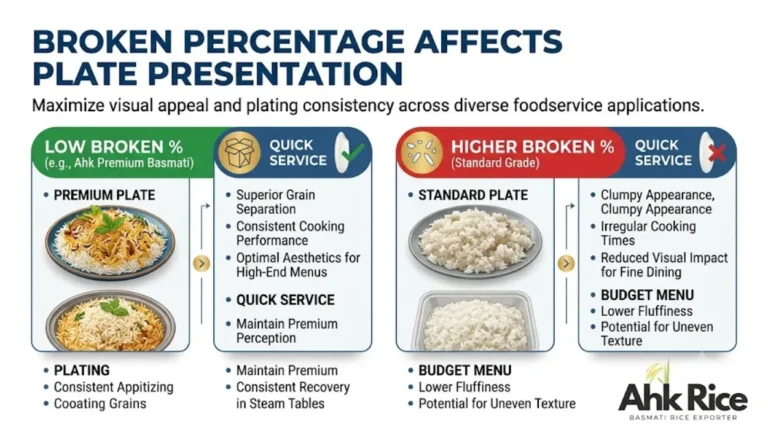
Grain sorting intensity affects price. Higher precision sorting reduces broken grains but increases processing time and cost.
Parboiling method also impacts pricing. Controlled steaming stabilizes starch but requires additional energy and processing cycles.
Freight rates fluctuate based on global shipping demand. Container availability directly affects landed UAE cost.
Currency exchange between PKR and USD influences export pricing stability. Buyers often lock contracts to mitigate volatility risk.
Seasonal paddy availability affects supply consistency. Harvest cycles in Punjab influence raw material cost structure for AHK Rice.
Bridge: With pricing dynamics understood, the final step is knowing how UAE importers can start procurement with AHK Rice efficiently.
How can UAE buyers start importing Sella Basmati Rice from AHK Rice?
UAE buyers can start by submitting specifications, requesting graded samples, confirming MOQ and packaging requirements, finalizing contract terms, and initiating shipment scheduling with documentation support from AHK Rice export coordination teams. Here is why: structured onboarding reduces procurement delays and compliance errors.
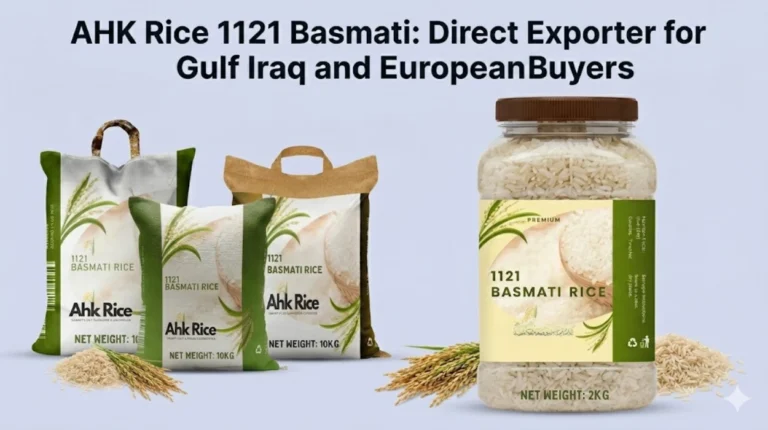
Initial contact defines required grade such as 1121, 1509, or Super Kernel. Packaging options include 5kg retail bags and 40kg institutional sacks.
Specification alignment includes grain length, moisture level, and broken ratio targets. AHK Rice verifies feasibility before contract confirmation.
Sample approval is completed before bulk production. This ensures consistency between expectation and export batch output.
Contract finalization includes pricing lock, shipment schedule, and payment terms. AHK Rice coordinates export documentation including phytosanitary and origin certificates.
Shipment scheduling is aligned with UAE port availability. Containers are loaded, dispatched, and tracked until delivery confirmation.
AHK Rice maintains continuous communication throughout the process to ensure supply chain transparency and reduce operational risk for UAE importers.
For procurement execution, buyers proceed directly to the service page Request a Quote to initiate formal ordering and contracting with AHK Rice.
Frequently Asked Questions
What makes Pakistani Sella Basmati suitable for UAE importers?
Pakistani Sella Basmati Rice is preferred in the UAE because it offers long grain consistency, high yield after cooking, and strong shelf stability. These qualities make it suitable for both retail packaging and large-scale hospitality use where uniform quality is essential.
Why is supplier consistency important for UAE rice imports?
Supplier consistency ensures every shipment maintains the same grain length, moisture level, and aroma. In UAE retail and food service sectors, even small variations can lead to rejection, making reliable sourcing critical for long-term contracts.
What grades of Sella Basmati Rice are commonly exported to UAE?
The most commonly exported grades include 1121 Golden Sella, Steam Sella, Super Kernel, and 1509 Sella. Each grade serves different market needs, from premium retail packs to cost-efficient catering supply.
How long does it take to ship rice from Pakistan to UAE?
Sea freight shipments typically take 7–12 days depending on port schedules and customs clearance. Air freight is faster at 1–3 days but is generally used only for urgent or small sample shipments.
How can UAE buyers ensure rice quality before bulk purchase?
Buyers usually request pre-shipment samples, lab test reports, and cooking evaluations. This process helps verify grain length, aroma, moisture, and cooking performance before confirming large contracts.