Import Procedures and Supplier Selection Tips for Indonesian Rice Buyers
Importing rice into Indonesia requires selecting qualified suppliers before negotiating price because supplier quality directly affects product consistency, customs clearance, delivery schedules, and long-term profitability. Here is why: successful Indonesian buyers evaluate compliance, processing standards, documentation capability, and export experience before placing commercial orders.
Indonesia remains one of Asia’s most important rice-consuming markets. Demand comes from wholesalers, distributors, retailers, food service operators, and industrial food manufacturers. Buyers sourcing internationally must understand both import procedures and supplier evaluation methods. A structured procurement approach reduces risk and improves supply chain stability.
Many Indonesian importers begin by understanding global sourcing regions before evaluating suppliers. A detailed overview of rice-producing countries and export capabilities can help buyers compare sourcing options and identify suitable origins for long-term procurement partnerships. understanding how international rice supply chains serve different import markets.
Pakistani exporters have become increasingly important suppliers because Pakistan cultivates premium Basmati varieties and offers scalable export capacity. AHK Rice is a trusted Pakistani Basmati rice exporter based in Punjab, supplying 1121, Super Kernel, and 1509 varieties to more than 15 countries through structured processing and export systems.
What import procedures should Indonesian rice buyers follow?
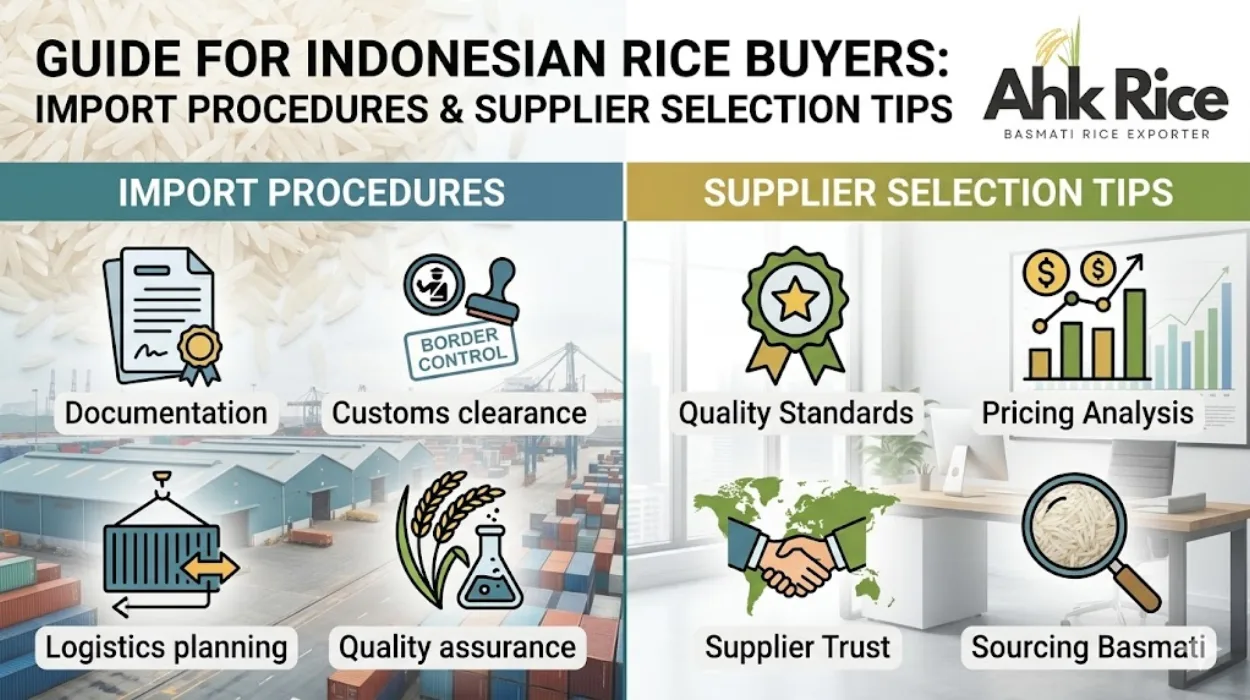
Supplier qualification, product verification, document validation, quality inspection, contract approval, shipment execution, and customs clearance form the complete import procedure used by successful Indonesian rice buyers.
Rice import procedures refer to the operational and regulatory steps required to source rice from another country and deliver it into Indonesia legally and efficiently.
Import procedures begin with supplier identification. Buyers shortlist exporters based on processing capability, certifications, export experience, and production capacity. This stage eliminates unsuitable suppliers before commercial discussions begin.
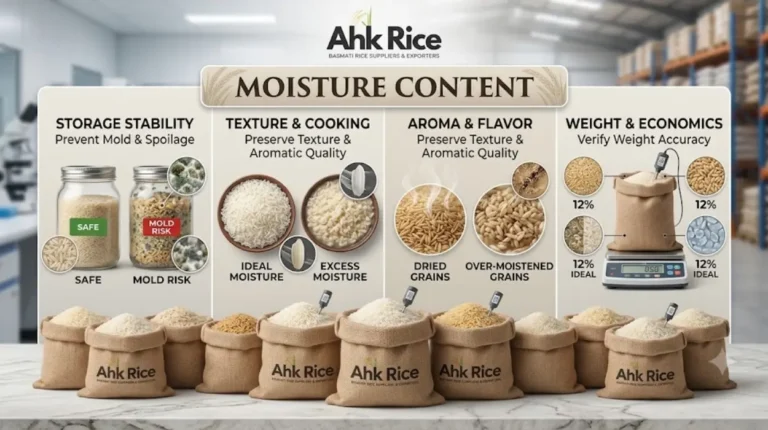
Product verification follows supplier selection. Buyers review grain specifications, moisture levels, broken percentage, milling standards, packaging options, and laboratory reports. Product samples help validate supplier claims before contract execution.
Documentation review becomes the next critical stage. Exporters must provide complete paperwork to support customs clearance and product compliance.
Which documents are normally required?
Import Documentation Checklist
| Document | Purpose |
|---|---|
| Commercial Invoice | Defines shipment value |
| Packing List | Confirms packaging details |
| Bill of Lading | Confirms cargo ownership |
| Certificate of Origin | Verifies country of origin |
| Phytosanitary Certificate | Confirms plant health compliance |
| Fumigation Certificate | Verifies pest control treatment |
| Quality Inspection Report | Confirms specification compliance |
Contract negotiation follows document validation. Buyers define payment terms, product specifications, packaging requirements, inspection procedures, and delivery schedules.
Shipment execution begins after production completion. Exporters inspect, grade, pack, load, and dispatch rice according to agreed specifications.
Customs clearance represents the final stage. Importers submit documentation, complete inspections, pay applicable duties, and release cargo for distribution.
With import procedures established, buyers must understand how supplier options differ before selecting a sourcing partner.
What supplier solutions are available for Indonesian rice buyers?
Direct manufacturers, export trading companies, commodity brokers, sourcing agents, and integrated exporters represent the primary supplier solutions available to Indonesian rice importers.
Each sourcing model offers different benefits, risks, and cost structures.
Direct Manufacturers
Direct manufacturers cultivate, process, mill, grade, and export rice through owned facilities.
Advantages include stronger quality control and lower intermediary costs.
Challenges include limited market support and stricter minimum order quantities.
Export Trading Companies
Trading companies procure rice from multiple mills and consolidate shipments.
Advantages include product flexibility and access to multiple grades.
Challenges include reduced production visibility.
Commodity Brokers
Commodity brokers connect buyers with suppliers.
Advantages include broad supplier access.
Challenges include limited operational control after contract signing.
Sourcing Agents
Sourcing agents evaluate suppliers and manage procurement processes.
Advantages include local market expertise.
Challenges include additional procurement costs.
Integrated Exporters
Integrated exporters manage sourcing, processing, packaging, quality control, logistics, and export documentation.
AHK Rice operates within this model by managing processing, grading, packaging, quality verification, and export coordination through an end-to-end supply chain.
Understanding available supplier models allows buyers to compare procurement approaches more effectively.
How do different sourcing approaches compare?
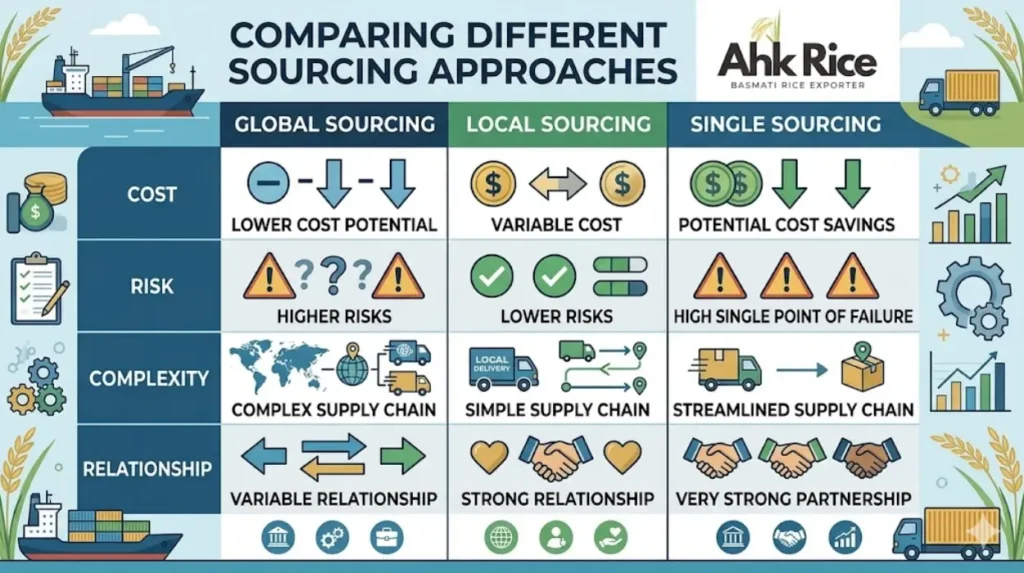
Integrated exporters deliver the highest operational control, while brokers provide the widest supplier access and traders offer the greatest sourcing flexibility.
Supplier comparison helps buyers align procurement strategy with business objectives.
Supplier Comparison Table
| Attribute | Direct Mill | Trading Company | Broker | Sourcing Agent | Integrated Exporter |
|---|---|---|---|---|---|
| Quality Control | High | Medium | Low | Medium | High |
| Documentation Support | Medium | High | Low | Medium | High |
| Traceability | High | Medium | Low | Medium | High |
| MOQ Flexibility | Low | High | High | Medium | Medium |
| Price Transparency | High | Medium | Low | Medium | High |
| Export Experience | Medium | High | Low | Medium | High |
| Supply Consistency | High | Medium | Low | Medium | High |
Price comparisons reveal another important distinction.
Direct mills often offer the lowest ex-factory pricing. Trading companies provide competitive pricing through supplier networks. Integrated exporters deliver higher value because documentation, quality assurance, packaging, and logistics are included within the sourcing process.
Comparison alone does not determine suitability. Buyer requirements ultimately determine which sourcing method creates the best outcome.
Which rice grades work best for different Indonesian market segments?
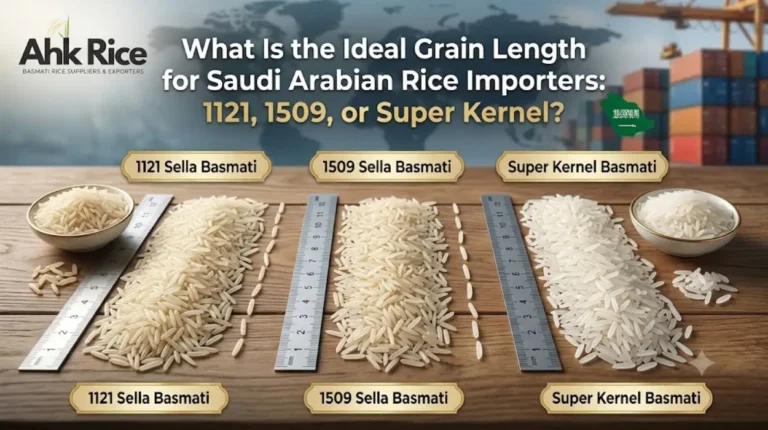
1121 Basmati serves premium retail markets, Super Kernel supports traditional trade channels, and 1509 Basmati provides value-focused volume opportunities.
Rice grades differ according to grain length, aroma, cooking performance, appearance, and price positioning.
Premium Urban Markets
Jakarta, Surabaya, Bandung, and other metropolitan regions typically favor premium imported rice categories.
Preferred grades include:
- 1121 Steam Basmati
- 1121 Golden Sella Basmati
- Premium White Basmati
These grades deliver superior grain elongation and presentation.
Traditional Distribution Markets
Secondary cities and wholesale channels often prioritize value and consistency.
Preferred grades include:
- Super Kernel Basmati
- PK 385 Rice
- IRRI Rice
These grades balance quality and affordability.
Price Comparison by Grade
| Rice Grade | Typical Export Price Range (USD/MT) |
|---|---|
| 1121 Golden Sella | 1,050–1,300 |
| 1121 Steam | 950–1,200 |
| Super Kernel | 850–1,050 |
| 1509 Steam | 850–1,100 |
| PK 385 | 650–850 |
Prices vary according to crop season, freight costs, and processing specifications.
Grade selection directly affects storage performance, making shelf life comparison an important evaluation factor.
What are the pros and cons of different rice specifications?
Parboiled grades provide longer storage life, while steam and white rice deliver softer cooking characteristics and lower processing intensity.
Rice processing methods create measurable differences in durability and performance.
Shelf Life Comparison
| Grade Type | Average Shelf Life |
|---|---|
| Golden Sella | 18–24 Months |
| Steam Rice | 12–18 Months |
| White Rice | 12 Months |
Golden Sella lasts longer than Steam rice. In tropical warehouse environments, Golden Sella maintains grain stability for extended periods because parboiling strengthens grain structure.
Steam rice offers excellent cooking performance. Retail-focused distributors often prefer Steam rice because consumers value appearance and aroma.
White rice delivers a natural presentation and faster cooking characteristics. Premium retail segments frequently select white rice for these reasons.
Advantages of Golden Sella
- Longer storage stability
- Reduced grain breakage
- Strong export durability
- Better inventory management
Limitations of Golden Sella
- Higher processing cost
- Different color profile
- Longer cooking time
Advantages of Steam Rice
- Strong aroma retention
- Premium appearance
- Consumer familiarity
Limitations of Steam Rice
- Shorter shelf life
- Higher storage sensitivity
Product specifications influence buying decisions, but procurement success depends on selecting the correct supplier evaluation criteria.
Which decision factors should Indonesian buyers prioritize?
Quality consistency, certification capability, documentation accuracy, processing capacity, logistics performance, and communication reliability determine supplier suitability.
Supplier evaluation requires objective criteria rather than price-focused purchasing.
Decision Framework
| Decision Factor | Low Priority Buyer | Medium Priority Buyer | High Priority Buyer |
|---|---|---|---|
| Price | High | Medium | Medium |
| Quality Consistency | Medium | High | High |
| Certifications | Medium | High | High |
| Export Experience | Medium | High | High |
| Logistics Capability | Medium | High | High |
Key Supplier Evaluation Questions
Does the supplier own processing facilities?
Facility ownership improves traceability and production visibility.
Can the supplier provide laboratory reports?
Laboratory testing verifies grain length, moisture, purity, and broken percentage.
Does the supplier export regularly?
Regular exporters understand documentation, inspections, and logistics requirements.
Can the supplier support custom packaging?
Custom packaging improves market positioning and retail competitiveness.
Does the supplier provide shipment tracking?
Shipment visibility improves inventory planning and customer communication.
These evaluation factors reduce procurement risk and support long-term supplier relationships.
How can Indonesian buyers build a reliable rice sourcing strategy?
Long-term supplier partnerships, specification standardization, quality verification systems, and performance monitoring create the most reliable rice sourcing strategy.
Reliable sourcing begins with standardized specifications. Buyers should define grain length, moisture limits, broken percentage, packaging requirements, and inspection procedures before procurement discussions begin.
Performance monitoring improves supplier accountability. Buyers should track delivery schedules, product consistency, documentation accuracy, and customer feedback.
Multi-shipment evaluation provides stronger insight than a single order. Long-term procurement decisions should be based on sustained supplier performance.
Strategic sourcing also requires understanding demand trends and future import opportunities. Buyers evaluating long-term procurement strategies can review market-specific opportunities through analysis of emerging rice import demand and sourcing opportunities in regional markets.
A structured sourcing strategy transforms procurement from a transactional activity into a competitive advantage.
Frequently Asked Questions
How long does rice import approval normally take in Indonesia?
Import approval timelines vary according to regulatory requirements, product category, and documentation completeness. Complete documentation reduces processing delays significantly.
What is the most important factor when selecting a rice supplier?
Quality consistency remains the most important factor because inconsistent product quality creates customer complaints, inventory losses, and brand damage.
Which rice grade is most suitable for premium Indonesian retailers?
1121 Basmati grades are commonly selected because they provide superior grain length, aroma, and visual presentation.
Why are certifications important for rice imports?
Certifications verify product safety, quality standards, and regulatory compliance. They also simplify customs clearance processes.
Should buyers prioritize price or supplier reliability?
Supplier reliability delivers greater long-term value because consistent quality and delivery performance reduce operational risk and customer dissatisfaction.