Basmati Rice Demand Increases Among Global Importers
The global agricultural trade landscape experiences a significant shift as international food distributors increase their volume orders for premium long-grain grains. Basmati Rice Demand Increases Among Global Importers because changing consumer preferences across continents drive a higher requirement for aged, aromatic varieties that maintain structural integrity during large-scale culinary preparation.
What Is Basmati Rice?

Basmati rice is a specific variety of long-grain, aromatic rice historically cultivated in the fertile, alluvial soils of the Punjab region encompassing parts of Pakistan and India. This specific grain expands to more than twice its original length during the cooking process without increasing its sectional width.
Defining the Botanical Profile
Basmati rice belongs to the Oryza sativa species. The grain possesses a unique chemical composition that sets it apart from standard long-grain rice varieties. The primary distinguishing factor is the presence of 2-acetyl-1-pyrroline. This chemical compound gives the grain its characteristic nutty aroma and flavor profile.
The grain structure contains a high amylose content. Amylose is a linear polymer of glucose that makes up starch. A high amylose percentage ensures that the grains remain separate, non-sticky, and fluffy after cooking. Standard white rice varieties contain lower amylose levels, which causes them to clump together.
Geographical Indications and Cultivation Zones
True Basmati rice grows exclusively in specific geographical zones. The fields must occupy the indus-gangetic plains. The specific soil profile requires nutrient-rich alluvial clay or loam. The cultivation zone must have access to clean water channels originating from the Himalayan mountain ranges.
The temperature in these zones must fluctuate between specific ranges during the maturation phase. Cool night temperatures combined with warm daytime conditions accelerate the development of the aroma compounds within the endosperm. The endosperm is the nutritive tissue surrounding the plant embryo inside the seed.
Varieties Packaged for Export
The international market categorizes Basmati rice based on genetic strain and grain length. Exporters categorize these into distinct premium types.
- 1121 Basmati Rice: This variety holds the record for the longest pre-cooked grain length, averaging 8.35 millimeters. It offers the highest elongation ratio upon cooking.
- Super Kernel Basmati Rice: This traditional variety is famous for its intense aroma profile and deep flavor. It represents the authentic heritage strain of the Punjab plains.
- 1509 Basmati Rice: This early-maturing variety features a grain length of approximately 8.40 millimeters. It provides a cost-effective option for high-volume buyers while maintaining the required elongation characteristics.
Where Is Basmati Rice Grown?
Basmati rice grows primarily in the traditional agricultural fields of the Punjab province in Pakistan, where specific climatic conditions and river networks create the ideal environment for the crop. The specific soil composition and weather patterns prevent the plant strains from losing their unique aromatic qualities.
The Punjabi Soil Matrix
The agricultural lands of Punjab consist of deep alluvial deposits. Rivers carry these mineral-rich sediments down from the mountains annually. The soil contains optimal percentages of nitrogen, phosphorus, and potassium. These elements feed the rice stalks throughout their 130-day growth cycle.
The water retention capacity of the Punjabi clay loam allows farmers to maintain a uniform water depth in the paddies. Uniform water distribution prevents the root systems from rotting. It ensures that every plant absorbs an equal amount of nutrients from the ground.
Climatic Triggers for Grain Maturation
The lifecycle of the crop requires precise seasonal transitions. Sowing happens during the hot summer months when temperatures exceed 40 degrees Celsius. High heat stimulates early vegetative growth and stalk development. The plant needs strong sunlight to synthesize sugars through photosynthesis.
The flowering and grain-filling stages must coincide with the onset of autumn. Temperatures must drop to a range between 20 and 25 degrees Celsius. The lower temperatures slow down the starch accumulation process inside the hull. Slow accumulation creates a denser endosperm, which prevents grain breakage during milling.
How Does Basmati Rice Processing Work?
Basmati rice processing works through a multi-stage mechanical sequence that transforms raw, moisture-heavy paddy grains into shelf-stable, polished, and color-sorted premium white or parboiled grains. The entire operation relies on computerized machinery to eliminate impurities, outer hulls, and defective kernels without fracturing the slender grain structure.
The Initial Intake and Mechanical De-husking
Processing begins immediately after the harvest. The raw paddy arrives at the facility with a high moisture content of 20 percent to 22 percent. Large industrial dryers reduce this moisture level to a stable 12 percent to 14 percent. This specific moisture level prevents fungal growth during storage.
The dried paddy enters the cleaning section. Pre-cleaners utilize vibrating sieves and air aspirators to remove external foreign matter. Examples of foreign matter include straw, dust, stones, and weed seeds. The clean paddy then passes into rubber-roll hullers. These machines apply friction to strip away the tough outer husk, producing raw brown rice.
The Parboiling Process Option
Parboiling is an optional hydrothermal process executed before milling. It alters the starch structure inside the grain. Workers soak the paddy in warm water under controlled pressure conditions. Steam injection follows the soaking phase, causing the starch to gelatinize.
This process drives water-soluble vitamins and minerals from the outer bran layer directly into the central endosperm. Parboiling hardens the grain structure. The hardened grain resists breakage during subsequent mechanical milling stages.
Mechanical Milling and Whitening
Brown rice undergoes whitening to remove the nutrient-rich bran layers. The grains pass through a series of abrasive and friction milling machines. These vertical or horizontal blocks gently remove the outer silver skin and germ. This process transforms the brown grain into white rice.
The friction generates heat, which millers control using internal air ventilation loops. Controlling the temperature prevents the slender grains from snapping. The removed bran layer goes to oil extraction plants, while the white grains proceed to the polishing phase.
Polishing and Mist Humidification
Polishing improves the visual appearance and storage life of the product. Grains pass through water polishers that inject a fine mist of purified water into the polishing chamber. The friction between the grains polishes their surfaces, removing any remaining bran dust.
This process gives the rice a translucent, glossy finish. A smooth surface prevents dust accumulation during long ocean transits. It ensures the product remains free-flowing inside its final retail packaging.
Length Grading and Color Sorting
The polished rice moves to the sizing section. Rotary sizers separate the whole grains from broken pieces. The factory isolates the broken segments into specific categories based on length. Examples of categories include large brokens, half brokens, and small tips.
The whole grains enter high-speed optical color sorters. Computerized charge-coupled device cameras scan the falling grain stream at microsecond intervals. High-pressure air ejectors blast individual discolored, chalky, or damaged grains out of the main stream. Only flawless, uniform grains pass into the packaging bins.
What Are the Key Components of the Basmati Export Supply Chain?
The key components of the Basmati export supply chain include standardized agricultural sourcing, computerized milling facilities, multi-layered protective packaging, and international maritime logistics management. Each element operates under strict regulatory frameworks to guarantee that the final product arrives at destination ports without quality degradation.
Sourcing Protocols and Quality Assurance
Sourcing requires direct coordination with contract farmers in the core growing zones. Exporters deploy field agronomists to monitor the application of fertilizers and pesticides. This oversight ensures that chemical residues remain below the maximum residue limits defined by importing nations.
Quality assurance laboratories test samples from every incoming truck load. Technicians measure specific physical parameters before unloading. Examples of parameters include grain length, moisture variance, impurity percentages, and the presence of contrasting varieties.
Industrial Storage Infrastructure
Safe storage requires specialized concrete or steel silos equipped with temperature-monitoring arrays. Basmati rice requires an aging period of 9 to 24 months to optimize its cooking quality. Aging dries out natural oils, which concentrates the aroma and hardens the starch structure.
Automated aeration fans circulate dry air through the grain mass whenever external humidity levels drop. This system prevents moisture pockets from forming inside the silos. It eliminates the risk of internal heating and spoilage.
Packaging Materials and Custom Configurations
Packaging protects the refined grains from moisture pickup, insect infestation, and physical friction during global transit. Factories utilize automated filling lines to seal the product into various material options.
- Biaxially Oriented Polypropylene Bags: These offer high moisture barriers and clear photographic print capabilities for retail display.
- Non-Woven Fabric Bags: These allow the grain to breathe during long sea journeys, reducing the risk of internal sweating.
- Jute Sacks: These provide traditional, heavy-duty protection for wholesale distribution networks.
What Are the Benefits of Importing Basmati Rice?
The benefits of importing Basmati rice include high market profitability margins, access to a growing premium consumer demographic, and excellent product shelf stability. Food distributors utilize this premium product to differentiate their inventory from standard commodities, capturing higher retail price points.
Market Position and Premium Pricing Power
Basmati rice occupies a luxury position within the global grain market. Consumers willingly pay a premium price for its unique sensory characteristics. Importers avoid the tight, low-margin competition associated with generic white long-grain rice varieties.
This pricing power allows distributors to maintain healthy profit margins even when international shipping costs fluctuate. The distinctive aroma and appearance create strong brand loyalty among end consumers, ensuring repeat purchase cycles.
Extended Storage Performance
Aged Basmati rice possesses a very low moisture profile, which gives it an exceptionally long shelf life. Properly packaged grains remain viable for consumption up to three years from the milling date.
This durability reduces inventory loss risks for global wholesalers. It allows them to buy large quantities during harvest periods when prices are favorable, holding the stock for steady distribution throughout the fiscal year.
What Are the Main Use Cases for Basmati Rice?
The main use cases for Basmati rice span commercial restaurant hospitality, industrial ready-to-eat meal manufacturing, and premium consumer retail brands. The grain’s ability to withstand prolonged heat treatment without turning into mush makes it the preferred base for complex culinary configurations.
Hospitality and Commercial Foodservice
High-end restaurants and catering businesses use Basmati rice as the mandatory foundation for traditional dishes. Examples of dishes include biryani, pilaf, and chelo kebab. Professional chefs rely on the non-sticky nature of the grain to maintain visual appeal on buffet tables and banquet platters.
The high elongation ratio increases the final serving volume per kilogram of raw grain. This expansion improves portion economics for restaurant operators, lowering their raw material cost per plate.
Industrial Food Manufacturing
Ready-to-eat food factories incorporate parboiled Basmati rice into microwaveable pouch meals and frozen entrees. The structural strength of the grain prevents it from breaking down during industrial sterilization cycles.
The grains absorb sauces and liquids without losing their distinct shape or texture. This characteristic ensures that the convenience food product mimics the quality of a freshly prepared restaurant meal when reheated by the consumer.
What Are the Common Problems and Misconceptions in Basmati Trade?
The common problems and misconceptions in the Basmati trade involve grain adulteration with cheaper long-grain lookalikes, confusion regarding the aging process, and incorrect cooking methodologies among end users. Importers must establish strict verification steps to ensure they receive authentic premium varieties.
Adulteration with Contrasting Varieties
A major challenge in the international market is the intentional mixing of genuine Basmati rice with non-aromatic long-grain varieties. Unscrupulous suppliers sometimes mix in cheaper hybrids that look identical in their raw form but fail to elongate or produce aroma when cooked.
Importers eliminate this risk by demanding DNA verification certificates for every shipment. Testing facilities verify the genetic purity percentage to ensure it meets the minimum 95 percent threshold required by international trade bodies.
Misconceptions About Aging and Freshness
Many consumers incorrectly believe that fresh agricultural products are always superior to older stock. In the context of Basmati rice, fresh harvest grains are less desirable because they contain high moisture levels and active enzymes that cause the rice to cook sticky.
Educating procurement managers on the value of aged rice justifies the higher cost structure of premium stocks. The aging process transforms the cooking performance from unpredictable to uniform.
Which International Markets Import Basmati Rice?
International markets that import Basmati rice include the Middle East, the European Union, North America, and growing consumer hubs across East Africa. Every destination region applies specific import regulations and quality testing rules that shipping documents must satisfy.
| Destination Region | Primary Quality Focus | Preferred Variety |
| Middle East | Grain length and elongation | 1121 Sella (Parboiled) |
| European Union | Tricyclazole residue compliance | Super Kernel / Organic |
| North America | Visual purity and packaging integrity | 1121 Steam / Raw White |
The Middle Eastern Hubs
The Gulf Cooperation Council nations represent the highest volume importers of Basmati rice globally. Countries like Saudi Arabia, the United Arab Emirates, and Oman import massive quantities annually for retail and commercial use.
These markets prefer parboiled variants because they fit large-scale catering requirements perfectly. Buyers in this region prioritize long grain presentation and uniform color uniformity over lower price points.
The European Union Market Space
European nations apply strict health regulations on all imported food items. Importers in Germany, the Netherlands, and the United Kingdom inspect incoming shipments for chemical residues down to parts per billion metrics.
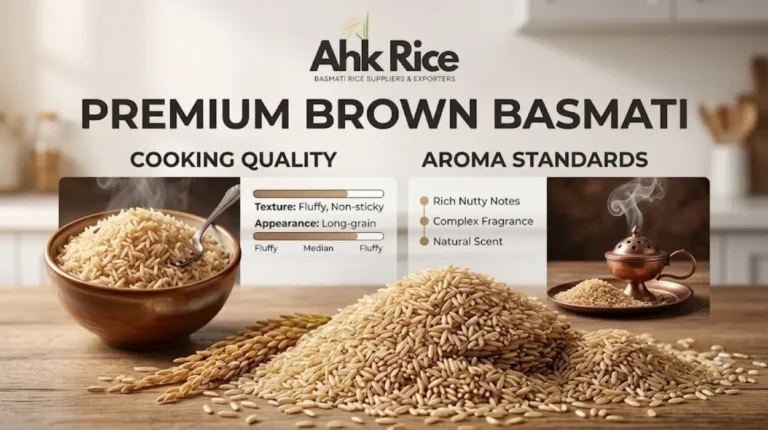
The market demands high-purity brown or white Basmati rice. Importers utilize automated customs screening processes to verify that shipments match the rigorous food safety standards set by regional authorities.
What Certifications Apply to Basmati Rice Exports?
Certifications that apply to Basmati rice exports include international food safety standards, phytosanitary clearance documents, and religious dietary compliance credentials. These certificates prove that the exporting milling facility operates under verified hygienic and legal protocols.
Food Safety Management Systems
Export processors must maintain operational compliance with global safety frameworks. Examples of frameworks include Hazard Analysis Critical Control Point protocols and ISO 22000 management standards.
These certifications confirm that the milling plant prevents physical, chemical, and biological contamination throughout the processing sequence. Regular third-party audits verify that machinery maintenance, pest control, and staff hygiene fulfill global standards.
Plant Health and Religious Documentation
Every export container requires a valid phytosanitary certificate issued by the national department of plant protection. This document confirms that the rice underwent proper fumigation to eliminate live insects, larvae, or fungal spores prior to sealing.
For access to specific regional markets, processors secure Halal and Kosher certifications. These credentials confirm that no prohibited processing aids or cross-contamination risks occur within the facility, ensuring the product is legally fit for consumption by specific religious groups worldwide.