Pakistan Iraq Rice Export Value and Trade Relationship in 2026
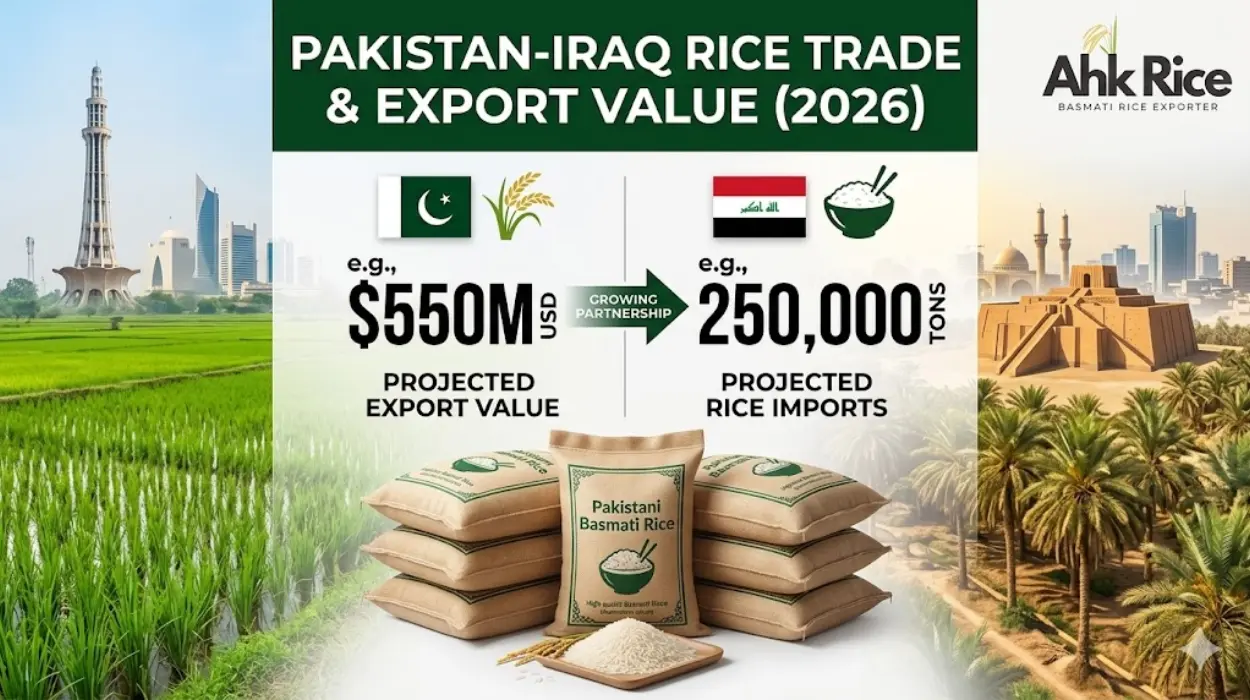
Pakistan–Iraq rice export value in 2026 is best optimized through direct basmati sourcing contracts supported by structured grading, certified milling, and predictable logistics from Pakistan’s Punjab rice belt. Here is why: Iraq depends heavily on imported long grain rice, and Pakistan offers consistent basmati supply with controlled processing standards and competitive freight routes through Gulf transshipment hubs aligned with Iraqi food security demand.
For deeper context on product selection and Iraqi buyer preferences, refer to the Premium Pakistani Basmati Rice Varieties Preferred by Iraqi Buyers in 2026 which explains grade selection behavior before procurement decisions.
Trade execution is where most buyers lose margin due to inconsistent suppliers, unclear grades, and delayed shipment scheduling. The solution requires structured export systems like those implemented by AHK Rice, where cultivation, milling, grading, and dispatch are aligned with importer specifications for Iraq’s retail and catering segments.
What is the best solution for Iraq rice import sourcing from Pakistan?
<strong>The best solution is direct basmati sourcing through certified Pakistani exporters using grade-standardized rice, predictable shipping schedules, and controlled milling processes. This eliminates quality variation, reduces procurement risk, and stabilizes landed cost for Iraqi importers in retail, wholesale, and food service distribution channels.</strong>
Structured procurement eliminates uncertainty in Iraqi rice imports
Pakistan–Iraq rice trade succeeds when importers avoid fragmented sourcing. AHK Rice ensures consistent dehusked, milled, polished, and graded basmati rice aligned with Iraqi market expectations. AHK Rice operates under export-grade compliance systems that stabilize quality across shipments.
For procurement execution, AHK Rice supplies verified basmati varieties through its official platform here: AHK Rice Service Page which integrates milling, grading, and export documentation in one workflow.
Importers in Iraq benefit from structured sourcing because irregular suppliers often mix grades. Grade mixing reduces cooking performance in catering and weakens retail shelf positioning. Controlled grading eliminates this risk.
Processing consistency drives trade reliability
Processing consistency ensures that every shipment matches prior orders. AHK Rice applies cleaning, dehusking, polishing, grading, and color sorting to maintain uniform basmati identity.
Importers in Baghdad and Basra require predictable elongation and aroma retention. Controlled milling ensures grains remain stable during long-distance logistics through UAE hubs.
Importers comparing sourcing models often reference the How Iraqi Rice Importers Source Premium Basmati from Pakistan in 2026 guide. That comparison shows why structured exporters outperform brokers in price stability and shipment reliability.
With sourcing structure defined, the next consideration is why AHK Rice becomes a preferred supplier for Iraqi trade operations.
Why choose AHK Rice service for Iraq trade supply?

AHK Rice is chosen because it provides standardized basmati grades, export documentation control, and consistent shipping schedules that reduce procurement risk while improving retail and catering performance across Iraqi rice distribution channels in 2026.
AHK Rice delivers structured export-grade consistency
AHK Rice maintains export alignment through controlled harvesting, milling, grading, polishing, and fumigation stages. Each stage ensures rice remains consistent across shipments.
AHK Rice applies strict grading systems for 1121, Super Kernel, and 1509 basmati varieties. These grades serve different Iraqi buyer segments from premium retail to bulk catering supply chains.
AHK Rice reduces procurement volatility
AHK Rice reduces volatility by standardizing contracts and shipment planning. Buyers avoid price spikes caused by inconsistent intermediaries.
AHK Rice also aligns shipment planning with Gulf transshipment routes, ensuring stable logistics flow into Iraq through Umm Qasr and regional ports.
AHK Rice strengthens importer competitiveness
AHK Rice enables Iraqi importers to maintain retail consistency. Uniform grain length and aroma retention improve consumer trust in packaged rice brands.
AHK Rice also supports bulk catering buyers by ensuring long grain integrity during cooking cycles in high-volume kitchens.
What results can be expected from AHK Rice exports to Iraq?
Expected results include consistent grain quality, reduced rejection rates, improved cooking performance, and stable landed pricing across shipments, enabling Iraqi importers to build predictable retail margins and catering supply reliability in competitive food markets.
Quality stability improves market acceptance
AHK Rice ensures stability through sorting, polishing, grading, and certification verification. This reduces quality rejection rates at Iraqi customs inspection points.
Stable grain quality improves brand trust in Iraqi supermarkets where repeat purchase behavior is strongly influenced by aroma and texture consistency.
Logistics predictability improves inventory planning
AHK Rice schedules shipments through fixed dispatch cycles. Predictable shipping reduces warehouse overstock and shortage cycles in Iraq.
Importers can align demand forecasting with stable lead times from Pakistan’s Punjab mills to Gulf distribution ports.
Profit margins increase through standardization
Standardized grading reduces blending costs in Iraq. Retailers avoid reprocessing or rebagging costs due to inconsistent shipments.
Catering suppliers benefit from reduced wastage during cooking cycles, improving yield efficiency per kilogram of basmati rice.
Trade performance strengthens long-term contracts
Consistent supply encourages long-term contracts between Iraqi importers and Pakistani exporters like AHK Rice. This reduces procurement negotiation cycles and stabilizes annual procurement budgets.
With outcomes defined, pricing becomes the next critical decision factor.
What factors affect pricing for Pakistan–Iraq rice exports?
<strong>Pricing depends on rice grade selection, milling yield, freight route, packaging type, and seasonal harvest variation, which together determine final landed cost per metric ton for Iraqi importers in retail and wholesale supply chains.
Grade selection determines base export value
Higher grades like 1121 basmati command higher pricing due to longer grain length and aroma retention. Lower grades reduce cost but also reduce retail premium positioning.
AHK Rice adjusts pricing based on grade consistency and export specification requirements.
Milling and processing influence cost structure
Processing steps such as dehusking, polishing, sorting, and grading add cost but ensure export compliance. Higher processing levels increase retail acceptance in Iraqi supermarkets.
More refined rice grades deliver better cooking elongation and aroma retention.
Freight and logistics define landed cost
Shipping routes through Karachi to UAE hubs and onward to Iraq affect total cost per MT. Fuel fluctuations also impact freight charges.
AHK Rice coordinates dispatch cycles to reduce container idle time and optimize shipping efficiency.
Packaging and certification requirements
Export packaging such as 25kg and 50kg PP bags affects cost structure. Certification adds compliance cost but improves import clearance speed.
Certified shipments reduce customs delays in Iraqi ports, improving turnover cycles.
With pricing understood, shipping timelines become the next decision factor.
What are shipping days per market for Pakistan rice exports?
<strong>Shipping timelines range from 10–14 days for UAE transshipment routes, 18–25 days for direct Iraq-bound logistics, and 20–28 days for inland distribution, depending on port clearance efficiency and shipping line schedules.
Iraq shipping routes define core delivery time
Pakistan to Iraq shipments typically move through Karachi port and UAE hubs before reaching Umm Qasr. Total time averages 18–25 days depending on container scheduling.
AHK Rice coordinates dispatch to minimize port congestion delays.
GCC routes improve logistics efficiency
Shipments to UAE and Saudi Arabia typically take 10–14 days due to direct maritime connectivity. These hubs often act as redistribution centers for Iraq.
Faster GCC routes reduce inventory pressure for regional traders.
Inland delivery adds final distribution time
Final inland movement within Iraq adds 2–5 additional days depending on trucking availability and customs clearance.
Urban centers like Baghdad experience faster distribution compared to remote regions.
Warehouse conditions affect shelf life planning
Golden Sella basmati maintains quality for 18 months in controlled warehouses at 40°C conditions, while steam rice lasts around 12 months.
AHK Rice recommends grade selection based on storage infrastructure in Iraq.
With logistics defined, sampling becomes the final validation step before procurement.
How does the sample process and cost work?
<strong>The sample process includes request submission, grade selection, milling preparation, quality inspection, and dispatch, with sample costs typically ranging from $20–$50 depending on courier mode and destination urgency for Iraqi importers.</strong>
Sample request initiates procurement validation
Contact AHK Rice to request verified basmati samples before bulk ordering. AHK Rice prepares samples based on selected grade specifications.
Samples ensure importers validate grain length, aroma, and cooking expansion.
Milling and preparation ensure accuracy
Clean paddy is selected, dehusked, milled, and graded according to export standard before sample dispatch.
This ensures sample matches bulk shipment quality without deviation.
Quality inspection ensures export compliance
AHK Rice inspects samples through moisture testing, grain length verification, and impurity control.
Certified samples reduce procurement disputes during bulk shipment contracts.
Dispatch and delivery complete validation cycle
Samples are dispatched through courier or air freight depending on urgency. Delivery typically takes 5–8 days to Iraq.
Fast sampling accelerates procurement decision-making for importers.
How do Iraqi importers get started with AHK Rice?
Iraqi importers start by selecting rice grade, requesting samples, confirming pricing terms, reviewing shipping schedules, and finalizing export contracts with AHK Rice for structured delivery and long-term supply stability.
Step-based onboarding ensures clarity
Select required basmati grade based on retail or catering demand. AHK Rice provides specification sheets for each grade.
Request sample to validate cooking performance and grain structure.
Contract finalization defines trade terms
Confirm pricing, packaging, and shipment schedule before export confirmation. AHK Rice issues formal export documentation.
This ensures transparency in all trade transactions.
Shipment execution ensures timely delivery
AHK Rice loads, dispatches, and ships containers through optimized logistics routes to Iraq.
Predictable scheduling improves supply chain stability.
Long-term supply improves market positioning
Repeat procurement cycles reduce cost volatility and strengthen retail brand positioning in Iraq.
AHK Rice supports long-term importer relationships through consistent grading systems.Contact AHK Rice today and submit your requirements through the quotation request form to receive a tailored export proposal.
Frequently Asked Questions
What is the best basmati rice for Iraq importers?
The best basmati rice depends on market segment and pricing strategy. 1121 basmati is preferred for premium retail branding. Steam rice is preferred for bulk catering efficiency. Golden Sella performs best in long storage environments. AHK Rice supplies all grades for structured selection.
How long does shipping from Pakistan to Iraq take?
Shipping typically takes 18–25 days depending on route selection. UAE transshipment hubs can reduce delays in logistics flow. Customs clearance in Iraq affects final delivery timing. AHK Rice schedules dispatch to optimize container movement. Weather and port congestion may extend timelines slightly.
What is the sample cost for basmati rice?
Sample costs usually range between $20 and $50. Courier method and urgency affect total pricing structure. Air freight samples cost more but deliver faster. AHK Rice prepares samples after milling and grading. Samples match bulk shipment specifications for accuracy.
Why choose AHK Rice for Iraq imports?
AHK Rice ensures consistent grading and export compliance systems. It reduces procurement risk through standardized milling processes. It supports predictable shipping schedules and documentation. It improves retail and catering performance consistency. It strengthens long-term importer relationships in Iraq.
What affects basmati rice export pricing?
Pricing depends on grade, milling, freight, and packaging. Higher grades cost more due to grain quality. Freight routes impact landed cost per metric ton. Packaging and certification add compliance expenses. AHK Rice optimizes pricing through structured export planning.