Why Do Saudi Catering Companies Use 1121 Steam Basmati Rice for Kabsa and Mandi?
Saudi catering companies use 1121 Steam Basmati Rice for Kabsa and Mandi because the grain delivers long cooked length, high volume expansion, consistent texture, and fast kitchen performance. The rice remains separate after cooking, absorbs meat stock efficiently, and meets the serving requirements of large-scale catering operations. Here is why: Saudi foodservice businesses require rice that performs consistently across thousands of meals while maintaining traditional flavor and presentation standards.
Saudi Arabia remains one of the largest import destinations for Pakistani Basmati rice. Foodservice operators, hotel kitchens, wedding caterers, Hajj catering contractors, and corporate meal providers regularly procure 1121 Steam Basmati Rice because the specification aligns with the preparation methods used for Kabsa and Mandi (source: REAP export data, December 2025).
What Is 1121 Steam Basmati Rice?
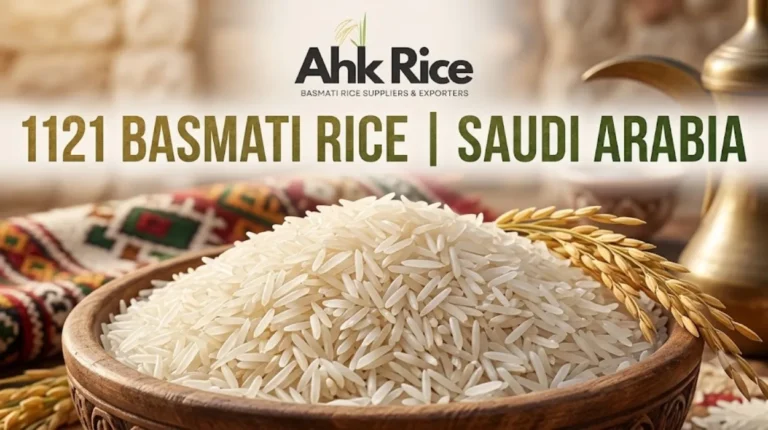
1121 Steam Basmati Rice is a long-grain aromatic rice processed through steam treatment without full parboiling, producing cooked grain lengths of approximately 18–22 mm.
1121 Steam Basmati Rice originates from Punjab, Pakistan. Farmers cultivate the variety in fertile alluvial soils using controlled irrigation systems. The grain develops naturally during the growing cycle and acquires its characteristic aroma during maturation.
1121 refers to the rice variety. Steam refers to the processing method. The paddy receives controlled steam treatment before milling. The grain retains its natural white appearance while gaining improved strength during processing.
Saudi buyers prefer this specification because the grain combines premium appearance with operational efficiency. Kabsa and Mandi require rice that remains fluffy after cooking. 1121 Steam achieves this outcome consistently.
The variety also provides high elongation after cooking. Long grain presentation remains an important quality indicator in Gulf food culture. Consumers associate visible grain separation with premium meal quality.
With the definition of 1121 Steam Basmati Rice established, the next question is how the processing method creates the characteristics Saudi caterers require.
How Does 1121 Steam Basmati Rice Processing Work?
The process uses controlled steaming, drying, milling, grading, and sorting to improve grain strength while preserving natural color and aroma.
Processing begins immediately after harvest. Rice mills inspect incoming paddy for moisture, impurities, and grain maturity.
Harvesting and Paddy Preparation
- Grow the crop for approximately 135–145 days.
- Harvest mature paddy at optimal moisture levels.
- Clean foreign materials from incoming paddy.
- Dry the paddy to processing specifications.
- Proper drying prevents grain cracking during subsequent operations.
Steam Processing
- Steam the cleaned paddy under controlled temperature conditions.
- Dry the steamed paddy gradually.
- Stabilize moisture throughout the grain structure.
- Steam treatment strengthens the kernel. Stronger kernels produce lower breakage percentages during milling.
Milling and Grading
- De-husk the paddy.
- Polish the grain surface.
- Grade kernels by size.
- Sort defective grains.
- Inspect final lots.
Modern exporters use optical sorting technology to remove discoloration and foreign particles. High-quality export specifications achieve superior visual consistency.
Quality Verification
- Test grain length.
- Verify moisture levels.
- Inspect broken percentage.
- Certify food safety compliance.
Export-oriented mills perform multiple quality inspections before shipment. Consistency remains essential because catering kitchens cook hundreds of kilograms daily.
The processing method explains product performance. The next section examines the specific characteristics that suit Kabsa and Mandi preparation.
What Key Components Make 1121 Steam Basmati Rice Suitable for Kabsa and Mandi?
Long grain structure, aroma retention, high elongation, low stickiness, and stock absorption create the performance required for traditional Saudi rice dishes.
Grain Length
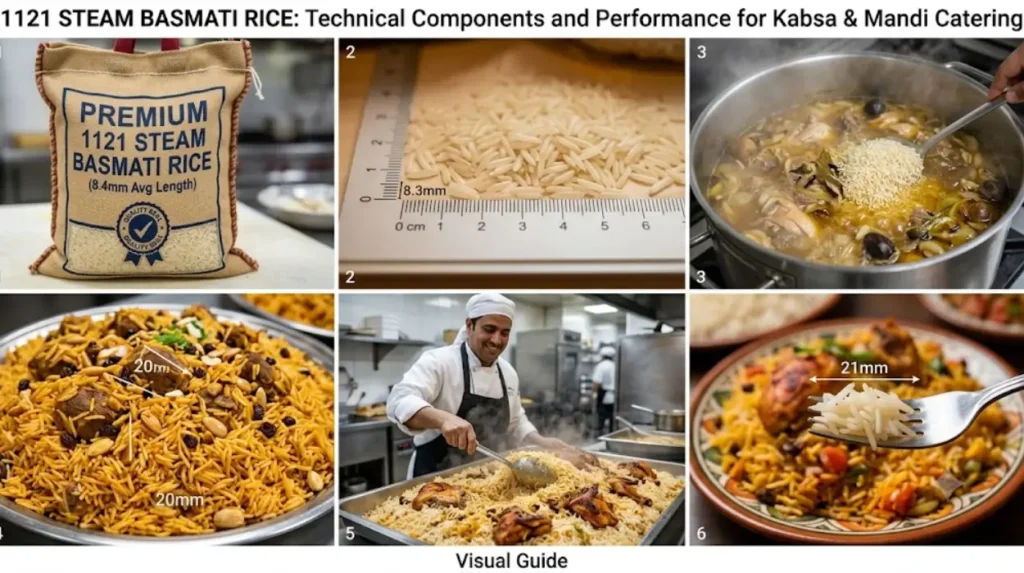
1121 Steam Basmati Rice contains extra-long kernels measuring approximately 8.20–8.40 mm before cooking.
Long raw grain translates into visually impressive cooked rice. Large catering events prioritize presentation because appearance influences customer perception.
Aroma
Natural Basmati aroma develops during cultivation and storage.
Kabsa and Mandi rely on aromatic rice because spices, meat stock, cardamom, cloves, and saffron interact with grain fragrance during cooking.
Elongation Ratio
Cooked grain length reaches approximately 18–22 mm.
Elongation creates the premium appearance expected in Gulf hospitality settings. Long grains remain visible even after prolonged service periods.
Texture Stability
1121 Steam Basmati Rice remains separate after cooking.
Saudi catering kitchens prepare large batches. Grain separation prevents clumping during holding and serving.
Stock Absorption
Rice absorbs flavored broth efficiently.
Kabsa preparation involves cooking rice with meat stock. Effective absorption improves flavor distribution throughout the dish.
These technical components explain performance. The next question focuses on the operational advantages catering companies gain from using this rice.
What Benefits Do Saudi Catering Companies Receive from 1121 Steam Basmati Rice?
Higher yield, faster cooking, consistent results, attractive presentation, and customer satisfaction make 1121 Steam Basmati Rice a preferred catering specification.
Higher Serving Yield
1121 Steam Basmati Rice expands significantly during cooking.
High expansion allows caterers to maximize output from each batch. Volume efficiency directly influences foodservice cost management.
Faster Kitchen Operations
Steam rice cooks faster than fully parboiled alternatives.
Large-scale kitchens prioritize workflow efficiency. Reduced cooking time supports faster meal production schedules.
Consistent Batch Performance
Consistency remains critical for contract catering.
Government facilities, corporate cafeterias, universities, hospitals, and event venues require standardized meal quality. Uniform grain behavior simplifies production planning.
Premium Presentation
Long cooked grains improve visual appeal.
Wedding banquets, Ramadan gatherings, and hospitality events frequently evaluate rice quality through appearance.
Reduced Cooking Risk
Strong kernels reduce breakage during cooking.
Lower breakage improves finished dish quality and minimizes customer complaints.
These advantages explain why many foodservice operators choose the specification. The next section examines where and how the rice is used across Saudi Arabia.
Where Is 1121 Steam Basmati Rice Used in Saudi Catering Operations?
The rice serves hotels, banquet halls, Hajj catering, corporate catering, airline kitchens, restaurants, and institutional foodservice programs throughout Saudi Arabia.
Kabsa Production
Kabsa remains Saudi Arabia’s most recognized rice dish.
Restaurants and caterers prepare large quantities daily. Long grain appearance supports traditional presentation standards.
Mandi Production
Mandi combines rice with slow-cooked meat and aromatic spices.
Rice absorbs broth released during cooking. Proper absorption enhances flavor integration throughout the meal.
Wedding Catering
Wedding events often serve thousands of guests.
Large-scale rice production requires predictable cooking performance. Consistency becomes essential for event success.
Hajj and Umrah Catering
Pilgrim meal providers prepare high-volume food service programs.
Operational efficiency remains a primary procurement consideration because meal quantities are extremely large during peak seasons.
Corporate Foodservice
Industrial facilities and corporate cafeterias serve rice-based meals regularly.
Consistent grain quality simplifies kitchen operations and procurement planning.
These applications demonstrate demand across multiple sectors. The next question addresses common misconceptions surrounding 1121 Steam Basmati Rice.
What Common Misconceptions Exist About 1121 Steam Basmati Rice?
Many buyers assume Steam and Golden Sella rice perform identically, believe longer grains guarantee quality, or think all 1121 rice follows identical processing standards.
Misconception 1: Steam and Golden Sella Are the Same Product
Steam and Golden Sella use different processing methods.
Golden Sella undergoes complete parboiling. Steam rice receives controlled steaming without full parboiling.
Golden Sella lasts longer than Steam. In a 40°C warehouse environment common in Gulf logistics, Golden Sella maintains quality for approximately 18 months. Steam specifications generally perform best within 12 months. Foodservice buyers selecting shorter inventory cycles often choose Steam.
Buyers comparing 1121 Steam vs 1121 Golden Sella Rice for Saudi Catering Contracts review the differences between processing methods before finalizing procurement decisions.
Misconception 2: Longer Grain Always Means Better Quality
Length represents only one quality parameter.
Moisture control, purity, broken percentage, milling quality, and sorting accuracy also influence performance.
A longer grain with poor processing delivers inconsistent cooking results.
Misconception 3: All 1121 Rice Comes From the Same Source
Export quality varies significantly.
Cultivation practices, storage conditions, processing equipment, grading standards, and inspection procedures affect final specifications.
Professional buyers evaluate complete technical specifications rather than grain length alone.
Misconception 4: Steam Rice Cannot Handle Large-Scale Catering
Commercial kitchens across Saudi Arabia successfully use Steam rice daily.
Strong grain structure supports large-batch cooking when kitchens follow correct soaking and cooking procedures.
Misconceptions often arise from confusion between processing grades. The next section examines Saudi import demand and market trends.
Why Does Saudi Arabia Import Large Quantities of Pakistani 1121 Steam Basmati Rice?
Pakistan supplies the grain specifications, aroma profile, elongation characteristics, and production volumes required by Saudi foodservice buyers.
Punjab produces the majority of Pakistan’s export-oriented Basmati rice. Fertile soil conditions and favorable climate support premium grain development.
Saudi Arabia remains among Pakistan’s leading Basmati export destinations (source: Pakistan Bureau of Statistics, FY2024-25).
Importers prioritize product consistency because foodservice contracts require predictable quality throughout the year.
Pakistani exporters supply multiple processing grades, including:
- Steam Rice
- Golden Sella Rice
- White Rice
- Creamy Sella Rice
- Extra Long Grain Grade
- Premium Sortex Grade
- Customized Catering Grade
Different sectors select specifications according to storage duration, menu requirements, and operational priorities.
Market demand continues to support 1121 Steam Basmati Rice because the specification aligns closely with traditional Saudi cuisine.
With import dynamics understood, the final question concerns quality certifications and compliance requirements.
What Certifications Apply to 1121 Steam Basmati Rice Exports to Saudi Arabia?
Food safety certification, phytosanitary compliance, laboratory testing, and export documentation support Saudi import requirements.
Exporters inspect and certify rice before shipment.
Common certification requirements include:
Food Safety Certifications
- HACCP Certification
- ISO 22000 Certification
- Food Safety Management Documentation
Export Compliance Documents
- Phytosanitary Certificate
- Certificate of Origin
- Commercial Invoice
- Packing List
- Bill of Lading
Quality Verification Procedures
- Moisture Testing
- Broken Percentage Analysis
- Grain Length Verification
- Purity Inspection
- Residue Testing
Saudi importers require documented compliance because food products must satisfy national import regulations.
Certification systems support traceability throughout the supply chain. Buyers receive documented evidence of quality verification before cargo dispatch.
1121 Steam Basmati Rice remains a preferred specification for Saudi catering companies because it combines long grain appearance, aroma retention, efficient cooking performance, and strong suitability for Kabsa and Mandi production. These characteristics align directly with the operational and culinary requirements of Saudi foodservice markets in 2026.
FAQs
Why do Saudi caterers prefer 1121 Steam Basmati Rice for Kabsa and Mandi?
Saudi caterers prefer 1121 Steam Basmati Rice because it cooks into long, separate grains with a fluffy texture. It absorbs meat stock well and keeps its shape during large-scale cooking, which is important for Kabsa and Mandi service.
Is 1121 Steam Basmati Rice better than regular basmati rice?
Yes, for catering purposes it is often preferred because it offers higher yield, stronger grains, and better elongation after cooking. Regular basmati may break more easily or lose consistency in bulk cooking environments.
What makes 1121 Steam Basmati Rice suitable for large catering events?
Its grain strength, fast cooking performance, and non-sticky texture make it ideal for preparing hundreds of kilograms at once. It remains consistent even when cooked in large industrial kitchen batches.
Does 1121 Steam Basmati Rice absorb flavor in Kabsa and Mandi?
Yes, it absorbs spices and meat broth very effectively. This helps distribute flavor evenly throughout the dish, enhancing the taste of traditional Saudi recipes like Kabsa and Mandi.
How is 1121 Steam Basmati Rice different from Golden Sella rice?
Steam rice is processed with controlled steaming, while Golden Sella is fully parboiled. Steam rice cooks faster and is often preferred for fresh catering, while Golden Sella has a longer shelf life.