Why Do UAE Food Safety Authorities Check Foreign Matter in Imported Pakistan Rice?
UAE food safety authorities inspect imported Pakistan rice because clean, contaminant-free rice protects consumers and ensures compliance with national food safety regulations. Buyers working with reliable exporters reduce customs delays and product rejection. Learn how inspections work in our guide on How UAE Importers Inspect Foreign Matter in Pakistan Basmati Rice Shipments.
Rice quality directly affects customs clearance, retail approval, and consumer confidence. Every shipment entering the UAE must comply with strict import requirements. Foreign matter such as stones, dust, husk, insects, metal fragments, and damaged grains can cause delays or shipment rejection.
This is why professional exporters perform multiple inspections before loading containers. AHK Rice helps importers receive export-ready rice that meets commercial expectations and regulatory standards. Visit the AHK Rice service page to learn about our export capabilities and quality assurance process.
Why Do UAE Food Safety Authorities Check Foreign Matter in Imported Pakistan Rice?
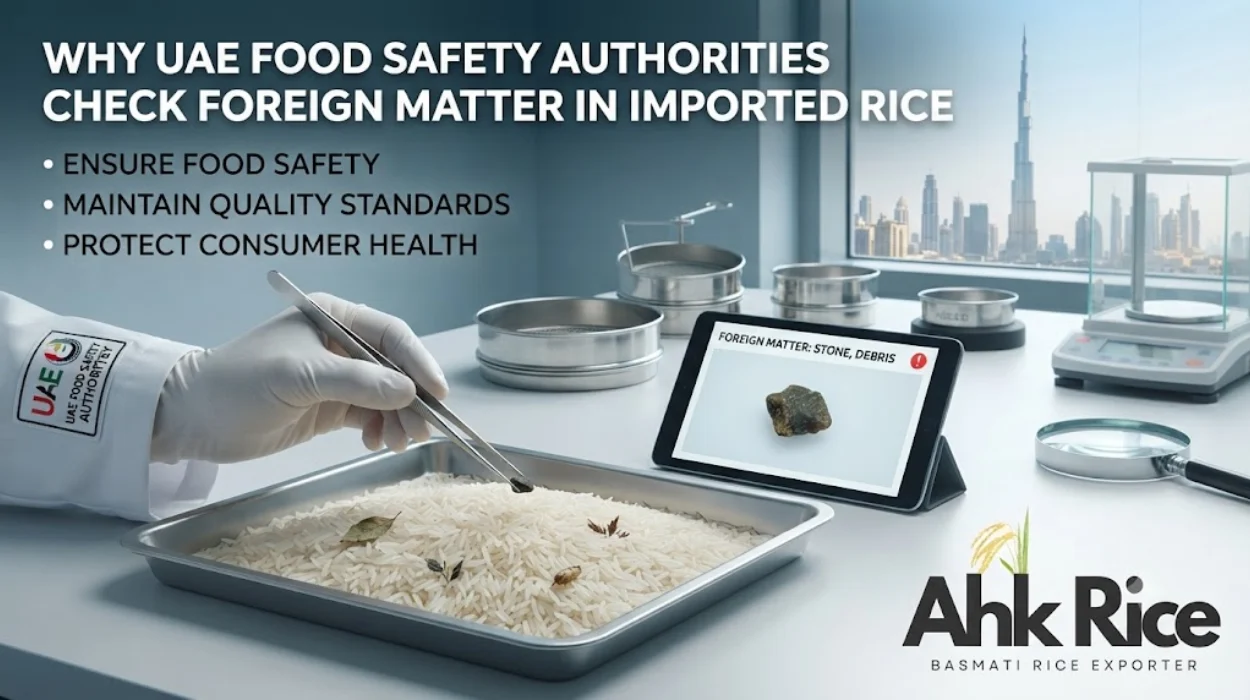
Foreign matter inspection protects public health, ensures food quality, reduces import risks, and confirms compliance with UAE regulations. Authorities verify every shipment because contaminants affect food safety, product value, and consumer trust throughout the supply chain.
Foreign matter includes every material that should not be present in rice. Examples include stones, straw, husk pieces, dust, plastic particles, insects, broken plant material, and metallic fragments.
UAE inspectors verify these contaminants because contaminated food creates health risks and lowers product quality. Clean rice also improves shelf appearance and customer satisfaction.
Professional exporters remove contaminants during several production stages before shipment. Each stage contributes to higher product consistency.
Types of Foreign Matter Commonly Inspected
| Foreign Matter | Reason for Removal |
|---|---|
| Stones | Prevent consumer injury |
| Dust | Improve hygiene |
| Husk | Increase product purity |
| Metal Particles | Protect food safety |
| Plastic Pieces | Meet import regulations |
| Insects | Prevent contamination |
| Damaged Grain | Improve appearance |
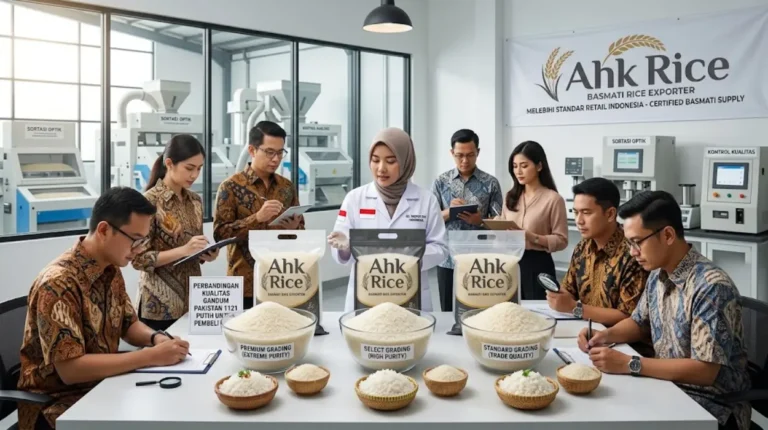
Modern rice mills use optical colour sorters, gravity separators, magnets, vibrating sieves, and metal detectors to improve product quality before export.
Third-party inspection companies may also verify shipment quality before containers leave Pakistan.
Understanding why authorities inspect rice naturally leads to the next question: what is the most effective solution for UAE buyers?
What Is the Best Solution for Meeting UAE Rice Import Standards?
The best solution is sourcing rice from exporters that perform documented quality inspections before shipment. Pre-export testing reduces customs delays, supports compliance, minimizes buyer risk, and delivers consistent product quality for wholesale and retail markets.
Inspection should begin before rice reaches the shipping container. Waiting until cargo arrives in the UAE increases commercial risk and creates unnecessary costs.
AHK Rice follows a structured inspection process that focuses on quality control at every production stage.
The Inspection Process
- Harvest mature paddy.
- Dry the harvested crop.
- Dehusk the grain.
- Mill the rice.
- Polish the kernels.
- Grade by length.
- Sort using colour sorters.
- Remove metal particles.
- Inspect foreign matter.
- Pack export cargo.
- Load sealed containers.
Each processing stage reduces contamination while maintaining grain quality.
Quality Parameters Verified Before Shipment
| Inspection Item | Commercial Benefit |
|---|---|
| Moisture Level | Longer shelf life |
| Broken Percentage | Consistent specifications |
| Grain Length | Premium appearance |
| Colour | Uniform quality |
| Foreign Matter | UAE compliance |
| Packaging | Safe transportation |
| Container Inspection | Reduced transit risk |
Export documentation also supports customs clearance. Buyers receive packing lists, commercial invoices, certificates, and inspection reports that simplify import procedures.
Why Choose AHK Rice for Pakistan Rice Exports to the UAE?
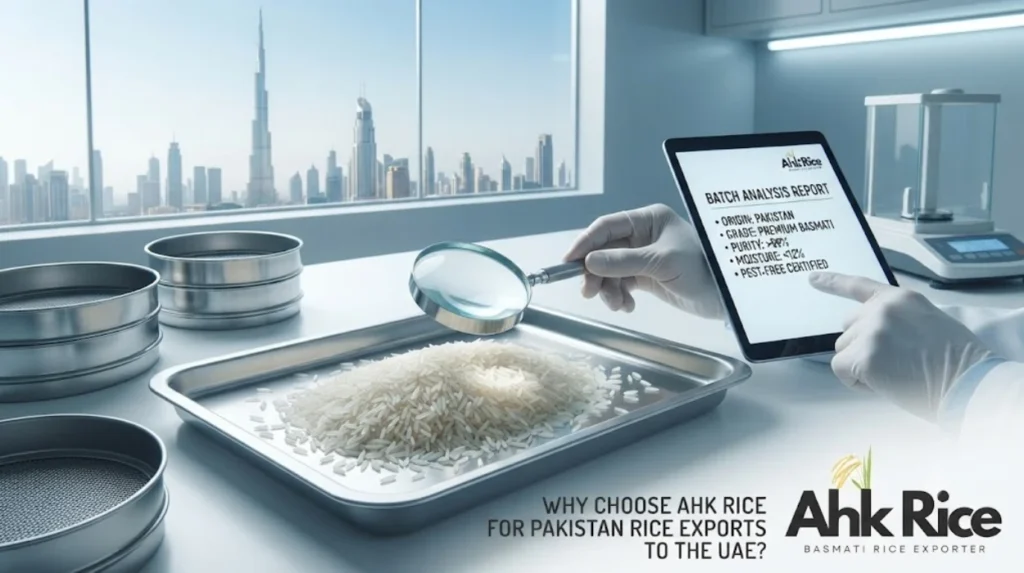
AHK Rice provides inspected, certified, and export-ready Pakistani rice for UAE importers. Every shipment passes multiple quality inspections, includes complete export documentation, and follows buyer specifications. This approach reduces customs delays, protects brand reputation, and improves long-term supply chain reliability.
Choosing the right exporter is as important as choosing the correct rice grade. UAE buyers expect suppliers to understand local food safety regulations before cargo reaches the destination.
AHK Rice delivers rice that meets commercial expectations through documented quality control. Every export batch undergoes inspection before loading to reduce shipment risks.
Key advantages include:
- Moisture testing
- Foreign matter inspection
- Length grading
- Colour sorting
- Metal detection
- Packaging verification
- Container loading inspection
- Export documentation
- Shipment tracking
AHK Rice also provides buyers with inspection reports that simplify customs clearance and purchasing decisions.
For buyers comparing suppliers, review how inspection reports improve purchasing confidence in our guide about Pakistan Basmati Rice Exporter Providing Foreign Matter Inspection Reports for UAE Buyers.
What Results Can UAE Buyers Expect?
Buyers receive cleaner rice, faster customs processing, fewer shipment disputes, consistent quality, and better customer satisfaction. Reliable inspection reduces commercial risk while supporting repeat business across supermarkets, wholesalers, distributors, hotels, and catering companies throughout the UAE market.
Companies importing inspected rice experience measurable advantages.
Expected outcomes include:
| Result | Business Benefit |
|---|---|
| Faster customs clearance | Reduced storage charges |
| Cleaner rice | Higher consumer confidence |
| Lower complaint rate | Better retailer relationships |
| Consistent specifications | Easier repeat ordering |
| Verified documentation | Faster import approval |
Importers also reduce the risk of rejected shipments because inspection begins before export rather than after arrival.
This creates predictable supply chains for supermarkets and food service businesses.
What Factors Affect the Cost of Exporting Pakistan Rice to the UAE
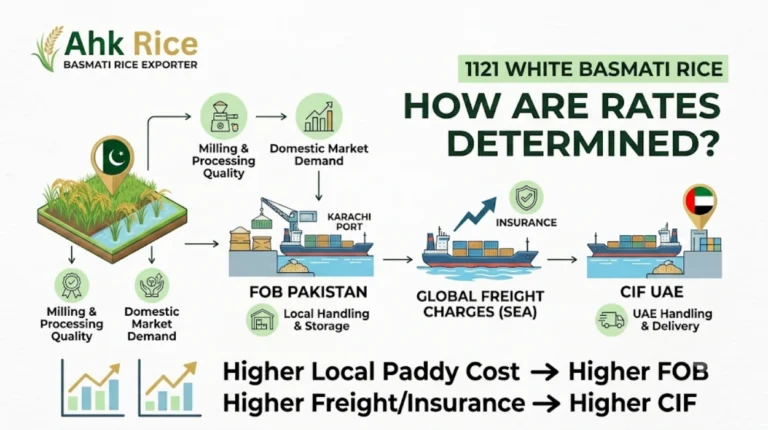
Rice export pricing depends on grade, processing method, packaging, inspection requirements, order volume, freight charges, and seasonal market conditions. Understanding these factors helps importers compare quotations accurately instead of selecting suppliers only by price.
Several commercial factors influence pricing.
Product Grade
Premium Basmati varieties cost more than standard long-grain rice because of grain length, aroma, and milling quality.
Processing Type
Steam, White, Golden Sella, and Creamy Sella require different production processes.
Packaging
Retail bags increase packing costs compared with bulk polypropylene bags.
Inspection Requirements
Third-party laboratory testing adds value because buyers receive independent quality verification.
Freight Costs
Ocean freight changes according to fuel prices and seasonal demand.
How Long Does Shipping Take from Pakistan to UAE?
Most Pakistan rice shipments reach UAE ports within 7–12 days, depending on the destination port, vessel schedule, customs clearance, and container availability. Accurate documentation helps avoid unnecessary delays after cargo arrives.
Typical transit times include:
| UAE Port | Estimated Transit Time |
|---|---|
| Jebel Ali | 7–9 days |
| Dubai | 7–9 days |
| Abu Dhabi | 8–10 days |
| Sharjah | 8–10 days |
| Fujairah | 10–12 days |
Transit times may vary depending on shipping lines and seasonal congestion.
How Does the Sample Process Work?
Professional exporters provide inspection samples before bulk production. Sampling allows buyers to verify grain quality, cooking performance, aroma, colour, and cleanliness before confirming commercial orders, reducing purchasing risk significantly.
AHK Rice follows a structured sample process.
- Buyer submits specifications.
- Rice is selected from matching production batches.
- Samples undergo quality inspection.
- Laboratory tests are completed if required.
- Samples are packed securely.
- Courier dispatch is arranged.
- Buyer approves specifications.
- Bulk production begins.
Typical sample costs include:
| Item | Estimated Cost |
|---|---|
| Rice Sample | Usually Free |
| Courier Charges | Buyer Pays |
| Laboratory Test | Depends on Requirement |
Approved samples become the quality benchmark for production.
How Can You Start Importing Pakistan Rice from AHK Rice?
The fastest approach is requesting a quotation with detailed specifications. Buyers receive product recommendations, pricing, inspection options, documentation details, production schedules, and shipping estimates before confirming their purchase order.
The process is straightforward.
- Share required rice grade.
- Confirm packaging requirements.
- Approve inspection standards.
- Receive quotation.
- Approve production sample.
- Confirm order.
- Production begins.
- Shipment is dispatched.
- Export documents are issued.
This structured process helps buyers reduce purchasing uncertainty while ensuring compliance with UAE food safety requirements.
UAE food safety authorities inspect foreign matter because clean rice protects consumers and supports efficient international trade. Importers should work with exporters that perform comprehensive inspections before shipment rather than relying on destination inspections alone.
AHK Rice combines quality inspection, modern processing, export documentation, and reliable logistics to help UAE buyers receive consistent Pakistani rice shipments. This reduces operational risk while improving long-term purchasing confidence.
Visit request a quote to receive a customized quotation from AHK Rice.
Frequently Asked Questions
Why is foreign matter testing important?
Foreign matter testing ensures imported rice meets UAE food safety standards. It removes stones, husks, dust, insects, and unwanted materials before export. Cleaner rice improves customer satisfaction. It also reduces customs delays. Importers benefit from fewer complaints and consistent product quality.
Does every shipment require inspection?
Professional exporters recommend inspecting every commercial shipment. Regular inspections maintain consistent quality across production batches. Inspection reports also support customs documentation. Buyers gain confidence before shipment arrives. This reduces commercial risk significantly.
Can buyers request third-party laboratory reports?
Yes. Independent laboratory reports can verify moisture, broken percentage, purity, and other quality parameters. Many UAE buyers request these reports before shipment. Third-party verification increases purchasing confidence. It also supports long-term supplier relationships.
How are samples different from production shipments?
Samples demonstrate the expected product quality before production starts. Buyers evaluate grain length, cooking quality, aroma, and cleanliness. Approved samples become the production reference. This minimizes misunderstandings. Bulk shipments follow the approved specification
How quickly can an order be shipped?
Production schedules depend on rice availability and order quantity. Standard export orders usually require several days for processing and inspection before loading. Shipping then follows the selected vessel schedule. Accurate documentation helps prevent customs delays. Buyers receive shipment updates throughout the process.