1509 White Basmati Rice Quantity Planning for UAE Distributors
1509 White Basmati Rice quantity planning helps UAE distributors maintain stable inventory, meet consumer demand, and reduce storage costs. Here is why: 1509 White Basmati Rice offers high yield, long grain length, and consistent consumption across retail, wholesale, and foodservice channels.
UAE distributors manage rice volumes through demand forecasting, shipment scheduling, inventory rotation, and supplier coordination. Accurate planning reduces stock shortages and prevents excess inventory. Understanding the rice itself is the first step in building an effective quantity plan.
What Is 1509 White Basmati Rice?
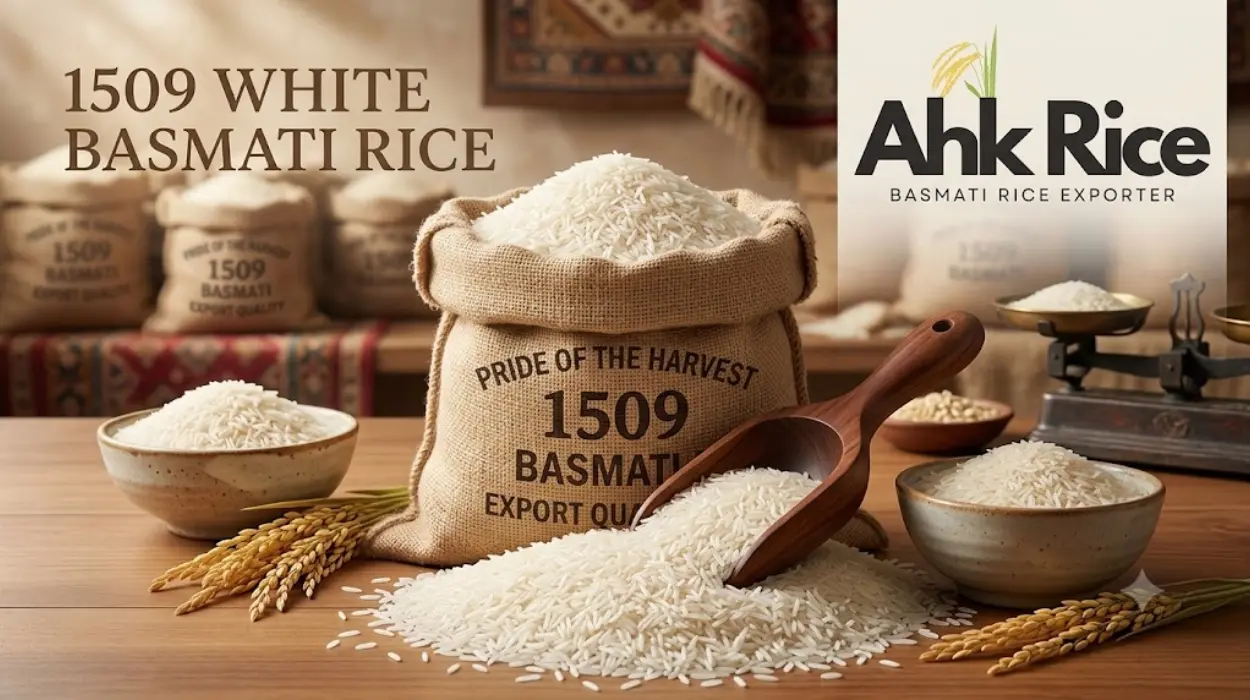
1509 White Basmati Rice is a long-grain aromatic rice variety with grain lengths reaching 8.30 mm, high cooking elongation, and strong demand across Gulf markets.
1509 White Basmati Rice is a variety cultivated in Punjab and other rice-growing regions of Pakistan and India. Farmers developed this variety to achieve earlier maturity while maintaining traditional Basmati characteristics.
1509 White Basmati Rice produces slender grains with a natural aroma. The variety matures faster than older Basmati types. Farmers harvest the crop earlier, allowing improved cultivation efficiency.
UAE distributors prefer 1509 White Basmati Rice because consumers recognize its long grain appearance and cooking performance. Retail stores, supermarkets, restaurants, and catering companies regularly procure this variety.
What Are the Main Characteristics of 1509 White Basmati Rice?
| Specification | Typical Value |
|---|---|
| Grain Length | 8.10–8.30 mm |
| Moisture | 12–14% |
| Purity | 95–100% |
| Broken Grains | 0–5% |
| Average Elongation | 1.8–2.2 times |
| Shelf Life | 18–24 months |
1509 White Basmati Rice forms a major segment of Pakistan’s Basmati exports due to strong international demand (source: REAP export data, December 2025).
With the definition established, the next question is how quantity planning works across the UAE distribution network.
How Does Quantity Planning Work for UAE Distributors?
Successful quantity planning combines demand forecasting, inventory monitoring, shipment scheduling, and seasonal consumption analysis throughout the year.
UAE distributors estimate monthly rice demand before placing procurement orders. Historical sales data provides the foundation for forecasting future consumption.
Demand forecasting examines retail sales, wholesale transactions, restaurant purchases, and seasonal events. Ramadan, Eid, wedding seasons, and tourism periods increase rice consumption.
Distributors calculate average monthly sales volumes. Inventory managers maintain safety stock levels that cover unexpected demand increases.
What Steps Are Used in Quantity Planning?
- Analyze historical sales data
- Calculate monthly demand
- Estimate seasonal fluctuations
- Determine safety stock levels
- Schedule procurement volumes
- Monitor warehouse inventory
- Adjust future forecasts
Accurate planning reduces warehouse congestion. Efficient inventory management improves cash flow and prevents unnecessary storage expenses.
Why Is UAE Demand Forecasting Important?
UAE imports most of its rice requirements. Importers depend on overseas suppliers for continuous stock replenishment.
Population growth supports rice consumption. Tourism activity increases foodservice demand. Restaurant chains maintain regular purchasing schedules.
Rice distributors use consumption patterns to schedule container arrivals throughout the year. This approach maintains steady product availability.
With quantity planning explained, the next question is how 1509 White Basmati Rice moves from cultivation to export.
How Is 1509 White Basmati Rice Processed Before Export?
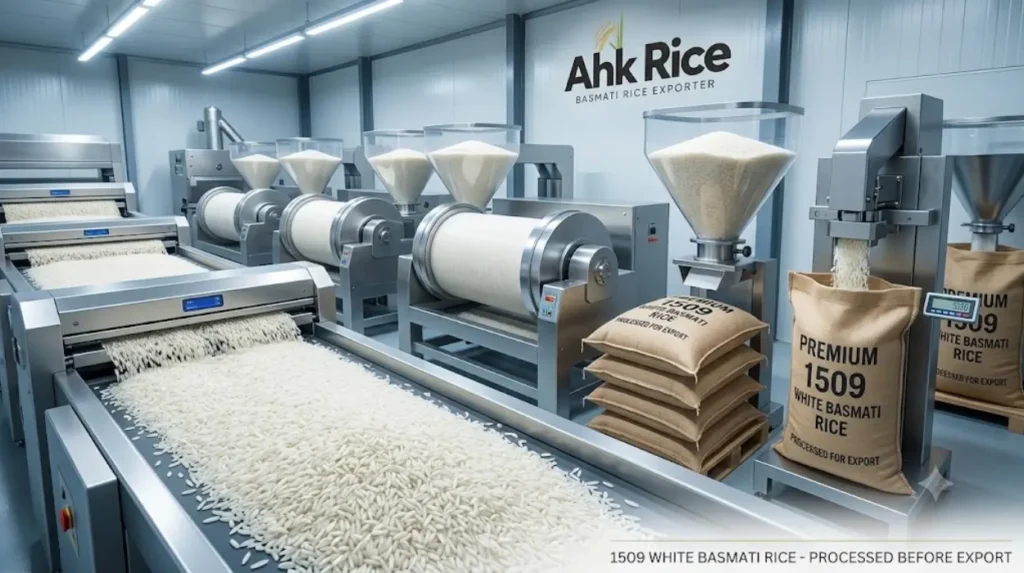
Nine processing stages transform harvested paddy into export-grade 1509 White Basmati Rice suitable for international distribution.
Processing determines quality consistency. Each stage removes impurities and improves grain presentation.
What Are the Processing Steps?
- Harvest the mature paddy
- Dry the harvested grain
- Clean foreign materials
- De-husk the paddy
- Mill the rice kernels
- Polish the grains
- Sort by length
- Inspect quality parameters
- Pack export consignments
Each stage influences final grain appearance and export specifications.
How Does Quality Inspection Support Planning?
Quality inspection ensures distributors receive consistent products across multiple shipments.
Inspection procedures include:
- Moisture testing
- Grain length verification
- Purity assessment
- Broken grain analysis
- Color sorting validation
- Packaging inspection
Quality consistency helps distributors forecast customer satisfaction and repeat purchases more accurately.
With processing completed, the next question concerns the grades available for UAE procurement.
What Grades of 1509 White Basmati Rice Are Available?
Export markets generally procure grades ranging from 100% sortex quality to economical broken-ratio specifications.
Rice grades allow distributors to serve different customer segments.
Premium Grade
Premium grade contains maximum purity and minimal broken grains.
Typical specifications include:
- 100% sortex
- 0–1% broken
- High grain uniformity
- Superior appearance
Premium grades target supermarkets and premium retail brands.
Standard Grade
Standard grade balances quality and cost efficiency.
Typical specifications include:
- 95–98% purity
- 2–5% broken
- Uniform grain length
- Retail suitability
Standard grades serve wholesalers and mainstream retail channels.
Economic Grade
Economic grades support budget-focused distribution programs.
Typical specifications include:
- Higher broken percentage
- Commercial quality
- Cost-sensitive pricing
Different grades help distributors match inventory to customer demand.
With grades understood, the next question focuses on the benefits that influence purchasing decisions.
What Benefits Make 1509 White Basmati Rice Popular in UAE Markets?
Long grain length, strong cooking performance, attractive appearance, and efficient inventory turnover drive demand.
1509 White Basmati Rice delivers visual appeal after cooking. Long grains remain separate and maintain shape.
Cooking elongation improves serving volume. Foodservice operators benefit from higher presentation quality.
Key Benefits
- Grain uniformity
- Cooking elongation
- Aroma retention
- Long shelf life
- Inventory flexibility
- Consumer recognition
1509 White Basmati Rice supports both retail and catering sectors.
Why Does Shelf Life Matter?
Shelf life affects inventory planning decisions.
Properly stored rice remains suitable for extended periods. Warehouses maintain product quality through moisture control and stock rotation.
Long shelf life provides flexibility during demand fluctuations.
With benefits covered, the next question is where distributors typically use this variety.
What Are the Main Use Cases for 1509 White Basmati Rice?
Retail distribution, wholesale trading, restaurant supply, catering operations, and private label packaging represent the largest use cases.
Retail channels distribute packaged rice through supermarkets and grocery stores.
Wholesale channels supply independent retailers and regional distributors.
Foodservice Applications
Restaurants prepare biryani, mandi, kabsa, pulao, and rice platters using long-grain Basmati varieties.
Hotels purchase rice in bulk quantities to support buffet operations.
Catering companies prioritize consistency and cooking performance.
Private Label Programs
Private label brands package rice under distributor-owned labels.
Distributors control branding while sourcing rice from exporters.
Private label growth continues across Gulf markets due to expanding retail competition.
With use cases explained, the next question addresses common planning mistakes and misconceptions.
What Common Problems and Misconceptions Affect Quantity Planning?
Demand estimation errors, excessive inventory accumulation, and misunderstanding rice grades create planning challenges.
Some distributors assume demand remains constant throughout the year. Seasonal fluctuations prove otherwise.
Ramadan consumption patterns differ from standard monthly demand. Accurate forecasting requires seasonal adjustments.
Misconception: Higher Inventory Always Improves Supply Security
Excess inventory increases storage expenses.
Warehouse space utilization declines when unnecessary stock accumulates.
Capital remains tied to inventory rather than operational activities.
Misconception: All 1509 White Basmati Grades Are Identical
Different grades serve different markets.
Premium retail channels require higher specifications than wholesale bulk programs.
Grade selection directly impacts pricing and customer expectations.
Misconception: Shipment Timing Does Not Affect Planning
Shipment scheduling influences stock availability.
Container arrival delays affect replenishment cycles.
Importers coordinate procurement schedules to maintain inventory continuity.
Understanding these planning challenges helps distributors improve procurement accuracy and inventory efficiency.
1509 White Basmati Rice quantity planning requires accurate forecasting, inventory management, grade selection, and shipment scheduling. UAE distributors use demand analysis, safety stock calculations, and quality specifications to maintain supply continuity. Understanding cultivation, processing, grading, certifications, and consumption patterns creates a stronger planning framework and supports efficient rice distribution across retail and foodservice sectors.
Frequently Asked Questions
What is the average grain length of 1509 White Basmati Rice?
1509 White Basmati Rice typically measures 8.10–8.30 mm before cooking and elongates significantly after cooking.
Why do UAE distributors prefer 1509 White Basmati Rice?
UAE distributors prefer this variety because of its long grain appearance, strong cooking performance, and consistent consumer demand.
How long can 1509 White Basmati Rice be stored?
Properly stored rice maintains quality for approximately 18–24 months under controlled warehouse conditions.
What grades are commonly imported into the UAE?
UAE importers commonly procure premium, standard, and economic grades based on customer requirements and market positioning.
Which sectors consume the highest quantities of 1509 White Basmati Rice?
Retail supermarkets, wholesale distributors, restaurants, hotels, catering companies, and private label brands consume the highest volumes.
What certifications are commonly required for export?
Common export certifications include phytosanitary certificates, fumigation certificates, health certificates, ISO certifications, HACCP compliance, and food safety documentation.