How Can You Improve Supply Chain Visibility with AHK Rice Northern Ireland?
AHK Rice improves Northern Ireland rice supply chain visibility through specification control, sample verification, shipment planning, inspection records, and documented export coordination. Here is why: buyers can track the order from product selection through processing, dispatch, ocean transit, and delivery.
Northern Ireland importers need more than a competitive rice price. They need visibility across procurement, quality, documentation, shipping, and arrival. This reduces uncertainty around stock planning and customer commitments.
For background, read why supply chain visibility matters in rice import operations.
What is the best solution for improving rice supply chain visibility?
The best solution is a controlled export workflow linking product specifications, samples, inspection, documentation, vessel booking, dispatch, and delivery updates in one procurement process.
Supply chain visibility starts before the purchase order. Buyers should define rice variety, grade, broken percentage, moisture, packaging, quantity, destination port, and Incoterm.
AHK Rice supplies Pakistani Basmati varieties including 1121, Super Kernel, and 1509. Its export workflow covers processing, grading, colour sorting, packaging, inspection, documentation, and container loading.
The product specification becomes the reference point for the complete order. This helps buyers compare the approved sample against the commercial shipment.
Which rice specifications should Northern Ireland buyers monitor?
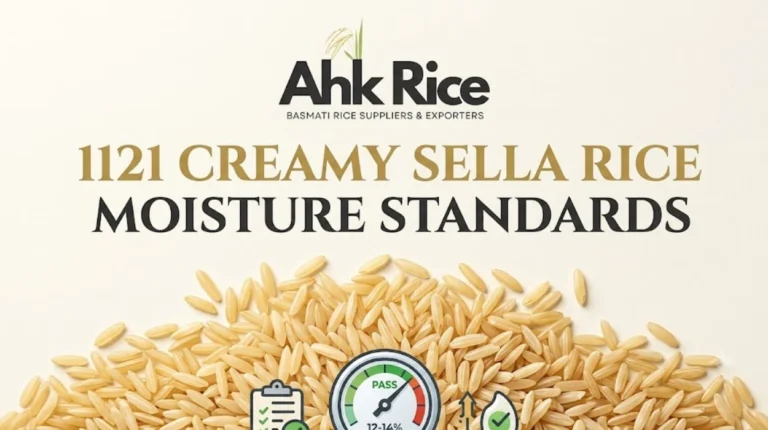
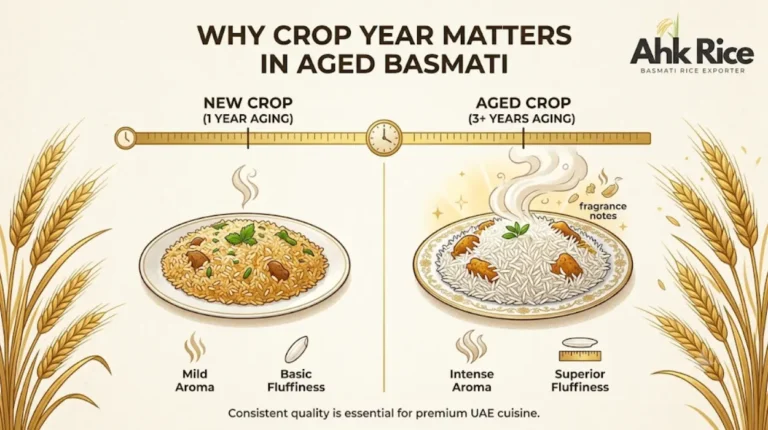
Northern Ireland buyers should monitor grain length, moisture, broken grains, foreign matter, crop year, packaging, and inspection requirements.
European buyers can place stronger emphasis on aroma, certification, documentation, and consistent specifications. AHK Rice uses inspection and documentation controls to support these requirements.
The company also offers customised packaging for wholesale, food-service, and private-label requirements. Packaging can include retail and bulk formats according to the purchase specification.
How does the shipment become visible?
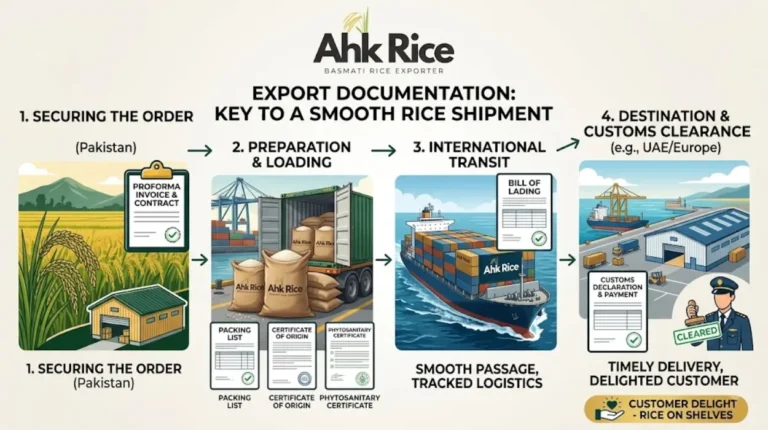
The shipment becomes visible through defined milestones. These include sample approval, quotation, contract confirmation, production, inspection, container booking, loading, dispatch, vessel movement, arrival, clearance, and delivery.
AHK Rice identifies shipping as a defined stage within its export process. Buyers can therefore connect production progress with the expected logistics schedule.
For buyers comparing supplier monitoring methods, this guide to monitoring international rice orders effectively provides the next decision layer.
With the visibility framework established, supplier capability becomes the next purchasing decision.
Why should Northern Ireland importers choose AHK Rice?
AHK Rice combines Pakistani Basmati sourcing, controlled milling, grading, colour sorting, inspection, documentation, packaging, and logistics coordination for international importers.
AHK Rice operates from Punjab, Pakistan, and supplies international markets with 1121, Super Kernel, and 1509 Basmati rice. The company states that its process covers paddy sourcing through final container loading.
AHK Rice also states that its quality system includes ISO 22000:2018, HACCP, ISO 9001:2015, GMP, and Halal certifications. These certifications support documented quality and food-safety processes.
What processing controls support consistency?
AHK Rice follows a defined processing sequence:
- Clean the paddy.
- De-husk the grain.
- Dry the rice.
- Mill the kernels.
- Polish the grains.
- Grade by length.
- Sort by colour.
- Inspect specifications.
- Load export containers.
This sequence gives buyers measurable checkpoints before dispatch. It also creates a stronger reference between the approved sample and bulk shipment.
What export documents improve visibility?
Common export documents include the commercial invoice, packing list, certificate of origin, phytosanitary certificate, fumigation certificate, bill of lading, and quality documentation.
Northern Ireland buyers should also confirm the import requirements applicable to their specific supply route. UK food import rules can depend on origin, trader status, product classification, and movement route. (source: Food Standards Agency)
AHK Rice supports documentation preparation as part of its export workflow. This reduces the risk of missing paperwork becoming a late-stage shipment problem.
With supplier controls established, measurable delivery expectations become the next decision factor.
What results can Northern Ireland buyers expect?

Buyers can expect clearer order milestones, earlier exception detection, better stock planning, stronger specification control, and fewer communication gaps across the procurement cycle.
Visibility becomes commercially useful when every stage has a defined decision point. A buyer can identify whether an order is awaiting sample approval, production, inspection, vessel booking, or arrival.
How many shipping days should buyers plan?
Shipping time depends heavily on the selected port and routing. Current route data shows Karachi to Felixstowe at approximately 28–33 days by FCL, while Karachi to Belfast can reach approximately 46 days 11 hours on a transshipment route.
For comparison, Karachi to Dublin can range from approximately 39 days on a faster container service to longer routings with transshipment.
| Market / route | Indicative ocean transit | Planning implication |
|---|---|---|
| Karachi → Belfast | 46+ days | Allow extra routing time |
| Karachi → Felixstowe | 28–33 days | Useful UK gateway option |
| Karachi → Dublin | 39+ days | Compare direct and transshipment options |
| Europe distribution | 28–40+ days | Confirm port before quotation |
These figures are route indicators, not guaranteed delivery dates. Vessel schedules, transshipment, port congestion, customs, and inland transport can change actual arrival dates.
What does better visibility look like in practice?
Consider a Northern Ireland distributor planning a 20-foot container. The buyer approves a 1121 Basmati sample and confirms 25kg packaging.
AHK Rice then aligns the specification, quotation, inspection, packaging, and container booking. The buyer can use those milestones to plan warehouse capacity and downstream deliveries.
A delay becomes easier to identify because the order has defined stages. The buyer can distinguish a production delay from a vessel delay or destination clearance issue.
With delivery expectations established, cost and sampling determine whether the supplier is commercially suitable.
What factors affect rice import pricing and sample costs?
Rice pricing depends on grade, processing, quantity, packaging, destination, freight, certification, seasonal paddy availability, inspection, and the selected Incoterm.
Grade selection affects processing requirements. Steam, Sella, and Raw Basmati can carry different processing and commercial costs.
Quantity also affects the unit economics. Container orders normally provide a different cost structure from small trial shipments.
Packaging affects production costs through bag material, printing, weight, private-label requirements, and packing configuration.
Freight affects landed cost directly. Northern Ireland buyers should compare the destination port rather than evaluating only the FOB rice price.
What does a complete sample process cost?
AHK Rice’s supplied material gives a typical sample cost range of $20–$50, depending on destination and requirements.
A practical sample workflow is:
- Define the rice grade.
- Confirm the destination.
- Request technical specifications.
- Prepare a representative sample.
- Inspect the sample specifications.
- Test cooking performance.
- Dispatch the sample by courier.
- Approve the commercial specification.
- Confirm the bulk quotation.
A broader budgeting model can include laboratory testing and courier charges. The supplied AHK Rice material gives sample-related costs of $60–$190 when product, laboratory, and courier costs are combined.
The exact amount depends on destination, sample weight, testing requirements, and courier selection. A sample should represent the commercial specification rather than an unrelated stock lot.
With sample economics clarified, the final step is moving from evaluation to an export order.
How can Northern Ireland importers get started with AHK Rice?
Start with the exact grade, quantity, packaging, destination port, Incoterm, and sample requirement, then complete sample approval before confirming the commercial shipment.
AHK Rice’s quotation workflow uses destination port, product, packing, quantity, and Incoterm as core commercial inputs.
Northern Ireland buyers should prepare the following information:
- Rice variety
- Processing grade
- Broken percentage
- Moisture requirement
- Packaging format
- Quantity in metric tons
- Destination port
- Incoterm
- Required certifications
- Sample quantity
The buyer should then request the technical specification and representative sample. Sample approval creates the quality reference for the commercial order.
AHK Rice can then align processing, inspection, packaging, documentation, vessel booking, and dispatch against the approved requirements.
The decision should focus on repeatability rather than the lowest initial price. A supplier that provides consistent specifications and clear shipment milestones gives importers stronger control over inventory planning.
For Northern Ireland buyers, AHK Rice therefore provides a practical route from sample evaluation to controlled Pakistani Basmati rice procurement.
The next step is to confirm your specification, destination port, quantity, packaging, and required delivery window with AHK Rice. Contact AHK Rice today and submit your requirements through the quotation request form to receive a tailored export proposal.
Frequently Asked Questions
How does AHK Rice improve supply chain visibility?
AHK Rice connects product specifications with processing and export milestones.
Buyers can define requirements before production begins.
Inspection and documentation provide additional verification points.
Shipment planning connects dispatch with vessel movement.
This creates a clearer procurement trail from sample approval to delivery.
How long does rice take from Pakistan to Northern Ireland?
Karachi to Belfast can take around 46 days on a current transshipment route.
Karachi to Felixstowe can take around 28–33 days by FCL.
Final Northern Ireland delivery requires additional inland transport.
Port congestion and vessel schedules can change actual timing.
Buyers should confirm the live sailing schedule before contracting.
What rice varieties does AHK Rice supply?
AHK Rice supplies 1121 Basmati rice for premium long-grain applications.
Super Kernel Basmati provides another premium aromatic specification.
1509 Basmati offers long grain performance with different commercial positioning.
Available processing grades can include Steam and Sella formats.
Final selection should follow the buyer’s specification and market use.
How much does a rice sample cost?
AHK Rice’s supplied material indicates typical sample costs of $20–$50.
Laboratory testing can add approximately $20–$50.
Courier charges can add approximately $40–$120.
A broader sample budget can therefore reach $60–$190.
Actual cost depends on destination, testing, sample weight, and courier.
What documents should Northern Ireland rice importers review?
Buyers should review the commercial invoice and packing list.
They should also check the certificate of origin and phytosanitary certificate.
Fumigation and quality documentation may also apply.
The bill of lading supports shipment verification.
Importers should confirm current Northern Ireland requirements before dispatch.
Is AHK Rice suitable for wholesale rice procurement?
AHK Rice supports wholesale procurement through bulk packaging and export processing.
The company supplies 1121, Super Kernel, and 1509 Basmati varieties.
Processing includes grading, colour sorting, inspection, and packaging.
Export documentation supports international shipment requirements.
Buyers can approve samples before confirming bulk procurement.
What information should buyers provide for a quotation?
Buyers should provide the rice variety and required processing grade.
They should specify quantity, packaging, and destination port.
The required Incoterm should also be confirmed.
Certification and inspection requirements should be stated early.
These details allow the quotation to reflect the actual shipment.