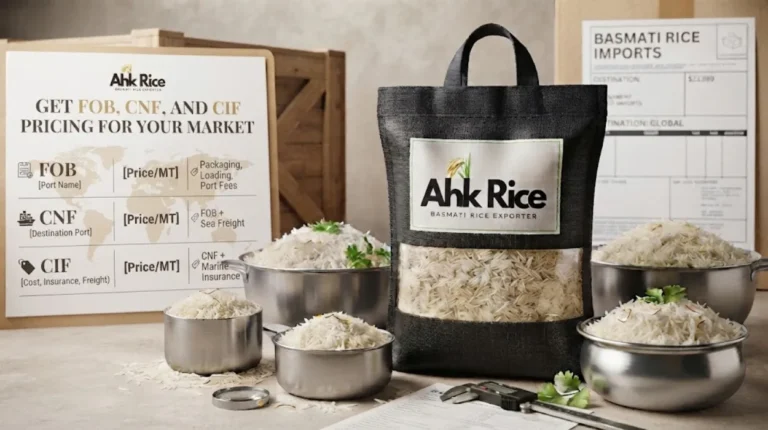
Import Pakistani Basmati Rice into England with AHK Rice Export Support
Importing Pakistani Basmati rice into England is most reliable with verified specifications, accurate customs documentation, pre-shipment inspection, and 25–40 days of planned sea transit. Here is why: UK buyers face quality, customs, food-safety, and logistics requirements before commercial rice reaches distribution channels. Start with the England rice customs declaration guide to understand the compliance framework.
AHK Rice supplies 1121, Super Kernel, and 1509 Pakistani Basmati rice for UK importers, wholesalers, retailers, and foodservice buyers. AHK Rice manages processing, grading, sorting, packaging, export documentation, and container dispatch from Punjab. The company supports buyers from specification approval through shipment execution.
What is the best solution for importing Pakistani Basmati rice into England?
The best solution is direct sourcing with specification control, documented quality testing, customs-ready paperwork, and coordinated sea freight. This approach reduces quality disputes, documentation errors, shipment uncertainty, and unnecessary intermediary costs for England-based buyers.
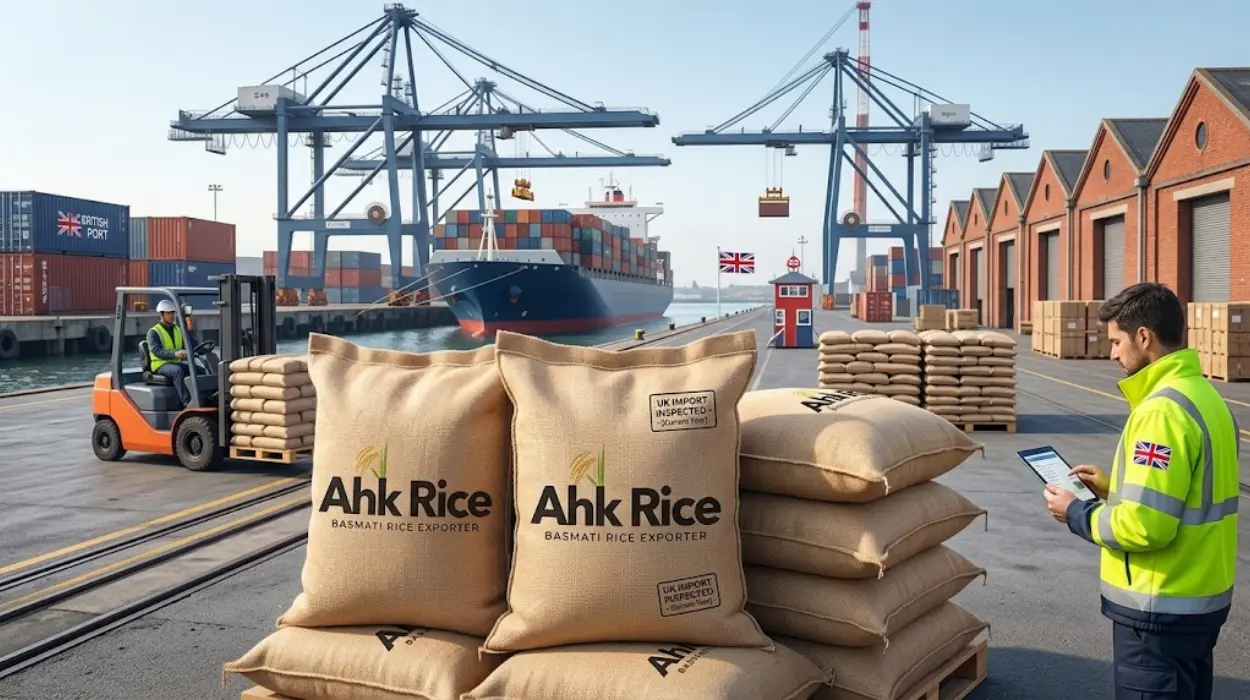
Pakistani Basmati rice enters England through established UK ports, including Felixstowe and Southampton. AHK Rice dispatches export containers from Karachi after completing milling, grading, sorting, inspection, packaging, and documentation. UK shipping normally requires 25–40 days, depending on vessel schedules and customs clearance.
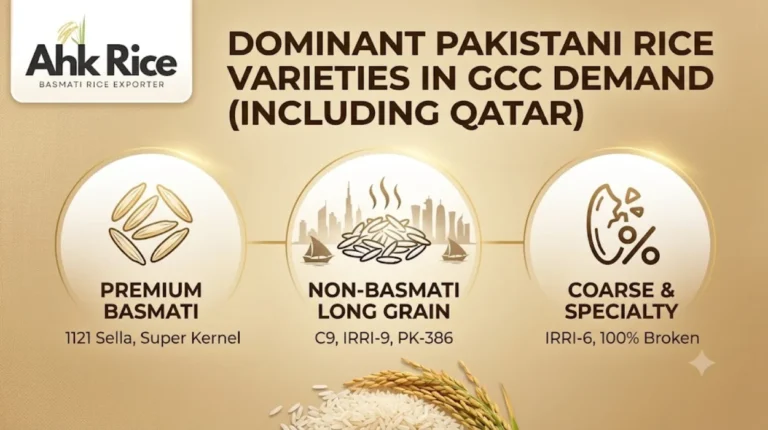
The correct product depends on the buyer’s commercial application. 1121 Basmati suits premium retail and restaurant channels because its long grain delivers strong visual presentation after cooking. 1121 Golden Sella suits catering because parboiling strengthens grain structure. Super Kernel serves buyers seeking strong aroma and traditional cooking characteristics. 1509 provides a competitive option for buyers balancing price and long-grain performance.
AHK Rice supports these decisions through specification-based procurement. Buyers can define grain length, broken percentage, moisture, processing type, packaging, crop year, and private-label requirements before production begins.
Why choose AHK Rice for England rice imports?
AHK Rice provides an integrated export supply chain covering milling, grading, sorting, testing, packaging, documentation, inspection, and shipping coordination. This gives England importers one controlled commercial workflow instead of managing separate suppliers for each export stage.
AHK Rice operates from Punjab and manages the rice supply chain from paddy procurement through container loading. Its processing sequence includes cleaning, dehusking, paddy separation, whitening, polishing, grading, length sorting, packaging, documentation, and logistics.
AHK Rice also provides several export-grade varieties for different UK market requirements. A buyer can select 1121 Steam for lighter colour and softer cooked texture. A buyer can select Golden Sella for stronger grain durability. Super Kernel supports traditional aromatic rice demand. 1509 supports cost-sensitive procurement programs.
Quality control remains central to the purchase decision. AHK Rice states that shipments can undergo pre-shipment inspection through recognized organizations such as SGS and Bureau Veritas. Buyers can also request laboratory testing and specification verification before dispatch.
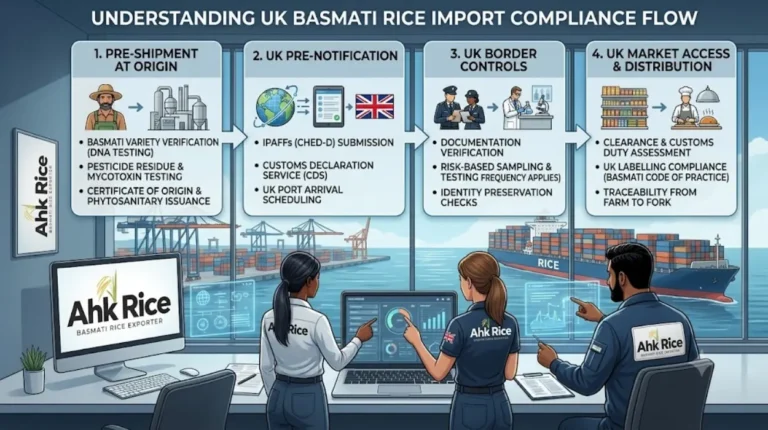
Documentation control provides another commercial advantage. Export documentation includes the commercial invoice, packing list, certificate of origin, phytosanitary certificate, fumigation certificate, and bill of lading. UK import procedures also require accurate customs declarations and food compliance records.
For buyers evaluating the preparation stage, the customs declaration preparation guide explains how classification, declarations, tariffs, and documentation interact during UK clearance.
What results can England importers expect?
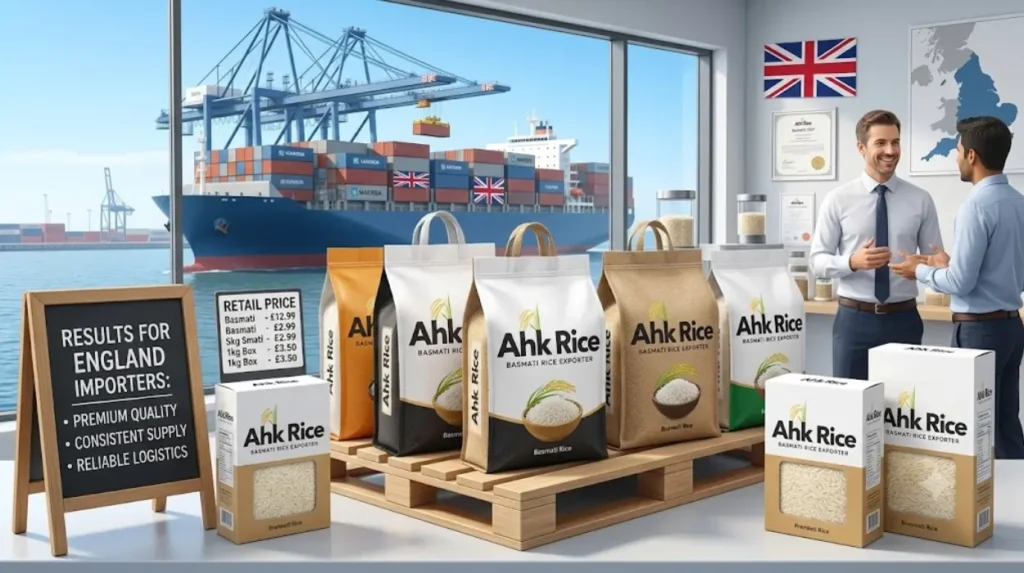
England buyers can expect better specification consistency, clearer shipment planning, stronger documentation control, and lower procurement risk when every export stage follows the approved specification. Results depend on the buyer’s agreed product requirements and shipment schedule.
A specification-controlled order starts with the product. AHK Rice confirms the variety, processing grade, broken percentage, moisture target, packaging, quantity, and crop year before production. This creates a reference specification for sampling and final shipment inspection.
The sample stage provides the first commercial proof. Buyers can inspect grain appearance, length, broken percentage, moisture, aroma, cooking performance, and packaging suitability. AHK Rice can provide specification sheets and laboratory reports with representative samples.
The logistics stage then converts the approved specification into a shipment plan. Karachi loading follows container preparation and export documentation. Sea transit to UK ports generally takes 25–40 days. Felixstowe and Southampton are established UK entry points for Pakistani rice cargo.
The commercial result is greater predictability. Retail buyers can match grades with shelf requirements. Restaurant suppliers can select durable cooking specifications. Wholesalers can select bulk packaging. Private-label buyers can establish packaging and labeling requirements before dispatch.
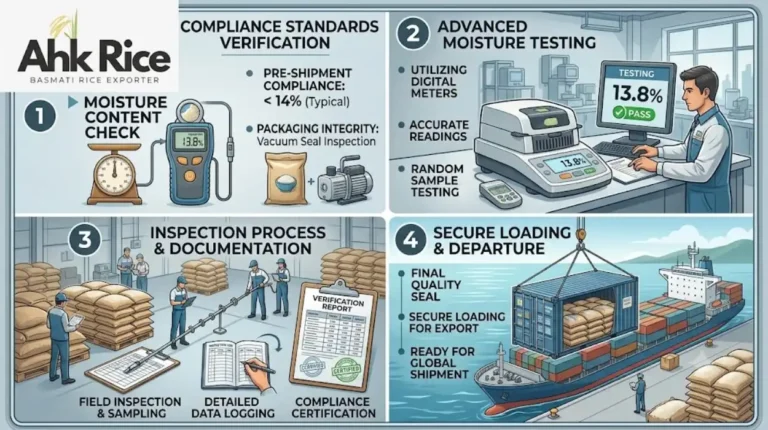
Moisture control also affects storage performance. Export-grade Basmati commonly targets 12%–14% moisture. Higher moisture can reduce storage stability and increase quality risks during transportation and warehousing.
How does the sample process work and what does it cost?
A practical sample process includes specification confirmation, sample quotation, courier dispatch, laboratory review, cooking evaluation, and final specification approval. Typical courier costs range from USD 40–120, while product samples are often complimentary.
What steps should an importer follow?
- Submit product requirements covering variety, grade, packaging, quantity, and destination.
- Confirm target specification covering grain length, broken percentage, moisture, processing, and crop year.
- Receive sample quotation covering the product sample and delivery requirements.
- Dispatch representative samples using an international courier to the England buyer.
- Review laboratory reports covering requested quality and safety parameters.
- Test cooking performance against the buyer’s retail, restaurant, or catering application.
- Approve final specification before production and commercial contracting.
- Confirm commercial order after quality, price, packaging, and logistics terms are agreed.
What are the typical sample costs?
| Sample Item | Typical Cost |
|---|---|
| Product sample | Often complimentary |
| International courier | USD 40–120 |
| Laboratory testing | Depends on requested analysis |
| Commercial shipment | Based on quantity, freight, and Incoterm |
Courier charges vary with destination, weight, delivery speed, and courier service. Laboratory costs vary with the number of tests requested. AHK Rice can provide specification information before sample dispatch.
Sample evaluation should focus on measurable commercial criteria. Inspect grain length and appearance first. Inspect broken percentage and moisture next. Test cooking expansion, separation, aroma, and texture afterward. Confirm packaging suitability before approving production.
What factors affect the import cost?
Final import cost depends on rice variety, processing grade, specification, packaging, order volume, freight, seasonal conditions, testing, and the selected Incoterm. Buyers should compare the complete landed-cost structure rather than evaluating rice price alone.
1121 Basmati normally occupies a premium position because of its long grain and market demand. 1509 can provide a more cost-focused alternative. Golden Sella can cost more than Steam because parboiling requires additional processing stages.
Packaging also changes the shipment economics. Common formats include 1 kg, 5 kg, 10 kg, 20 kg, 40 kg, and 50 kg bags. Retail buyers normally require smaller consumer packs. Catering and wholesale buyers often select larger PP bags.
Freight remains another variable. Ocean freight changes with vessel availability, route conditions, port charges, and booking schedules. England buyers should therefore request a current quotation rather than relying on an old freight figure.
Order volume can improve commercial efficiency. Larger recurring contracts allow suppliers to plan production, packaging, and container allocation more effectively. AHK Rice also supports customized packaging and private-label requirements.
Documentation and inspection create additional costs in some orders. Laboratory analysis, third-party inspection, special packaging, and private-label printing depend on the buyer’s requirements.
How should an England importer choose the correct rice specification?
Choose the specification according to the sales channel, cooking application, storage requirement, packaging format, and target price rather than selecting a grade by name alone. This prevents mismatched products and improves commercial performance after import.
| Buyer Requirement | Recommended Direction |
|---|---|
| Premium retail | 1121 Basmati |
| Restaurant supply | 1121 Steam or Golden Sella |
| Catering and buffet use | 1121 Golden Sella |
| Traditional aromatic retail | Super Kernel |
| Cost-focused long grain | 1509 |
| Private-label retail | Grade matched to retailer specification |
England wholesalers should also define broken percentage before contracting. Retail programs may request low-broken specifications because uniform grain appearance supports premium positioning. Catering buyers may prioritize cooking durability and cost efficiency.
Packaging should match the distribution model. Supermarkets require compliant consumer labeling. Wholesalers often require bulk formats. Foodservice distributors generally need practical sacks that reduce handling frequency.
Crop year should also form part of the purchase specification. Fresh and aged rice can behave differently during cooking and storage. Buyers should record the agreed crop year in the commercial specification and shipment documentation.
How can an England importer get started with AHK Rice?
Start by submitting the required rice specification, quantity, packaging, destination port, and preferred Incoterm. AHK Rice can then structure the sample, quality verification, quotation, production, documentation, and shipping sequence around the approved requirements.
The first step is specification submission. Provide the preferred Basmati variety, processing grade, broken percentage, moisture target, packaging size, quantity, and destination port.
The second step is sample approval. AHK Rice dispatches representative samples after requirements are confirmed. Buyers evaluate physical quality, cooking performance, laboratory information, and packaging requirements.
The third step is commercial confirmation. AHK Rice aligns the approved specification with price, quantity, packaging, Incoterm, and shipping schedule. Production then follows the agreed commercial specification.
The fourth step is export preparation. AHK Rice completes processing, grading, sorting, inspection, packaging, container loading, and export documentation before dispatch.
The fifth step is shipment execution. Cargo moves from Karachi toward UK entry ports such as Felixstowe or Southampton. Planned sea transit generally falls within 25–40 days, subject to vessel schedules and clearance conditions.
For England importers, this workflow creates a direct path from product selection to commercial delivery. AHK Rice combines Pakistani Basmati supply, processing control, documentation support, quality verification, and export logistics within one procurement process.
Choose AHK Rice when the purchase requires controlled specifications, documented quality, structured samples, export documentation, and planned UK delivery. For the next shipment, request a quote with your required grade, quantity, packaging, destination port, and Incoterm.
Frequently Asked Questions About Importing Pakistani Basmati Rice into England
How long does Pakistani Basmati rice take to reach England?
Pakistani Basmati rice generally takes 25–40 days to reach UK ports by sea.
The shipment normally departs from Karachi after export processing and container loading.
Felixstowe and Southampton are common UK entry points for imported rice.
Vessel schedules, port congestion, and customs clearance can affect the final timeline.
Importers should confirm the latest shipping schedule before placing a commercial order.
Which Pakistani Basmati rice is best for England importers?
1121 Basmati, 1121 Golden Sella, Super Kernel, and 1509 serve different commercial requirements.
1121 suits premium retail, restaurants, and foodservice buyers seeking long grains.
Golden Sella suits catering because parboiling provides stronger grain structure.
Super Kernel supports buyers seeking traditional aroma and cooking characteristics.
1509 provides a cost-focused option for long-grain Basmati procurement.
What documents are required to import Pakistani rice into England?
Importers normally require a commercial invoice, packing list, certificate of origin, phytosanitary certificate, fumigation certificate, and bill of lading.
The shipment also requires an accurate UK customs declaration.
Product classification and shipment information must match the commercial documentation.
Food import requirements can also apply depending on the product and shipment conditions.
AHK Rice can coordinate the export documentation required for the shipment.
How much does a Pakistani Basmati rice sample cost?
A product sample may be provided without a separate product charge.
International courier delivery commonly costs around USD 40–120, depending on destination and shipment weight.
Laboratory testing creates an additional cost when specific analyses are requested.
Testing costs depend on the number and type of laboratory parameters required.
The final sample cost should be confirmed before dispatch.
What quality specifications should England buyers confirm?
England buyers should confirm variety, grain length, broken percentage, moisture, processing type, crop year, and packaging before ordering.
These specifications establish the commercial quality standard for the shipment.
Moisture control supports storage stability during international transportation.
Broken percentage affects grain appearance and retail positioning.
The agreed specifications should also appear in the commercial purchase documentation.
Can AHK Rice provide private-label Basmati rice for England?
Yes, AHK Rice can support custom packaging and private-label requirements for suitable commercial orders. Buyers can define packaging sizes, artwork requirements, product specifications, and quantities.
What is the minimum order quantity for Pakistani Basmati rice?
The appropriate order quantity depends on the rice grade, packaging format, and commercial shipment requirements. Containerized orders are generally more suitable for wholesale import programs.
How does the rice sample process work?
The process starts with the buyer submitting the required rice specification.
AHK Rice then confirms the variety, processing grade, packaging, and quality requirements.
A representative sample can be prepared and dispatched for buyer evaluation.
The buyer checks physical appearance, cooking performance, and requested laboratory information.Commercial production begins after the specification and sample are approved.
Which UK ports can receive Pakistani Basmati rice?
Felixstowe and Southampton are established UK ports used for imported goods, including food cargo.The selected port depends on the buyer’s logistics network and final delivery location.
Port selection can affect inland transportation and overall landed cost.
Why should England importers choose AHK Rice?
AHK Rice provides rice processing, grading, sorting, quality verification, packaging, documentation, and export logistics. The company supplies Pakistani Basmati varieties including 1121, Super Kernel, and 1509.