AHK Rice Pakistan Moisture-Controlled Basmati Rice Supply for Indonesian Importers
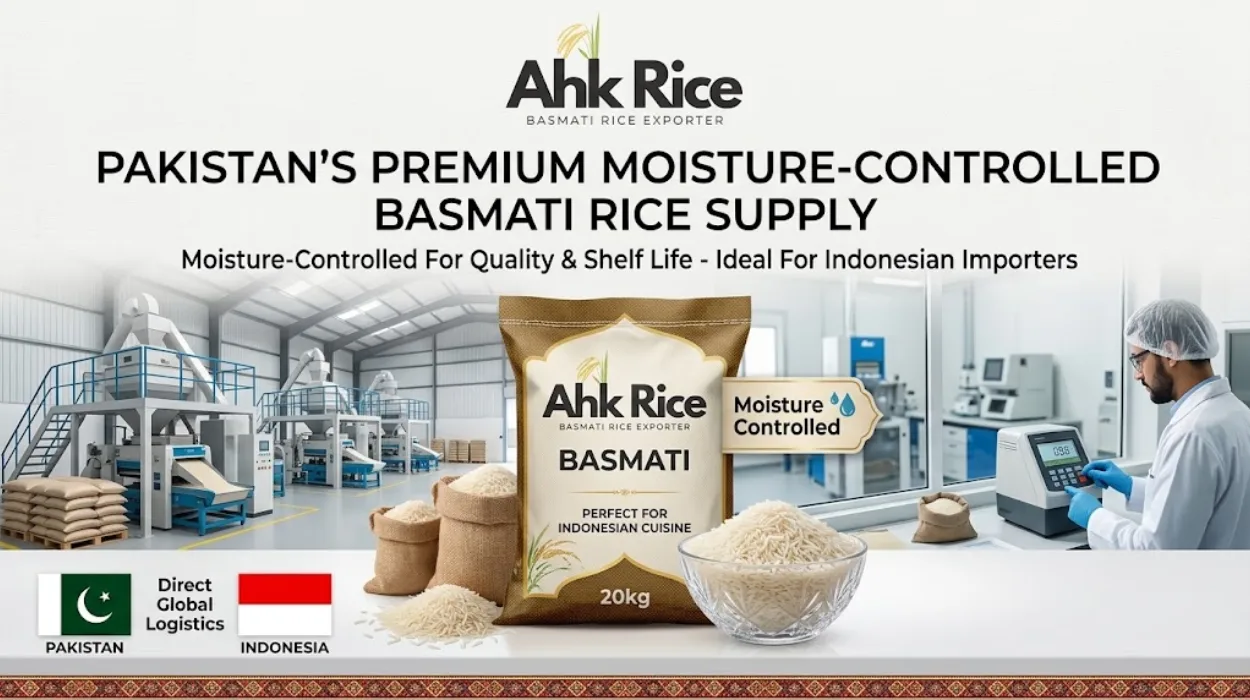
AHK Rice provides the strongest solution for Indonesian importers that need controlled moisture, consistent grain quality, documented inspection, and predictable Pakistan-to-Indonesia shipping. Here is why: moisture directly affects storage stability, cooking performance, milling quality, and shipment risk. Indonesian buyers can review the broader moisture requirements for Pakistan Basmati rice imports before approving a commercial specification. AHK Rice supplies Pakistani 1121, 1509, and Super Kernel grades against agreed specifications and coordinates processing, packing, documentation, and container dispatch.
What is the best solution for Indonesian importers managing rice moisture?
The best solution is a contracted moisture target, pre-shipment testing, representative sampling, sealed export packaging, and controlled container loading. This process prevents buyers from relying only on visual inspection or supplier declarations. AHK Rice can align the commercial shipment with the approved sample and agreed moisture specification.
Which Basmati grades can Indonesian importers source?
1121, 1509, and Super Kernel provide the main commercial choices, with 1121 strongest for premium positioning and 1509 for value-focused procurement. AHK Rice supplies multiple processing grades for different retail, restaurant, catering, and wholesale requirements.
| Specification | 1121 Basmati | 1509 Basmati | Super Kernel |
|---|---|---|---|
| Average grain length | 8.2–8.4 mm | 8.1–8.35 mm | 7.0–7.4+ mm |
| Moisture target | ≤12.5% | 12–13% | ≤12.5% |
| Broken target | <1–2% | 1–5% | ≤2–3% |
| Aroma | High | Medium-high | High |
| Cooked elongation | Very high | High | High |
| Positioning | Premium | Mid-premium | Traditional premium |
| Main use | Retail/HORECA | Retail/HORECA | Specialty retail |
These specifications represent AHK Rice commercial references and can vary by contracted grade and shipment. The buyer should approve the final specification before production.
How does AHK Rice control moisture before shipment?
AHK Rice controls moisture through milling, drying, grading, laboratory inspection, sample approval, packaging, and final container checks. The workflow creates measurable checkpoints between raw paddy selection and vessel loading.
- Select the paddy against the agreed variety and quality profile.
- Clean the paddy to remove unwanted material.
- De-husk the grain through controlled milling equipment.
- Dry the rice under controlled processing conditions.
- Polish the grain to achieve the contracted appearance.
- Sort the kernels through grading and colour-sorting systems.
- Inspect moisture against the approved commercial specification.
- Test samples before final packing and container stuffing.
- Load export bags under controlled shipment conditions.
This process gives the importer a traceable quality path rather than a single moisture reading.
With the supply specification established, the next decision is why supplier control matters commercially.
Why choose AHK Rice for moisture-controlled Indonesian supply?

AHK Rice combines product specification, sample approval, export documentation, packaging, inspection coordination, and logistics into one purchasing workflow. That structure reduces gaps between the product approved by the buyer and the rice eventually loaded for export.
AHK Rice operates from Punjab, Pakistan, where its supply chain connects rice sourcing with milling and export preparation. AHK Rice can provide customized packaging and coordinate common export documentation, including certificate of origin, phytosanitary documentation, fumigation records, and other documents required for the shipment.
Indonesia classifies Basmati as a special rice category under its commodity framework. Indonesian government guidance identifies Basmati under HS 10063050 and distinguishes special rice from ordinary consumer rice.
Indonesian import procedures can also require technical verification and shipment information. Indonesian regulations describe verification of rice imports at the loading port and identify specifications such as origin, rice type, volume, destination port, and shipment timing.
AHK Rice therefore suits importers that want the specification agreed before production rather than resolved after arrival.
How should an importer verify the approved specification?
Approve the sample first, then contract the same moisture range, grain length, broken percentage, packaging, and processing grade. The approved sample should become the commercial reference for production and inspection.
For deeper comparison before ordering, Indonesian buyers can review the moisture verification process used to compare Pakistan Basmati shipments. This comparison helps procurement teams distinguish a supplier’s stated moisture figure from a documented inspection process.
The next decision is delivery performance, because quality control must continue through dispatch and sea transit.
What shipping days should Indonesian importers expect?
Pakistan-to-Indonesia sea transit commonly takes about 14–21 days, while the complete order cycle can take approximately 4–6 weeks. AHK Rice coordinates inland transport, port preparation, container loading, documentation, and sea freight planning. Its Indonesia export information states 14–21 days of sea transit to Jakarta or Surabaya.
| Stage | Indicative time |
|---|---|
| Sample dispatch | 3–5 days |
| Production and milling | 7–10 days |
| Packaging and inspection | 3–5 days |
| Karachi inland movement | 2–3 days |
| Port clearance and loading | 4–7 days |
| Sea transit | 14–21 days |
| Overall order cycle | 4–6 weeks |
Actual schedules depend on production capacity, documentation, vessel schedules, port congestion, inspection requirements, and destination clearance.
What happens in a typical commercial order?
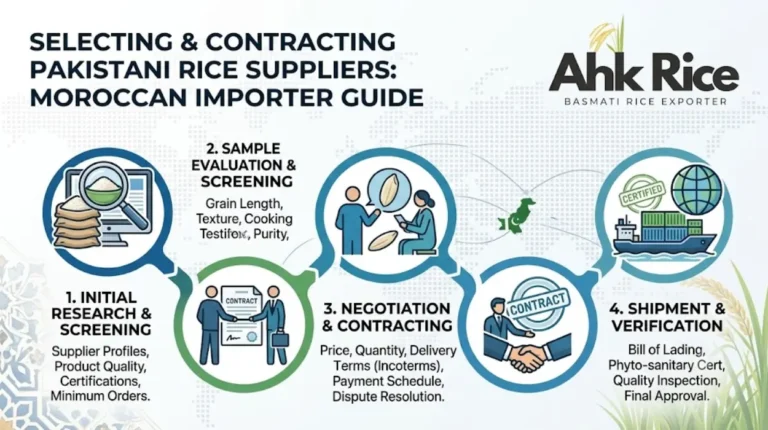
A representative order starts with specification approval, moves through production and inspection, then finishes with container loading and Indonesian delivery coordination. This sequence gives buyers clear decision points before committing to repeat volumes.
A buyer first identifies the grade, quantity, moisture target, packaging, destination port, and Incoterm. AHK Rice then prepares the commercial offer and sample requirements.
After sample approval, the buyer issues the purchase order and confirms payment terms. AHK Rice schedules production and milling against the agreed specification.
Quality inspection follows production. Moisture, grain appearance, broken percentage, purity, packaging, and other contracted attributes can be checked before loading.
The container then moves toward Karachi for export clearance. AHK Rice coordinates documentation and vessel loading before the shipment begins its Indonesian sea transit.
This process converts moisture control from a product claim into a procurement checkpoint.
What results can Indonesian importers expect?
Importers can expect more consistent moisture, predictable grain performance, clearer documentation, and fewer specification disputes when the contract follows the approved sample. The commercial benefit comes from controlling measurable variables before dispatch.
A 1121 buyer can prioritize premium grain length and low breakage. A 1509 buyer can prioritize long-grain performance with tighter procurement economics. A Super Kernel buyer can prioritize traditional Basmati positioning and cooking characteristics.
Moisture control also supports warehouse planning. A buyer receiving rice near the agreed specification has a clearer basis for storage, inventory rotation, and quality monitoring.
AHK Rice supports this approach by connecting specification approval with processing and shipment preparation. AHK Rice can coordinate inspection requirements before loading, while AHK Rice can also provide packaging options according to the commercial order.
The final decision should therefore compare total landed economics rather than FOB price alone.
How much does moisture-controlled Basmati rice cost?
The final price depends on grade, moisture specification, quantity, packaging, inspection, season, freight, insurance, Incoterm, and destination port. Indonesian buyers should request a shipment-specific quotation rather than rely on a fixed online price.
For example, 1121 generally carries a stronger premium position than 1509. A tighter broken percentage or lower moisture target can also affect processing and quality-control costs. Custom retail packaging can increase the per-metric-ton cost compared with standard bulk PP bags.
Freight also changes the landed price. Jakarta and Surabaya may receive different vessel schedules and freight quotations. AHK Rice’s published Indonesia information identifies Karachi-to-Indonesia sea transit around 14–21 days.
A practical commercial quotation should therefore show:
- Product grade and processing
- Moisture specification
- Broken percentage
- Packaging format
- Quantity in metric tons
- FOB or CIF basis
- Inspection requirements
- Estimated dispatch window
- Destination port
- Payment terms
AHK Rice can then structure the offer around the buyer’s actual specification instead of quoting generic Basmati rice.
How can Indonesian importers get started?
Start with the exact grade, moisture target, quantity, destination port, packaging, and Incoterm, then approve a representative sample before commercial production. This gives AHK Rice the information required to prepare a practical export quotation.
- Define the grade such as 1121, 1509, or Super Kernel.
- Set the moisture target and broken percentage.
- Specify the packaging and required bag weight.
- Confirm the destination such as Jakarta or Surabaya.
- Request the sample for physical and cooking evaluation.
- Approve the specification before production begins.
- Confirm the purchase order and commercial terms.
- Monitor production through agreed quality checkpoints.
- Approve shipment documents before vessel dispatch.
AHK Rice is best suited to importers seeking a repeatable specification-led supply model rather than an anonymous spot purchase. AHK Rice combines Pakistani Basmati sourcing with processing and export coordination. AHK Rice also gives buyers a clearer framework for evaluating moisture, grade, packaging, documentation, and shipment timing.
For the next procurement step, Indonesian importers can request a tailored Basmati rice export quotation from AHK Rice.
Frequently Asked Questions
What moisture level does AHK Rice offer for Indonesian Basmati shipments?
AHK Rice publishes moisture targets according to the selected Basmati grade.
1121 references commonly show moisture around or below 12.5%.
1509 specifications commonly target approximately 12–13%.
The final contract should define the exact moisture specification.
Shipment testing should follow the approved commercial specification.
How long does Pakistan Basmati rice take to reach Indonesia?
Sea transit from Karachi to Indonesia commonly takes 14–21 days.
Jakarta and Surabaya are the main destination ports referenced by AHK Rice.
Production and documentation require additional time before loading.
A complete order cycle can reach approximately four to six weeks.
Vessel schedules and port conditions can change the final timeline.
Which Basmati grade is best for Indonesian importers?
1121 suits buyers prioritizing premium grain length and presentation.
1509 suits buyers seeking long grain with stronger procurement economics.
Super Kernel suits buyers seeking traditional Basmati positioning.
The correct grade depends on the buyer’s retail or foodservice segment.
Final selection should follow sample approval and contracted specifications.
Can AHK Rice provide samples before bulk orders?
AHK Rice provides samples for Indonesian buyers before commercial commitment.
Published Indonesia supply information indicates sample dispatch can take several days.
Buyers should evaluate grain appearance, aroma, cooking performance, and moisture.
The approved sample should match the intended commercial specification.
This approach reduces quality uncertainty before bulk production.
What documents are important for Indonesian rice imports?
Typical export documentation includes a commercial invoice and packing list.
A bill of lading supports the international shipment record.
Certificate of origin and phytosanitary documentation may also apply.
Fumigation documentation can support plant-health and customs requirements.
Importers should confirm current Indonesian requirements before shipment.