AHK Rice Pakistan Basmati Rice Supply for Indonesian Retail Distributors
1509 Steam is the strongest default for Indonesian retail distribution, while 1121 Steam fits premium shelves and Super Kernel serves aroma-focused channels. Here is why: Indonesian distributors need a balance of retail appearance, cooking performance, procurement cost, documentation, and reliable shipment planning. AHK Rice supplies these Pakistan-origin Basmati options with controlled processing, grading, packaging, inspection, and export coordination.
Indonesian buyers should first define their retail segment, target price, pack size, and required specification. The educational guide on selecting the right Pakistani Basmati grade for Indonesia provides useful market context before commercial sourcing.
What is the best solution for Indonesian retail distributors?
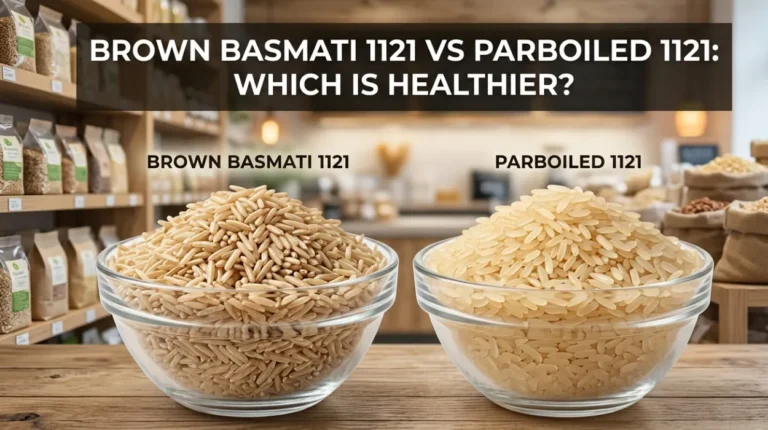
1509 Steam provides the best price-performance balance, while 1121 Steam provides stronger premium positioning and Super Kernel supports traditional aromatic retail demand. Here is why: each grade targets a different consumer and margin structure.
Which grade should a distributor select?
1509 Steam suits supermarkets seeking accessible premium positioning. Its long-grain appearance, cooking performance, and comparatively lower procurement cost support faster retail turnover. AHK Rice identifies 1509 Steam as a strong value choice for Indonesian bulk and commercial channels.
1121 Steam suits premium retail brands. The variety provides extra-long grain presentation and strong cooked elongation. This specification can support higher retail pricing in premium urban channels.
Super Kernel suits distributors targeting traditional Basmati consumers. Its strong aromatic profile and slender grain provide a different retail proposition from 1509 and 1121.
| Specification | 1509 Steam | 1121 Steam | Super Kernel |
|---|---|---|---|
| Market position | Value-premium | Premium | Traditional premium |
| Grain profile | Long | Extra-long | Long |
| Aroma | Medium | High | High |
| Cooking profile | Soft, separate | Fluffy, elongated | Tender, aromatic |
| Main channel | Supermarkets, horeca | Premium retail | Specialty retail |
| Cost position | Lower | Higher | Mid-premium |
| Best decision | Volume + margin | Premium shelf value | Aroma-led demand |
The comparison points toward grade selection, but the supplier must also control the complete export process.
Why choose AHK Rice for Indonesian retail supply?
AHK Rice combines Pakistan-origin sourcing, controlled milling, grading, colour sorting, custom packaging, inspection, and export documentation into one supply process. Here is why: retail distributors need consistent specifications across repeat shipments rather than isolated spot purchases.
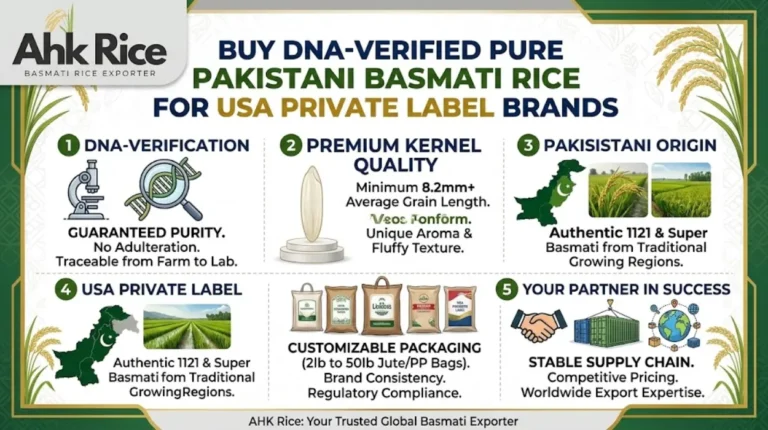
AHK Rice operates from Bucheki, Nankana Sahib, Punjab, and supplies 1121, Super Kernel, and 1509 Basmati varieties. Its export service covers processing, grading, colour sorting, customized packaging, and export documentation.
The AHK Rice Pakistan Basmati export service gives buyers access to these supply capabilities. Packaging can be configured around wholesale and private-label requirements.
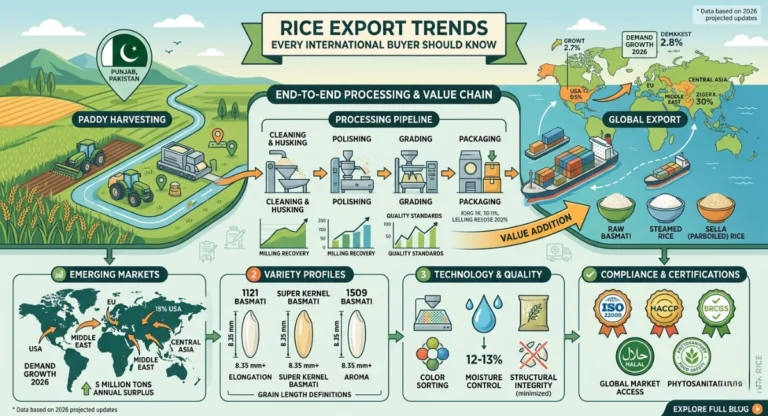
Quality control includes pre-shipment inspection options. AHK Rice states that shipments can undergo inspection through internationally recognized organizations such as SGS and Bureau Veritas.
Indonesian buyers can also request phytosanitary documentation, certificates of origin, fumigation documentation, invoices, packing lists, and shipping documents. These records support commercial verification and import processing.
Supplier selection therefore depends on more than price. The distributor should evaluate specification control, documentation, inspection capability, packaging flexibility, and shipment planning together.
What sample process should an Indonesian distributor follow?
Start with a defined specification, receive up to 20 kg for product evaluation, pay the applicable courier and phytosanitary costs, then approve the sample before bulk production. Here is why: sample approval reduces specification risk before a container commitment.
How does the sample process work?
- Define the variety, grade, grain specification, broken percentage, moisture target, packaging, and destination.
- Request the required sample quantity from AHK Rice.
- Receive up to 20 kg of rice for evaluation under the stated sample terms.
- Pay courier charges and the applicable phytosanitary certificate cost.
- Test the sample for appearance, aroma, cooking performance, broken percentage, and physical purity.
- Approve the specification before confirming the commercial order.
- Finalize packaging, quantity, Incoterm, destination port, and inspection requirements.
AHK Rice states that samples up to 20 kg can be provided free, while the client covers courier and phytosanitary certificate costs. Buyers may also use their own courier account.
The exact courier and certificate amount should be confirmed before dispatch because those charges depend on the shipment arrangement. AHK Rice also states that sample charges can be waived in the final quotation after an approved purchase.
Sample testing should focus on the commercial specification. A retailer should assess cooked appearance, aroma, texture, grain separation, and pack presentation before approving the bulk order.
With the sample approved, the next decision is production scheduling and shipment timing.
What shipping time should Indonesian distributors expect?
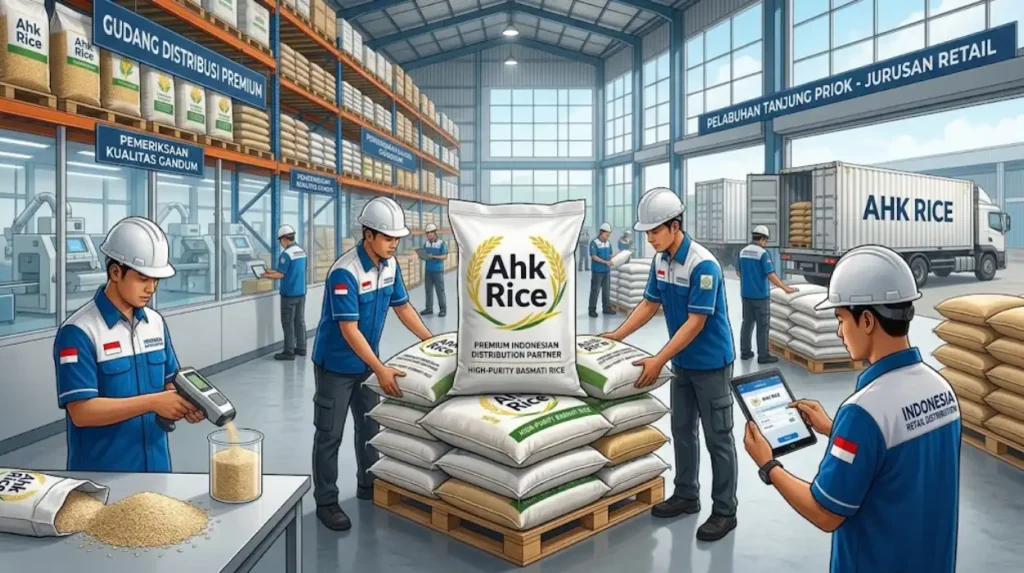
Plan around 4–6 weeks from purchase-order confirmation to Indonesian delivery, including 7–10 days for production, about one week for documentation and port clearance, and 14–21 days for sea transit. Here is why: every stage needs coordination before the vessel reaches Indonesia.
How does the shipment timeline work?
| Stage | Typical time |
|---|---|
| Production | 7–10 days |
| Documents and port clearance | About 7 days |
| Sea transit to Indonesia | 14–21 days |
| Total planning window | 4–6 weeks |
Production begins after order and specification confirmation. AHK Rice then processes, grades, sorts, packs, and prepares the cargo for dispatch.
Documentation and port clearance require another planning period. Complete export documents reduce avoidable administrative delays.
Sea transit normally represents the longest physical movement. The stated Indonesia transit range is 14–21 days.
Distributors should therefore plan inventory before the previous shipment reaches its minimum stock level. A 4–6 week replenishment cycle requires adequate warehouse cover.
For Jakarta and other Indonesian distribution destinations, the final landed schedule should be confirmed against the selected destination port, vessel booking, and customs process.
What results can Indonesian retailers expect?
A controlled supply specification can improve retail consistency, purchasing predictability, packaging alignment, and replenishment planning across repeated Basmati shipments. Here is why: specification control links product quality with commercial inventory management.
1509 Steam can help distributors maintain a competitive retail price while preserving a premium appearance. This makes it suitable for supermarkets and foodservice-linked distribution.
1121 Steam can support premium private-label positioning. Its extra-long grain presentation creates stronger visual differentiation on higher-value retail shelves.
Super Kernel can support specialty positioning where aroma and traditional Basmati characteristics influence consumer choice.
AHK Rice also supports private-label packaging. This allows distributors to align pack sizes and branding with their own retail strategy.
The commercial result depends on the chosen specification. A premium grade does not automatically create better margins. The distributor must match the grade to the target consumer and retail price.
Indonesian buyers comparing grade economics can also review this Pakistan 1121 and 1509 comparison for Indonesia before selecting the final commercial specification.
What factors affect Pakistan Basmati rice pricing?
Price depends on variety, processing grade, quantity, packaging, quality specification, season, freight, destination, and selected Incoterm. Here is why: a single FOB figure cannot represent the final landed cost for every Indonesian distributor.
1121 normally carries a stronger premium than 1509 because of its premium grain positioning. 1509 can provide stronger price efficiency for volume-focused retail programs.
Processing also affects cost. White, Steam, and parboiled grades require different production routes and specifications.
Packaging creates another cost variable. Bulk PP bags, retail packs, cartons, and private-label packaging have different production and handling requirements.
Quantity can influence the commercial rate. Larger orders may improve purchasing economics through production planning and container utilization.
Freight creates a separate landed-cost variable. Indonesian distributors should compare FOB and CIF quotations using the same product specification, quantity, destination, and packaging.
AHK Rice’s quotation process requests destination port, product, packing, quantity, and Incoterm details. These inputs allow the commercial offer to reflect the actual order structure.
How should an Indonesian distributor get started?
Start with one confirmed grade, one defined retail specification, one approved sample, and one destination-based quotation before committing to recurring supply. Here is why: a controlled first order creates a measurable benchmark for later shipments.
What information should the buyer provide?
- Specify 1121, 1509, or Super Kernel.
- Choose White, Steam, or Sella according to the retail application.
- Define grain length, broken percentage, moisture, purity, and packaging.
- Confirm the Indonesian destination port.
- Request the sample and applicable sample charges.
- Test the sample against the retail specification.
- Approve the final product specification.
- Confirm quantity, Incoterm, packaging, inspection, and payment terms.
- Schedule production and vessel booking.
- Monitor documentation, loading, dispatch, and delivery.
AHK Rice states that its Indonesia 1121 program uses a 30% advance payment and 70% balance against scanned shipment documents. Buyers should confirm current commercial terms within the quotation.
The strongest starting strategy is a specification-led trial order. Select the retail segment first, approve the product second, and scale purchasing after performance is verified.
Frequently Asked Questions
Which Pakistan Basmati rice is best for Indonesian retail distributors?
1509 Steam is the strongest general-purpose choice for Indonesian retail distribution.
It balances long-grain appearance with competitive procurement economics.
1121 Steam fits premium supermarket and luxury retail positioning.
Super Kernel suits aroma-focused and specialty retail channels.
The final choice should follow the distributor’s target retail segment.
How much rice can Indonesian buyers receive as a sample?
AHK Rice states that samples up to 20 kg can be provided free.
The buyer covers courier and phytosanitary certificate costs.
The buyer can also provide its own courier account.
Sample costs can be waived in the final quotation after purchase approval.
Exact courier and certificate charges should be confirmed before dispatch.
How long does Pakistan Basmati rice take to reach Indonesia?
The stated total shipment planning period is approximately 4–6 weeks.
Production normally takes 7–10 days after order confirmation.
Documentation and port clearance take about one week.
Sea transit to Indonesia generally takes 14–21 days.
Final timing depends on vessel schedules and destination clearance.
What certifications and documents can AHK Rice provide?
Export documentation can include phytosanitary, origin, fumigation, quality, and shipping records.
Common documents include the Certificate of Origin and Commercial Invoice.
Packing Lists and Bills of Lading support shipment documentation.
Quality inspection can also be arranged through third-party organizations.
Indonesian importers should confirm current regulatory requirements before shipment.
What determines the final Basmati rice price?
Final pricing depends on grade, specification, volume, packaging, freight, destination, and Incoterm.
1121 generally carries a stronger premium than 1509.
Processing and packaging requirements also change the quotation.
Freight must be evaluated when comparing FOB and CIF offers.
A destination-specific quotation provides the most useful commercial comparison.
How should a distributor begin sourcing from AHK Rice?
Begin with the required grade, specification, sample, destination port, quantity, and packaging format.
AHK Rice can then prepare the commercial quotation around those requirements.
The buyer should test and approve the sample before bulk production.
The approved specification becomes the benchmark for the commercial order.
Repeat purchasing can then follow the verified product and logistics requirements.
For a destination-specific price, approved sample process, packaging configuration, and shipment plan, request a customized AHK Rice quotation.