Understanding Basmati Rice Quality Grades
Basmati rice quality grades describe grain length, appearance, processing, purity, cooking performance, and broken grain percentage. 1121, Super Kernel, and 1509 Basmati rice represent important Pakistani Basmati varieties, while Steam, Sella, and White describe processing methods. Here is why: buyers need both a variety and a processing specification to evaluate rice accurately.
What Are Basmati Rice Quality Grades?
Basmati rice quality grades classify rice by grain characteristics, processing condition, purity, and cooking performance. Variety identifies the rice type, while grade describes measurable quality attributes. These classifications help importers, distributors, retailers, and foodservice buyers compare rice specifications before procurement.
Basmati rice is an aromatic long-grain rice traditionally cultivated in the Himalayan foothills of Pakistan and India. Pakistan produces Basmati rice in Punjab, especially across areas associated with the traditional Basmati growing region. The crop requires suitable soil, irrigation, temperature, and seasonal conditions.
What Does Basmati Rice Variety Mean?
A Basmati variety is a distinct rice type with inherited grain characteristics, aroma, and cooking behaviour. 1121, Super Kernel, and 1509 are Pakistani varieties commonly used in export specifications.
1121 Basmati is recognised for its exceptionally long grain. Super Kernel Basmati has a traditional long-grain profile and strong aroma. 1509 Basmati provides a long-grain option with distinct cooking characteristics and commercial applications.
What Does Rice Processing Grade Mean?
A processing grade describes how harvested paddy becomes finished rice. White, Steam, and Sella identify processing methods rather than separate rice varieties.
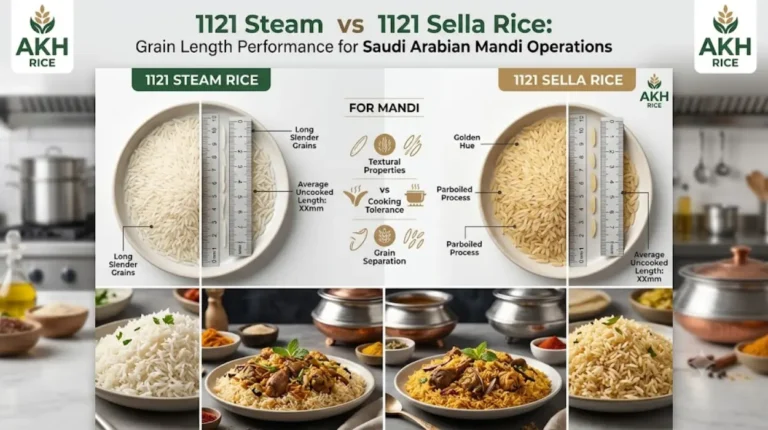
White rice undergoes milling and polishing. Steam rice receives controlled steaming before drying and milling. Sella rice undergoes parboiling, drying, and milling. Each method changes grain appearance, texture, and cooking performance.
The distinction between variety and processing grade creates the foundation for comparing Basmati rice quality. The next question is how these grades develop through production.
How Is Basmati Rice Processed?
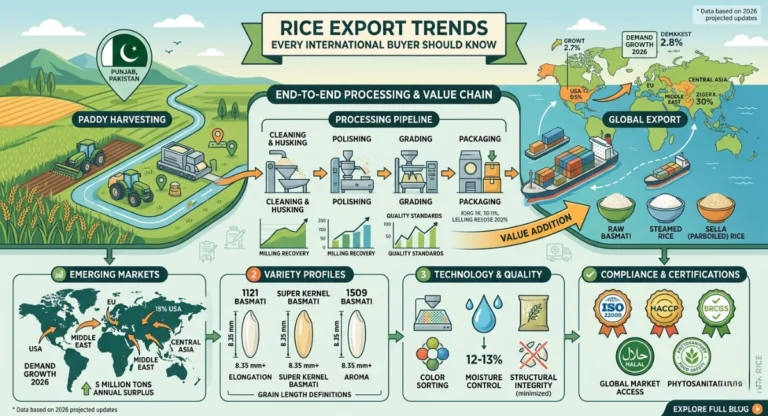
Basmati rice processing follows nine main stages: paddy cleaning, dehusking, polishing, grading, sorting, optional parboiling, drying, inspection, and packaging. Each stage controls a specific quality attribute. The exact sequence depends on the selected processing method and finished product specification.
How Does Paddy Become Finished Basmati Rice?
Paddy is harvested rice that still contains its protective husk. Processing removes the husk, separates impurities, and prepares the edible grain for grading.
- Clean the paddy: Remove stones, dust, straw, and other foreign material through cleaning equipment.
- De-husk the grain: Separate the outer husk from the rice kernel using a dehusking machine.
- Separate the brown rice: Remove remaining husk and separate unhusked paddy from dehusked kernels.
- Polish the grain: Remove bran layers to produce the required white rice appearance.
- Grade the grain: Separate kernels according to length, broken percentage, and other specification requirements.
- Sort the grain: Remove discoloured, damaged, immature, and foreign kernels through sorting equipment.
- Parboil the rice: Apply controlled soaking, steaming, and drying for Sella or Steam processing.
- Dry the rice: Reduce moisture to a suitable level for storage and milling.
- Inspect and package: Verify quality attributes and pack the finished rice according to buyer specifications.
Parboiling changes the structure of the rice kernel. White rice follows a conventional milling route. Steam and Sella processing apply heat before the final milling stage.
How Does Parboiling Change Basmati Rice?
Parboiling involves soaking, heating, steaming, and drying paddy or rice before milling. Sella processing strengthens the grain structure and produces a firmer, more separate cooked rice texture. Steam processing also uses heat and produces a distinct cooking profile.
The term Sella commonly refers to parboiled rice. Golden Sella receives additional drying and processing that produces a golden or yellow appearance. White Sella retains a lighter appearance after parboiling.
The processing method affects colour, texture, cooking time, and resistance to breakage. These differences explain why two rice products from the same variety have different commercial uses.
Which Basmati Rice Quality Attributes Matter Most?
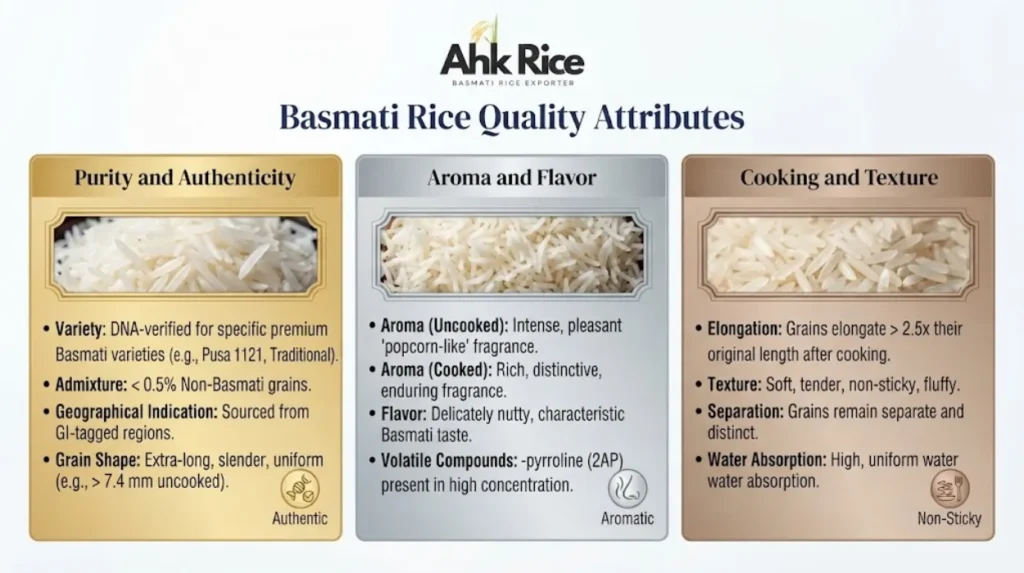
Grain length, broken percentage, aroma, moisture, colour, purity, and cooking performance form the main Basmati rice quality attributes. Buyers compare these values to match rice with retail, restaurant, and wholesale requirements. A single attribute does not define the complete grade.
How Does Grain Length Affect Rice Quality?
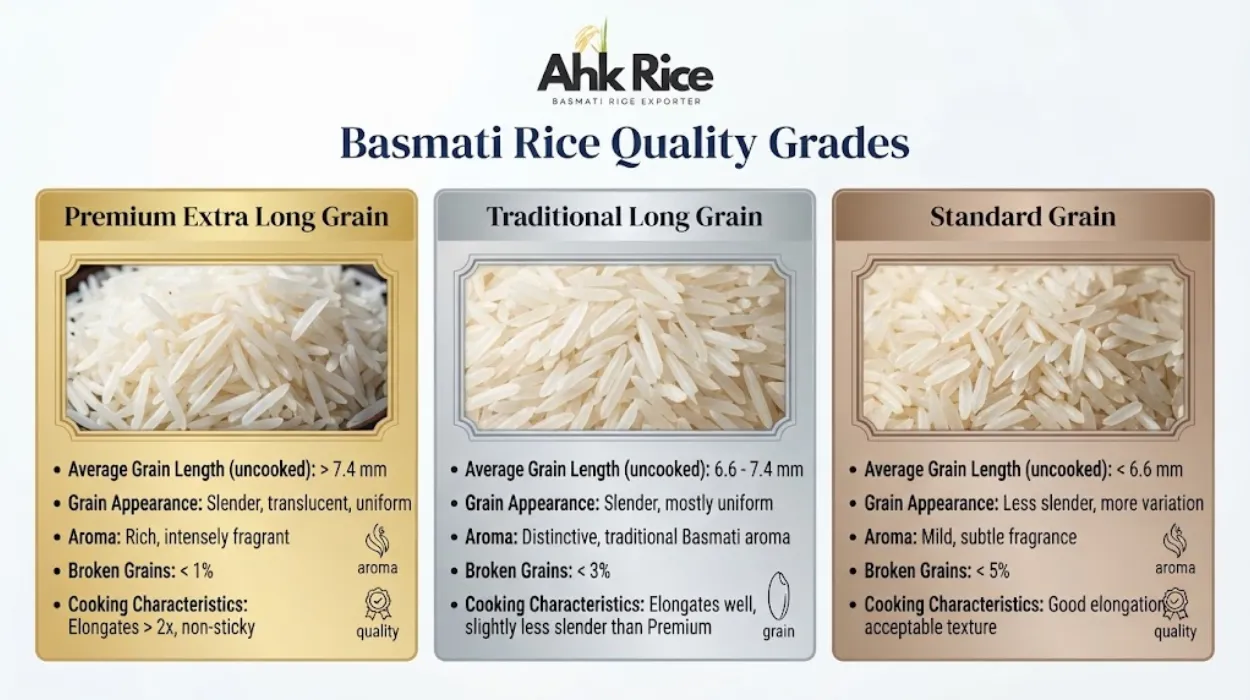
Grain length measures the physical length of the rice kernel. 1121 Basmati commonly measures approximately 8.05–8.30 mm in raw form, depending on the specification and measurement method. Longer grains create a distinct visual appearance after cooking.
Super Kernel Basmati typically has a long, slender grain profile. 1509 Basmati also provides long grains, with specifications varying by crop, processing, and supplier.
Grain length alone does not establish quality. Uniformity, broken percentage, moisture, and cooking performance also influence the finished product.
Why Does Broken Percentage Matter?
Broken percentage measures the proportion of rice kernels that break during milling or handling. A lower broken percentage produces a more uniform appearance and supports premium retail and foodservice specifications.
A specification such as 5% broken allows a limited quantity of broken kernels. A 100% sortex specification describes a sorting requirement, not a guarantee of zero broken grains.
Buyers compare broken percentage with their intended use. Retail packs often require strong visual uniformity. Restaurants focus on cooking performance and portion consistency.
How Do Moisture and Purity Affect Storage?
Moisture describes the water content of rice kernels. Controlled moisture supports stable storage and reduces quality problems linked to excess moisture. Foreign matter measures unwanted materials such as stones, husk, dust, and other non-rice particles.
Moisture content, foreign matter, damaged grains, and discoloured grains belong in a complete quality specification. These attributes support inspection and help buyers verify the condition of a shipment.
Rice storage also depends on temperature, humidity, packaging, and warehouse hygiene. A quality grade cannot replace appropriate storage conditions.
What Does Rice Aroma Indicate?
Aroma describes the characteristic fragrance released by Basmati rice before and after cooking. Traditional Basmati aroma develops from genetic characteristics and influences consumer perception of rice quality.
1121, Super Kernel, and 1509 have distinct aromatic profiles. Aroma intensity varies with variety, crop conditions, storage, and processing.
Aroma testing requires a defined evaluation method. Buyers should compare samples under the same cooking conditions rather than relying only on raw grain fragrance.
The main quality attributes explain how buyers evaluate rice. The next section identifies the grades and varieties used in commercial procurement.
Which Basmati Rice Grades Are Available?
Pakistan Basmati rice is available in White, Steam, Sella, and Golden Sella processing grades. Important varieties include 1121, Super Kernel, and 1509. Each combination creates a different product specification. Buyers select the combination according to cooking requirements, price, and market demand.
What Is 1121 Basmati Rice?
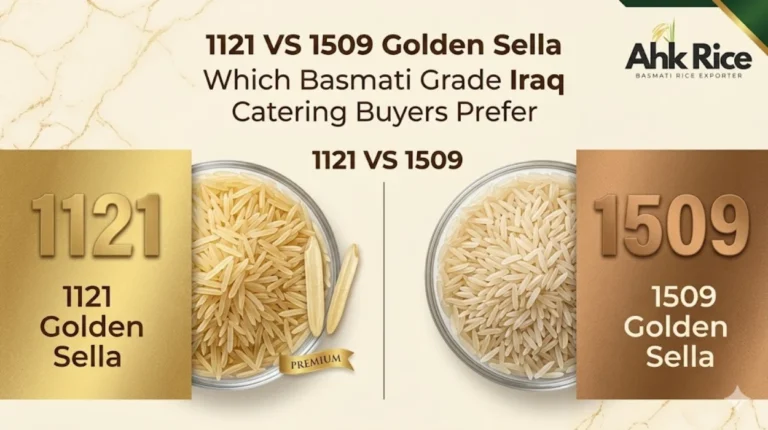
1121 Basmati is a long-grain Pakistani rice variety recognised for its exceptional grain length and aromatic cooking profile. 1121 White, 1121 Steam, and 1121 Golden Sella are common commercial specifications.
1121 White provides a bright appearance and traditional Basmati cooking characteristics. 1121 Steam uses heat processing before milling. 1121 Golden Sella provides a firmer grain structure and golden colour.
What Is Super Kernel Basmati Rice?
Super Kernel Basmati is a traditional Pakistani long-grain Basmati variety. Super Kernel White, Steam, and Sella are used in retail, wholesale, and foodservice supply.
Super Kernel has a long, slender appearance and aromatic cooking profile. Buyers compare its grain length, broken percentage, moisture, and cooking performance with other Basmati varieties.
What Is 1509 Basmati Rice?
1509 Basmati is a Pakistani long-grain rice variety used in domestic and export markets. 1509 White, 1509 Steam, and 1509 Sella represent common processing options.
1509 offers a long-grain alternative for buyers seeking a defined cooking profile and commercial price specification. Its quality depends on grain uniformity, processing, and the agreed product parameters.
How Do White, Steam, and Sella Compare?
| Attribute | White Basmati | Steam Basmati | Sella Basmati |
|---|---|---|---|
| Processing | Conventional milling | Heat processing | Parboiling |
| Appearance | White | White to cream | Cream or golden |
| Texture | Traditional | Firmer | Firm and separate |
| Cooking | Traditional Basmati profile | Heat-processed profile | Parboiled profile |
| Common use | Retail and restaurants | Retail and foodservice | Catering and wholesale |
The grade selection depends on the product’s intended use. The next question is where these specifications are commonly used.
Where Are Basmati Rice Quality Grades Used?
Basmati rice quality grades support procurement across retail, wholesale, restaurants, catering, and private-label packaging. Each channel requires a different balance of appearance, cooking performance, price, and packaging. Buyers match the product specification with customer expectations.
Which Grades Suit Retail Buyers?
Retail buyers often compare grain appearance, aroma, broken percentage, and packaging format. 1121 White and 1121 Steam serve long-grain retail requirements, while Super Kernel and 1509 provide additional product options.
Retail packaging includes consumer bags such as 1 kg, 2 kg, 5 kg, and 10 kg. The selected grade must match the target retail segment and cooking expectations.
Which Grades Suit Restaurants and Catering?
Restaurants and catering operators focus on cooked rice texture, grain separation, cooking yield, and consistency. 1121 Steam, 1121 Sella, and Super Kernel Sella provide options for foodservice specifications.
Large kitchens often purchase rice in 25 kg or 40 kg bags. Commercial buyers compare cooking results using a controlled sample process before placing larger orders.
Which Grades Suit Wholesale and Private Label?
Wholesale buyers compare grade consistency, cost, packaging, and supply continuity. White, Steam, and Sella allow wholesalers to serve different customer segments.
Private-label buyers require a defined product specification and packaging design. Packaging can include the buyer’s brand, bag size, labelling, and product information. The specification must remain consistent across production batches.
The use cases show why one Basmati grade does not serve every buyer. The next section covers the markets and quality requirements associated with these products.
Which Markets Import Pakistani Basmati Rice?
Pakistani Basmati rice reaches markets across the Middle East, Asia, Europe, and other regions. Importers compare grain specifications, processing grades, food safety requirements, documentation, and packaging rules before procurement. Market requirements vary by buyer and destination.
Which Middle Eastern Markets Source Basmati Rice?
Middle Eastern markets include the United Arab Emirates, Saudi Arabia, Qatar, and Iraq. 1121, Super Kernel, and 1509 serve retail, wholesale, and catering applications.
Importers compare White, Steam, and Sella according to customer demand. Catering buyers often focus on cooking performance, while retail buyers place greater emphasis on appearance and packaging.
Which Asian Markets Import Pakistani Basmati Rice?
Asian markets include Indonesia, Malaysia, and the Philippines. Long-grain Basmati specifications support retail, foodservice, and wholesale procurement.
Importers compare rice variety, cooking texture, grain length, and packaging. Buyers also review destination-specific food safety and import requirements before shipment.
Which European Markets Import Basmati Rice?
European markets include the United Kingdom and other European countries. Importers evaluate Basmati rice through product specifications, food safety documentation, labelling, and traceability requirements.
Retail and private-label buyers compare grain quality, packaging, and documentation. Importers also verify compliance with applicable food safety and labelling regulations.
Market selection does not determine a single correct grade. The buyer’s product specification and destination requirements establish the appropriate combination.
Which Certifications Apply to Basmati Rice?
Basmati rice certifications and quality documents verify product safety, processing controls, traceability, and compliance. The applicable documents depend on the destination, buyer, and shipment specification. A certification does not replace laboratory testing or product inspection.
What Does HACCP Certification Mean?
HACCP stands for Hazard Analysis and Critical Control Points. HACCP identifies food safety hazards and establishes controls at important processing stages. Rice processors use HACCP systems to manage risks linked to contamination, handling, and processing.
What Does ISO 22000 Certification Mean?
ISO 22000 is an international food safety management system standard. ISO 22000 combines food safety management with hazard control and operational procedures. It supports systematic food safety management across the supply chain.
What Does Phytosanitary Certification Mean?
A phytosanitary certificate is an official plant health document issued by the competent authority. The certificate confirms that a consignment meets applicable plant health requirements for the destination country.
Rice shipments require destination-specific documentation. Buyers should verify the required documents before arranging export.
What Other Documents Support Quality Verification?
Common export documents include:
- Certificate of analysis
- Certificate of origin
- Phytosanitary certificate
- Commercial invoice
- Packing list
- Fumigation certificate
- Inspection report
The exact requirements depend on the importing country and buyer contract. Certification and documentation support the quality verification process.
What Are Common Misconceptions About Basmati Rice Grades?
Basmati rice quality grades do not depend on grain length alone. Variety, processing, broken percentage, moisture, purity, aroma, and cooking performance all contribute to the finished specification. Buyers need a complete specification rather than a single quality claim.
Does Longer Grain Always Mean Better Quality?
Longer grain does not automatically mean better quality. A longer grain with high broken percentage or poor cooking performance does not satisfy every buyer’s requirements. Grain length must be evaluated with uniformity and cooking results.
Is Golden Sella a Separate Rice Variety?
Golden Sella is a processing grade, not a separate variety. 1121 Golden Sella and Super Kernel Golden Sella combine a rice variety with parboiling and drying. The same distinction applies to White and Steam products.
Does 100% Sortex Mean Zero Broken Rice?
100% Sortex describes a sorting process or sorting specification. The term does not automatically mean zero broken grains. Buyers should verify the agreed broken percentage and sorting requirements.
Does Premium Packaging Guarantee Premium Rice?
Packaging does not determine rice quality. A premium package requires a matching product specification, verified quality, and appropriate storage. Packaging protects the product and communicates its identity to the buyer.
Understanding these misconceptions helps buyers interpret specifications accurately. The final section connects quality grades with the next stage of procurement planning.
How Should Buyers Compare Basmati Rice Quality Grades?
Buyers should compare variety, processing grade, grain length, broken percentage, moisture, purity, cooking performance, packaging, and documentation. A defined specification creates a reliable basis for sample approval and procurement. The comparison should match the buyer’s intended market and product use.
What Should a Basmati Rice Specification Include?
A complete specification should identify the variety, processing method, grain length, broken percentage, moisture, foreign matter, packaging, and inspection requirements. 1121 Steam 5% Broken in 25 kg bags provides an example of a defined product specification.
The buyer should also specify the crop year, quantity, destination, and required documents. These details help suppliers prepare consistent samples and commercial offers.
How Does Packaging Connect With Quality Grades?
Packaging protects rice during handling, storage, and transport. White, Steam, and Sella products require packaging that matches the grain condition, storage period, and buyer’s distribution channel.
Packaging formats include PP bags, woven bags, laminated bags, and retail pouches. Each format serves different handling and branding requirements.
The next stage is comparing private-label and standard packaging options. [Insert Link to MOFU Article] should connect readers to that comparison.
Where Should the MOFU Article Link Be Inserted?
Place the MOFU link in the packaging paragraph under “How Does Packaging Connect With Quality Grades?” The contextual anchor should be:
private label vs standard rice packaging
This placement connects the informational discussion of packaging with the reader’s next procurement question. It also follows the natural progression from product quality to packaging decisions.
Basmati rice quality grades provide the foundation for product comparison. Buyers who understand variety, processing, specifications, and certification can evaluate rice more accurately and select products that match their market requirements.