When Is Basmati Rice Harvested in Pakistan and How Does Crop Year Work?
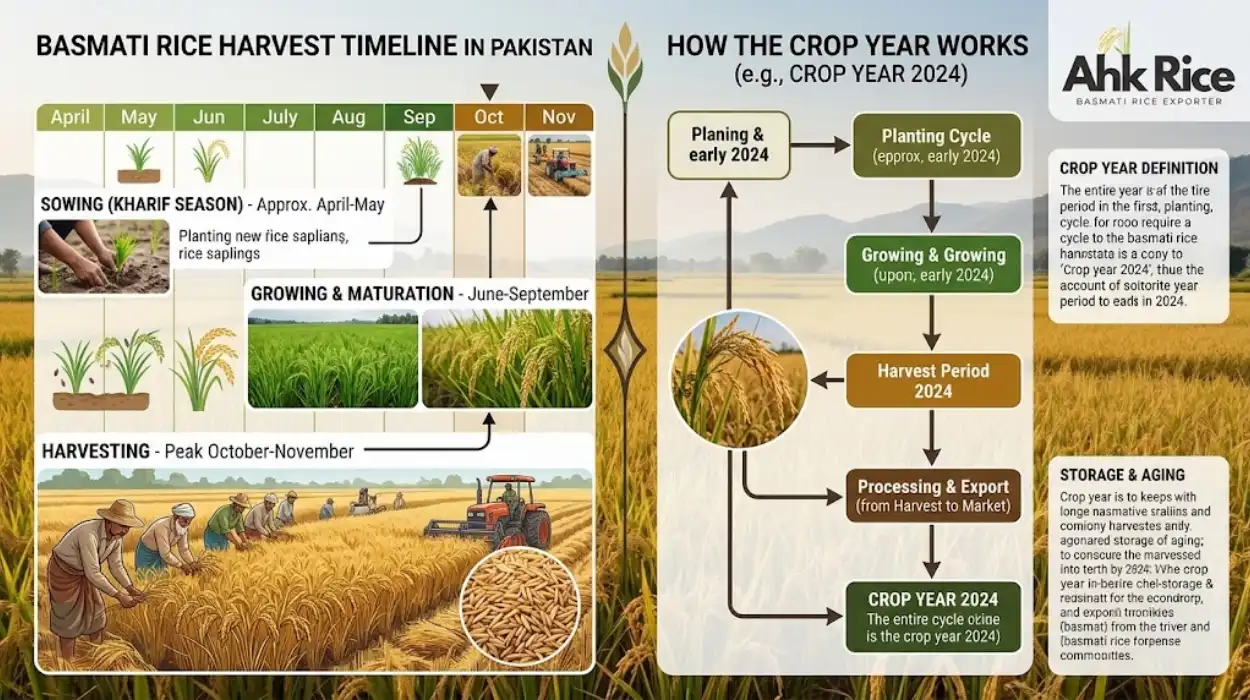
Basmati rice in Pakistan is harvested mainly from September to November, depending on variety, planting date, weather, and location. The crop year identifies the harvest season, while milling, storage, and aging determine when rice becomes ready for different markets.
Basmati is a long-grain aromatic rice traditionally cultivated in Punjab, Pakistan. Its growing areas include districts such as Hafizabad, Gujranwala, Sheikhupura, Narowal, and Sialkot. Farmers grow Basmati during the summer growing season and harvest the mature crop in autumn.
The exact harvesting date depends on the variety. Early-maturing varieties reach harvest sooner than traditional, longer-duration varieties. Weather conditions, irrigation, planting schedules, and crop maturity also affect the calendar.
The harvest season matters because freshly harvested paddy contains more moisture than rice prepared for commercial storage. It requires careful drying before milling and storage. Harvest timing also establishes the crop-year identity used by traders, millers, importers, and retailers.
A crop harvested in autumn 2026 is generally identified as the 2026 crop. Its crop-year identity does not automatically change when the rice is milled, packed, shipped, or sold in 2027.
How Does the Basmati Rice Crop Year Work?
A Basmati crop year normally refers to the year in which farmers harvest the paddy. Traders use this identity to distinguish new-crop rice from previous harvests, track inventory, compare quality, and understand the age of rice offered for milling, export, or retail.
The crop-year system begins with cultivation and ends with the commercial use of the harvested rice. Farmers plant the crop, monitor its development, and harvest mature paddy. Rice mills then dry, clean, process, and store the grain.
A simple example explains the difference between crop year and rice age:
- 2026 crop: Paddy harvested during the 2026 harvest season.
- Milled in 2026: The paddy is processed into rice during the same year.
- Exported in 2027: The rice retains its 2026 harvest identity.
- Sold as aged rice: The seller must establish the storage period and aging history rather than relying only on the year printed on the packaging.
Crop-year labels are not identical to aging claims. A 2025 crop sold in late 2026 has an earlier harvest date than a 2026 crop, but its actual age depends on the harvest date and the date of sale.
Importers should therefore request the crop year, harvest period, milling date where available, storage conditions, and batch traceability. These details establish a more accurate picture of the rice than the phrase old crop alone.
When Are Different Pakistani Basmati Varieties Harvested?
Pakistani Basmati varieties follow different maturity schedules. Early-maturing 1509 generally reaches harvest before traditional Basmati varieties, while 1121 and Super Kernel harvesting usually falls within the autumn season. Actual dates depend on planting time, location, and crop maturity.
The three varieties serve different commercial purposes, and their harvest schedules influence when mills receive new paddy.
| Variety | Typical crop characteristics | Harvest timing |
|---|---|---|
| 1509 Basmati | Shorter maturity period, high yield potential, long grain | Generally September to October |
| 1121 Basmati | Extra-long grain, premium elongation after cooking | Generally October to November |
| Super Kernel Basmati | Traditional Pakistani aromatic Basmati | Generally October to November |
These are indicative harvest windows, not fixed national dates. Individual farms harvest according to field maturity, local climate, and planting schedules.
1509 Basmati
1509 generally matures in approximately 95–105 days under suitable growing conditions. Its shorter growing period allows farmers to harvest it earlier than traditional, longer-duration varieties.
Early harvesting gives mills access to new-crop 1509 before much of the later Basmati crop arrives. Importers purchasing 1509 Steam or 1509 White should still verify the actual harvest date and batch specifications.
1121 Basmati
1121 is known for its extra-long grain and pronounced elongation after cooking. Its crop usually reaches maturity later than 1509, although planting dates and weather influence the actual schedule.
The commercial grades include 1121 Steam, 1121 Golden Sella, 1121 Creamy Sella, 1121 Brown, and broken rice. These grades result from different processing methods or grain selections. The grade name alone does not establish the crop year.
Super Kernel Basmati
Super Kernel is a traditional aromatic Basmati variety cultivated in Punjab. It is valued for its aroma, grain appearance, and cooking characteristics.
Harvesting normally takes place during the autumn Basmati season. Millers assess grain moisture, maturity, foreign material, and broken-grain levels before accepting paddy for processing.
How Is Basmati Rice Harvested and Processed Step by Step?
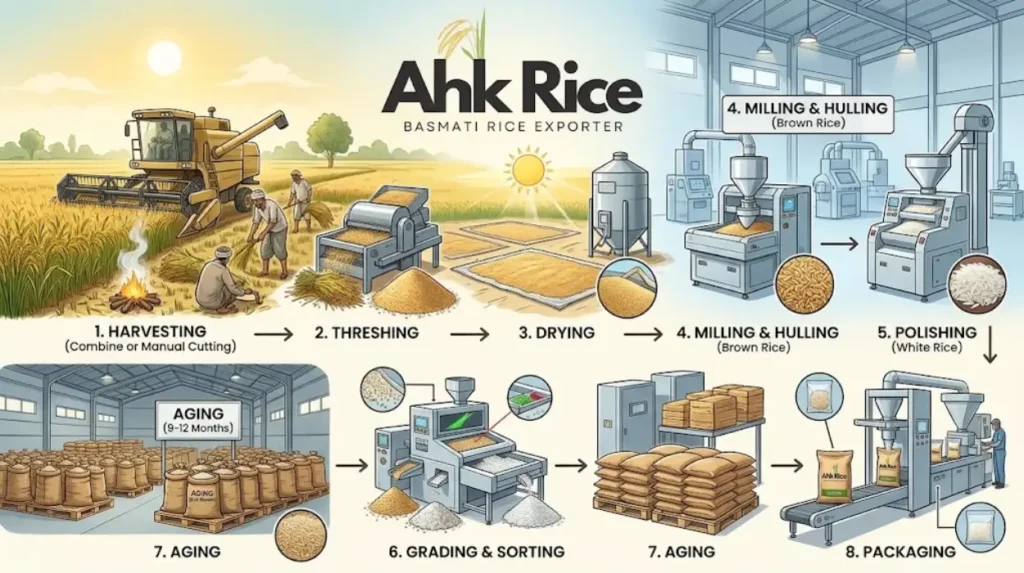
Basmati production moves through field harvesting, threshing, drying, cleaning, milling, grading, and storage. Each stage controls a different quality factor, including moisture, grain breakage, purity, appearance, and shelf stability before rice enters domestic or export distribution.
1. Field maturity and harvesting
Farmers monitor grain development and harvest when the crop reaches suitable maturity. Harvesting too early produces immature grains, while delayed harvesting increases exposure to weather and field losses.
2. Threshing and collection
Threshing separates paddy grains from the harvested plants. The collected paddy is transported for drying and preliminary cleaning. Careful handling reduces contamination and physical damage.
3. Drying and moisture control
Paddy is dried to a level suitable for safe storage and subsequent milling. Drying must be controlled because excessive heat or uneven moisture removal causes fissures, which increase broken grains during milling.
4. Cleaning and milling
Equipment removes dust, stones, and other foreign material. Milling removes the husk, while further processing removes bran when producing white rice. Brown rice retains its bran layer.
5. Grading and sorting
Graders separate rice according to grain length, broken percentage, colour, and other contract specifications. Optical sorters remove selected discoloured grains and defects. Laboratories verify moisture and other required quality parameters.
6. Storage, packing, and dispatch
Processed rice is stored in clean, dry conditions and packed in suitable bags. Export batches are identified and prepared against the agreed grade, packaging, inspection, and shipping documentation requirements.
The exact sequence varies by mill. Parboiled rice production includes soaking and steaming paddy before drying and milling. This processing method produces grades such as Golden Sella and changes the grain’s colour and cooking behaviour.
What Are the Main Benefits of Understanding the Crop Year?
Knowing the crop year helps buyers compare rice batches, plan purchases, evaluate aging claims, and maintain traceability. It also supports inventory rotation, quality inspections, and purchasing decisions based on the cooking performance required by retailers, restaurants, and food distributors.
For importers, the crop year provides a starting point for evaluating freshness and storage history. It helps distinguish newly harvested supplies from older inventory and supports negotiations over specifications and pricing.
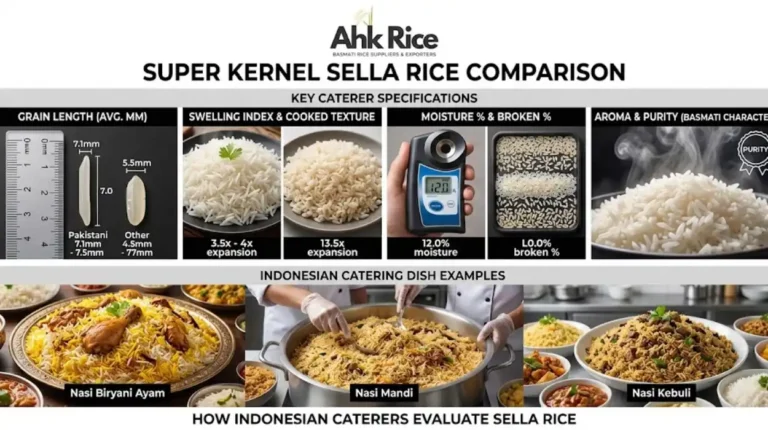
Retailers benefit from consistent grain appearance, aroma, and cooking performance across replenishment orders. Foodservice operators need predictable water absorption, grain separation, and cooking yield, particularly when preparing biryani, pulao, and large-volume rice dishes.
Crop-year knowledge also helps prevent inventory confusion. Warehouses can identify batches by harvest season, milling date, and lot number, then rotate stock according to documented storage conditions and product requirements.
However, an earlier crop year does not automatically guarantee superior rice. Quality depends on variety, maturity, drying, milling, storage, and handling. Buyers should combine crop-year records with laboratory results and cooking tests.
How Does Aging Change Basmati Rice Quality and Pricing?
Aging is the controlled storage of rice after harvest or processing to develop desired cooking characteristics. Properly aged Basmati often cooks with firmer, more separate grains, while price differences depend on variety, grade, storage costs, market demand, and verified age.
New-crop rice enters the market relatively soon after harvest and processing. Its moisture history, storage duration, and processing method influence its cooking behaviour. Properly aged rice generally absorbs water differently and retains better grain separation when cooked under suitable conditions.
Aging does not mean leaving rice in an uncontrolled warehouse. Storage requires protection from moisture, pests, contamination, excessive temperature fluctuations, and strong odours. Poor conditions degrade quality regardless of crop year.
The market distinguishes new-crop and aged rice according to buyer expectations. Some buyers prioritise recent harvests and supply availability. Others prefer aged Basmati for premium retail, biryani preparation, and foodservice applications.
Pricing reflects more than age. Variety, raw grain length, broken percentage, moisture, milling quality, packaging, order volume, freight, and delivery terms all affect the final quotation. An aged-rice premium should therefore be supported by traceable batch records and agreed specifications.
For a detailed commercial comparison, buyers can examine how new-crop and aged Basmati rice differ in cooking results and pricing for USA retail and foodservice. That comparison connects harvest timing with the purchasing requirements of US distributors and food businesses.
Which Grades and Processing Types Are Available After Harvest?
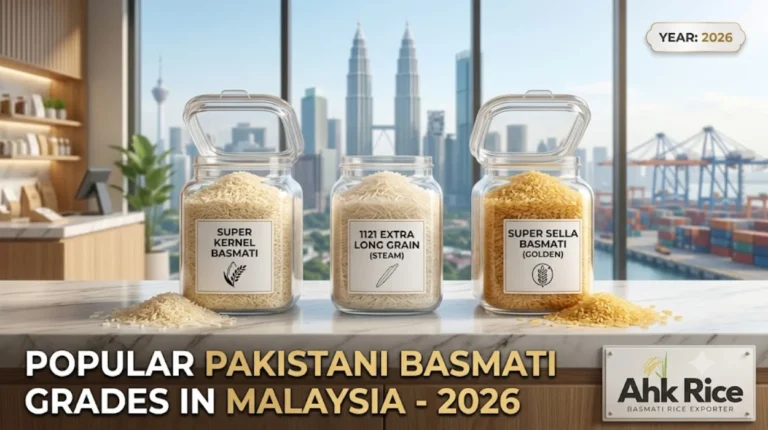
Pakistani Basmati is sold in multiple varieties, grain grades, and processing types. Common commercial options include 1121, Super Kernel, and 1509, supplied as white, Steam, Golden Sella, Creamy Sella, Brown, or broken rice according to processing and grading requirements.
The variety identifies the type of rice, while the processing designation describes how the grain is treated. These terms are not interchangeable.
| Grade or type | Processing or grain characteristic | Common application |
|---|---|---|
| 1121 Steam | Steam-treated before milling | Retail, biryani, foodservice |
| 1121 Golden Sella | Parboiled rice with a golden appearance | Catering and bulk foodservice |
| 1121 Creamy Sella | Parboiled rice with a lighter creamy appearance | Wholesale and restaurant supply |
| 1121 Brown | Bran layer retained | Whole-grain retail |
| Super Kernel White | Milled white aromatic Basmati | Retail and traditional cuisine |
| 1509 White | Milled white long-grain rice | Retail and commercial distribution |
| 1509 Steam | Steam-treated rice | Foodservice and wholesale |
| Broken Basmati | Grains separated by length and breakage | Price-sensitive retail and food manufacturing |
Actual availability depends on the mill, crop, and buyer specification. Broken-rice grades should be defined by the agreed broken percentage and grain-size requirements rather than by name alone.
Which International Markets Import Pakistani Basmati Rice?
Pakistani Basmati supplies international markets across the Gulf, Europe, North America, Africa, and Asia. Import demand varies by grain variety, price, aroma, cooking characteristics, packaging, food regulations, and the requirements of retail, wholesale, and foodservice buyers.
In the Gulf, the UAE and Saudi Arabia serve retail, wholesale, catering, and foodservice demand. Importers select premium long-grain varieties for biryani and other rice dishes, while bulk buyers compare grades and landed costs.
In North America, including the United States, Pakistani Basmati serves specialist grocery stores, ethnic retail chains, distributors, and restaurants. Buyers evaluate grain length, aroma, cooking consistency, package size, labelling, and compliance with applicable food-import requirements.
European buyers assess traceability, pesticide residues, contaminants, packaging declarations, and applicable food-safety requirements. Markets in Africa and Asia also purchase Pakistani rice according to local consumer preferences, price points, and distribution needs.
Harvest timing affects procurement planning in every destination. Importers need to allow time for drying, milling, quality approval, packaging, documentation, port handling, and ocean freight. The time between harvest and arrival therefore differs from the crop’s age at the mill.
Which Certifications and Quality Documents Matter for Basmati Exports?
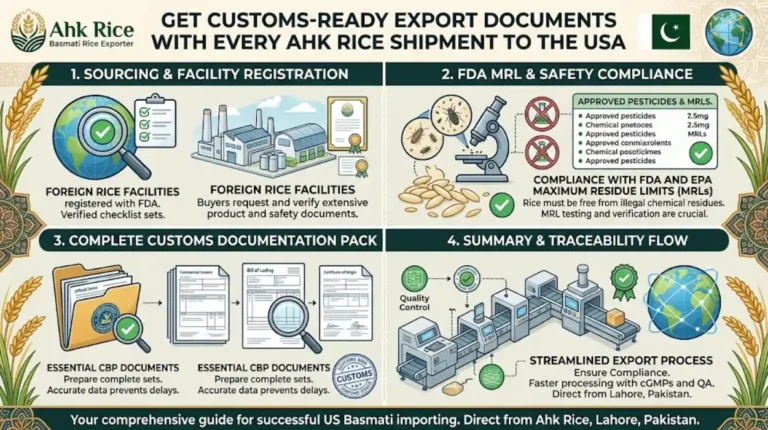
Basmati export documentation establishes product identity, traceability, food safety, and compliance with destination requirements. Depending on the shipment, buyers review quality specifications, certificates of analysis, phytosanitary documentation, certificates of origin, inspection records, and required food-safety certifications.
The crop year should connect to the lot or batch number shown in the supplier’s records. A certificate of analysis, or COA, reports agreed quality parameters, such as moisture, broken percentage, and other specified tests.
A phytosanitary certificate addresses plant-health requirements where applicable. A certificate of origin identifies the product’s declared country of origin. Commercial invoices, packing lists, and transport documents support the shipment’s customs clearance.
Certifications such as HACCP-based food-safety systems and ISO 22000 demonstrate structured food-safety management when a supplier holds valid certification within the relevant scope. Halal certification applies where required by the buyer or destination market.
Importers must verify current destination rules rather than assume one document satisfies every market. Requirements vary by country, product, processing method, and shipment circumstances.
What Common Problems and Misconceptions Affect Crop-Year Decisions?
The most common mistakes involve confusing harvest year with milling date, treating all varieties as having identical maturity periods, and assuming older rice always cooks better. Buyers should verify traceability, storage conditions, moisture, grade specifications, and actual cooking performance.
Several misconceptions create avoidable purchasing problems:
- Crop year equals packing year: Incorrect. Rice packed in 2027 can originate from paddy harvested in 2026.
- All Basmati varieties mature together: Incorrect. 1509 generally matures earlier than traditional Basmati varieties, including 1121 and Super Kernel.
- Aged rice is always superior: Incorrect. Poor storage damages older rice, while properly handled new-crop rice can meet demanding specifications.
- Harvest dates guarantee a specific price: Incorrect. Market demand, quality, freight, currency movements, and contract terms influence the price.
- A variety name guarantees identical quality: Incorrect. Grain length, broken percentage, moisture, purity, and processing standards differ between batches.
Buyers should request a crop-year declaration, harvest period, batch identification, quality report, and representative cooking sample. For commercial contracts, the agreed specification should define acceptable moisture, broken percentage, grain length, packaging, inspection procedures, and shipment conditions.
What Frequently Asked Questions Explain Basmati Harvesting and Crop Years?
Basmati harvesting and crop-year questions help buyers understand when new rice enters the market, how long aging takes, and which records establish a batch’s identity. Harvest dates vary by variety and region, so documented supplier information remains essential.
When does Basmati rice harvesting start in Pakistan?
Harvesting generally starts in September, with early-maturing varieties such as 1509 often reaching maturity before traditional varieties. The main Basmati harvest continues through October and November, depending on weather, planting dates, and field conditions.
What does the 2026 crop year mean for Basmati rice?
The 2026 crop year generally identifies paddy harvested in 2026. Rice from that crop retains its harvest-year identity when it is milled, packed, stored, or exported in 2027.
Is new-crop Basmati better than aged Basmati?
Neither is automatically better. New-crop rice offers recently harvested supply, while properly aged rice often provides firmer grains and improved separation after cooking. The best choice depends on the variety, storage history, cooking application, and buyer’s requirements.
How long should Basmati rice be aged before export?
There is no single mandatory aging period for every Basmati variety or export contract. Some rice is sold relatively soon after harvest, while premium products are stored for months or longer. Buyers should verify the actual aging period and cooking performance.
How can importers verify a Basmati crop year?
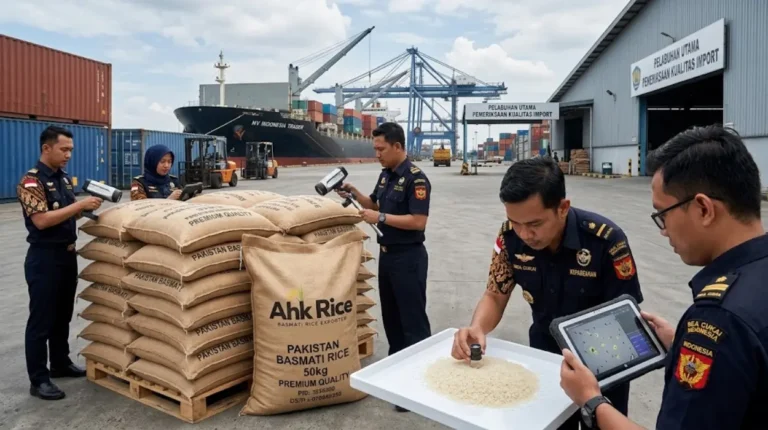
Importers should request the declared harvest year, lot identification, milling records where available, storage history, and a certificate of analysis. Independent inspection and cooking tests provide additional evidence of compliance with the agreed specification.