Which Indonesian Hotels and Resorts Use Imported Basmati Rice?
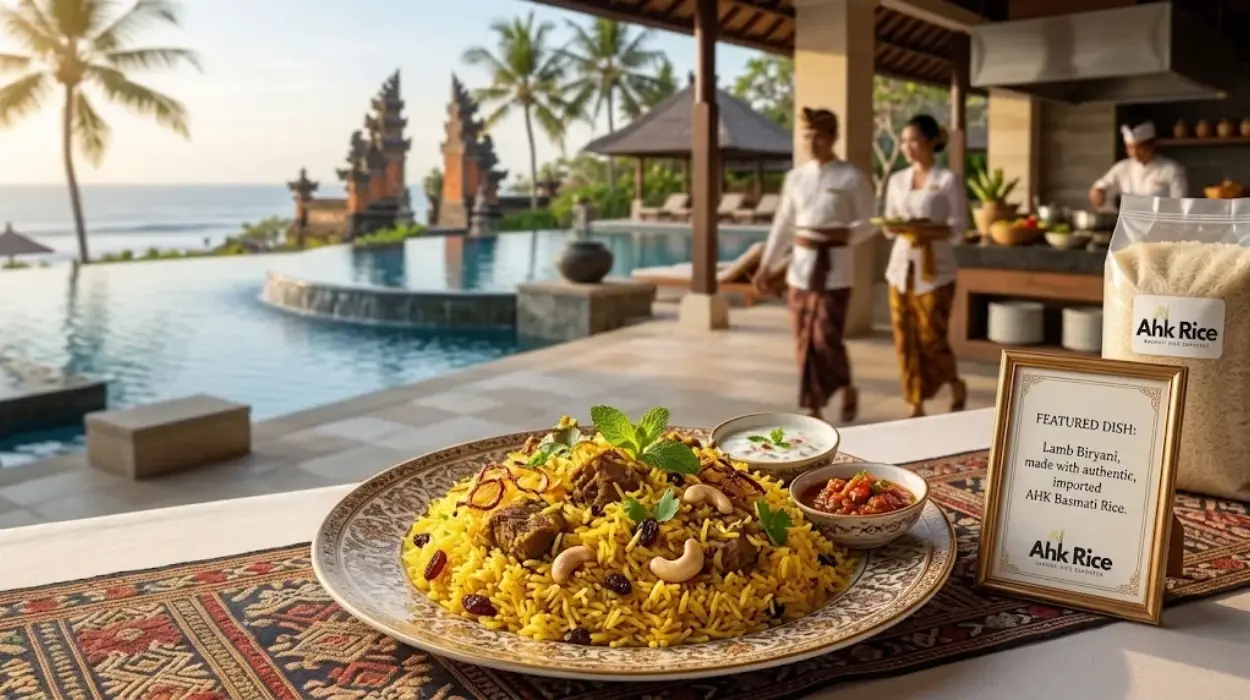
Imported Basmati rice is used by Indonesian hotels and resorts that serve Indian, Pakistani, Middle Eastern, South Asian and international dishes. The strongest demand appears in large hotels, luxury resorts, restaurants, banquet operations and properties serving international tourists.
The rice is selected for grain length, aroma, cooking performance, holding stability and consistency. Bali and Jakarta are important hotel markets because both cities contain large hospitality sectors, international restaurants, wedding venues and business hotels. Imported Basmati is used in dishes such as biryani, pilaf, pulao, steamed rice and rice-based buffet meals.
The main imported types include 1121, Super Kernel, and 1509 Basmati rice. Processing creates different commercial forms such as Raw, Steam, Golden Sella and Creamy Sella. Each form behaves differently during cooking and buffet holding.
What is imported Basmati rice for Indonesian hotels?
Imported Basmati rice for Indonesian hotels is long-grain aromatic rice sourced from producing countries such as Pakistan and India, then imported for hotel kitchens, restaurants, banquets, buffets and resort food operations serving international cuisines.
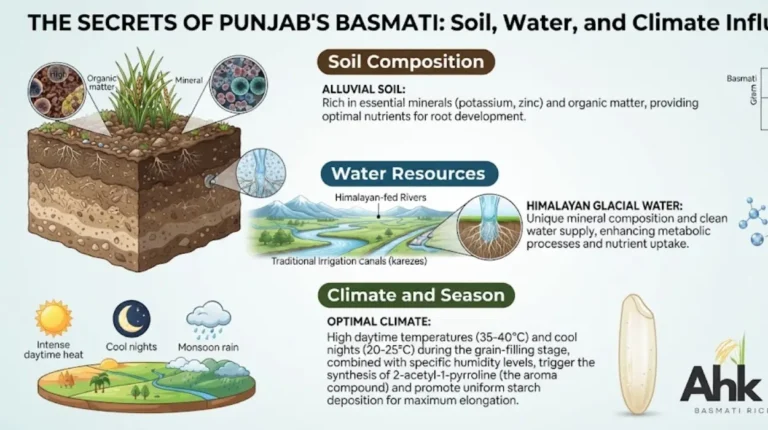
Basmati is a distinct aromatic rice category known for its long grain, fragrance and cooked texture. Pakistani Basmati originates mainly from Punjab, where suitable soil, climate and agricultural conditions support production.
Hotels do not select Basmati only by its raw grain appearance. Purchasing teams evaluate several characteristics:
- Raw grain length
- Broken percentage
- Moisture
- Aroma
- Grain uniformity
- Cooking expansion
- Texture
- Holding performance
- Packaging
- Food safety documentation
- Origin documentation
A hotel serving biryani needs different performance from a property using rice for a general buffet. The recipe, cooking method and service period determine the most suitable grade.
Where is Basmati rice imported for Indonesian hotels grown?
Pakistani Basmati is primarily cultivated in Punjab, especially areas including Gujranwala, Hafizabad, Sheikhupura, Narowal and Sialkot, while Indian Basmati comes mainly from northern Indian producing regions with similar long-grain rice conditions.
Punjab is a major production region for Pakistani Basmati. The crop passes through farming, harvesting, milling, grading and export processing before reaching Indonesian buyers.
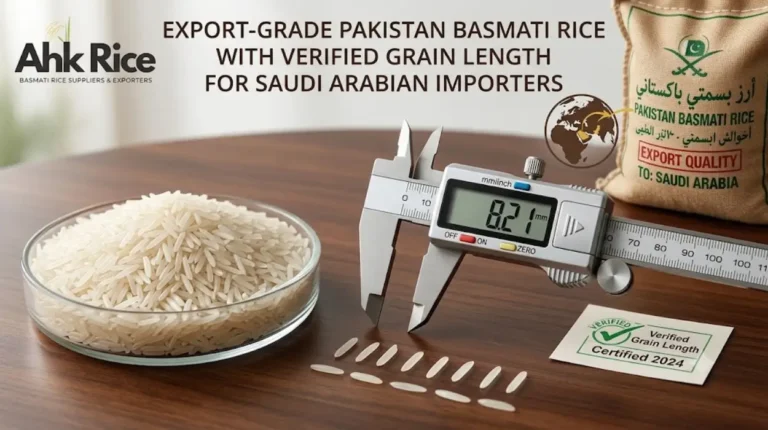
Pakistani Basmati includes several commercially important varieties. 1121 Basmati is known for very long grain length and strong cooked elongation. Super Kernel Basmati combines aromatic characteristics with a premium long-grain profile. 1509 Basmati is another long-grain variety used in commercial foodservice.
The origin also matters for documentation. Export shipments use commercial documents and origin records that identify the producing country and shipment details. Indonesian importers then complete the required import and food-control procedures.
How is imported Basmati rice processed before reaching an Indonesian hotel?
Imported Basmati moves through a controlled chain from paddy procurement to milling, cleaning, grading, sorting, quality testing, packaging, export documentation, shipping, Indonesian import clearance and final hotel-kitchen use.
1. Paddy procurement
Rice production begins with paddy. Suppliers purchase paddy from suitable growing areas according to variety, crop quality and harvest requirements.
2. Drying and storage
Harvested paddy requires controlled moisture before milling. Proper storage protects the grain from moisture damage, contamination and quality deterioration.
3. Milling
The husk is removed during milling. The resulting brown rice is further processed according to the required commercial form.
4. Whitening and polishing
Rice intended for white commercial grades undergoes whitening and polishing. The objective is to produce clean grains with a consistent appearance.
5. Cleaning
Mechanical cleaning removes foreign material and unwanted particles. Industrial facilities use multiple cleaning stages to prepare rice for grading.
6. Grading
Grading separates rice according to grain size, broken percentage and other physical characteristics. This step creates consistent commercial specifications.
7. Sortex sorting
Optical sorting equipment identifies and removes discoloured or defective grains. Double Sortex processing applies optical sorting twice to achieve a higher level of visual uniformity.
8. Quality testing
Export rice is tested against the agreed specification. Tests cover factors such as moisture, broken percentage, grain dimensions and other quality parameters.
9. Packaging
The finished rice is packed into formats selected for the target market. Hotel and foodservice supply commonly uses larger commercial packs, while branded retail programs use smaller consumer packs.
10. Export preparation
The exporter prepares the commercial invoice, packing list, certificate of origin, phytosanitary documentation and other documents required for the shipment.
11. Import and distribution
The shipment reaches Indonesia through the selected port. After import procedures, rice moves through distributors or importers to hotels, restaurants and foodservice operators.
Which Basmati grades are available for Indonesian hotels?
Indonesian hotel buyers can source 1121, Super Kernel and 1509 Basmati in Raw, Steam, Golden Sella and Creamy Sella forms, with selection based on grain length, cooking method, buffet holding, menu requirements and purchase specifications.
1121 Basmati is widely associated with long grain and strong cooked elongation. It suits premium biryani, pulao and banquet menus where grain appearance matters.
Super Kernel Basmati is an aromatic Pakistani Basmati variety with a premium long-grain profile. It fits South Asian restaurant menus and international hotel kitchens.
1509 Basmati is valued for commercial efficiency and long grain performance. It suits high-volume foodservice where consistent output and cost control are important.
The processing form also changes kitchen performance.
Steam Basmati retains a white appearance and provides a fresh cooked presentation. It fits hotel buffets where rice is cooked and served within a shorter service cycle.
Golden Sella Basmati is parboiled and has a firmer grain structure. It performs well in biryani, banquet service and buffet operations requiring longer holding.
Creamy Sella provides another parboiled option with a lighter appearance than Golden Sella. It is used where the buyer wants parboiled cooking performance without the stronger golden appearance.
Why do hotels and resorts use imported Basmati rice?
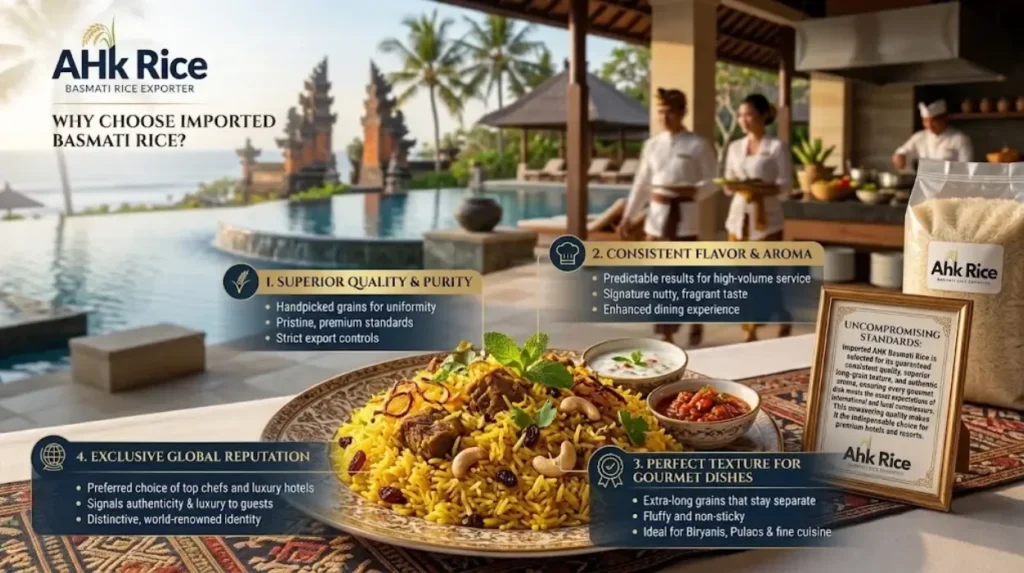
Hotels use imported Basmati because its long grain, aroma, cooking expansion and distinct texture support premium South Asian, Middle Eastern and international dishes while creating consistent presentation across restaurant and banquet service.
The first benefit is grain appearance. Long cooked grains create a recognizable premium presentation in biryani and pilaf.
The second is aroma. Basmati has a characteristic fragrance that differentiates it from many ordinary long-grain rice varieties.
The third is menu compatibility. Hotels serving Indian and Pakistani cuisine require rice that matches traditional cooking techniques.
The fourth is batch consistency. Commercial kitchens need predictable cooking results across repeated service periods.
The fifth is buffet suitability. Parboiled Sella grades provide firm grains that remain separated during extended service.
Which Indonesian hotels and resorts use imported Basmati?
Imported Basmati is most relevant to luxury hotels, international resorts, Indian and Pakistani restaurants, Middle Eastern restaurants, large banquet venues, wedding caterers and properties serving substantial numbers of international guests.
In Bali, resort kitchens serve international tourists alongside local and regional guests. Hotels with Indian, Pakistani, Middle Eastern or Mediterranean menu concepts have a clear reason to stock long-grain aromatic rice.
Jakarta has a different demand structure. Business hotels, international hotel chains, diplomatic events, corporate catering and large banquet operations create demand for imported rice suitable for international menus.
Hotels in other Indonesian tourism and business markets also use imported Basmati when their menus require it. Examples include restaurants inside luxury properties, destination resorts, wedding venues and specialist South Asian restaurants.
The important point is that hotel name alone does not determine rice usage. Procurement depends on the property’s menu, restaurant concept, kitchen volume, supplier contract and required rice specification.
How do Bali and Jakarta hotels select between Steam and Sella Basmati?
Bali and Jakarta hotels select Steam or Sella according to service duration, menu type, cooking method and holding requirements, with Steam suited to fresh white-rice service and Sella suited to biryani and longer buffet holding.
Steam Basmati provides a white cooked appearance and works well when the kitchen prepares rice close to service.
Sella rice undergoes parboiling before final milling. This processing changes the grain structure and produces firmer cooked rice.
For buffet operations, holding time becomes an important purchasing factor. A rice dish served shortly after cooking has different requirements from biryani prepared for a wedding banquet and held during several service periods.
Hotel procurement teams therefore compare grain length, processing type, broken percentage, moisture, cooking yield and holding performance rather than choosing only by brand or country.
For a detailed comparison of these processing forms, the article [Basmati Rice Selection for Bali and Jakarta Hotels: Sella vs Steam for Buffet Holding] provides the relevant MOFU decision framework.
What are common problems when Indonesian hotels buy imported Basmati?
Common problems include inconsistent grain specifications, excessive broken rice, incorrect moisture levels, unsuitable processing types, weak documentation, poor packaging decisions and selecting a grade without testing its cooking and buffet performance.
A hotel can receive long-grain rice that looks correct but performs poorly in its kitchen. Grain length alone does not guarantee suitable cooking performance.
Another problem is selecting Steam when the menu requires extended buffet holding. The rice can behave differently from a parboiled Sella product.
The opposite problem also occurs. Selecting Sella for a menu requiring a fresh white rice presentation can produce an appearance that does not match the restaurant concept.
Documentation is another critical area. Importers need accurate commercial and regulatory documentation that matches the shipment, product and destination requirements.
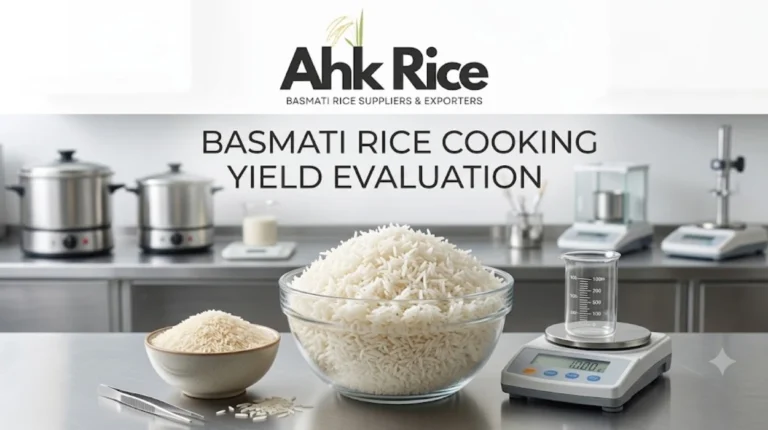
Sample testing prevents many specification problems. A hotel or importer can test cooking expansion, texture, aroma, broken percentage and holding performance before approving a commercial order.
What should Indonesian hotel buyers check before importing Basmati rice?
Hotel buyers should define variety, processing type, grain length, broken percentage, moisture, packaging, quantity, destination, import documentation and cooking performance before approving an imported Basmati specification for regular hotel supply.
A practical specification should identify the exact product instead of using only the term “Basmati rice.”
For example, a buyer can specify 1121 Steam, 1121 Golden Sella, Super Kernel Steam, Super Kernel Golden Sella or 1509 Steam.
The specification should also define the required grain characteristics and quality limits.
A sample should then be cooked using the hotel’s actual recipe. Biryani testing should use the hotel’s normal soaking, water ratio, cooking method and holding period.
This creates a direct connection between laboratory specifications and kitchen performance.
Frequently Asked Questions
Which Basmati rice is best for Indonesian hotel buffets?
Golden Sella is generally suited to buffet operations requiring firm, separate grains and longer holding. Steam Basmati suits fresh service where rice is cooked closer to serving time.
Do Indonesian hotels import Pakistani Basmati rice?
Yes. Pakistani Basmati is used by foodservice businesses serving South Asian and international cuisines. Pakistani varieties include 1121, Super Kernel and 1509.
Is 1121 Basmati suitable for hotels?
Yes. 1121 is suitable for premium biryani, pulao and banquet menus because of its long grain and strong cooked elongation.
What is the difference between Steam and Sella Basmati?
Steam Basmati is processed to retain a white appearance and fresh cooked presentation. Sella is parboiled before final milling and provides firmer grains suited to longer holding.
Do Bali resorts use Basmati rice?
Bali resorts with Indian, Pakistani, Middle Eastern and international restaurant menus use imported Basmati when the menu requires its aroma, grain length and cooking characteristics.
What should a hotel test before buying Basmati?
A hotel should test grain length, broken percentage, moisture, aroma, cooked texture, elongation, water absorption and holding performance using its actual kitchen preparation.