Why Is Supply Chain Visibility Important for Rice Importers?
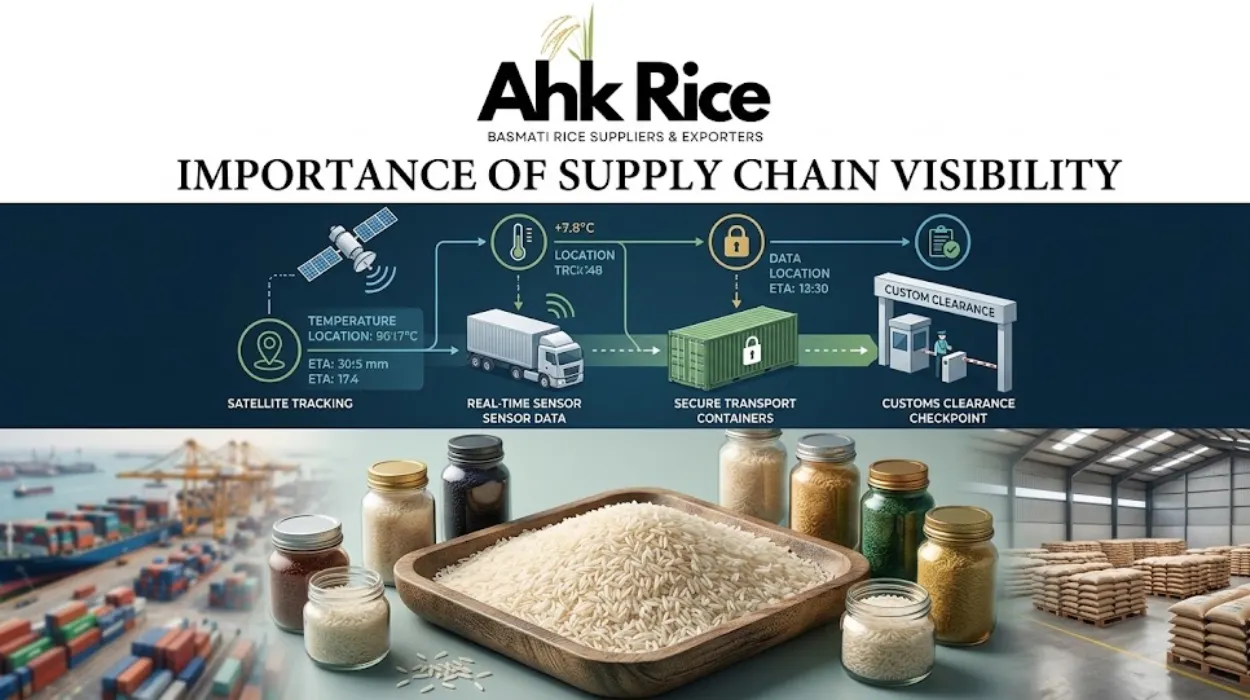
Supply chain visibility gives rice importers a verified view of product identity, quality status, processing, documents, shipment location, and delivery milestones. It connects farm, mill, exporter, laboratory, warehouse, carrier, port, customs, and buyer records so each order can be traced.
Supply chain visibility is the ability to see and verify what happens to a rice order from sourcing through final delivery. It combines physical product information with commercial, quality, logistics, and compliance records.
For an importer, visibility starts before the container moves. The buyer needs to know which rice variety was allocated, which lot entered processing, which specification was approved, which laboratory tests were completed, and which documents correspond to the shipment.
A rice lot is a defined quantity produced, processed, packed, or handled under identifiable conditions. Examples include one production lot of 1121 Basmati, one batch of Super Kernel White Rice, or one shipment of 1509 Steam Basmati.
Visibility becomes important because international rice procurement involves multiple handoffs. A single order can involve farmers, paddy suppliers, mills, laboratories, packaging facilities, exporters, freight forwarders, shipping lines, ports, customs authorities, and importers.
The information must remain connected across these stages:
How does rice supply chain visibility work?
Rice supply chain visibility works by assigning identity to each lot and linking physical movement with digital records. A buyer follows the same lot from paddy intake through milling, grading, packing, inspection, container loading, export clearance, transport, import clearance, and delivery.
The process begins with product identification. The purchase order establishes the variety, grade, origin, crop information, moisture requirement, broken-grain tolerance, foreign-matter limit, packaging format, quantity, and other commercial specifications.
The exporter then assigns a lot or batch reference. That identifier should appear across production records, laboratory reports, packing records, and shipment documentation.
Processing creates the next visibility stage. Paddy enters cleaning, dehusking, milling, polishing, sorting, grading, and packaging. Parboiled rice follows additional soaking, steaming, drying, and milling stages. Steam rice follows controlled steaming before drying and final processing.
Quality control connects testing to the physical lot. Common records include moisture, broken grains, chalky grains, damaged grains, foreign matter, grain length, milling degree, infestation status, and laboratory analysis.
Packaging creates another traceability point. The package specification identifies net weight, bag type, product name, origin, lot code, production information, and destination-market labeling requirements.
Container loading then links the physical shipment to the commercial order. The container number, seal number, packing list, bill of lading, invoice, certificate records, and lot references should correspond.
Pakistan’s export system also supports digital visibility. Pakistan Single Window provides a single interface for export declarations and routes relevant information to government agencies through defined business rules.
What are the key components of a visible rice supply chain?
Key components include lot identification, specification records, quality testing, production status, inventory records, document control, container tracking, milestone alerts, supplier communication, and exception management. Together, these components create one evidence trail linking the ordered specification directly to the delivered shipment.
Lot and specification identification
The lot number connects the physical rice to its records. The specification defines what the buyer purchased.
For example, a purchase order for 1121 Basmati should identify grain type, processing form, grade, moisture limit, broken percentage, packaging, quantity, and destination requirements.
Production visibility
Production visibility shows whether the ordered quantity has been allocated, processed, inspected, packed, and released.
This matters when an importer has several containers under one contract. Each container should remain connected to the relevant production and packing records.
Quality visibility
Quality visibility links test results to the actual shipment. A laboratory report without a lot reference provides weak traceability.
Codex Standard CXS 198-1995 provides an international reference framework for rice classification and quality requirements. Its classification includes long-, medium-, and short-grain categories based on length-to-width ratios.
Document visibility
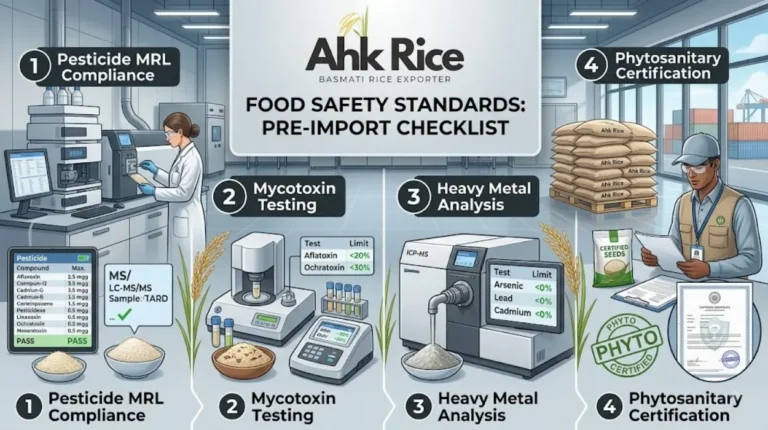
Documents should remain synchronized with the shipment. Examples include commercial invoices, packing lists, bills of lading, certificates of origin, phytosanitary certificates, inspection reports, treatment certificates, and laboratory reports.
Pakistan’s Department of Plant Protection lists commercial invoices, packing lists, container information, treatment certificates where applicable, and phytosanitary certification within its export procedure.
Logistics visibility
Logistics visibility records container booking, loading, sealing, port departure, transshipment where applicable, arrival, customs clearance, and delivery.
The purpose is not simply to display a vessel position. The purpose is to connect logistics events with the correct rice order.
How does rice processing and grading affect supply chain visibility?
Rice processing creates multiple control points where product identity can be preserved or lost. Visibility therefore follows variety, milling form, grade, processing stage, test result, package, and container so buyers receive evidence that the delivered rice matches the approved specification.
Rice is grown across Pakistan, with Punjab representing an important production region for Basmati and other fine rice varieties. Punjab’s Agriculture Department lists Super Basmati, PK 1121 Aromatic, Basmati 515, Punjab Basmati, Super Basmati 2019, and newer Basmati varieties among Punjab rice varieties.
Pakistan’s export portfolio also includes Basmati and non-Basmati rice. Trade Development Authority material identifies varieties such as Super Kernel Basmati, Extra Long Grain 1121, Basmati 515, PK-386, IRRI-6, IRRI-9, and KS-282.
For commercial procurement, grades should be treated as defined specifications rather than assuming that one universal grading system applies worldwide.
Common product forms include:
- White rice: Milled rice with the husk and bran layers removed.
- Brown rice: Rice retaining the bran layer after husk removal.
- Steam rice: Rice processed using controlled steaming before drying and milling.
- Sella or parboiled rice: Rice subjected to soaking, heat treatment, drying, and milling.
- Broken rice: Kernels separated according to broken-length specifications.
- Basmati varieties: Commercial varieties such as 1121, Super Kernel, and 1509, each requiring a defined purchase specification.
Visibility should record the exact commercial grade instead of using a general term such as “premium rice.”
What benefits does supply chain visibility provide to rice importers?
Supply chain visibility reduces procurement uncertainty because buyers see evidence before problems become expensive. It supports quality verification, inventory planning, document readiness, supplier accountability, recall response, and customer communication. The commercial benefit comes from faster decisions and fewer surprises across international shipment stages.
The first benefit is quality control. Buyers can compare approved specifications with production and laboratory records before shipment.
The second benefit is inventory planning. A distributor can coordinate warehouse capacity against confirmed production, loading, sailing, arrival, and clearance milestones.
The third benefit is document control. Missing or inconsistent documents can delay customs processing even when the physical rice is ready.
The fourth benefit is accountability. When a discrepancy occurs, the importer can identify whether it originated during procurement, processing, packing, inspection, documentation, or transport.
The fifth benefit is repeat-order consistency. Historical records allow buyers to compare current lots against previous approved shipments.
Visibility also supports regulatory compliance. For U.S. food imports, FDA states that importers are responsible for ensuring imported food meets applicable U.S. safety and labeling requirements. Imported food facilities must meet applicable registration requirements, and Prior Notice applies to covered food shipments.
U.S. importers covered by the Foreign Supplier Verification Program also have responsibilities involving supplier evaluation, hazard analysis, verification activities, corrective actions, and recordkeeping.
Where do rice importers use supply chain visibility?
Importers use visibility for recurring contracts, private-label rice, foodservice supply, retail programs, manufacturing inputs, and regulated markets. Examples include tracking 1121 Basmati lots, confirming Super Kernel packing, monitoring 1509 Steam production, checking laboratory results, and matching containers with shipping documents.
A wholesale importer uses visibility to confirm that contracted quantity is moving according to the purchase schedule.
A retailer uses it to coordinate private-label packaging, production release, shipment arrival, and warehouse receiving.
A restaurant distributor uses it to maintain continuity for standardized rice specifications across multiple locations.
A food manufacturer uses it to verify that raw material specifications remain consistent between shipments.
A regulated-market importer uses visibility to maintain evidence supporting customs, food-safety, phytosanitary, and supplier-verification requirements.
International markets also create different compliance requirements. Pakistan’s Department of Plant Protection states that export phytosanitary procedures follow the importing country’s requirements and can involve inspection, sampling, treatment, and issuance of a phytosanitary certificate.
The same shipment therefore needs visibility across both the exporting country’s procedures and the destination market’s requirements.
What certifications and compliance records apply to visible rice supply chains?
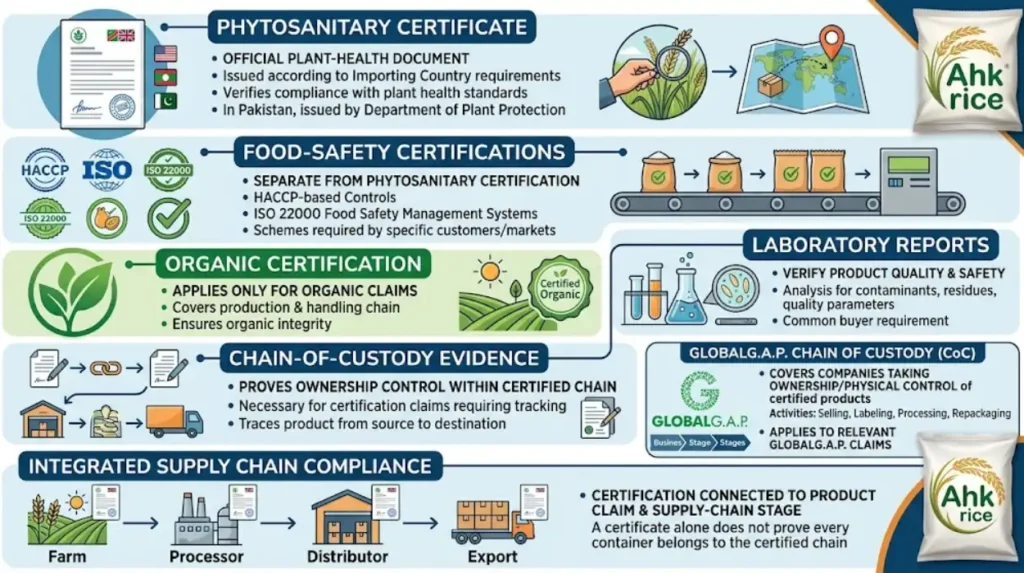
Rice certification depends on destination rules, buyer specifications, product claims, and supply-chain roles. Common records include phytosanitary certificates, laboratory reports, food-safety certifications, organic documentation where claimed, and chain-of-custody evidence when certification claims require controlled ownership.
A phytosanitary certificate is an official plant-health document issued according to the requirements of the importing country. Pakistan’s Department of Plant Protection issues phytosanitary certificates for exports according to importing-country requirements and applicable international standards.
Food-safety certifications are separate from phytosanitary certification. Buyers commonly encounter systems such as HACCP-based controls, ISO 22000-based food-safety management systems, and certification schemes required by specific customers or markets.
Organic certification applies when the rice is sold with an organic claim. The certification must cover the relevant production and handling chain.
GLOBALG.A.P. Chain of Custody certification applies when businesses handle products sold with relevant GLOBALG.A.P. claims. Its current standard covers companies that take ownership or physical control of certified products and perform activities such as selling, labeling, processing, or repackaging under the certification claim.
Certification should therefore be connected to the product claim and supply-chain stage. A certificate alone does not prove that every container belongs to the certified chain.
What are the common supply chain visibility problems for rice importers?
Visibility does not mean watching a container on a map. A location update cannot prove rice quality, lot identity, document accuracy, or supplier compliance. Common failures occur when physical batches, laboratory samples, invoices, packing lists, certificates, and container records use inconsistent identifiers.
One common misconception is that vessel tracking equals supply chain visibility. Vessel tracking only describes logistics movement.
Another problem is disconnected laboratory testing. A report becomes difficult to use when its sample number does not match the production lot or shipment.
A third problem is specification drift. The purchase order can state one grade while the final packing documents describe another.
A fourth problem is document mismatch. Container numbers, seal numbers, quantities, package counts, and lot references must remain consistent across documents.
A fifth problem is delayed exception reporting. An importer needs to know when production falls behind schedule, a test fails, packaging changes, a container misses its planned sailing, or documents remain incomplete.
The strongest visibility model therefore connects product identity + specification + quality evidence + processing status + documents + logistics milestones + delivery confirmation.
That structure gives importers a traceable record rather than a collection of separate updates.
Frequently Asked Questions
What Is Supply Chain Visibility in Rice Importing?
Supply chain visibility gives rice importers clear information about sourcing, processing, quality checks, documentation, packaging, container loading, and shipment status from supplier to destination.
Why Does Supply Chain Visibility Matter for Rice Quality?
It helps buyers monitor specifications such as grain length, moisture, broken grains, purity, milling quality, and packaging at different stages before the shipment leaves the origin country.
How Does Supply Chain Visibility Reduce Import Risks?
Visibility helps identify quality deviations, documentation errors, processing delays, and shipment disruptions early, allowing buyers and suppliers to take corrective action before they become costly problems.
How Does Supply Chain Visibility Support Food Safety Compliance?
Importers can maintain traceable records of processing, inspections, testing, packaging, and supplier documentation, making it easier to demonstrate compliance with applicable food-safety and import requirements.
How Does Supply Chain Visibility Improve Shipment Tracking?
Importers can monitor production completion, container loading, vessel departure, transit progress, and expected arrival dates, improving inventory planning and reducing uncertainty around delivery schedules.
What Documents Should Rice Importers Track?
Key documents can include commercial invoices, packing lists, certificates of origin, phytosanitary certificates where applicable, inspection or laboratory reports, bills of lading, and other destination-market documentation.
How Can Importers Verify Rice Processing Before Shipment?
Buyers can request production updates, quality-control records, inspection reports, approved samples, packaging confirmation, and loading evidence to verify that the shipment matches the agreed specification.
Does Supply Chain Visibility Improve Inventory Planning?
Yes. Reliable visibility helps importers estimate arrival dates, coordinate warehouse capacity, manage safety stock, plan distribution, and reduce the risk of inventory shortages.
How Does Visibility Improve Supplier Accountability?
A documented supply chain creates measurable checkpoints for product specifications, processing, quality control, documentation, packaging, and shipping, making supplier performance easier to evaluate over repeated orders.