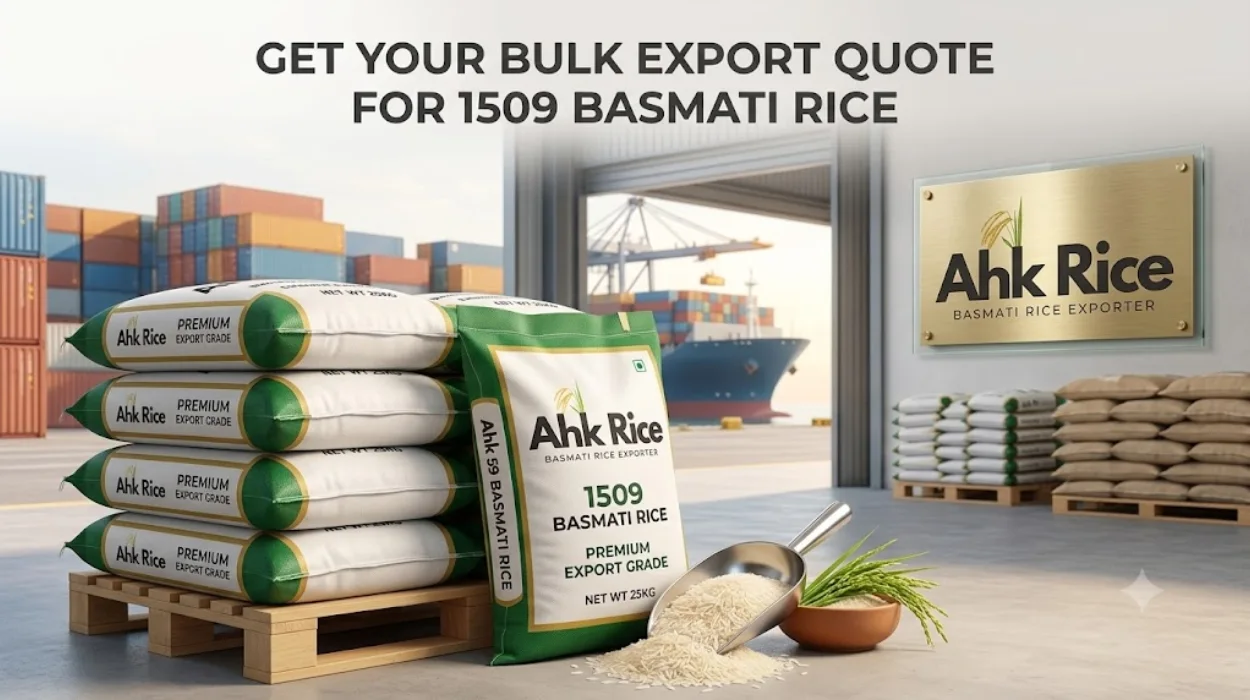
Get a Bulk Export Quote for 1509 Basmati Rice
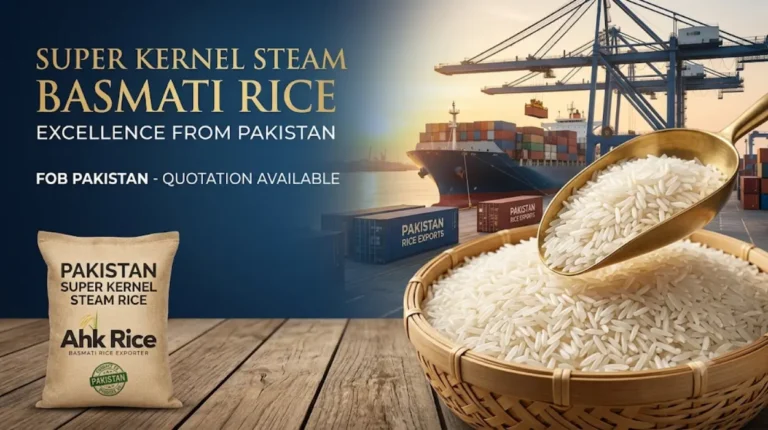
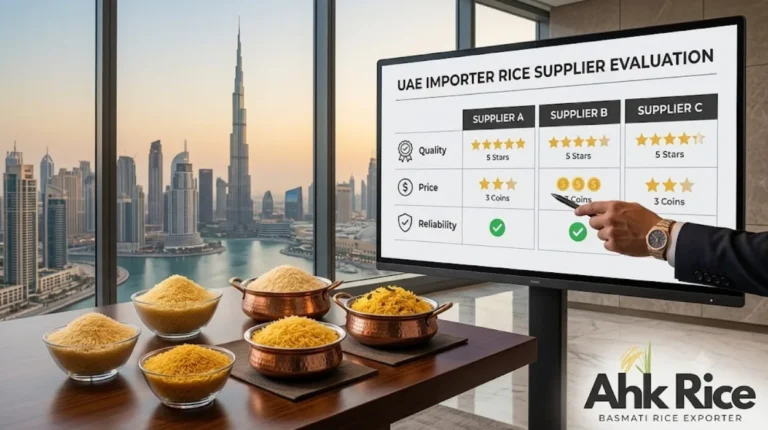
The fastest way to secure a competitive bulk export quote for 1509 Basmati Rice is to work directly with a verified Pakistani exporter that controls sourcing, milling, grading, inspection, and shipping. Here is why: direct exporters provide accurate specifications, transparent pricing, quality verification, and shipment planning before production begins. Buyers researching market demand can first review insights from major importing destinations for Pakistani 1509 Basmati Rice before requesting commercial quotations.
1509 Basmati Rice remains one of Pakistan’s most traded rice varieties because it combines long grain appearance, high yield, strong cooking performance, and competitive pricing. Importers, wholesalers, distributors, retailers, and food service buyers frequently choose this grade when balancing quality and budget requirements.
AHK Rice supplies bulk quantities of 1509 Basmati Rice in Steam, White, Golden Sella, and Parboiled specifications. AHK Rice supports buyers through the complete export process, from sample approval to final delivery. AHK Rice also assists with documentation, inspection coordination, packaging customization, and shipment scheduling.
For buyers comparing grades before placing orders, the value proposition becomes clearer after reviewing how 1509 Basmati Rice compares against other export grades in international markets.
What is the best solution for sourcing 1509 Basmati Rice in bulk?
The best solution is sourcing directly from a Pakistani exporter that offers verified specifications, multiple processing grades, export documentation, quality inspections, and shipment management. Direct sourcing reduces procurement risks, improves pricing transparency, and creates consistent quality outcomes across repeat orders.
Bulk rice procurement involves more than comparing prices. Quality consistency affects customer satisfaction, inventory turnover, and repeat sales.
1509 Basmati Rice offers advantages because the variety delivers long grain appearance at a lower cost than premium traditional Basmati grades. Buyers often achieve stronger margins while maintaining acceptable quality standards.
Why do importers choose 1509 Basmati Rice?
1509 Basmati Rice matures faster than many traditional Basmati varieties. Faster cultivation cycles increase availability and support stable export volumes.
1509 Basmati Rice also produces excellent grain elongation after cooking. Retail consumers value this characteristic because longer cooked grains improve presentation and dining experience.
What processing grades are available?
AHK Rice offers the following export specifications:
- White Basmati Rice
- Steam Basmati Rice
- Golden Sella Basmati Rice
- Creamy Sella Basmati Rice
- Parboiled Basmati Rice
AHK Rice mills, grades, sorts, and inspects each specification according to buyer requirements.
Specification Overview
| Attribute | Typical Range |
|---|---|
| Grain Length | 8.00–8.35 mm |
| Moisture | 12–14% |
| Broken Grains | 1–5% |
| Purity | 95–100% |
| Crop Origin | Punjab, Pakistan |
| Crop Type | Basmati |
| Packaging | 1kg–50kg |
The correct specification depends on your target market, which directly influences pricing and shipment planning discussed in the next section.
Why choose AHK Rice for a bulk export quote?
AHK Rice provides direct export pricing, multiple processing grades, quality inspections, customized packaging, export documentation, and shipment coordination. Buyers receive specification-based quotations that match destination market requirements and commercial objectives.
AHK Rice operates from Pakistan’s primary rice-growing region. This location enables AHK Rice to source paddy efficiently and maintain quality control throughout processing.
What export services does AHK Rice provide?
AHK Rice supports buyers through:
- Paddy sourcing
- Rice milling
- Grain grading
- Colour sorting
- Quality inspection
- Packaging customization
- Container loading
- Export documentation
- Shipping coordination
Each service contributes to product consistency and shipment reliability.
What quality controls are applied?
AHK Rice follows a structured processing sequence:
- Clean the paddy.
- De-husk the grain.
- Dry the rice.
- Polish the kernels.
- Grade by size.
- Sort through colour sorters.
- Inspect quality parameters.
- Pack according to specifications.
- Load export containers.
These steps help maintain uniform quality across shipments.
What certifications may be available?
Depending on destination requirements, exports may include:
- Phytosanitary Certificate
- Certificate of Origin
- Fumigation Certificate
- Quality Inspection Report
- Packing List
- Commercial Invoice
- Bill of Lading
These documents support customs clearance and buyer compliance requirements.
With supplier selection established, the next question concerns expected commercial outcomes and shipment performance.
What results can buyers expect from 1509 Basmati Rice exports?
Buyers can expect competitive landed costs, consistent grain quality, reliable cooking performance, scalable volumes, and access to multiple market segments. Expected results depend on grade selection, packaging requirements, shipment size, and destination market conditions.
1509 Basmati Rice serves several customer categories. Retailers often prioritize appearance and shelf presentation. Food service buyers frequently prioritize yield and cost efficiency.
Market-specific opportunities
Gulf Cooperation Council Markets
Golden Sella grades perform well in Gulf markets because longer shelf life supports inventory management.
Golden Sella typically maintains quality for approximately 18–24 months under recommended storage conditions.
African Markets
Steam and White grades often attract importers seeking competitive pricing and strong retail turnover.
Steam rice typically offers balanced quality and affordability for large-volume distribution.
European Markets
European importers frequently prioritize traceability, documentation, and consistent grain specifications.
Quality verification becomes especially important because regulatory requirements are stricter.
Shipping timelines by market
| Destination Market | Estimated Transit Time |
|---|---|
| UAE | 10–15 Days |
| Saudi Arabia | 15–20 Days |
| Oman | 10–18 Days |
| Qatar | 12–18 Days |
| Kuwait | 12–20 Days |
| Kenya | 18–30 Days |
| South Africa | 25–40 Days |
| Malaysia | 15–25 Days |
| Singapore | 15–22 Days |
| United Kingdom | 25–35 Days |
Actual transit times depend on vessel schedules, port congestion, and customs procedures.
With expected outcomes defined, buyers typically evaluate pricing factors before making a purchasing decision.
What factors affect the export price of 1509 Basmati Rice?
Export pricing depends on rice grade, crop season, broken percentage, packaging specification, order quantity, inspection requirements, destination market, and freight conditions. Accurate quotations require complete commercial and technical specifications from buyers.
Rice pricing changes throughout the year because crop availability and export demand fluctuate.
Primary pricing factors
| Cost Factor | Impact on Price |
|---|---|
| Rice Grade | High |
| Grain Length | Medium |
| Broken Percentage | High |
| Packaging Type | Medium |
| Container Quantity | High |
| Freight Charges | High |
| Inspection Requirements | Medium |
How does order quantity affect pricing?
Larger orders often achieve lower per-ton costs because fixed logistics expenses are distributed across more volume.
A full container load generally provides better pricing efficiency than smaller shipments.
How does packaging affect pricing?
Customized packaging increases production costs because it requires printing, design approval, and dedicated packaging materials.
Common export options include:
- 1 kg retail bags
- 5 kg retail bags
- 10 kg retail bags
- 25 kg PP bags
- 50 kg PP bags
Example buyer scenario
A distributor importing one container of Golden Sella Rice for the UAE may prioritize shelf life and visual appearance.
A catering supplier importing Steam Rice for East Africa may prioritize volume efficiency and cost control.
Both buyers require different specifications, resulting in different quotations.
Pricing evaluation naturally leads to the final procurement stage: requesting samples and placing an order.
How do you get started with a bulk export quote?

The fastest process involves sharing specifications, approving samples, confirming commercial terms, and finalizing shipment details. Most serious buyers can move from inquiry to production scheduling within a short commercial evaluation period.
Step 1: Submit requirements
Provide:
- Required grade
- Target market
- Packaging type
- Quantity requirement
- Destination port
- Quality specifications
Accurate information improves quotation accuracy.
Step 2: Request samples
AHK Rice provides sample support to qualified buyers.
Sample procedures generally follow these steps:
- Request the desired grade.
- Confirm delivery address.
- Approve courier arrangements.
- Receive and inspect samples.
- Conduct cooking tests.
- Approve commercial specification.
Typical sample costs
| Item | Typical Cost |
|---|---|
| Product Sample | Often Free |
| Courier Charges | Buyer Pays |
| Laboratory Testing | Optional |
| Inspection Sample | As Required |
Sample costs vary by destination and courier provider.
Step 3: Confirm commercial terms
After sample approval, buyers confirm:
- Product specification
- Packaging details
- Quantity
- Delivery terms
- Payment terms
- Shipment schedule
Step 4: Production and inspection
AHK Rice begins procurement and processing after order confirmation.
AHK Rice inspects, grades, sorts, and prepares the rice according to approved specifications.
Step 5: Container loading and shipment
AHK Rice loads containers and coordinates export documentation.
AHK Rice then dispatches the shipment according to the agreed schedule.
AHK Rice provides shipment information that helps buyers track cargo movement and prepare for customs clearance.
The procurement process becomes significantly easier after specifications, samples, pricing, and logistics are aligned. For current pricing, specifications, and shipment availability, contact AHK Rice today and submit your requirements through Request a Quote.
Frequently Asked Questions
How long does it take to receive a 1509 Basmati Rice export quote?
Most export quotations can be prepared within 24 to 48 hours after receiving complete specifications. Buyers should provide grade details, packaging requirements, quantity, and destination port. Accurate information improves pricing precision. Freight estimates may require additional verification. Complex projects can take longer.
What is the minimum quantity for bulk export orders?
Minimum quantities depend on packaging requirements and destination markets. Many buyers begin with container-based orders because logistics costs remain efficient. Trial orders may also be available depending on commercial arrangements. Product specifications influence production planning. Discuss requirements before requesting quotations.
Which grade of 1509 Basmati Rice is most popular?
Golden Sella and Steam grades remain among the most requested export specifications. Golden Sella offers longer shelf life and strong grain appearance. Steam Rice provides a balance between quality and affordability. Market preferences differ by region. Buyer requirements determine the ideal choice.
Can packaging be customized for private labels?
Yes, private-label packaging can be arranged for qualified buyers. Packaging formats range from retail bags to large wholesale sacks. Artwork approval is required before production begins. Printing specifications affect production schedules. Packaging customization supports brand development.
What documents are included with exports?
Export shipments generally include commercial invoices, packing lists, certificates of origin, and shipping documents. Additional certificates may be provided when destination regulations require them. Documentation requirements vary by country. Buyers should verify import regulations before shipment. Proper paperwork supports customs clearance.