Source Current Crop Pakistani Basmati Rice for UK Importers
UK importers looking for consistent quality and competitive pricing often choose current crop Pakistani Basmati rice directly from exporters. Understanding crop year, quality specifications, sampling procedures, shipping schedules, and supplier capabilities helps buyers reduce risk and secure dependable supply chains.
Businesses that have already explored how crop year affects buying decisions through our guide on Why Does Crop Year Influence Basmati Rice Purchasing Decisions? and compared stock options in How Do Buyers Compare New Crop and Matured Rice Stocks? are usually ready to move toward supplier selection and procurement decisions.
What Is the Best Solution for UK Importers Looking to Source Current Crop Pakistani Basmati Rice?
The best solution is working directly with an experienced Pakistani exporter that offers verified quality specifications, transparent sampling procedures, export documentation, consistent production capacity, and reliable shipping schedules. This reduces procurement risk while ensuring product consistency, compliance, and long-term supply security for UK distribution channels.
Many UK importers face challenges when sourcing rice internationally. These challenges include inconsistent grain quality, delayed shipments, inaccurate specifications, and limited communication from suppliers.
Current crop Pakistani Basmati rice remains one of the most sought-after rice categories in the UK market because of its natural aroma, grain elongation, cooking performance, and consumer recognition. However, not every supplier can consistently deliver the same quality across multiple shipments.
AHK Rice addresses this challenge by providing direct sourcing from Pakistan’s premium rice-growing regions in Punjab. The company focuses on maintaining specification consistency from procurement through processing and export.
For buyers evaluating crop-year impact before purchasing, reviewing educational resources about crop quality factors can help establish procurement criteria before supplier selection.
The sourcing process becomes significantly easier when importers work with a supplier capable of managing production, quality control, documentation, packaging, and shipping under one export system.
The first step is understanding the exact product requirement. Some UK buyers prefer Super Basmati Rice, while others import PK-385, Basmati 1121, Basmati 1509, or steam and parboiled variants based on retail or foodservice demand.
When product specifications are clearly defined, exporters can provide accurate quotations and production schedules.
AHK Rice supports this process through its export services available on the <a href=”https://ahkrice.com/”>Pakistani Basmati rice export platform</a>, helping importers match specifications with available crop inventory.
Why Should UK Buyers Choose AHK Rice?
AHK Rice combines direct sourcing, modern processing, quality assurance systems, export expertise, and customer-focused communication to help UK importers receive consistent current crop Pakistani Basmati rice shipments that meet commercial requirements while reducing procurement uncertainty and operational risks throughout the buying process.
Supplier selection directly affects profitability.
A lower-priced supplier may initially appear attractive. However, inconsistent quality, shipment delays, or specification deviations can create larger costs after importation.
AHK Rice works with carefully selected rice-growing regions in Punjab where premium Basmati varieties are cultivated under favorable agricultural conditions.
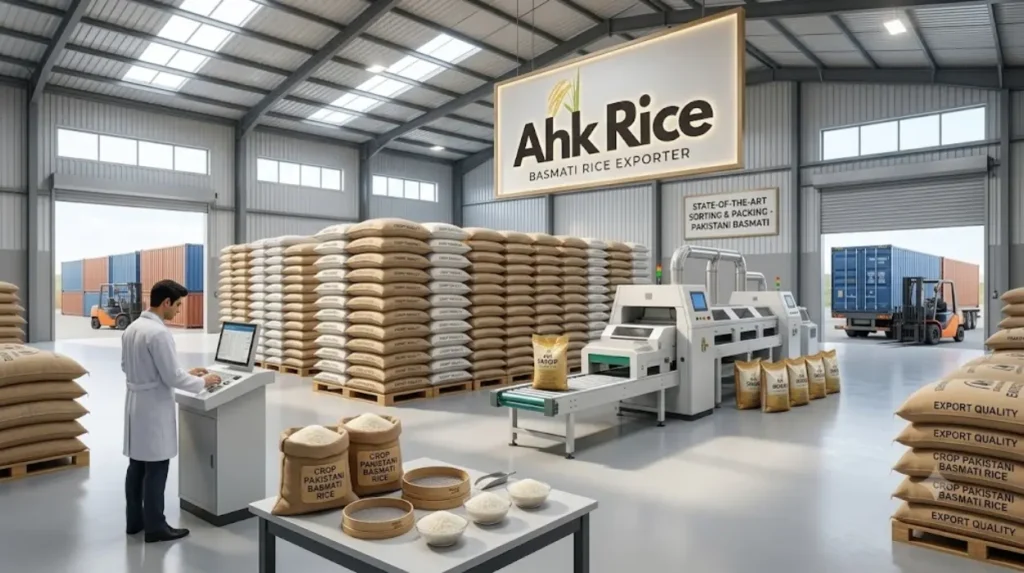
The company maintains strict quality control throughout procurement, milling, grading, sorting, polishing, packaging, and container loading.
UK importers benefit from receiving clear specifications before placing orders.
These specifications typically include moisture levels, grain length, purity percentages, broken grain ratios, damaged grain limits, foreign matter tolerance, and packaging requirements.
AHK Rice also provides flexibility in packaging options.
Importers can request retail packs, private-label packaging, consumer bags, or bulk export packaging depending on their distribution strategy.
Communication is another important factor.
International buyers often struggle when suppliers provide delayed responses during production or shipping stages.
AHK Rice prioritizes transparent communication throughout procurement, production, inspection, and logistics processes.
For buyers who are still comparing crop options, the article <a href=”#”>comparing new crop and matured rice stocks for commercial imports</a> provides useful insights into selecting inventory based on target market requirements.
What Sampling Process Should UK Importers Expect?
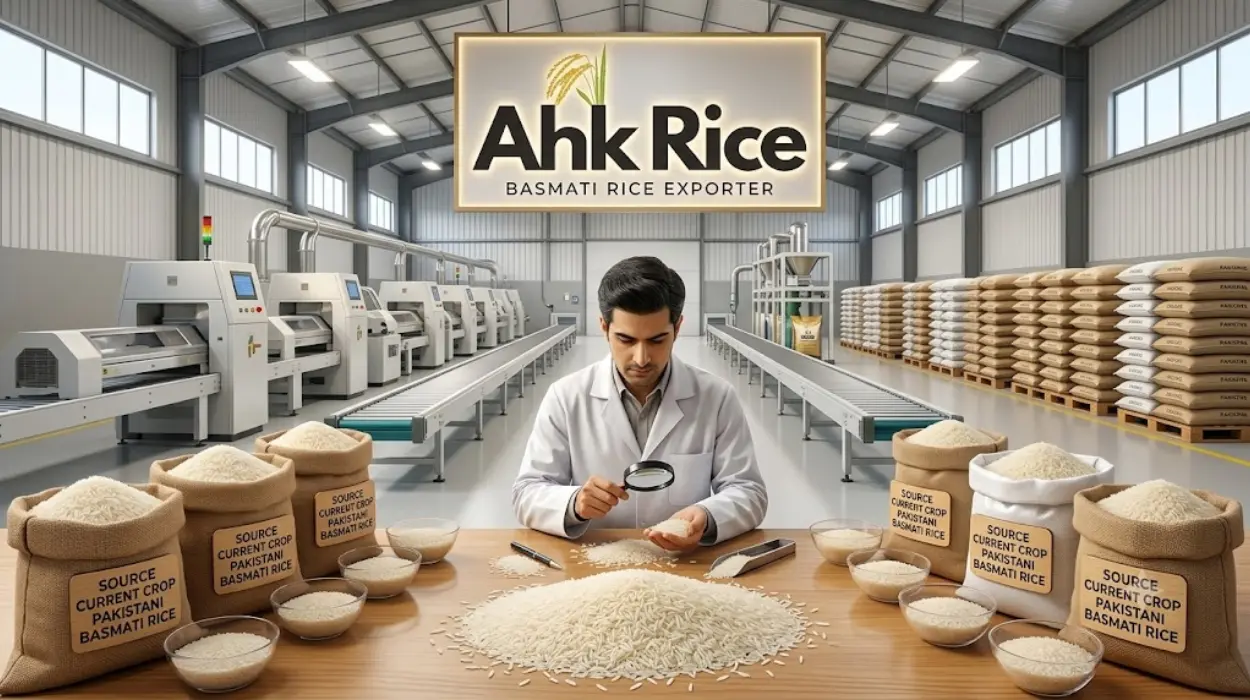
A professional sampling process allows buyers to verify grain quality, aroma, appearance, cooking characteristics, and specification compliance before committing to large-volume purchases. Sampling minimizes procurement risk and provides confidence that production shipments will match approved standards and expectations.
The sampling stage is one of the most important steps in international rice procurement.
AHK Rice generally follows a structured sample approval process.
First, the buyer submits product requirements.
The export team identifies suitable stock and prepares representative samples based on requested specifications.
Samples may include different grades, milling finishes, or packaging options when required.
The sample package is then prepared for shipment.
Courier services such as DHL, FedEx, UPS, or similar providers are commonly used for international delivery.
Typical sample quantities range between 500 grams and 2 kilograms depending on buyer requirements.
Sample costs vary according to destination and courier rates.
Most international sample shipments typically cost between USD 40 and USD 120.
Certain commercial buyers may receive complimentary samples, while courier charges are often paid by the importer.
Once received, buyers evaluate several characteristics.
These include grain appearance, fragrance, cooking performance, elongation ratio, moisture level, and overall market suitability.
After approval, the buyer confirms specifications and requests a commercial quotation.
The approved sample becomes the reference standard for future production.
This process significantly reduces the possibility of disputes during shipment arrival.
AHK Rice encourages sample approval before large-scale orders because it establishes mutual expectations and strengthens long-term business relationships.
What Shipping Times Can UK Importers Expect?
Shipping schedules depend on production requirements, container availability, port operations, and destination logistics. Most UK importers can expect production and shipment timelines that allow efficient inventory planning while maintaining consistent supply throughout the year and across multiple purchase cycles.
Shipping reliability is a major concern for importers.
Inventory shortages can affect retail shelves, wholesalers, distributors, and foodservice operators.
AHK Rice works to maintain predictable shipment schedules through coordinated production and logistics planning.
Typical production preparation requires approximately 7 to 15 days depending on order volume and packaging requirements.
Container loading and export documentation generally require several additional days.
Average sea freight transit times from Pakistan to the United Kingdom commonly range between 25 and 40 days depending on shipping line schedules and destination ports.
Estimated shipping durations include:
| Market | Estimated Transit Time |
|---|---|
| United Kingdom | 25–40 Days |
| Germany | 25–35 Days |
| Netherlands | 25–35 Days |
| France | 28–38 Days |
| Spain | 30–40 Days |
| Middle East | 10–20 Days |
| North America | 35–50 Days |
Importers should always plan inventory requirements well before seasonal demand increases.
Advance procurement reduces exposure to freight fluctuations and container shortages.
AHK Rice provides shipment updates throughout the export process to help buyers maintain inventory planning accuracy.
What Results Can Importers Expect from Current Crop Pakistani Basmati Rice?
Importers sourcing high-quality current crop Pakistani Basmati rice can expect strong consumer acceptance, reliable cooking performance, attractive shelf presentation, and competitive positioning within retail and foodservice markets when product specifications align with customer expectations and purchasing behaviors.
Consumer satisfaction drives repeat purchases.
Current crop Basmati rice offers fresh harvest characteristics that many markets value.
The grains maintain attractive visual appearance and strong aromatic qualities.
Retail buyers often appreciate the premium presentation.
Foodservice operators value consistency and cooking performance.
Distributors benefit from products that generate repeat demand.
AHK Rice supports these outcomes by maintaining quality control systems that focus on specification compliance and export consistency.
Importers also gain operational advantages.
Fewer quality complaints mean lower replacement costs.
Consistent product quality supports brand reputation.
Reliable supply contributes to stronger customer relationships.
These factors collectively influence long-term profitability.
What Factors Affect Pricing?
Pricing depends on rice variety, crop quality, milling specifications, packaging requirements, order volume, freight costs, currency fluctuations, certification requirements, and market conditions. Understanding these variables helps importers make informed purchasing decisions and accurately forecast procurement budgets for commercial operations.
Rice pricing is influenced by multiple factors.
The selected variety is usually the largest pricing variable.
Premium varieties such as Super Basmati and Basmati 1121 typically command higher prices than standard alternatives.
Packaging requirements also affect costs.
Private-label retail packaging generally costs more than bulk export bags.
Order volume influences pricing as well.
Larger quantities often create opportunities for more competitive rates.
Shipping costs can fluctuate based on container availability and freight market conditions.
Certification requirements may also affect final pricing.
Importers requesting additional documentation or specialized compliance standards should account for these costs during procurement planning.
AHK Rice provides transparent quotations based on buyer specifications so importers can accurately evaluate landed costs before placing orders.
How Can UK Importers Get Started with AHK Rice?
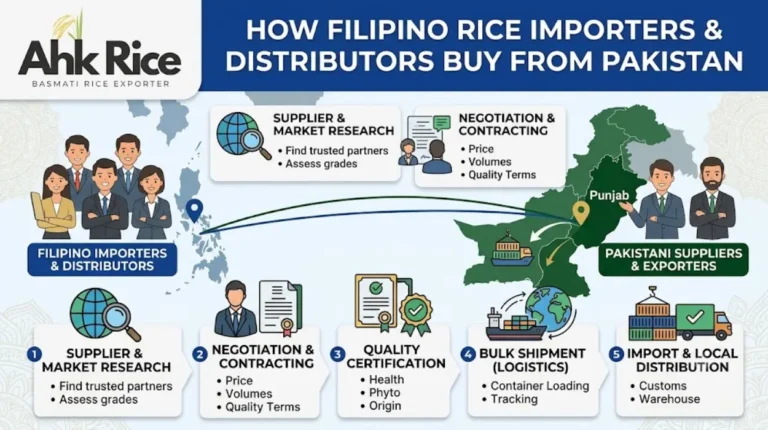
Getting started involves defining product requirements, requesting samples, reviewing specifications, confirming commercial terms, approving production details, and arranging shipment schedules. This structured procurement process helps buyers secure reliable supply while maintaining confidence in product quality and delivery performance.
The procurement process is straightforward.
First, buyers define their required rice variety and specifications.
Second, AHK Rice prepares and dispatches samples for evaluation.
Third, specifications and pricing are reviewed.
Fourth, commercial terms are finalized.
Fifth, production begins according to approved standards.
Finally, shipment and export documentation are completed for delivery.
AHK Rice supports buyers throughout each stage, helping simplify international procurement while maintaining quality and communication standards.
For UK importers seeking a dependable supplier of current crop Pakistani Basmati rice, the next step is requesting specifications, samples, and commercial pricing directly through <a href=”/request-a-quote/”>the quotation request page</a>.
FAQs
How do I verify Basmati rice quality before importing?
A professional sample evaluation process is the most effective method. Buyers should assess grain length, aroma, purity, cooking performance, moisture content, and elongation ratio. Laboratory testing can also be arranged when required. Approved samples become the benchmark for future shipments. This helps reduce procurement risk significantly.
What is the minimum order quantity for export?
Minimum order quantities vary depending on packaging and product type. Many commercial shipments are arranged in full container loads. Buyers with specific requirements should discuss volumes directly with the exporter. Larger orders generally offer better freight efficiency. Exact quantities depend on product specifications.
Does AHK Rice provide private-label packaging?
Yes. AHK Rice supports private-label and custom packaging solutions for importers. Packaging can be tailored for retail, wholesale, and foodservice markets. Branding requirements, artwork specifications, and bag sizes can be discussed during order planning. This helps distributors build their own market identity.
How long does shipping to the UK usually take?
Transit times generally range between 25 and 40 days after shipment departure. Production and documentation preparation should also be considered. Shipping schedules may vary depending on destination port and shipping line availability. Early planning helps avoid inventory shortages. Buyers should account for seasonal demand periods.
Why is current crop Pakistani Basmati rice popular in the UK?
Current crop Pakistani Basmati rice is valued for its aroma, appearance, and cooking performance. Consumers recognize its premium characteristics and versatility across many cuisines. Retailers and foodservice operators appreciate consistent quality. Demand remains strong across diverse customer segments. This supports long-term import opportunities for distributors.