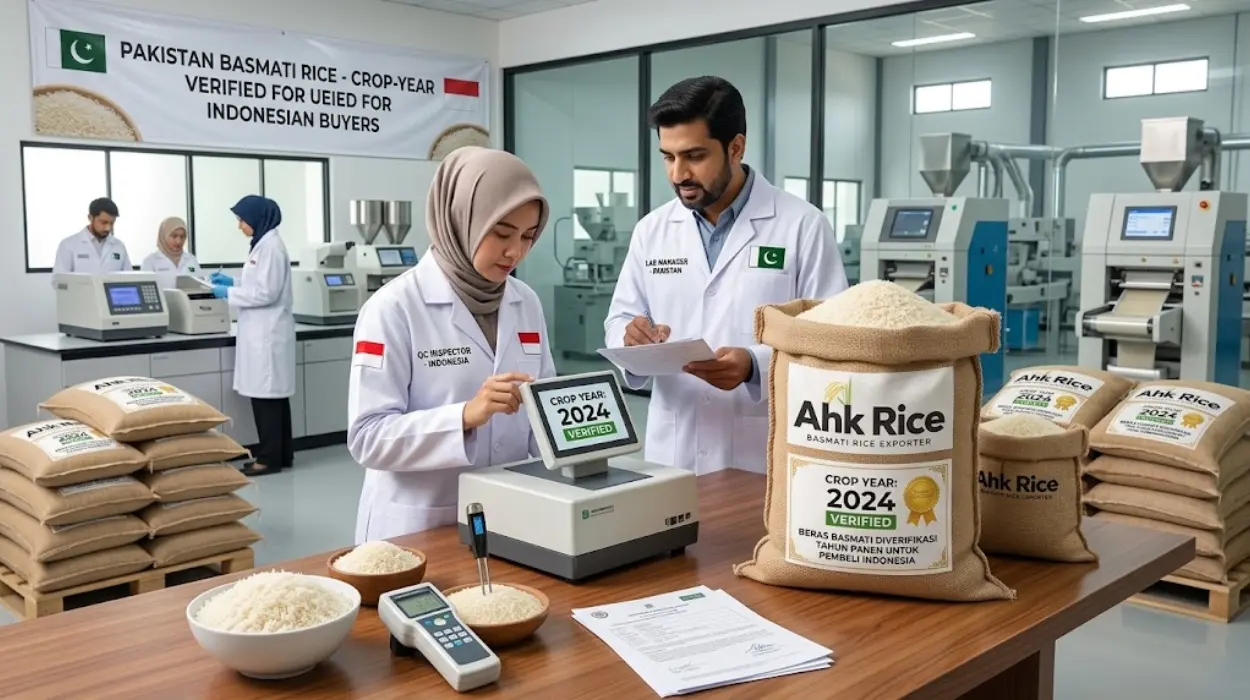
AHK Rice Pakistan Crop-Year Verified Basmati Rice for Indonesian Buyers
Verified crop year, controlled aging, documented specifications, and pre-shipment testing provide Indonesian buyers with the safest sourcing route. Here is why: crop year affects moisture, aroma, cooking performance, storage stability, and commercial value. Buyers can reduce quality disputes by matching the contracted crop year with batch records and laboratory checks.
Crop-year verification should be treated as a purchasing specification, not a marketing statement. Buyers comparing fresh and aged Pakistan Basmati should also review how crop year affects Basmati quality. The same principle applies when Indonesian importers evaluate 1121, Super Kernel, and 1509 Basmati rice against their intended retail or foodservice use.
What is the best solution for Indonesian buyers needing verified crop-year Basmati?
The best solution is a documented Pakistan Basmati lot matched to crop year, grade, moisture, broken percentage, aging period, and pre-shipment inspection. This specification gives buyers measurable evidence before shipment and reduces arrival-stage disputes.
AHK Rice supplies Pakistan-origin Basmati through controlled processing and export preparation. Its main Basmati options include 1121, Super Kernel, and 1509. Buyers can select white, steam, sella, or other available processing grades according to their cooking and distribution requirements.
AHK Rice supports crop-year verification through production records, batch identification, quality testing, and export documentation. This creates a traceable connection between the contracted specification and the shipped cargo.
Which grade should Indonesian buyers select?
1121 is the strongest premium choice, while 1509 can suit buyers prioritising procurement economics and Super Kernel can support premium foodservice positioning. The final grade should match cooking requirements, selling price, and target customer.
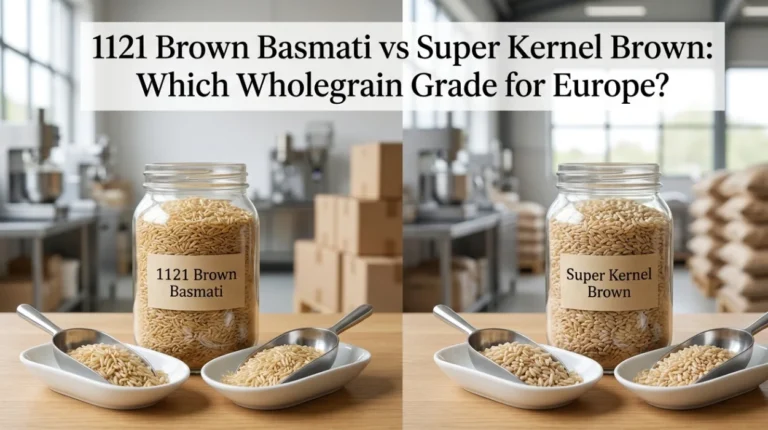
1121 offers extra-long grain characteristics and strong cooking elongation. AHK Rice lists 1121 specifications including 8.35 mm+ average grain length, moisture targets, and low broken-grain specifications.
1509 can provide a useful balance between long grain, cooking performance, and procurement cost. Super Kernel provides another premium long-grain option for buyers seeking a differentiated Pakistani Basmati specification.
Indonesian buyers should compare the actual lot specification rather than selecting only by variety name. Crop year, aging period, moisture, broken ratio, packaging, and destination terms can materially change the purchasing decision.
Why choose AHK Rice for crop-year verified Pakistani Basmati?
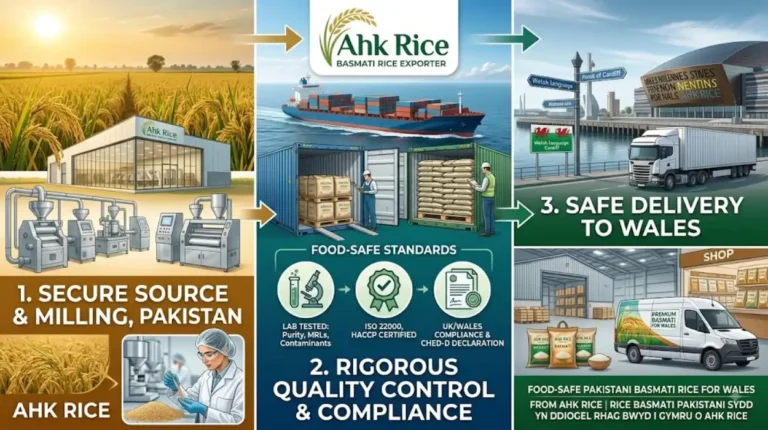
AHK Rice combines Punjab sourcing, controlled milling, crop-year traceability, laboratory checks, export documentation, and Indonesia-focused logistics into one procurement process. This reduces the number of separate quality and logistics decisions required from the importer.
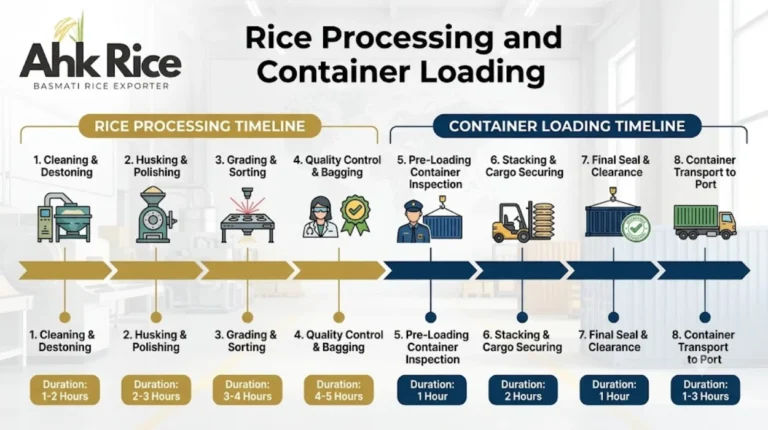
AHK Rice processes rice through cleaning, dehusking, polishing, grading, sorting, testing, packaging, and shipment preparation. Each stage affects the final commercial specification.
AHK Rice also supports Indonesia shipments through Karachi before sea dispatch to major Indonesian ports. Its published Indonesia export process covers milling, packaging, certification, inland transport, vessel loading, and delivery support.
What documents should buyers request?
Buyers should request crop-year records, laboratory results, certificate of origin, phytosanitary documentation, packing details, fumigation documentation, and the final commercial specification. These documents connect the physical cargo with the agreed purchasing terms.
Documented crop year helps buyers confirm the rice’s production period. Laboratory results help verify measurable characteristics such as moisture and broken grains. Export certificates support customs and regulatory procedures.
Indonesia’s rice-import framework can change according to rice category and government policy. Bapanas stated in 2025 and 2026 that Indonesia was not authorising ordinary consumption-rice imports under the applicable national supply policy, while special and industrial rice categories remained subject to different arrangements.
Therefore, buyers should confirm their import eligibility and applicable Indonesian permissions before contracting a shipment.
With the supplier and documentation requirements established, the next decision is how the physical sampling process protects the purchase.
How does the AHK Rice sample process work and what does it cost?
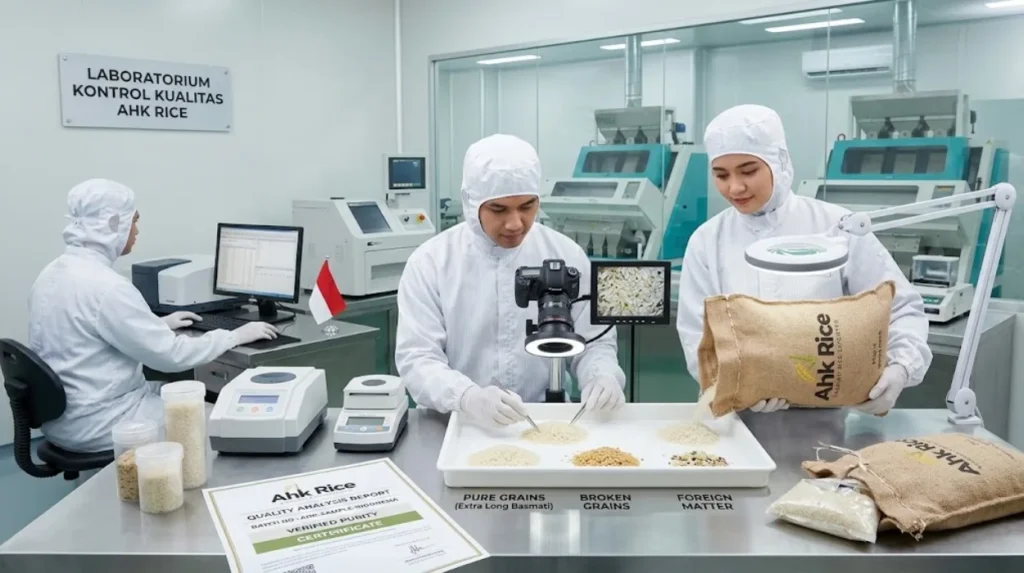
The sample process starts with specification confirmation, followed by sample preparation, courier dispatch, buyer testing, approval, and commercial quotation. Sample charges depend on courier service, phytosanitary requirements, sample weight, and the buyer’s preferred delivery arrangement.
What happens before the sample ships?
AHK Rice first confirms the requested variety, crop year, processing grade, packaging format, destination, and quality specification. This prevents buyers from testing a sample that does not match the intended bulk order.
The buyer can request specifications for 1121, Super Kernel, or 1509. The sample should represent the proposed commercial grade and processing type.
What sample costs should Indonesian buyers expect?
AHK Rice states that samples can be supplied free or at low cost, while the buyer normally covers courier and applicable phytosanitary charges. The exact cost should be confirmed against sample weight, destination, and courier selection.
For 1121 Indonesia shipments, AHK Rice states that samples up to 2 kg can be requested, with courier delivery generally taking 3–5 days.
For broader Indonesia export samples, AHK Rice states that delivery from Punjab can take approximately 7–10 days.
The sample should be tested for aroma, grain appearance, cooking expansion, separation, moisture, and broken percentage. Buyers can also compare fresh and aged samples before selecting the crop-year specification.
What happens after sample approval?
After approval, the supplier converts the accepted sample specification into the commercial order, contract, packaging plan, and production schedule. This creates a direct specification link between sample approval and bulk shipment.
AHK Rice states that sample charges can be waived in the final quote when a buyer proceeds with an order after approval.
This approach gives Indonesian buyers a practical quality checkpoint before committing to container volume.
What shipping days should Indonesian buyers plan for?
Indonesian buyers should normally plan around 18–28 days for the Pakistan-to-Indonesia logistics window, with the exact schedule depending on port, vessel, transshipment, and clearance conditions. Direct routes can reduce the sea-transit component.
AHK Rice publishes a 14–21 day sea-transit estimate for Karachi to Jakarta or Surabaya on its Indonesia export page.
Its broader 2026 shipping guide gives an overall route estimate of 18–28 days, including inland movement, port handling, sea transit, and Indonesian clearance.
| Indonesian destination | Planning estimate |
|---|---|
| Jakarta | 18–24 days |
| Surabaya | 20–26 days |
| Medan | 22–28 days |
These figures are planning ranges rather than guaranteed arrival dates. Port congestion, vessel allocation, transshipment, documentation, and seasonal conditions can extend delivery schedules.
Indonesian buyers should therefore confirm the vessel booking before fixing retail launch dates or promotional inventory schedules.
What results can Indonesian buyers expect?
The main result is stronger purchasing control through verified crop year, consistent specifications, tested samples, documented shipment preparation, and predictable logistics planning. These controls reduce uncertainty before the container leaves Pakistan.
A premium retailer may select aged 1121 for aroma and cooking presentation. A foodservice distributor may prioritise stable cooking performance and commercial pricing. A value-focused buyer may compare 1509 against higher-cost aged 1121.
AHK Rice enables the buyer to make this decision using measurable specifications rather than a generic “premium rice” description.
A properly verified lot also supports inventory planning. Buyers know the crop year, processing grade, moisture target, packaging format, and expected shipping schedule before the order is dispatched.
What factors affect the final price?
Final price depends on variety, crop year, aging period, processing grade, broken percentage, order quantity, packaging, Incoterm, freight, inspection, and seasonal market conditions. A single published price cannot represent every Indonesian shipment.
AHK Rice publishes indicative 1121 export pricing from US$1,100 per MT FOB Karachi on its Indonesia product page, while the final price varies according to volume, packaging, season, and commercial terms.
Aged rice can command a premium because controlled storage adds inventory time and handling costs. AHK Rice’s crop-year material indicates that naturally aged Basmati can carry approximately US$80–170 per MT above fresh crop, depending on grade, processing, demand, and export season.
CIF pricing adds ocean freight and related charges. FOB pricing gives the buyer greater control over freight arrangements. Buyers should therefore compare landed cost rather than comparing FOB figures alone.
How should an Indonesian buyer make the final decision?
Choose verified aged 1121 for premium retail and foodservice, compare 1509 for cost-sensitive applications, and use Super Kernel where premium positioning requires another long-grain option. Always approve the physical sample against the written commercial specification.
A practical procurement sequence is straightforward:
- Define the destination port and intended market.
- Select the variety, processing grade, and crop year.
- Request the laboratory and traceability specifications.
- Test the physical sample before bulk approval.
- Confirm packaging, Incoterm, payment, and quantity.
- Approve the production specification.
- Inspect the finished cargo before loading.
- Dispatch the containers through the agreed Karachi route.
The final decision should prioritise specification consistency over the lowest initial price. Crop-year verification becomes valuable because it gives Indonesian buyers a measurable basis for comparing fresh and aged inventory.
For buyers comparing those two options, a detailed fresh-versus-aged Pakistan Basmati comparison can help define the appropriate aging specification.
To confirm the current crop year, grade, sample arrangement, shipping schedule, and landed-cost terms, request an export quotation from AHK Rice.
Frequently Asked Questions
Does crop year really matter when buying Pakistan Basmati?
Yes, crop year affects moisture, aroma, cooking performance, and storage characteristics.
Fresh crop normally carries different moisture characteristics from aged rice.
Controlled aging can improve aroma and grain separation.
Buyers should verify crop year through production and inventory records.
The agreed crop year should appear in the commercial specification.
Which Pakistan Basmati variety is best for Indonesian buyers?
1121 is generally the strongest premium choice for long-grain positioning.
Super Kernel can suit premium foodservice and wholesale applications.
1509 can provide a more cost-conscious long-grain option.
The correct selection depends on retail positioning and cooking requirements.
Sample testing should determine the final grade selection.
How long does Pakistan rice take to reach Indonesia?
Typical planning ranges are approximately 18–28 days for the broader logistics route.
AHK Rice publishes 14–21 days for sea transit on some Indonesia routes.
Jakarta planning estimates can reach 18–24 days.
Surabaya can require approximately 20–26 days.
Port congestion and vessel schedules can extend the final delivery window.
How much does a rice sample cost?
Sample cost depends mainly on courier, weight, phytosanitary requirements, and destination.
AHK Rice states that samples can be free or low cost.
Buyers generally cover courier and applicable phytosanitary charges.
A 1121 sample of up to 2 kg is listed for Indonesia.
Sample charges may be waived after an approved bulk order.
What should buyers test in the Basmati sample?
Buyers should test aroma, grain appearance, moisture, broken percentage, and cooking performance.
Cooking tests should measure elongation and grain separation.
Laboratory testing can verify critical physical specifications.
The approved sample should represent the intended bulk grade.
The final contract should match the approved sample specification.
What documents support crop-year verification?
Production records, batch information, laboratory reports, packing records, and export certificates provide useful verification.
Certificate of Origin establishes the declared country of origin.
Phytosanitary documentation supports plant-health compliance.
Packing documents connect shipment quantities with the commercial order.
Buyers should request traceability records before final approval.
What is the minimum order for Indonesian Basmati shipments?
AHK Rice lists 20 MT as the MOQ for its 1121 Indonesia export program.
That quantity corresponds approximately to one 20-foot container.
Larger orders can improve freight and procurement economics.
Packaging and destination requirements can influence container loading.
Buyers should confirm the final MOQ in the commercial quotation.