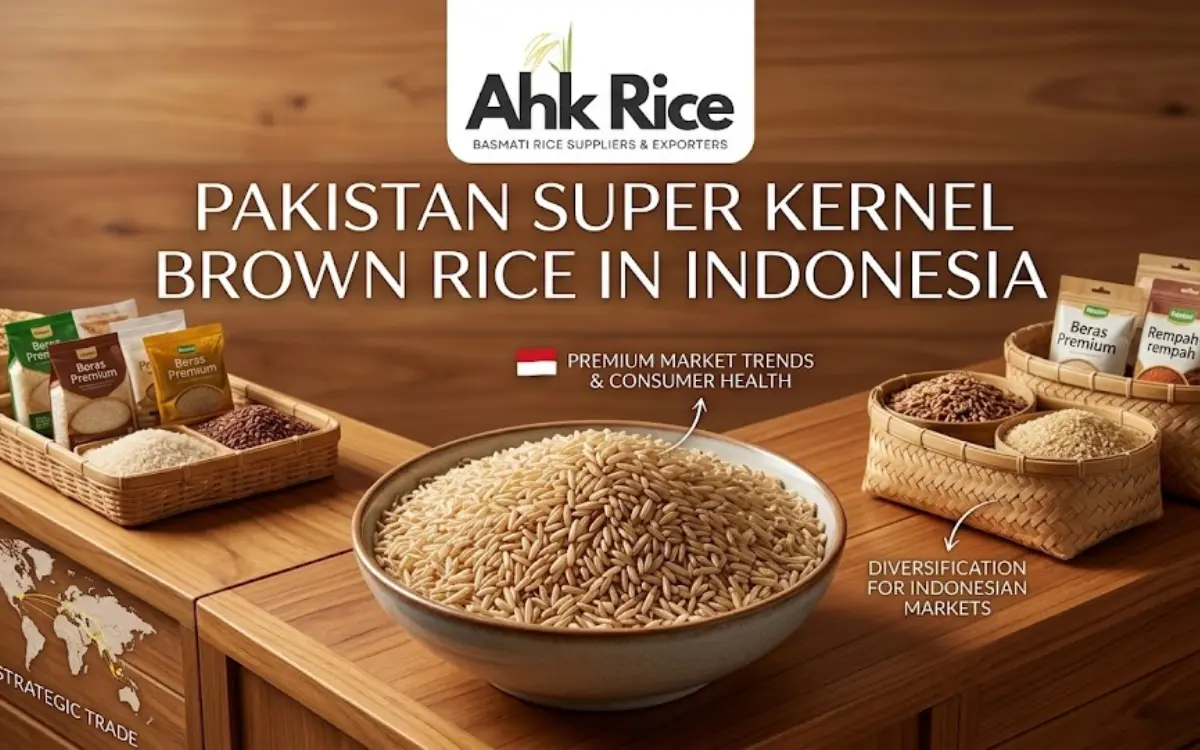
Why Is Pakistan Super Kernel Brown Rice Relevant to Indonesian Specialty Markets?
Pakistan Super Kernel Brown Rice is a long-grain, aromatic rice produced from Pakistan’s Super Kernel Basmati paddy and milled with the bran layer retained. Its aroma, elongated grain, firmer texture, and brown-rice nutrition profile make it relevant to specialty food markets.
Super Kernel Basmati is a premium Pakistani Basmati rice variety associated with Punjab, particularly the rice-growing areas surrounding the traditional Basmati belt. Brown rice refers to rice that retains the bran and germ layers after milling. White rice removes these outer layers.
The combination creates a product with two distinct market characteristics. Super Kernel provides the long grain and characteristic Basmati aroma. Brown-rice processing retains more of the grain’s outer nutritional layers.
The product is therefore different from ordinary brown rice. It is also different from fully milled Super Kernel white rice.
Pakistan’s Basmati sector supplies several commercial varieties. These include Super Kernel, 1121 Basmati, and 1509 Basmati. Super Kernel has a strong position in premium and traditional Basmati markets because of its aroma, grain appearance, and cooking characteristics.
For Indonesian specialty markets, the distinction matters. Indonesian consumers already recognise rice as a core staple. A specialty Basmati product therefore competes through differentiated attributes rather than basic rice consumption alone.
The term “Indonesian specialty market” covers premium grocery, health-oriented food retail, restaurants, hotels, gourmet foodservice, ethnic-food distribution, and consumers seeking differentiated grains. Examples include premium supermarkets, organic-oriented retailers, Indian restaurants, and health-conscious food channels.
Where is Super Kernel Brown Rice grown in Pakistan?
Super Kernel Basmati is grown primarily in Pakistan’s Punjab rice-producing region, where soil, irrigation, temperature, and seasonal conditions support aromatic rice cultivation. Brown rice is not a separate crop; it is a processing form produced from harvested Super Kernel paddy.
Punjab is Pakistan’s principal Basmati-producing region. Rice cultivation depends on irrigation, suitable soil conditions, temperature patterns, and water availability during the growing cycle.
The production chain starts in the field. Farmers cultivate paddy rather than brown rice. The harvested paddy contains the rice grain enclosed inside a protective husk.
After harvesting, the paddy enters post-harvest handling. Moisture management becomes important at this stage. Proper drying reduces storage and processing risks.
Super Kernel is identified through its varietal characteristics. These include long slender grains, aromatic properties, and cooking behaviour associated with Pakistani Basmati.
Geography matters because Basmati is strongly connected with the agro-climatic characteristics of its production region. The variety, cultivation environment, post-harvest handling, and processing method together influence the final commercial product.
For Indonesian importers, understanding origin helps distinguish Pakistani Super Kernel Brown Rice from brown rice produced from non-Basmati varieties in other countries.
How is Pakistan Super Kernel Brown Rice processed?
Pakistan Super Kernel Brown Rice passes through harvesting, drying, cleaning, dehusking, separation, grading, sorting, quality inspection, and packaging. The critical difference is milling: the husk is removed while the bran layer remains attached to the edible rice kernel.
How does harvesting begin?
Farmers harvest mature Super Kernel paddy after the crop reaches the appropriate stage. Mechanical harvesting is widely used in commercial rice production. The harvested material contains grain, husk, straw fragments, dust, and other field materials.
The paddy is transported to a processing facility for post-harvest handling.
How is paddy dried?
Freshly harvested paddy contains moisture that must be controlled before storage and milling. Drying brings moisture toward a suitable level for safe storage and efficient processing.
Controlled drying helps reduce grain damage. Excessive drying or poor moisture management can increase cracking and broken grains.
How is the paddy cleaned?
Cleaning equipment removes foreign materials from the harvested paddy. Examples include stones, dust, metal fragments, straw, and other field contaminants.
Cleaning protects downstream machinery and improves product quality.
How is the rice dehusked?
A husker removes the outer rice husk from the paddy. The resulting grain still contains the bran layer and germ.
This is the key stage separating brown rice from white rice production.
How is Super Kernel brown rice graded?
Grading separates kernels according to physical characteristics such as length, broken percentage, damaged grains, and other quality parameters.
Modern rice mills use mechanical grading and sorting systems. Optical sorters identify colour and appearance defects that conventional screens cannot reliably separate.
How is the finished rice inspected?
Quality control evaluates physical and commercial characteristics. Typical checks include moisture, broken kernels, foreign matter, damaged grains, discolouration, grain length, and packaging integrity.
Laboratory testing also supports food-safety verification where required by the destination market.
What are the key components of Super Kernel Brown Rice quality?
Super Kernel Brown Rice quality depends on variety, grain length, aroma, bran retention, moisture, broken-grain percentage, cleanliness, sorting accuracy, food safety, packaging, and storage conditions. These attributes collectively determine suitability for Indonesian specialty distribution channels.
Grain characteristics
Super Kernel is valued for its long, slender grain profile. Grain appearance is important in premium rice markets because consumers often associate elongated kernels with Basmati quality.
Brown rice retains the bran layer, giving the grain its characteristic brown appearance.
Aroma
Aromatic quality is one of Basmati’s defining characteristics. The aroma becomes particularly relevant in premium culinary applications.
Indian and South Asian restaurants in Indonesia represent one example of a foodservice segment where aromatic Basmati rice fits established culinary traditions.
Bran retention
Brown rice retains the bran layer after dehusking. This gives it a different appearance, texture, cooking time, and nutritional composition from white rice.
The retained bran also increases sensitivity to storage conditions because the outer grain layers contain natural oils.
Moisture
Moisture is a central quality-control parameter. Incorrect moisture levels affect storage stability, milling performance, texture, and shelf life.
Broken grains
Premium markets typically place greater emphasis on whole-kernel appearance. A high broken-grain percentage changes cooking behaviour and reduces visual uniformity.
Sorting
Optical sorting improves consistency by removing selected discoloured or defective kernels. This creates a more uniform finished product.
Why is Super Kernel Brown Rice relevant to Indonesian specialty markets?
Super Kernel Brown Rice fits Indonesian specialty markets because it combines Pakistani Basmati identity with brown-rice positioning. Its long aromatic grain supports premium culinary use, while bran retention supports differentiated health-oriented and gourmet food positioning.
Indonesia has a large rice-consuming population and a developed rice distribution system. The mainstream market is dominated by locally familiar rice varieties. Imported Basmati therefore occupies a more specialised position.
Super Kernel Brown Rice addresses several specialised requirements.
First, it provides aromatic differentiation. Basmati has a recognisable sensory identity that differs from many common Indonesian rice varieties.
Second, it provides whole-grain positioning. Brown rice retains the bran and germ, making it relevant to consumers looking for less-refined grain products.
Third, it supports premium foodservice. Restaurants use specialty rice when aroma, grain appearance, and culinary identity matter.
Fourth, it supports gourmet retail. Specialty supermarkets can differentiate imported Basmati from conventional white rice through variety, origin, processing method, and culinary use.
Fifth, it creates an origin story. Pakistani Punjab provides a defined geographic production identity that specialty retailers can communicate to consumers.
These characteristics explain why the product belongs in a specialty segment rather than competing directly with Indonesia’s mass-market rice supply.
What benefits does Super Kernel Brown Rice offer specialty buyers?
For specialty buyers, Super Kernel Brown Rice offers varietal identity, long aromatic grains, bran retention, premium culinary differentiation, and multiple positioning opportunities. These attributes support retail, foodservice, gourmet, and health-oriented applications without treating the product as ordinary table rice.
Premium grain positioning
Long, slender kernels create a visible distinction from conventional rice. The grain shape becomes part of the product proposition.
Aromatic culinary use
Basmati aroma supports dishes where fragrance is an important sensory characteristic. Examples include biryani, pilaf, pulao, rice bowls, and restaurant-style rice dishes.
Brown-rice positioning
Retaining the bran gives the product a whole-grain identity. Brown rice also generally contains more fibre and micronutrients than fully milled white rice because the outer layers remain.
Nutritional claims still require careful regulatory treatment in Indonesia. A product label cannot assume that a general nutritional characteristic automatically qualifies as a permitted health claim.
Product differentiation
Importers can distinguish Super Kernel Brown Rice through several attributes at once. Examples include Pakistani origin, Basmati variety, brown-rice processing, grain length, packaging format, and intended culinary use.
Where can Indonesian businesses use Super Kernel Brown Rice?
Indonesian businesses can use Super Kernel Brown Rice across premium retail, specialty grocery, restaurants, hotels, catering, gourmet foodservice, and selected health-oriented channels. Each application uses the product’s aroma, appearance, origin, or brown-rice characteristics differently.
Premium retail
Specialty supermarkets can position imported Super Kernel Brown Rice as a differentiated grain product. Packaging can communicate origin, variety, cooking instructions, net weight, importer information, and applicable certifications.
Restaurants
Indian, Pakistani, Middle Eastern, and fusion restaurants can use aromatic Basmati in dishes where long grains and fragrance influence the final result.
Hotels and catering
Hotels with international menus can include Basmati-based dishes in buffet and banquet operations. Brown rice also fits menus designed around differentiated grain options.
Gourmet foodservice
Foodservice distributors can supply the product to chefs who require specific rice varieties for defined recipes.
Health-oriented retail
Brown rice can occupy a specialised whole-grain position. The product still requires accurate labelling and compliant nutritional communication.
For buyers evaluating different products, the next-stage comparison process is covered in:
How Indonesian buyers compare Pakistan Super Kernel Brown Rice options. This link belongs in the section discussing product differentiation because readers have already learned the basic characteristics of the product.
Which certifications and compliance requirements apply?
Certification requirements depend on the Indonesian import channel, product claims, importer status, and applicable Indonesian food regulations. Food safety, halal status, labelling, registration, and import documentation are separate compliance areas that buyers must evaluate before commercial distribution.
Indonesia has specific requirements governing imported food. Importers must meet applicable food, customs, labelling, and product-registration requirements.
Halal compliance is especially important for the Indonesian market. Indonesia operates a national halal assurance framework, and imported food products fall within its regulated halal ecosystem according to applicable requirements and implementation timelines.
Other certifications can support commercial positioning but are not automatically mandatory for every shipment. Examples include ISO 22000, HACCP, BRCGS, organic certification, and Halal certification.
The correct certification depends on the buyer and channel.
An organic retailer requires evidence supporting an organic claim. A conventional supermarket does not automatically require organic certification simply because the product is brown rice.
Food-safety certifications also differ from government import approvals. A private certification demonstrates compliance with a defined standard. Indonesian import clearance remains a separate regulatory process.
Which markets import Pakistani Basmati rice?
Pakistani Basmati rice reaches international markets across the Middle East, Europe, Asia, Africa, and North America. Indonesian demand represents a specialised Asian opportunity where imported Basmati competes through aroma, grain characteristics, origin, culinary use, and premium positioning.
Pakistan exports Basmati and other rice varieties to numerous international destinations. Major markets include countries in the Gulf, European Union, United Kingdom, North America, and other Asian and African markets.
The exact destination mix changes by year, harvest conditions, trade policy, prices, and import requirements.
Indonesia has its own rice-production base, so Pakistani Basmati does not compete with domestic rice purely on volume. Imported Basmati instead serves differentiated demand.
This distinction is important for specialty-market analysis. A product does not need mass-market penetration to have commercial relevance. A defined premium segment can support imported varieties with distinctive characteristics.
What are the common misconceptions about Super Kernel Brown Rice?
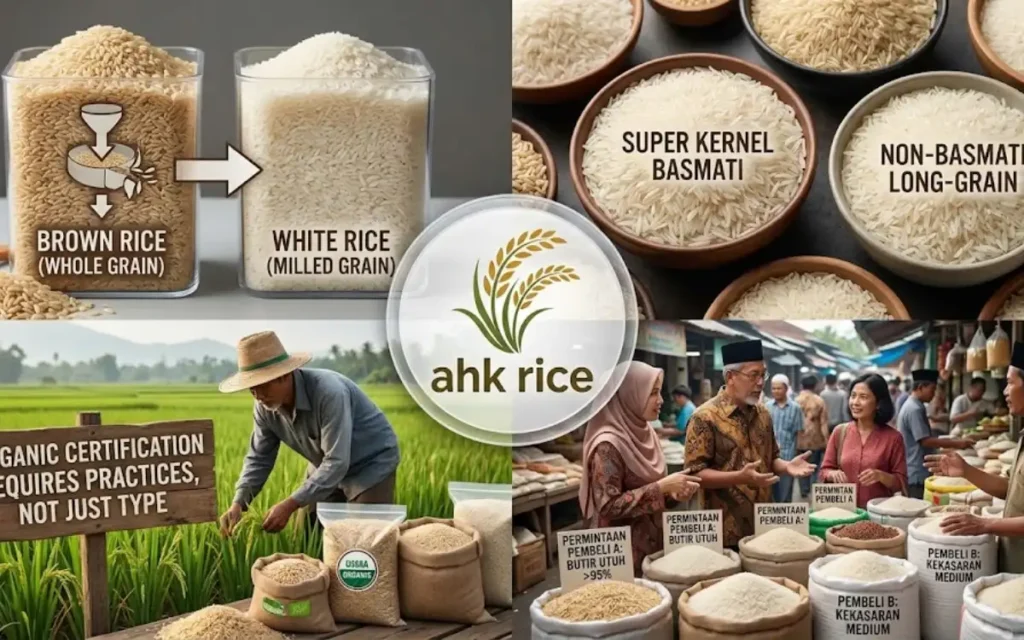
Common misconceptions include treating brown rice as a separate rice variety, assuming every long-grain rice is Basmati, equating brown rice with automatic organic certification, and assuming all Indonesian buyers require identical specifications. Variety, processing, certification, and buyer requirements remain separate concepts.
Is brown rice a separate variety?
No. Brown rice describes the milling condition. Super Kernel identifies the variety. Super Kernel can therefore be processed into brown rice or further milled into white rice.
Is every long-grain rice Basmati?
No. Long grain describes physical grain characteristics. Basmati has additional varietal and aromatic characteristics.
Does brown rice automatically mean organic?
No. Brown rice and organic rice are different product classifications. Organic status requires certification under the relevant standard.
Does every buyer want the same specification?
No. A restaurant can prioritise aroma and cooking performance. A supermarket can prioritise appearance, packaging, certification, and retail compliance. A health-focused retailer can prioritise brown-rice positioning and verified nutritional information.
Is Pakistani origin enough for market entry?
No. Origin is one product attribute. Indonesian importers also need to address applicable food regulations, documentation, labelling, halal requirements, customs procedures, and buyer specifications.
How should Indonesian buyers understand the product before comparing options?
Indonesian buyers first need to separate variety, processing, grade, quality parameters, certification, packaging, and import compliance. This framework creates a consistent basis for comparing Super Kernel Brown Rice products before selecting suppliers or commercial specifications.
The first comparison point is variety. Super Kernel must be distinguished from other Pakistani Basmati varieties such as 1121 and 1509.
The second is processing condition. Brown rice retains the bran layer, while white rice undergoes additional milling.
The third is physical grade. Whole kernels, broken grains, length, moisture, damaged grains, and foreign matter affect commercial value.
The fourth is food safety. Testing and certification requirements depend on the destination market and buyer specification.
The fifth is packaging. Retail packs and foodservice sacks serve different distribution models. Examples include 1 kg retail bags, 5 kg consumer packs, and larger foodservice formats.
The sixth is documentation and compliance. Indonesian buyers need the appropriate import and product documentation for their channel.
Frequently Asked Questions
What is Pakistan Super Kernel Brown Rice?
Pakistan Super Kernel Brown Rice is a long-grain Basmati rice produced from Super Kernel paddy grown primarily in Punjab, Pakistan. The rice is dehusked while retaining its bran layer, giving it a brown appearance and distinct texture.
Where is Super Kernel Brown Rice grown in Pakistan?
Super Kernel Basmati is primarily associated with Pakistan’s Punjab rice-growing region. The area provides suitable agricultural conditions for aromatic Basmati production, supported by irrigation, soil conditions, and seasonal temperatures.
What makes Super Kernel Brown Rice different from white Basmati rice?
Super Kernel Brown Rice retains the bran and germ layers after the husk is removed. White Basmati undergoes additional milling that removes these outer layers. This creates differences in colour, texture, cooking time, and nutritional composition.
Why is Pakistani Super Kernel Brown Rice relevant to Indonesian specialty markets?
It combines Basmati’s long aromatic grain with brown-rice positioning. This makes it relevant to premium retail, specialty grocery, international restaurants, gourmet foodservice, and selected health-oriented food channels in Indonesia.
Is Super Kernel Brown Rice the same as 1121 Basmati Brown Rice?
No. Super Kernel and 1121 are different Pakistani Basmati varieties. Both can be processed as brown rice, but they have different varietal characteristics, grain profiles, and commercial specifications.